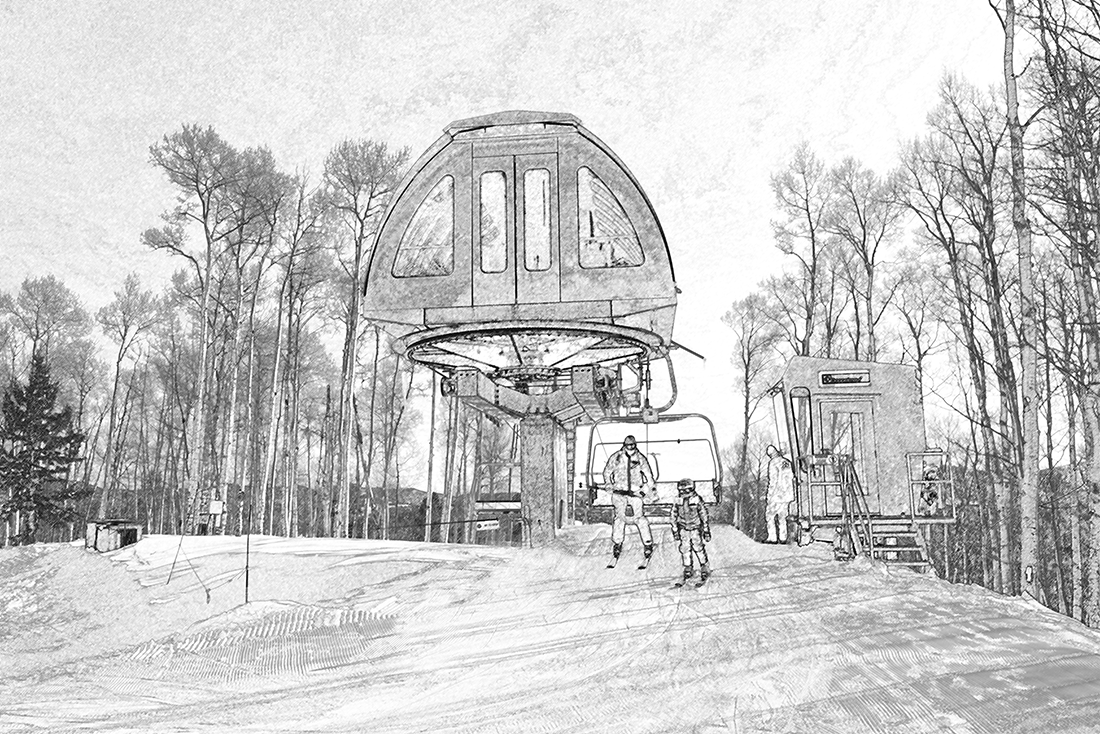
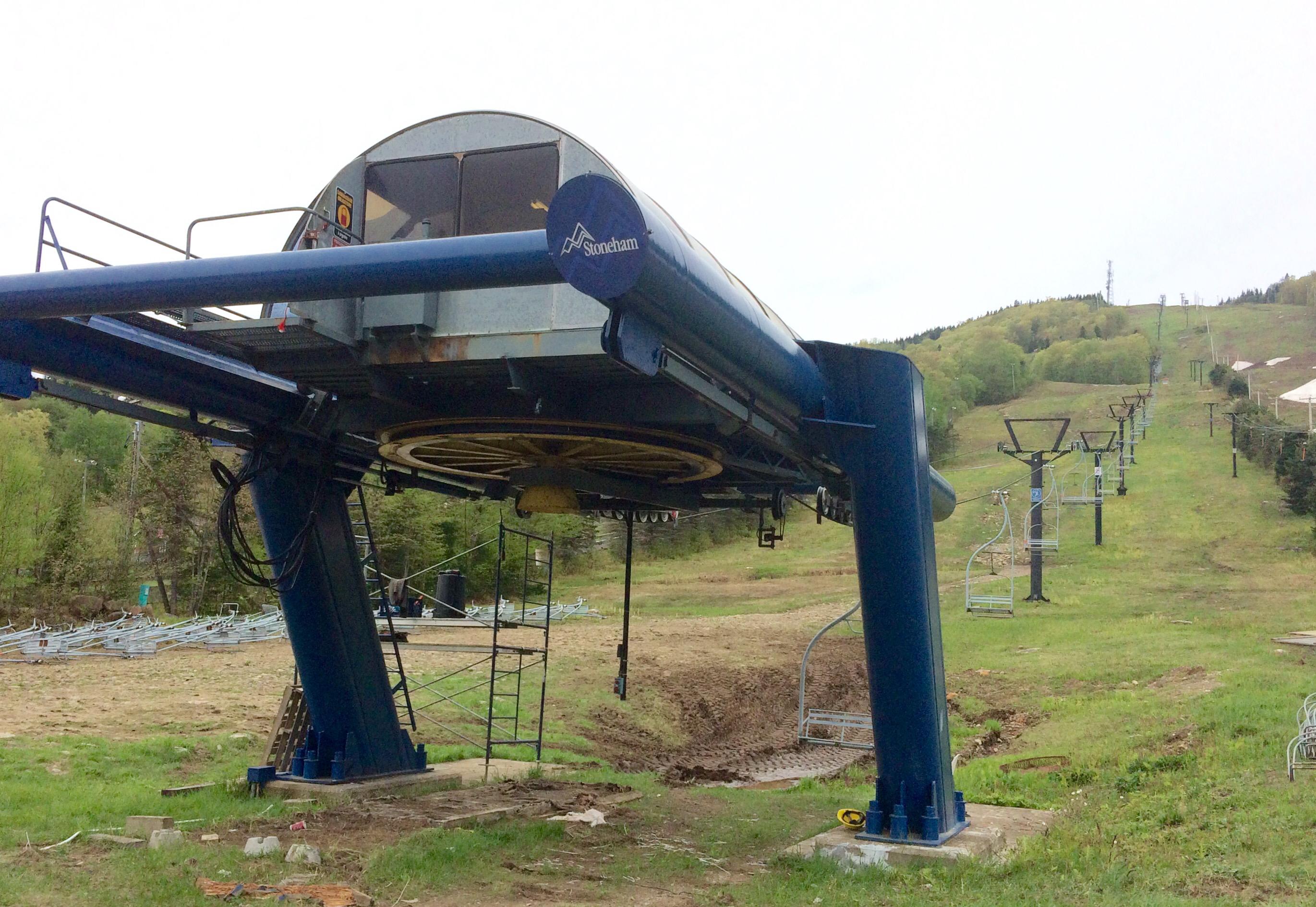
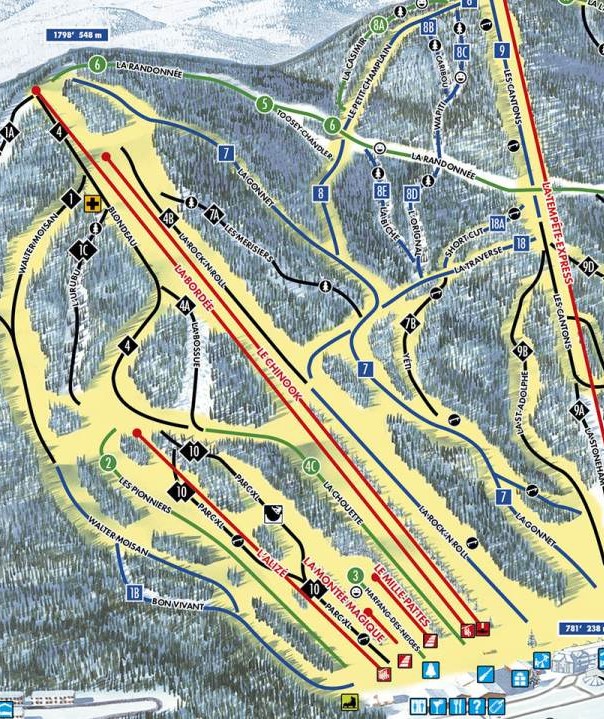
This is big news as the last new lift built at Stoneham is 28 years old! Thanks to Julien C. for the head’s up.

This is big news as the last new lift built at Stoneham is 28 years old! Thanks to Julien C. for the head’s up.

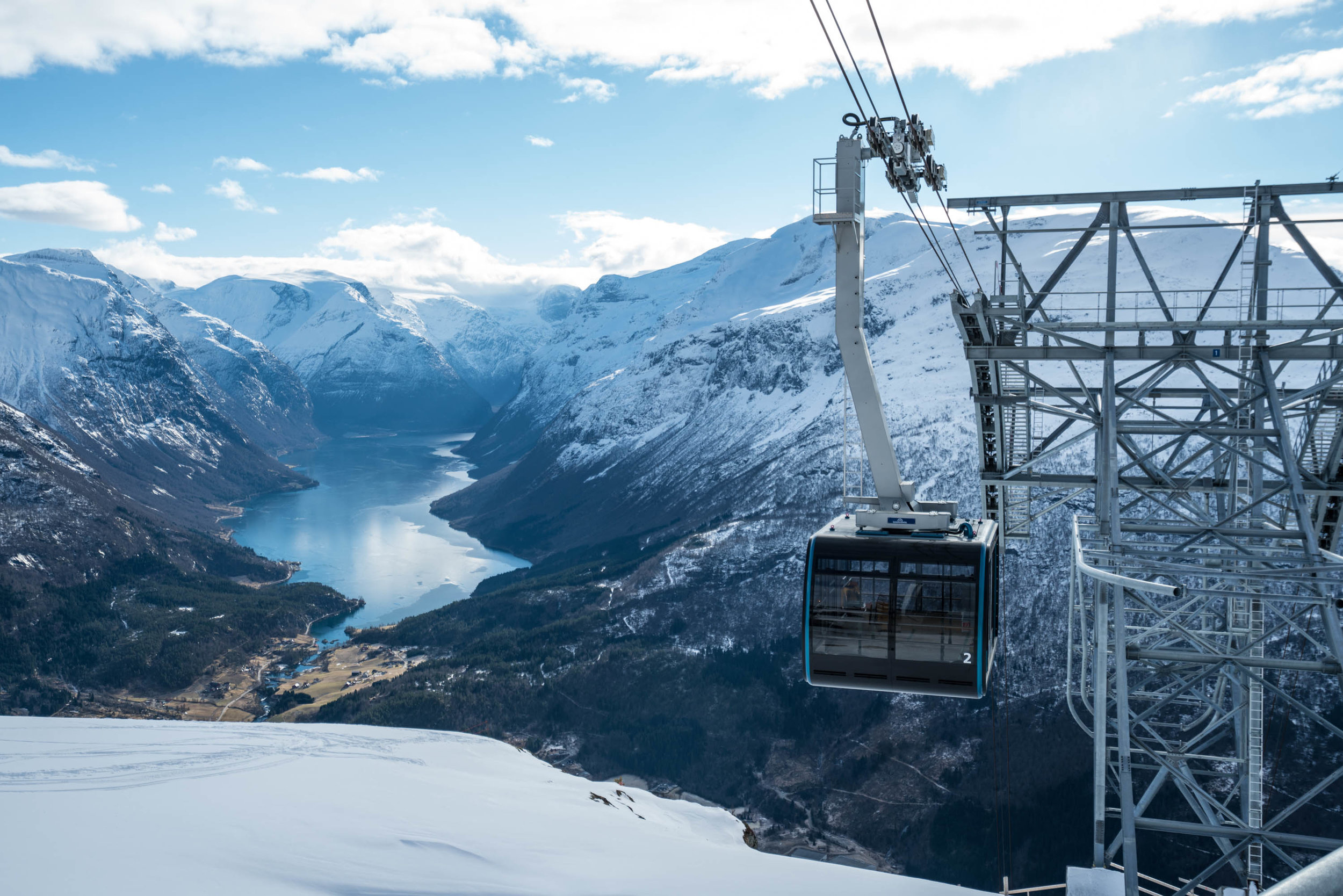
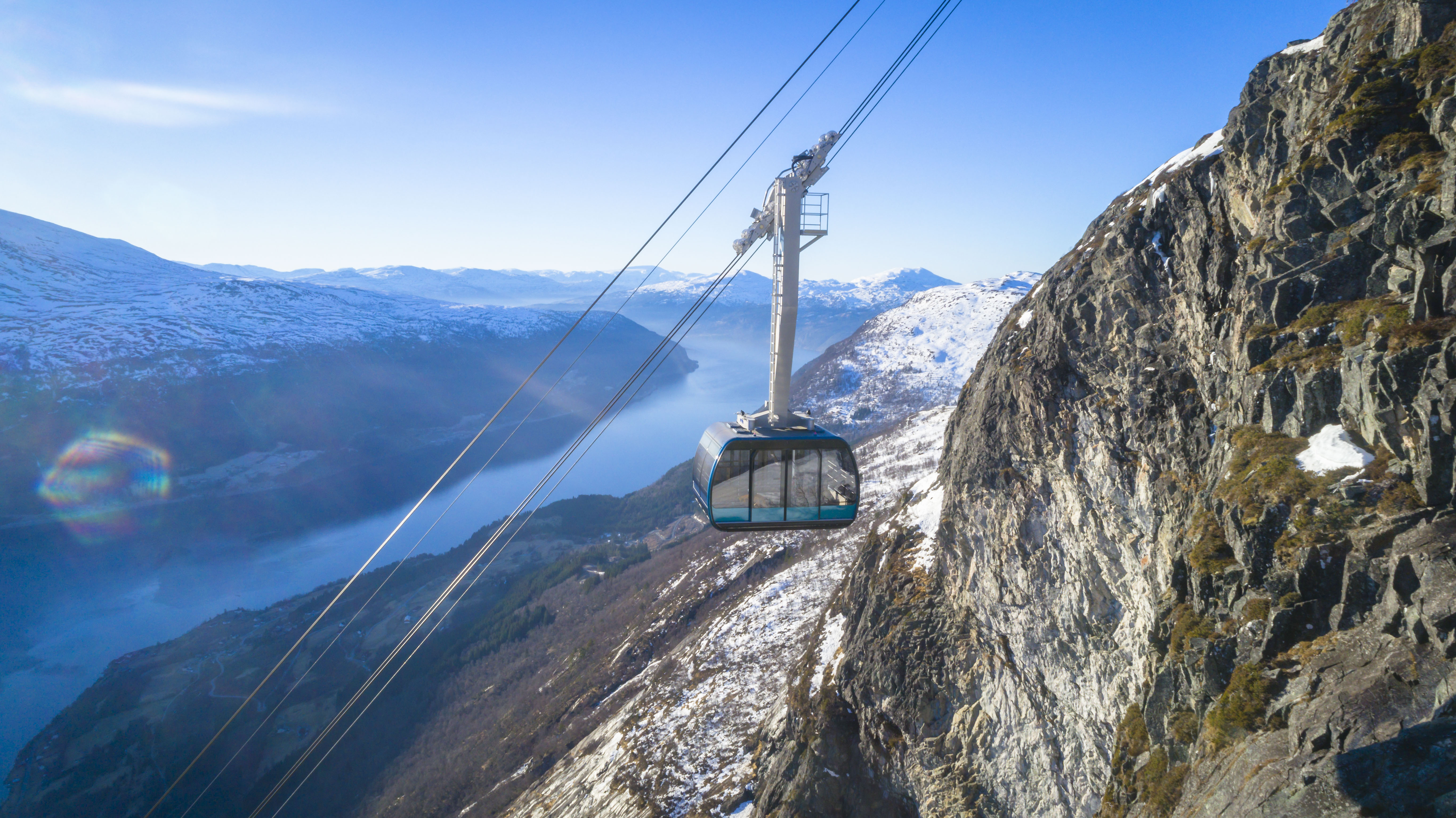
From Fjord to Sky in Five is the tagline for the Loen Skylift, a spectacular new sightseeing tramway and adventure destination in Norway that debuted this morning. Rising from the sea to 1,011-meter Mt. Hoven, the brand new Garaventa aerial tram becomes the steepest jig-back built in modern times and is already being hailed as one of the world’s great lifts. “The Loen Skylift is the quickest and easiest way to explore the best of what Norwegian mountains have to offer,” said Richard Grov, general manager of Loen Skylift. “The trip from the fjord to the mountain only takes a few minutes.”

An ascent from dock to dock is 3,248 feet over a slope length of 5,021 feet, yielding an insane average grade of 53 degrees. That’s much steeper than every lift in North America, the steepest of which averages only 34.3 degrees. At seven meters per second, a Skylift ride takes just five minutes and the machine can transport 460 passengers each hour in two 45-passenger CWA Kronos cabins. As the Doppelmayr annual brochure notes, “[The Skylift] features one strongly-overhanging tower standing on two feet and anchored back with a tie bar. The tramway has two sets of track ropes and no track rope brake.”

Lookout Pass is the only ski resort in America spanning two states, two National Forests and two time zones. While markedly low-key, this local favorite on the Idaho-Montana border has grown rapidly from one lift to four since 2002. A Record of Decision published today by the Idaho Panhandle and Lolo National Forests gives Lookout approval to build two new lifts on Eagle Peak, upgrade Chair 1 and add 15 new trails spanning 654 acres. Vertical rise will increase more than 40 percent to 1,650′ as the lift-served summit moves from Runt Mountain to Eagle Peak. Taken alone, the expansion will be larger than all but four ski areas in the Eastern United States. When combined with current terrain, once little Lookout will provide more than 1,000 acres of terrain for a growing number of skiers in the Inland Northwest.
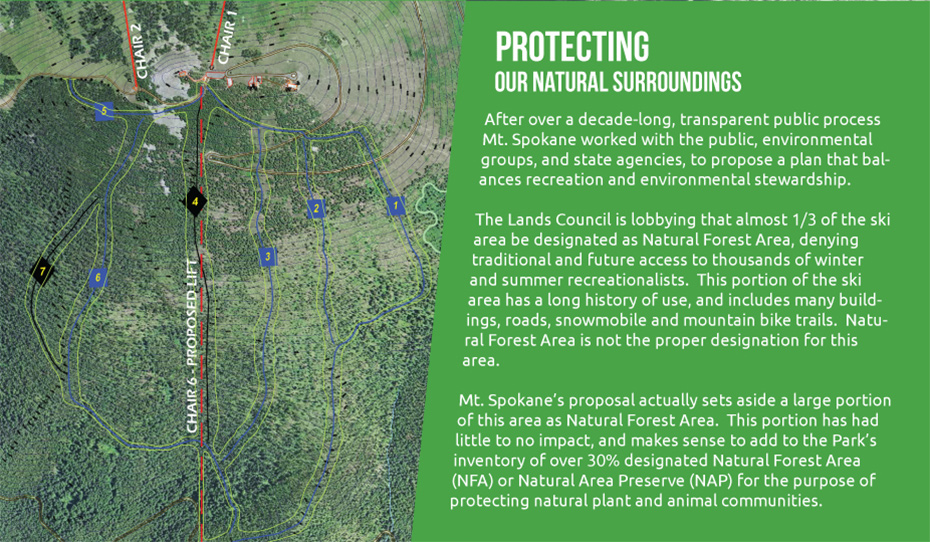
Lift 1, a 1982 Riblet double, will be upgraded to a fixed- or detachable-grip quad in the existing alignment. A new fixed-grip double, triple or quad chair on Eagle Peak dubbed Lift 5 will be 5,200′ long by 1,300′ vertical with around 24 towers. A smaller 2,800 x 800′ Lift 6 was approved as a double chair ending on the same summit. A 12,000′ power line will need to be trenched to both relatively remote new bottom drive terminals. “The new lifts will incorporate components recycled from the Lift 1 upgrade as well as used components purchased from other ski areas to promote resource conservation and to reduce costs,” the ROD notes. Lookout Pass already operates four Riblet fixed-grips, three of which were relocated from other resorts. Fittingly, one of the new lifts will be located in Idaho and Pacific Time, the other in Montana on Mountain Time.
Not wasting a moment, Lookout Pass said in a statement, “Phase One projects will be initiated starting this summer. Specific projects are subject to logging bids and contracts plus additional ski lift and building plan review. We will announce the proposed projects timeline as soon as possible.” You can learn more and follow the progress here.
Following a winter with three times normal snowfall, California now has its second major lift project for the coming construction season. Bear Valley in the Stanislaus National Forest plans to construct a six-passenger detachable in place of the Bear chair from the day lodge at mid-mountain to the 8,500′ summit. The Leitner-Poma installation will closely match one built last year at Skyline Investments’ other mountain in Canada, Horseshoe Resort. Leitner-Poma also supplied Bear Valley’s first detachable, the Polar Express quad, in 2006.
Bear is a 1967 Riblet double running parallel to a Yan triple called Kuma, built in 1981, that combine to serve the heart of the mountain. Kuma will remain for now. The 11-tower, 58-chair six-pack will rise approximately 750 vertical feet in just over three minutes. “This lift investment is a game changer for Bear Valley that will greatly enhance our guests’ experience during the winter operations, and with the new high speed lift being 100% downloadable it aligns well with our heightened focus on summer recreation and activities on the mountain,” said Andrea Young, general manager at Bear Valley. “This is a continuation of the many improvements that Skyline Investments is making at Bear Valley on the heels of two strong winters which will elevate the guest experience and further establish the area as a year-round Sierra family destination.” Bear Valley plans to build two additional lifts on the backside of the mountain in the coming years, directly connecting the Bear Valley Village to the ski area for the first time.

Bear Valley’s sixer is the seventh to be announced this year. With only five high-speed quads scheduled in the United States and Canada, more-six packs than detachable quads may go in for the first time ever this year. In 2010, the ratio of quads to six-packs was 9:1, in 2013 it reached 3:1 and last year hit 1:1. Six-place lifts can be built with any capacity that quads can, allow families to ride together and can offer greater wind resistance. The new one at Bear Valley is sure to be a hit over the 50-year old center pole double it replaces.

It’s been two weeks since the bombshell news that Aspen Skiing Co. and KSL Capital Partners are joining forces to bring twelve ski resorts under a new entity rivaling Vail Resorts. While the deals won’t close for months, the new partners already say they plan to invest heavily in the guest experience. “We have earmarked a lot of capital for improvements to be able to continue to reinvest significantly in the communities and the mountains,” KSL CEO Eric Resnick told the Denver Post. “What’s exciting is being able to bring new opportunities with these communities and with these mountains to those customers who are already so passionate.” This could come in the form of new lifts ahead of the 2018-19 season and beyond. Below is a summary of announced plans and my speculation of what might be in store for KSL and Aspen’s upcoming resorts.


Killington Resort and a local developer will invest $110 million to revitalize Bear Mountain over the next few years, including the addition of a fixed-grip quad chair at South Ridge next summer. Most of the plans involve base infrastructure and real estate but the lift news is exciting given the South Ridge area has been without direct service since its triple chair was removed in 2011. The $3 million quad chair will be the first new lift at the East’s most visited resort since the addition of the Skye Peak Express in 2008. “This Bear Mountain Revitalization Plan is especially exciting for me because I know that our core group of season pass holders has wanted a new South Ridge lift since the day we removed the old one,” says Mike Solimano, president and general manager of Killington Resort. “With the trail work our team has planned, this layout should greatly enhance the Killington experience by improving connectivity between the north and south sides of the resort.” The Bear Mountain Quad, a 1979 Yan will remain for now but is likely to be upgraded in the future with new development at its base.
Lift Engineering built the old South Ridge lift in the shape of a triangle, a wacky setup that will not be repeated. The new version will follow the path of the old light side from the bottom of Roundabout to an unload near the summit of Killington Peak. “From the top of the Bear Mountain Quad, the long-awaited replacement of the South Ridge lift will give skiers and snowboarders easy access the resort’s north side terrain including the Canyon and Snowdon areas, or easy access to the many trails in the sunny South Ridge area,” says Jeff Temple, director of mountain operations. Leitner-Poma is likely to build the fixed-grip quad as a longstanding supplier to Killington, but there’s also a chance it could go to Doppelmayr with Powdr Co.’s recent history. In further good news, The Beast also announced an agreement yesterday to host World Cup ski racing in both 2017 and 2018.
Sun Valley Resort plans to replace its oldest chairlift with a new, longer high-speed quad and open 380 acres of Cold Springs Canyon to skiing in 2018. A future plans webpage launched today details the planned expansion within Bald Mountain’s existing permit area on Bureau of Land Management and National Forest lands. North-facing terrain in Turkey Bowl and Cold Springs Canyon would be gladed with an extended Lower Broadway run leading to the bottom of a new detachable quad chairlift. South-facing terrain underneath the lift would also be opened when conditions permit.


The world’s largest urban gondola network leaps forward this week with the addition of the Línea Azul (Blue Line) in the Bolivian twin cities of La Paz and El Alto. Since debuting with just one line in May 2014, the state-owned Mi Teleférico (My Cable Car) system has now transported more than 75 million passengers on its Green, Yellow, and Red gondolas. In 2015, My Cable Car committed $450 million to build six additional lines through 2020, and it ordered two more last year. Mi Teleférico has quickly become one of Doppelmayr’s largest customers, exclusively utilizing the Austrian company’s ten-passenger monocable detachable gondola technology.
Construction commenced on Línea Azul in late May 2015 with cable pulling (by drone!) wrapping in September 2016. The first cabin launched later that month with Bolivian President Evo Morales taking the inaugural ride in November. After three more months of terminal buildout and system testing, the Blue line’s five stations are ready for show time. Línea Azul is La Paz’s longest to date, with 208 CWA Omega IV-10-LWI cabins that will cover an impressive 32,700 feet per revolution beginning March 3rd, just 645 days after groundbreaking.
Like the Red, Yellow and Green lines, the Blue line is actually two lifts with two separate haul ropes and two drive systems with cabins transferring between them. Nearly all of the Mi Teleférico network will be built this way, with multiple haul rope loops forming single “lines” with two to five stations each (most have either three or four.) Multi-stage gondolas operating with this principle in North America include Whistler Village and Excalibur at Whistler Blackcomb, Panorama at Mammoth and Revelation at Revelstoke Mountain Resort.
As one of America’s oldest resorts, Loveland Ski Area has welcomed skiers to the Continental Divide continuously since 1937. Although now surrounded by the likes of Keystone, Breckenridge and Winter Park and with I-70 literally cutting through it, Loveland remains a local favorite with plentiful snowfall and varied terrain served by nine fixed-grip chairlifts. The first double chair – a Heron – debuted at Loveland Basin in 1955. A second ski area, Loveland Valley, opened in 1961. A number of Heron, Heron-Poma and later Lift Engineering lifts were added through 1990. The first modern Poma quad chair debuted in 1996, followed by a series of Leitner-Poma triple and quad chairs to modernize the fleet. When Lift 9 opened in 1998, it became the highest-elevation chairlift in North America, a title Loveland held until Breckenridge opened the Imperial SuperChair in 2005.

Loveland generally builds lifts below maximum capacity and skier density is much lower than the industry average, with 1,800 acres of skiable terrain and an hourly lift capacity of over 14,000 skiers. The development plan notes that Loveland’s lift network generally serves the terrain well, but some lifts are approaching the end of a typical 35-year lifespan and a few changes should be made. Just last week, lifts 1 and 6 had to be closed for multi-day repairs but have since re-opened.


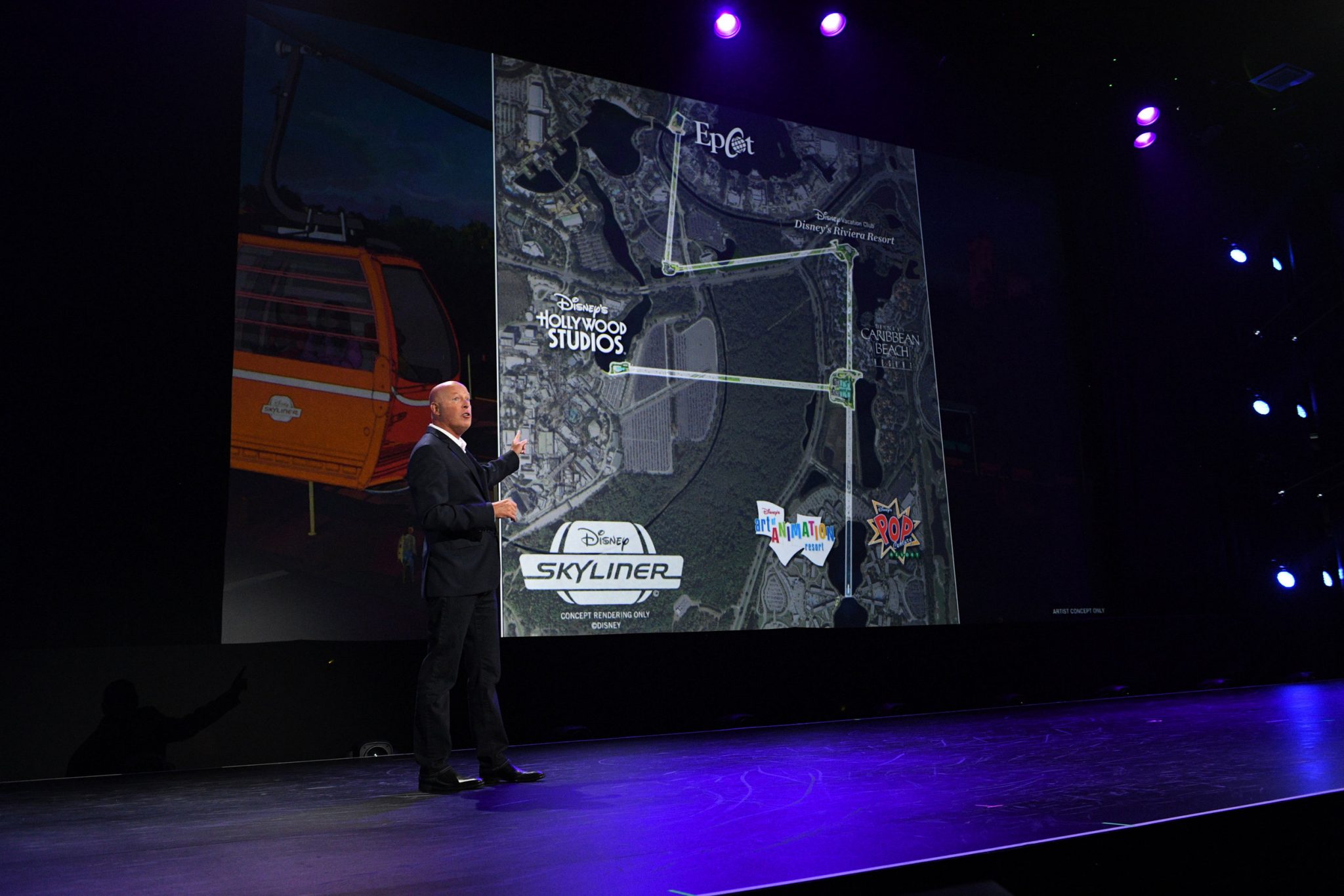
A $15 million gondola system will connect the New York State Fairgrounds in Syracuse to a nearby amphitheater, Governor Andrew Cuomo announced this morning. “This is very, very exciting and it brings the energy of both facilities together for a synergy between the two,” Cuomo noted, calling the planned gondola “world class.” The lift’s 38 cabins will cross Interstate 690 along a 3,700′ route. The project still requires federal approval but is scheduled for completion in June 2018.
The gondola will link more than 15,000 parking spaces at the fair to the 17,500-seat Lakeview Amphitheater, which will host major acts such as Zac Brown Band and Third Eye Blind this summer. The amphitheater gondola station will also serve Onondaga Lake Park and its network of popular trails. The state- and county-owned facilities are currently connected by shuttle buses operating on a circuitous route during major events. Capacity of the eight-passenger lift will be 1,200 passengers per hour. An expansion to 75 cabins would achieve an ultimate capacity of 2,400 per hour. A manufacturer has not yet been selected and the state will hold a competitive bid process in the coming months.
A separate, privately-funded and operated skyride lift will also be built this spring, traveling 1,500 feet over the fairgrounds with between 100 and 120 double chairs. Dozens of fairs across the country operate either chairlifts or gondolas for fair-goers, among them a new Skytrac ride at Cal Expo, a Partek chairlift at the North Carolina State Fair and the Texas Skyway gondola built at the Texas State Fair in 2007.
Governor Cuomo also announced $20 million in improvements at the state-owned Belleayre, Gore Mountain and Whiteface ski resorts today, including a new enclosed upper terminal building for Gore’s Northwoods Gondola and a new lift connecting Whiteface’s learning center to mid-station. New York State owns more lifts than any other state – 27 in total – including the Roosevelt Island Tramway. The government has been a frequent customer of both Doppelmayr and Leitner-Poma over the years.