News Roundup: 115.4 mph

1516_StarBlog

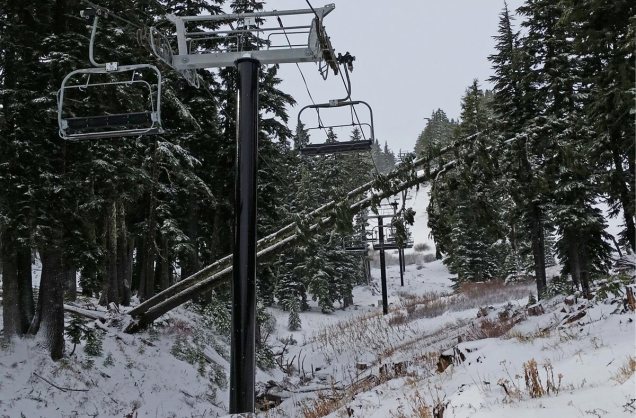
  • Mt. Hood Meadows updates skiers on the windstorm that sent two hundred-foot hemlock trees onto the Shooting Star Express the night of November 17th.
  • Vail Resorts announces $100 million in capital improvements across its mountains for 2016/17 including replacement of the last major fixed-grip lift on Vail Mountain.  The new Sun Up Lift #17 will be a detachable quad, manufacturer unknown.
  • SkyTrac splices the Humphrey’s Peak Quad at Arizona Snowbowl.
  • The latest from Sugarloaf on the new King Pine.  An apparent Doppelmayr delay will push opening until late-December. Luckily (or unluckily) there’s no snow anyways.
  • Utah’s new ski resort, Cherry Peak, announces a December 21st debut with two lifts.
  • Doppelmayr’s 10th  3S gondola, the Penkenbahn, is ready to go.
  • A nonprofit ski area in Ontario that’s been unable to operate its quad chair since 2011 due to a 2006 Doppelmayr service bulletin hopes to crowdfund $80,000 for repairs.
  • West Mountain celebrates their new lift with fireworks rather than skiing and already has the drive terminal up for another new-used lift next summer.

Lift Profile: Vail’s Gondola One

Riding Gondola One to Vail Village.

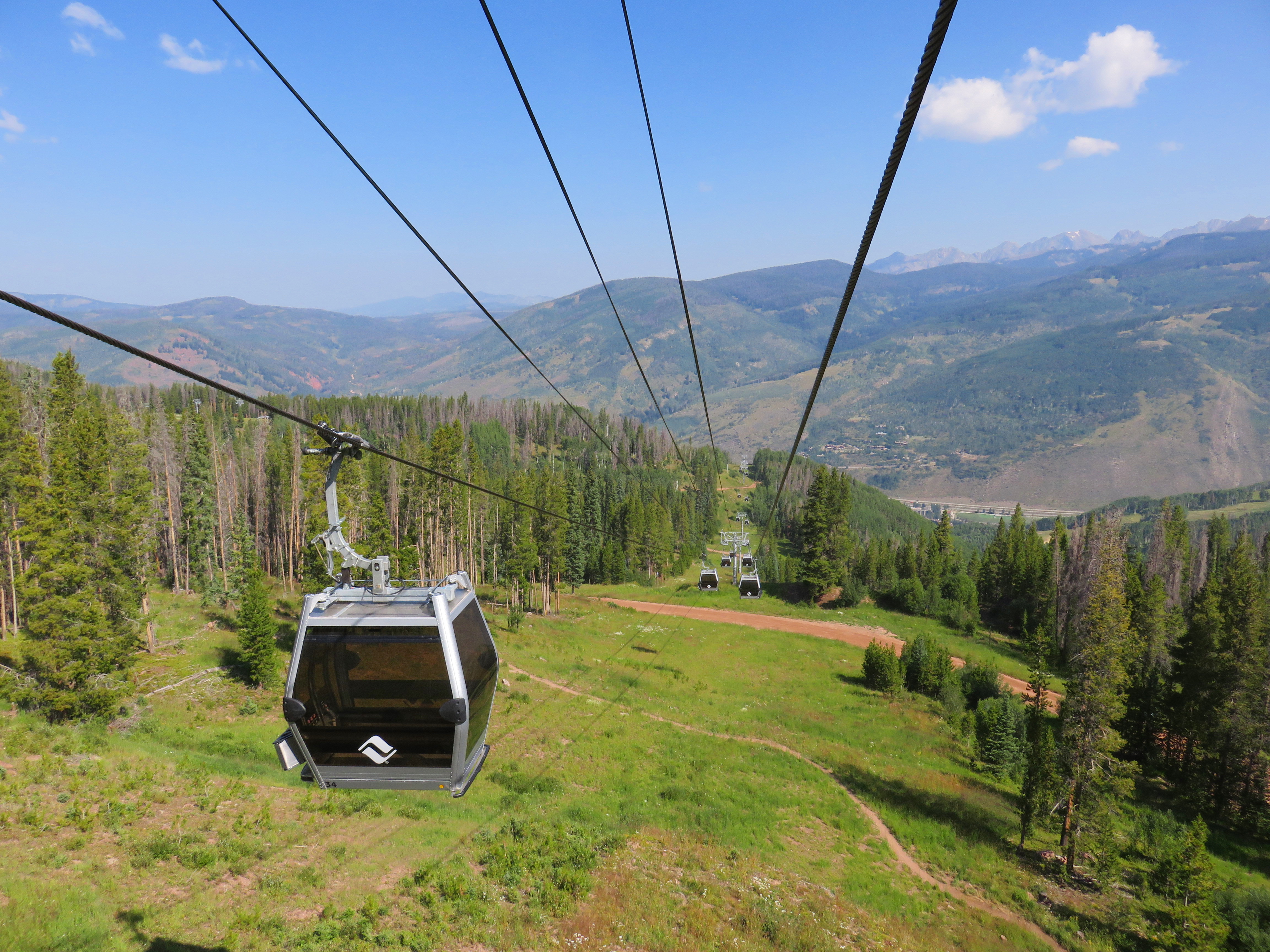
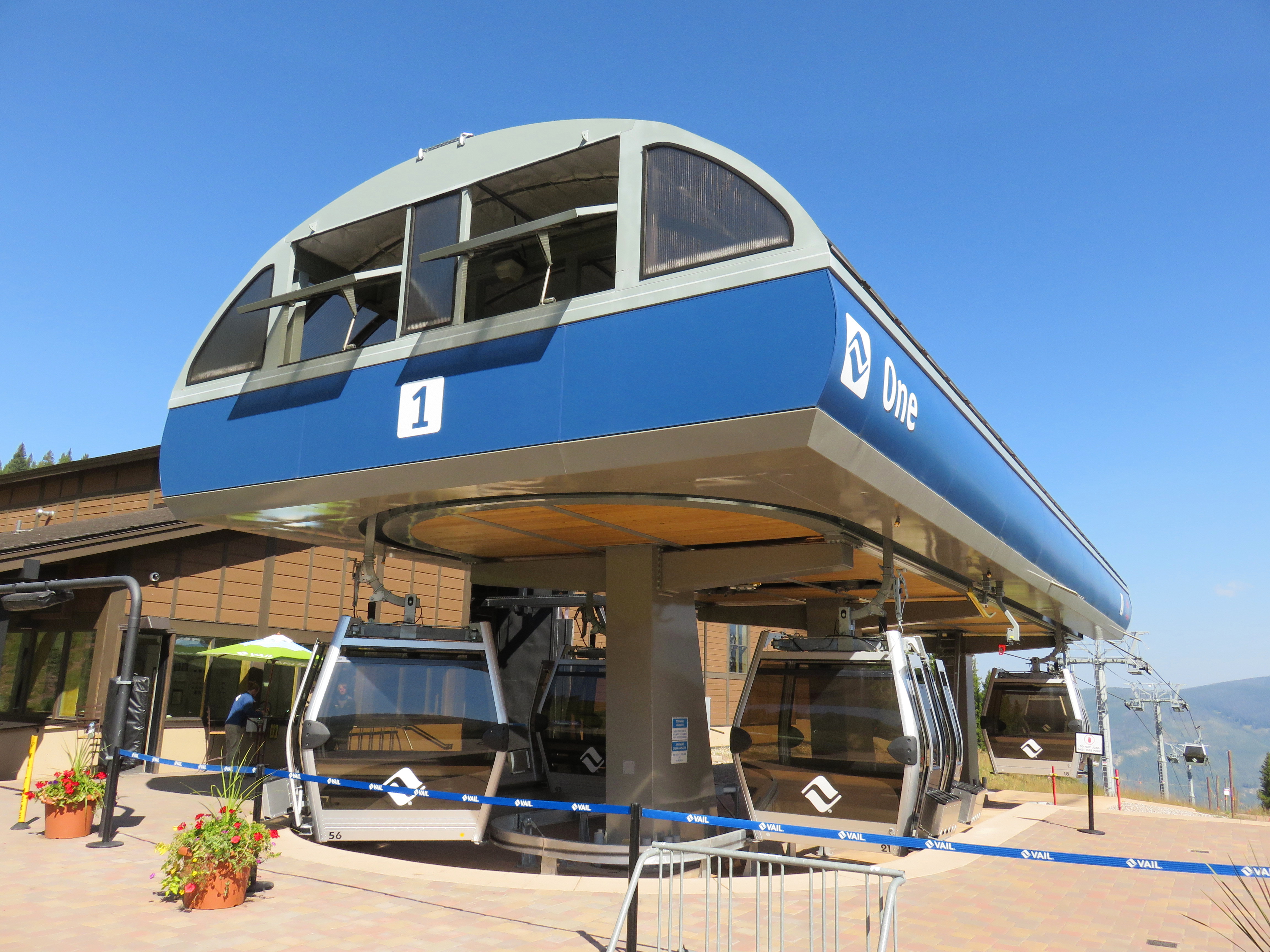
When Vail opened the 10-passenger Gondola One in 2012, it marked the return of gondola service to Vail Village for the first time since 1976.  Gondola One is named after the original Bell gondola at Vail, which opened fifty years earlier in 1962.  After a de-ropement on that gondola the Lionshead gondola that killed four, various chairlifts served Vail Village for the next thirty years.  Gondola One replaced the Vista Bahn, one of Vail’s original detachable quads from 1985.  The Vista Bahn was a beast of a lift – over 9,000 feet long with 216 bubble quad chairs that could move 2,650 skiers per hour to the heart of Vail Mountain.  By 2011, the Vista Bahn had reached the end of its useful life and needed replacement.

The bottom terminal is located in the heart of Vail Village and has a spacious loading area.
The Mid-Vail station houses the drive and cabin parking.

Gondola One is an impressive upgrade, full of modern features and an example of how the gondola is staging a comeback.  Built by Leitner-Poma, it has 120 10-passenger Sigma Diamond cabins with heated seats, LED lighting and Wi-Fi.  Cabin 50 is painted gold to celebrate Vail’s 50th anniversary which was celebrated the year it opened.  Exterior ski racks on the cabins have space for ten pairs of skis or six snowboards and bikes can fit inside the cabins in the summer.

Continue reading

Checking Out Vail’s New Lift 2

IMG_3482
New towers with old tower tubes.

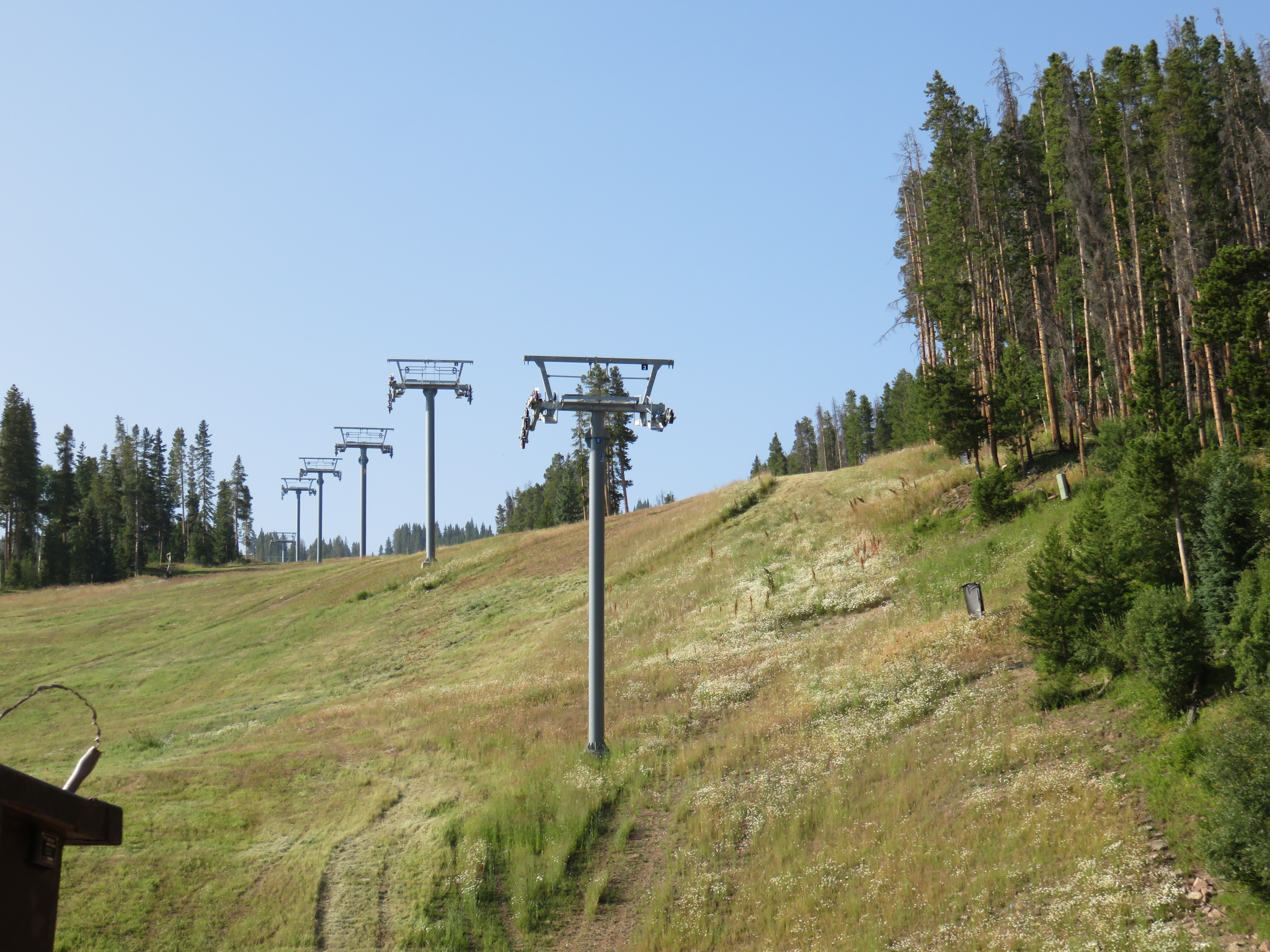
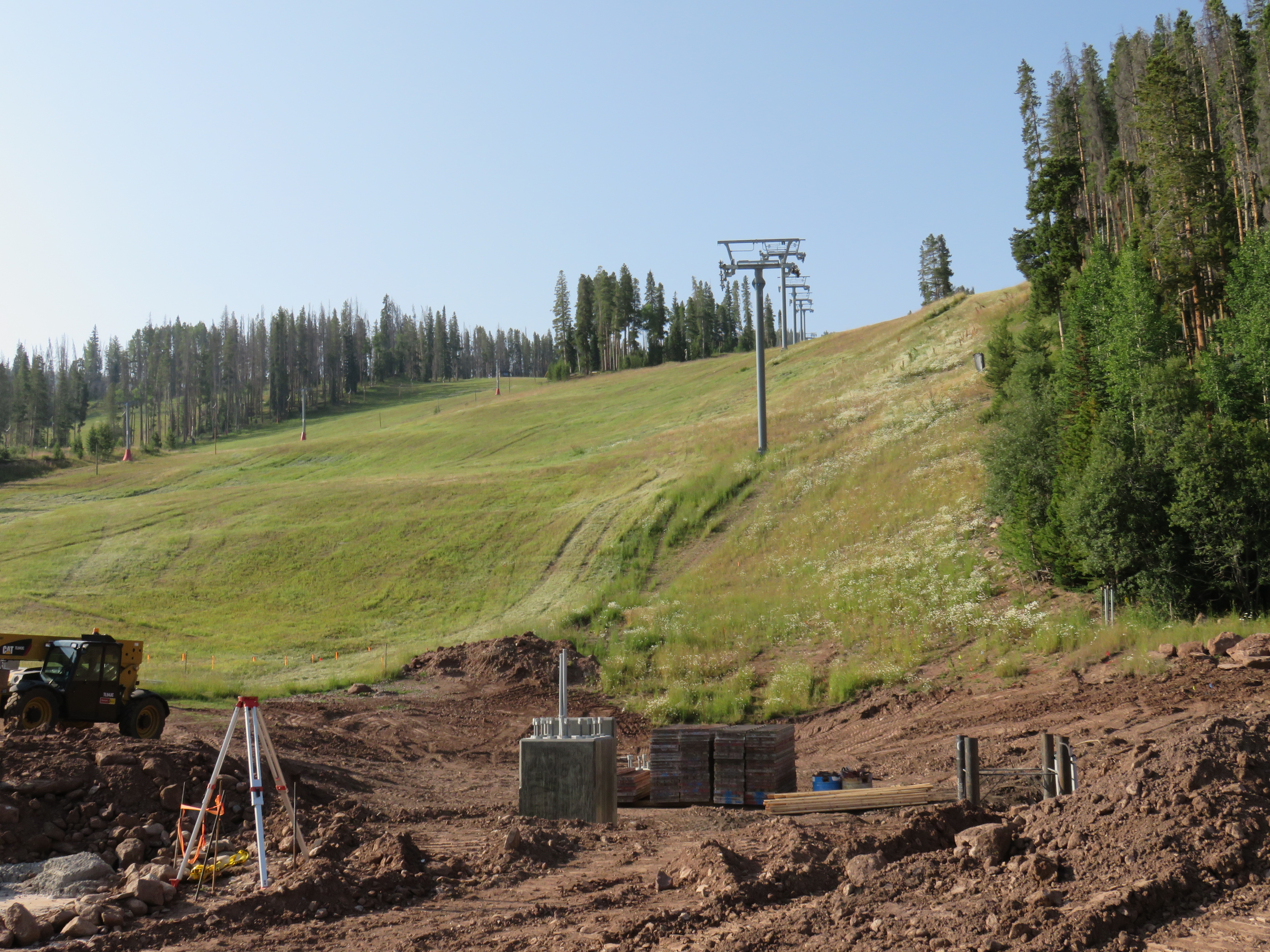
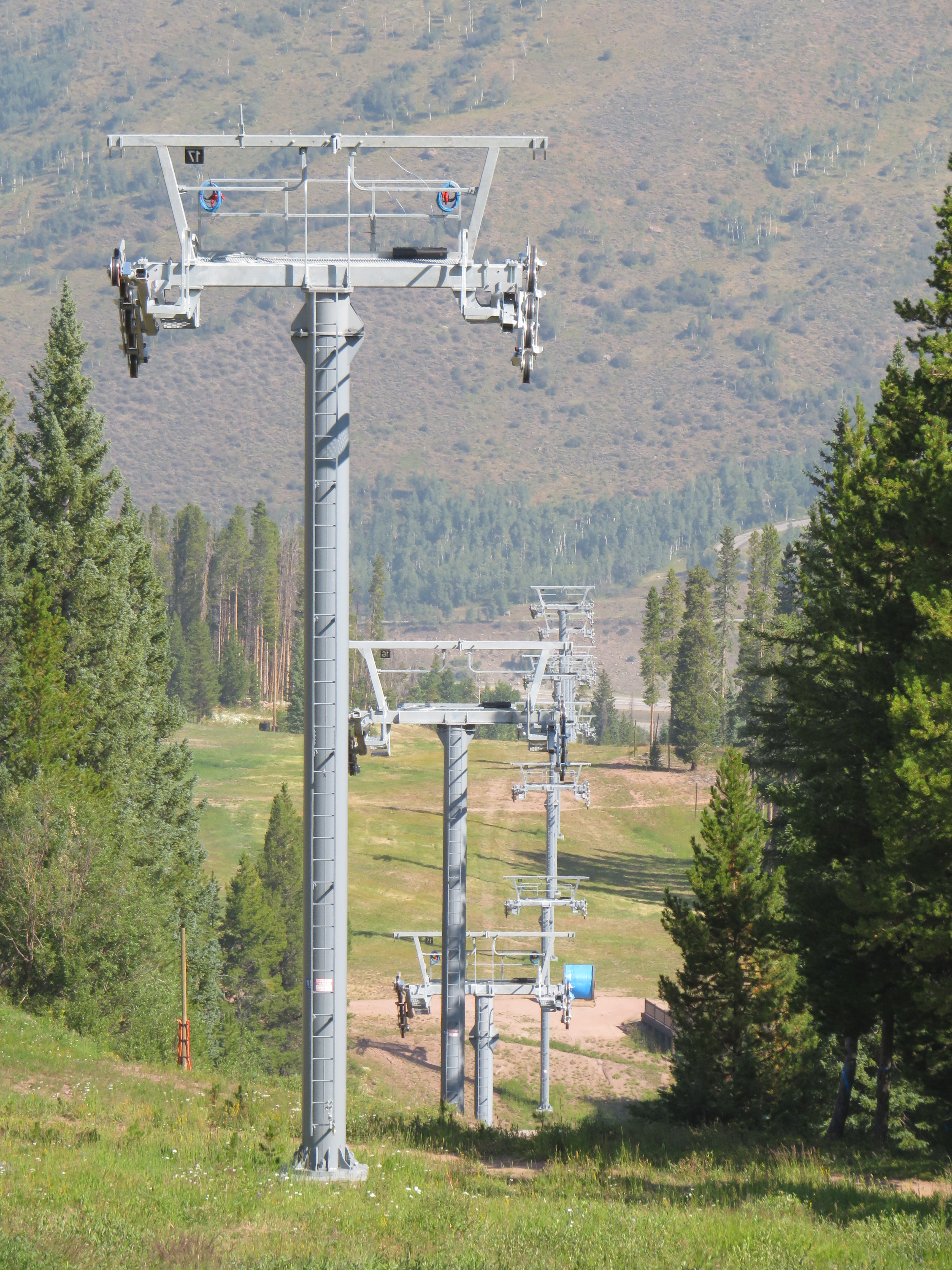
Vail Resorts is in the midst of a major program at its four Colorado resorts to replace first-generation detachable quads with new six packs and gondolas.  Up for a refresh this summer is Chair 2 at Vail, the Avanti Express.  The 1989 detachable quad is being replaced with a Doppelmayr six-pack.  This follows the replacement of the Vista Bahn with a Leitner-Poma 10-passenger gondola and the Mountaintop Express with a Doppelmayr six-pack last summer.  Vail has been saving parts from these lifts to keep others of the same vintage going.  Lifts 7, 8, 11 and 21 are the only 1980s detachables left at Vail and will likely be replaced in the next few years.  Northwoods and Game Creek are the oldest two lifts of any kind left at Vail, dating back to 1985.

The bottom terminal will have a loading carpet.

The new 2 is in the same alignment as the old and re-uses its tower tubes.  New, wider crossarms were flown into place a few weeks ago with the exception of towers 24 and 25 at the summit.  Concrete work for both terminals is finished except for the loading carpet pit at the bottom terminal.  Steel for the terminals has been delivered.  New chairs are staged at the summit and the haul rope spool sits at tower 9.

IMG_3562
Middle portion of the line with the haul rope ready to go.

Continue reading

Vail Resorts to Add Lift Wait Times to EpicMix

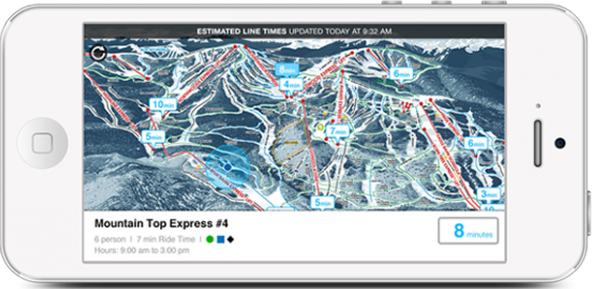
The EpicMix app will show lift wait times in minutes for major lifts at Vail's four Colorado resorts.
The EpicMix app will show lift wait times in minutes for major lifts at Vail’s four Colorado resorts.

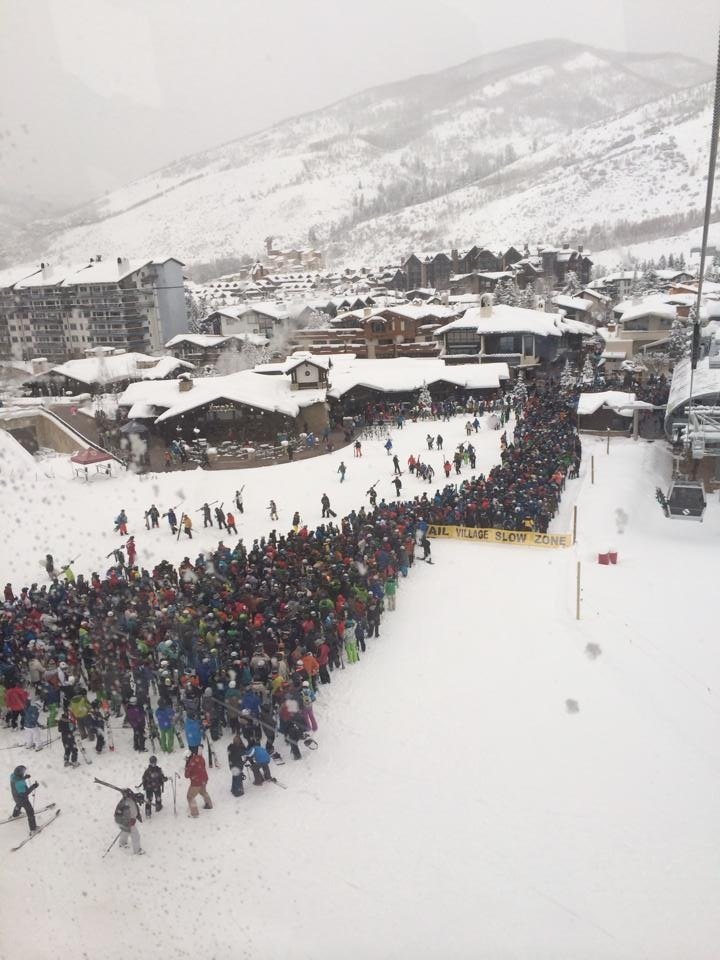
Last week, Vail Resorts announced their EpicMix mobile app will provide guests with live lift wait times for 55 lifts at Vail, Beaver Creek, Breckenridge and Keystone starting this winter.  Vail Resorts will use their app to track guests through lift lines to provide a crowd-sourced estimate called EpicMix Time.  The technology is currently being tested at the company’s Perisher resort in Australia.  Vail compares the system to Google’s Waze app, which crowd sources traffic and accident information for Google Maps.  The company plans to expand the technology in future years to all its resorts and other places where guests have to wait in line such as restaurants and rental shops.

Vail's Gondola One can move an impressive 3,600 skiers per hour but sometimes even that isn't enough.
Vail’s Gondola One can move an impressive 3,600 skiers per hour but sometimes even that isn’t enough.

Other resorts have tried to provide lift waiting times in the past.  For years, Whistler-Blackcomb has had lights on its lift status signs that indicate whether a lift line is less than 5 minutes, 5-15 minutes, or more than 15 minutes.  I suspect Whistler’s system is powered by lift operators calling a dispatcher which is a less than perfect solution.  Vail’s technology will be much more accurate and timely.

Continue reading

Top Ten Biggest Lifts in North America by VTFH

Vertical transport feet per hour (VTFH) is the best way to measure how lifts move people up mountains.  VTFH combines hourly capacity and vertical rise into one number, usually measured in millions.  Ski Area Management uses this metric each fall when they look at how good of a year it was for the lift-building business.

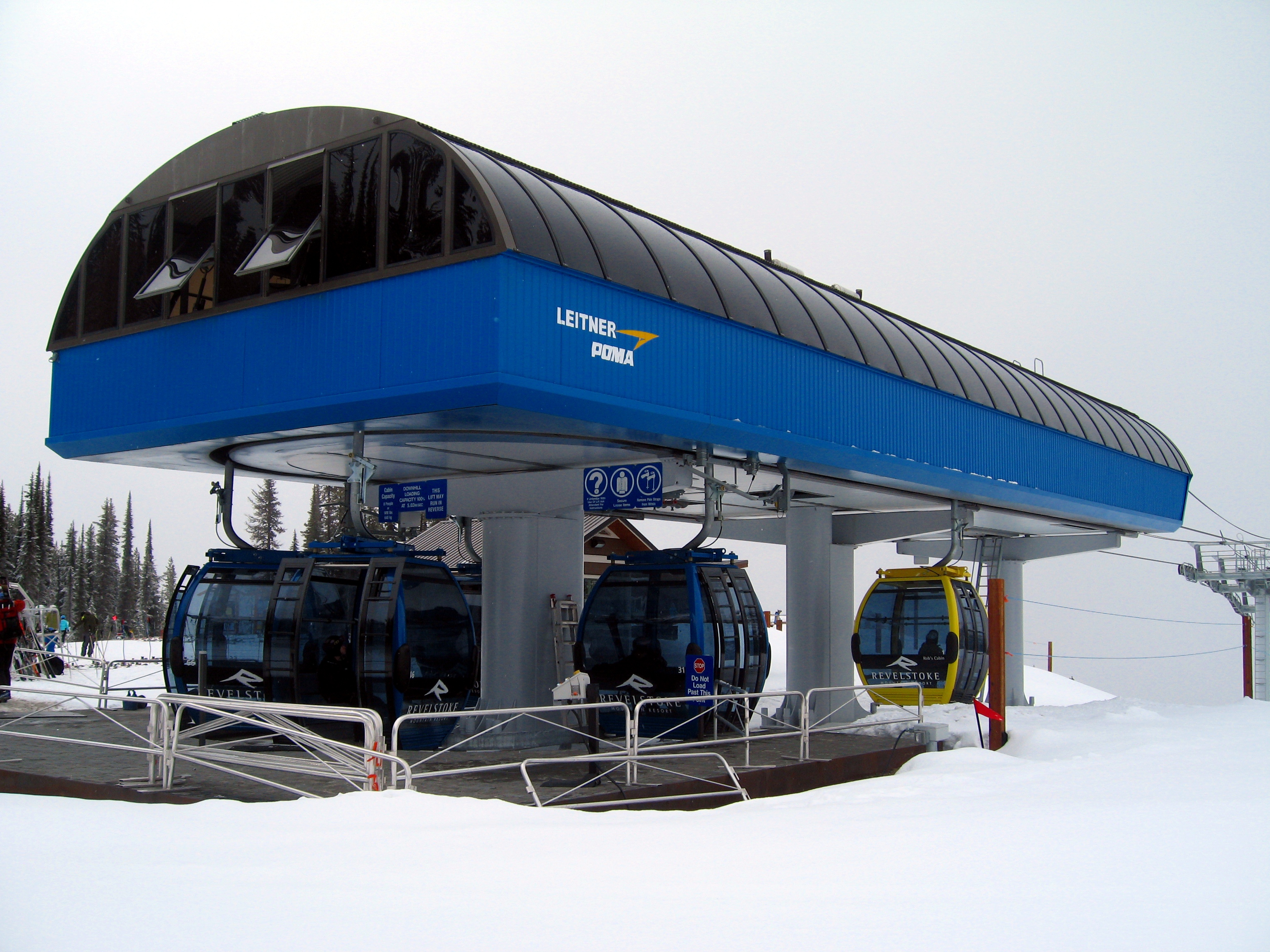
The second stage of Revelstoke's Revelation Gondola has a VTFH of over 8 million, the highest in North America.
The second stage of Revelstoke’s Revelation Gondola has a VTFH of over 8 million, the highest in North America.

For a lift to score big it has to have a high hourly capacity (think lots of carriers, high speed) and large vertical rise (think big slope length with many towers.)  The Jackson Hole tram has a huge vertical (over 4,000′) but very low capacity so its VTFH is only 2,654,600 – not even in the top 400.  The Peak 2 Peak Gondola has a huge capacity but only rises 119 feet for a dismal VTFH of 243,950.  There are 49 lifts in the US and Canada that move enough people high enough to achieve a VTFH over five million.  Below are the top ten.

1. Revelation Gondola Stage II, Revelstoke Mountain Resort, British Columbia

2007 Leitner-Poma 8-passenger gondola

2,952′ vertical x 2,800 passengers per hour = 8,265,600 VTFH

2. Gold Coast Funitel, Squaw Valley, California

1998 Garaventa CTEC 28-passenger funitel

2,000′ vertical x 4,032 passengers per hour = 8,064,000 VTFH

3. Heavenly Gondola, Heavenly Mountain Resort, California

2000 Doppelmayr 8-passenger gondola

2,874′ vertical x 2,800 passengers per hour = 8,047,200 VTFH

4. Gondola One, Vail Mountain, Colorado

2012 Leitner-Poma 10-passenger gondola

1,996′ vertical x 3,600 passengers per hour = 7,185,600 VTFH

5. Centennial Express, Beaver Creek Resort, Colorado

2014 Doppelmayr 6/10 chondola combination lift

2,102′ vertical x 3,400 passengers per hour = 7,146,800 VTFH

Continue reading

Up and Over Lifts

What if you could build two lifts for the price of one longer lift?  A handful of ski areas have done it with “up and over” lifts.  With this setup, riders load at each end and unload at a ridgetop mid-station.   There are obvious cost advantages but also limited locations where such a lift makes sense.  Due to multiple load/unload areas more stops and slows can occur.  Another disadvantage is that the entire system has to run even if only one side is open.  Most up and over lifts are located in the Pacific Northwest.

Ray's lift at Sundance, UT.
Ray’s lift at Sundance, UT.

Robert Redford’s Sundance Resort built a CTEC up and over quad in 1995 to replace two lifts.  Skiers who load Ray’s Lift in the main village can unload at the Mont Mountain summit or continue down the other side to the base of the Arrowhead lift.  Guests can also load at this end to ride back up to the mid-station.  Ray’s lift is a beast – depending on the season it has eight different load/unload points, five lift shacks with controls and 33 towers.

Stevens Pass considers its Double Diamond/Southern Cross system as two separate lifts.  Skiers load at both ends and unload on two ramps at the summit which are monitored by one operator.  The front side portion, called Double Diamond, is short and steep while the rest of the lift is on the Mill Valley side and dubbed Southern Cross.  This system was also built by CTEC in 1987.  The combined lift is 5,700 feet long and moves 1,200 people per hour up each side.

One operator oversees two unloading ramps from high above at Stevens Pass.

Perhaps the most famous of the up and over lifts is the Dinosaur at Snoqualmie’s Hyak.  It was built by Murray-Latta in 1965.  Over 5,000 feet long, it started at the base of Hyak, crossed the summit and continued down into Hidden Valley.  This one lift accessed 100% of the resort’s terrain on both sides of Mt. Hyak.  The lift had a rollback in 1971 that injured dozens of skiers.  The Dinosaur continued to run until 1988.  When it closed, large portions of Hyak became abandoned.  The Dinosaur sat idle until was removed in 2009 and replaced with two used Riblet lifts, a triple on the front side and a double in Hidden Valley.

Continue reading