Pomerelle Mountain near Twin Falls, Idaho announced they will replace their 39-year old SLI double chair with a new SkyTrac triple. This is SkyTrac’s only publicly announced project for this summer. Apparently they have another contract for a lift in Arizona. Leave a comment if you know where.
Saddleback, Maine has listed their Rangeley lift for sale for $350,000. They had previously listed just the drive terminal for $200k.
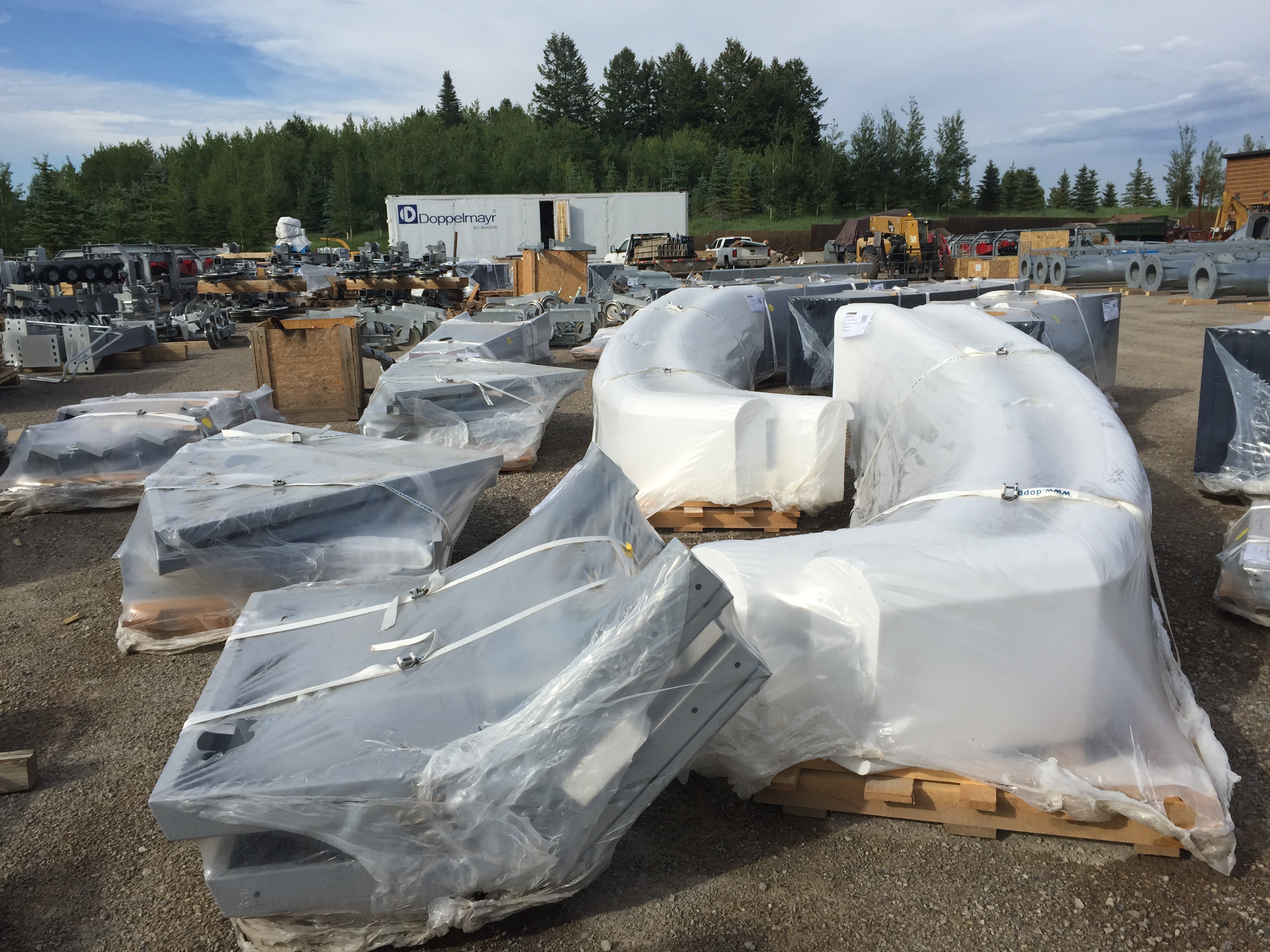
Sugarloaf removes the damaged drive terminal for the King Pine lift which rolled back in March to make way for a new Doppelmayr terminal.
Group wants to reopen Mt. Ascutney in Vermont. It’s tough to run a ski resort with no lifts, however. The mountain’s high speed quad was sold to Crotched Mountain and other lifts went to Pat’s Peak.
North America’s top ten longest lifts are all gondolas or aerial tramways and only half of them are directly used for skiing. Silver Mountain’s Gondola is number one although it is no longer the world’s longest. Since 2014, that title has belonged to the Bursa Uludag Gondola in Turkey which is a ridiculous 28,871 feet. This list does not include systems which have multiple haul ropes, such as Blackcomb’s Excalibur, which I consider to be two separate gondolas.
Silver Mountain’s VonRoll gondola was the world’s longest when it opened in 1990.
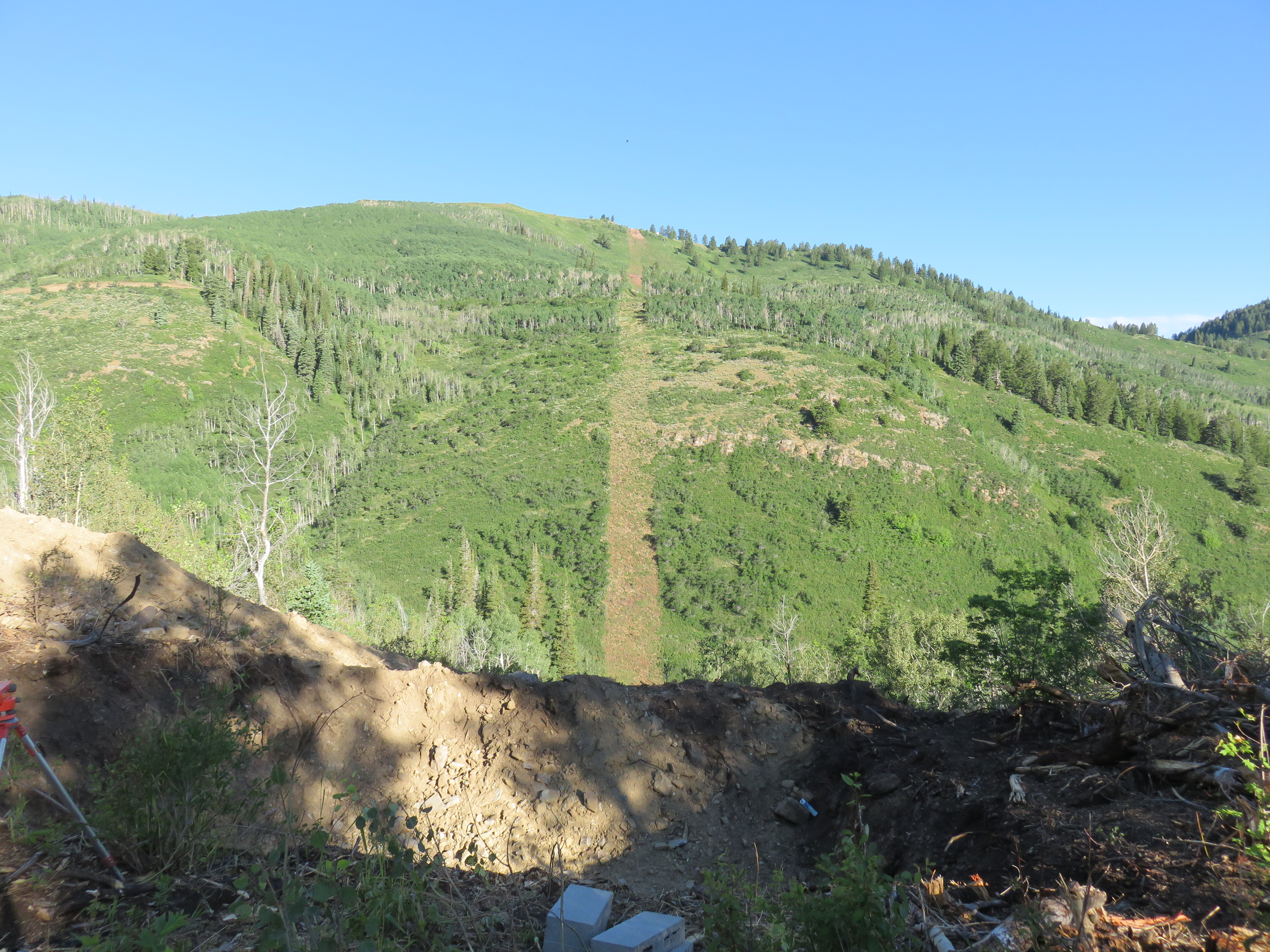
It’s not hard to figure out where the new gondola goes. This is looking down from the top of Crescent.
I found myself near Park City this week and had to check out all the construction creating Utah’s largest ski resort. It’s one thing to read Vail Resorts’ press releases touting $50 million in improvements but it is quite another to see hundreds of workers scrambling to complete a long list of projects spread over 7,300 acres. This post will focus on what is perhaps the most exciting part – the new Pinecone Gondola that will link Park City to Canyons.
PCMR terminal and Snow Hut Lodge under construction.
The 8,200′ long gondola starts adjacent to Park City’s Silverlode six-pack where a new Snow Hut lodge is also being built. The terminal and first two tower footings have already been poured. From this point, the line crosses over a modest ridge and descends before beginning the climb to Canyons in earnest. There is a break halfway up Pinecone Ridge where the liftline moderates before a steep section to the summit. Most of the holes for the towers in this portion have been dug including the two breakover towers just before the ridge-top mid-station. I was surprised at how sharp the midstation’s angle will be – around 30 degrees.
Germany’s highest mountain is getting a new tram. Photo credit: Bayerische Zugspitzbahn Bergbahn AG
Just weeks after opening two record-breaking aerial tramways on the Italian side of Mont Blanc, the Doppelmayr/Garaventa Group has begun construction on an even more remarkable tramway to Germany’s highest summit. Replacing a 1963 jig-back tram, the new 120-passenger Eibsee Cable Car on the Zugspitze will leave a base terminal at 3,337 feet and top out at 9,718 feet with only one tower in between. Two other aerial tramways that reach the same summit, the Tyrolean Zugspitzebahn and the Zugspitze Gletcherbahn, will remain unchanged.
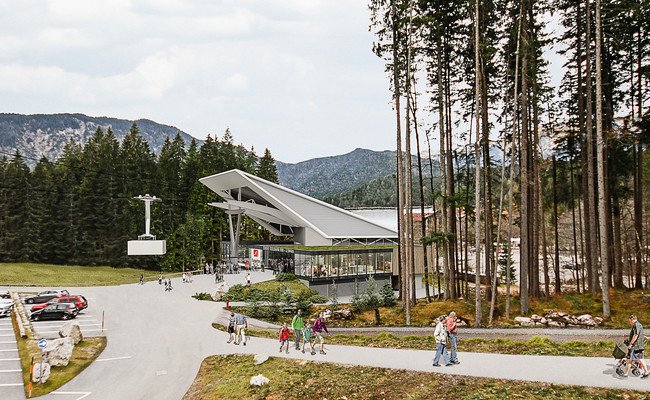
Summer rendering of the new bottom terminal building. Photo credit: Bayerische Zugspitzbahn Bergbahn AG
The new cable car will maintain the old version’s record for the largest vertical rise of a single tramway span at 6,381 feet, down slightly from 6,398 feet. Its lone tower will be the tallest in the world at 416 feet – 43 feet taller than the current tallest on Austria’s Gletscherbahn Kaprun III. The new cableway will also have the longest unsupported span at 10,541 feet, breaking the current record of 9,941 feet on the Peak 2 Peak Gondola’s middle span.
Below is a list of the top ten steepest lifts in the US and Canada. I calculated these using a ratio of slope length to vertical rise using data from the manufacturers. To give you some perspective, Snowbasin’s tram has the lowest ratio at 1.11 while Whistler’s Peak 2 Peak has the highest ratio at 120. The average lift is 4.65, meaning 4.65 feet of length to rise one vertical foot, on average. Only three of the top ten are chairlifts and only five serve ski-able terrain.
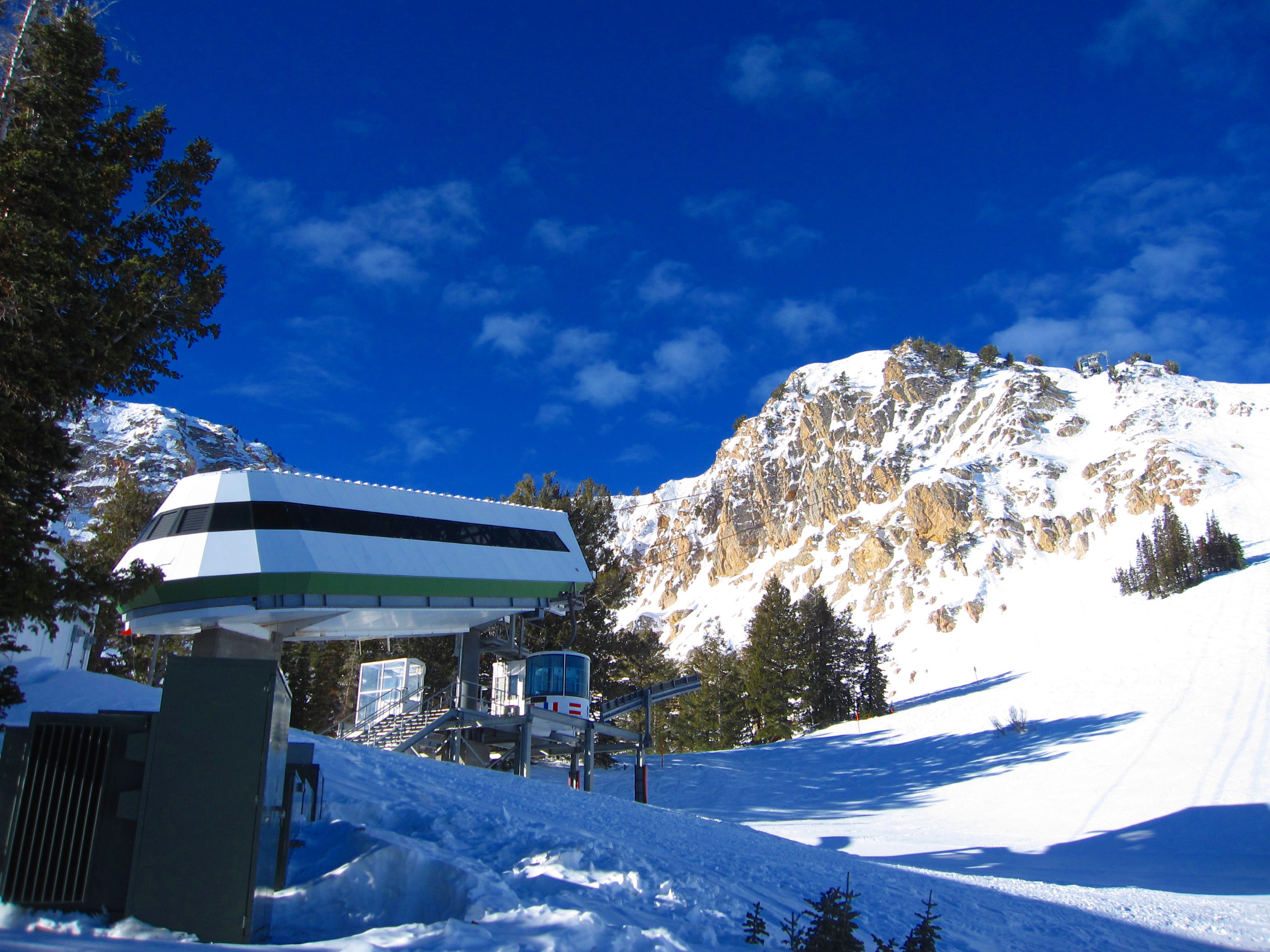
Snowbasin’s Mt. Allen Tram, built for the 2002 Olympics, is the steepest lift in North America.
1,165′ slope length x 1,047′ vertical rise = 1.11 length to vertical ratio
edit: Ski Area Management’s lift construction survey had the incorrect vertical for this lift. It is actually 510′ making the Mt. Allen Tram about half as steep as posted above.
The Couloir Express is on the upper right of the White Pass trail map.
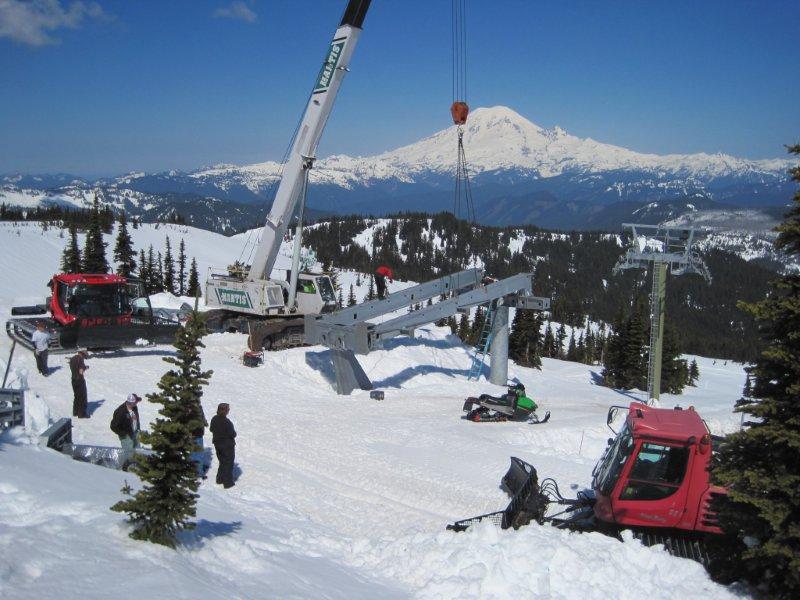
Located on the edge of Mt. Rainier National Park in the Washington Cascades, White Pass Ski Area has been operating continuously since 1956. Until 2010, the entire ski area could be accessed from a single lift with a 1,500 foot vertical rise. An ambitious expansion opened on December 4, 2010, doubling the size of the resort 33 years after it was first proposed to the Forest Service. The 767-acre Paradise Basin addition includes two new Doppelmayr quads called Basin and Couloir Express as well as a new lodge and trails. Both lifts were built mostly over snow to avoid road building in this former wilderness area. Construction took place over two springs, taking a break for the summer and winter of 2009-10.
Building the Couloir Express over snow with a unique construction schedule due to environmental concerns. Photo credit: White Pass Ski Area
The Couloir Express is the last Uni-GS model detachable that Doppelmayr built. Designed specifically for North America, 44 GS detachable quads and six packs were built between 2003 and 2010. Some resorts like Beaver Creek continued to order the Austrian-designed Uni-G so the GS never fully caught on. Presumably it was phased out in 2010 to simplify production in a market with limited demand.
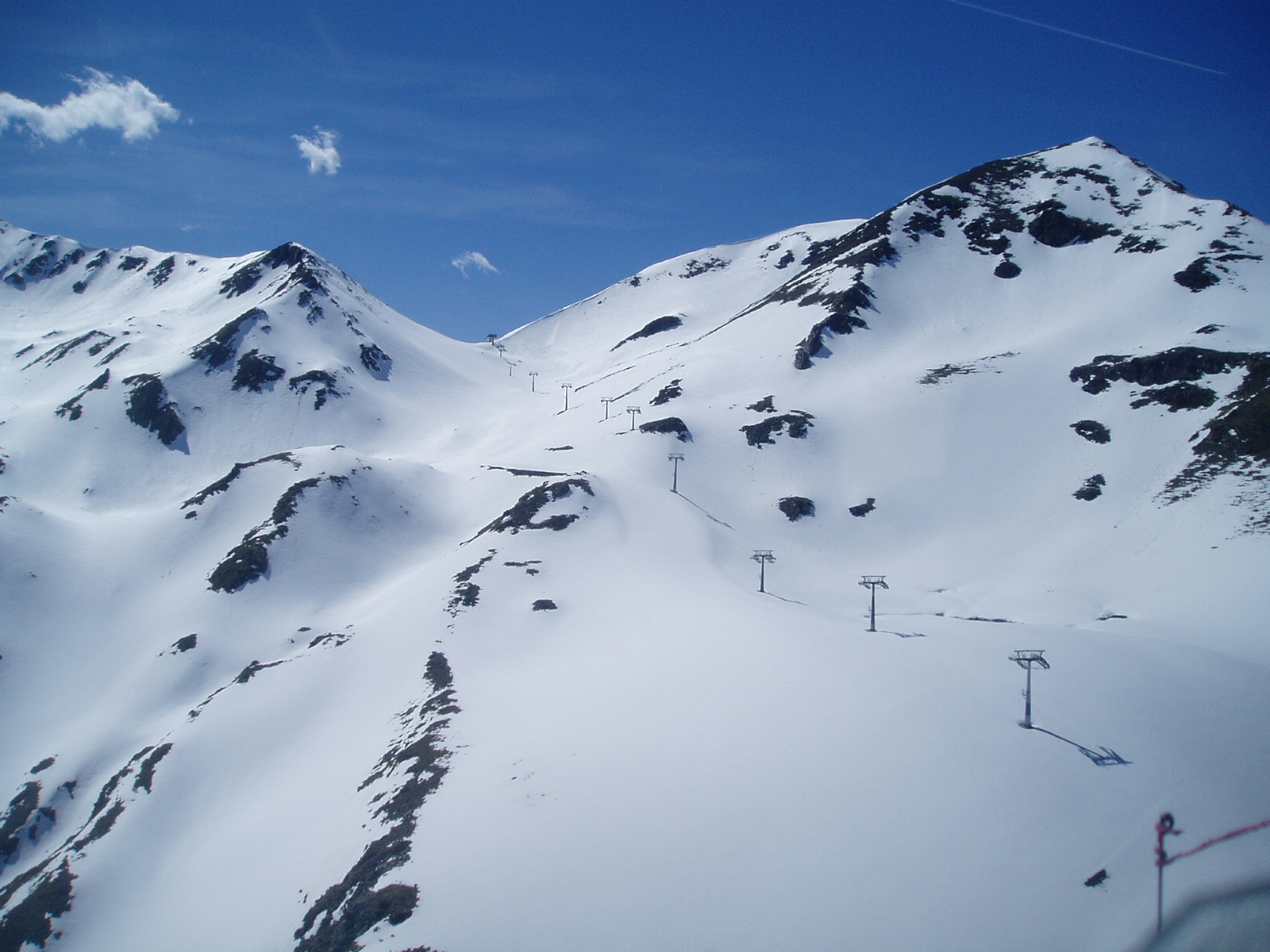
Abandoned towers for a Doppelmayr detachable quad at the Vall Fosca Mountain Resort in Spain. Photo Credit: Alfonso Pedrero Muñoz on Panoramio.
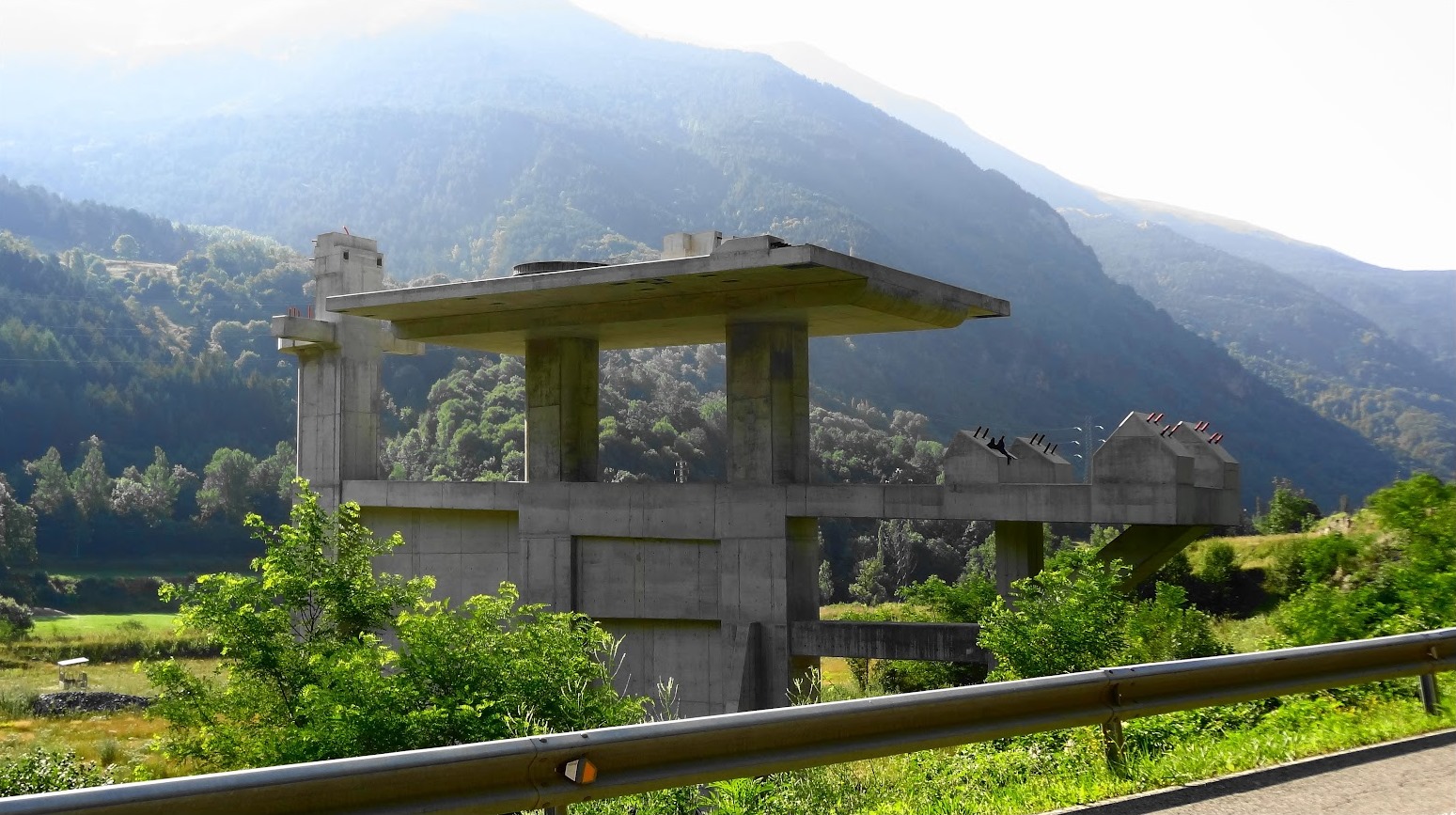
There are closed ski resorts with old, abandoned lifts rotting away all over the world. But a remote mountain in Spain takes the lost ski area to a new level with tens of millions of dollars of half-completed lifts (including a 3S gondola) that never opened. Doppelmayr partially built three lifts at the Vall Fosca Mountain Resort and abandoned them after the developer went bankrupt at the height of the 2008 financial crisis. It’s a fascinating story of boom and bust all too common in the ski industry.
An abandoned 3S gondola terminal on the side of a road at the Vall Fosca Mountain Resort in Spain. Photo credit.
Construction began back in 2006 and the resort was scheduled to open for the 2008-09 ski season. The plan included a €230 million pedestrian village with 965 homes at 4,000 feet. A 3S gondola was to connect the village to a new ski resort with four chairlifts. At the time, only Val d’Isere and Kitzbuhel had Doppelmayr’s tri-cable gondola technology and Vall Fosca was destined to have the first 3S outside of the Alps. That title ended up going to Whistler-Blackcomb.



 Lift Blog