
- Crystal Mountain owner John Kircher revives the idea of a second gondola to Campbell Basin, which would be around 7,800′ long and closely follow the one time path of an SLI double chair.
- Vermont shuts down the Hermitage Club for a third time as more lawsuits are filed against the business and its founder. One by a food service company argues, “The dire financial circumstances facing the defendants compel the plaintiff to press forward with alacrity…the collectible assets of the defendants appear to be dwindling.”
- The New York City Economic Development Corporation is again studying a gondola to connect Lower Manhattan with a redeveloped Governors Island.
- With 2,400 cabins headed out the door this year alone, CWA is expanding its production capabilities in Switzerland. Photos from the factory floor show new cabins bound for Montana, Hawaii and more.
- Park City’s NPR station reports a chair slid into another chair on the Jupiter lift in January, resulting in an injury, three day closure and now litigation.
- Approval of Woodward Park City is upheld, paving the way for construction of a fixed-grip quad.
- The Forest Service tentatively approves Purgatory’s proposed Gelande high-speed lift.
- A real estate development now under construction includes money for reopening New York’s Big Tupper with up to five lifts.
- New owners at Owl’s Head, Quebec may spend up to $150 million on new lifts and other improvements. The mountain currently includes three 1980s-era detachables including the world’s first high-speed quad from Breckenridge.
- Lift construction season is here! Thanks to Carleton G. for these photos of Waterville Valley’s new LST T-Bar.


Instagram Tuesday: Bold
Every Tuesday, I feature my favorite Instagram photos from around the lift world.
Building a Bigger Big White
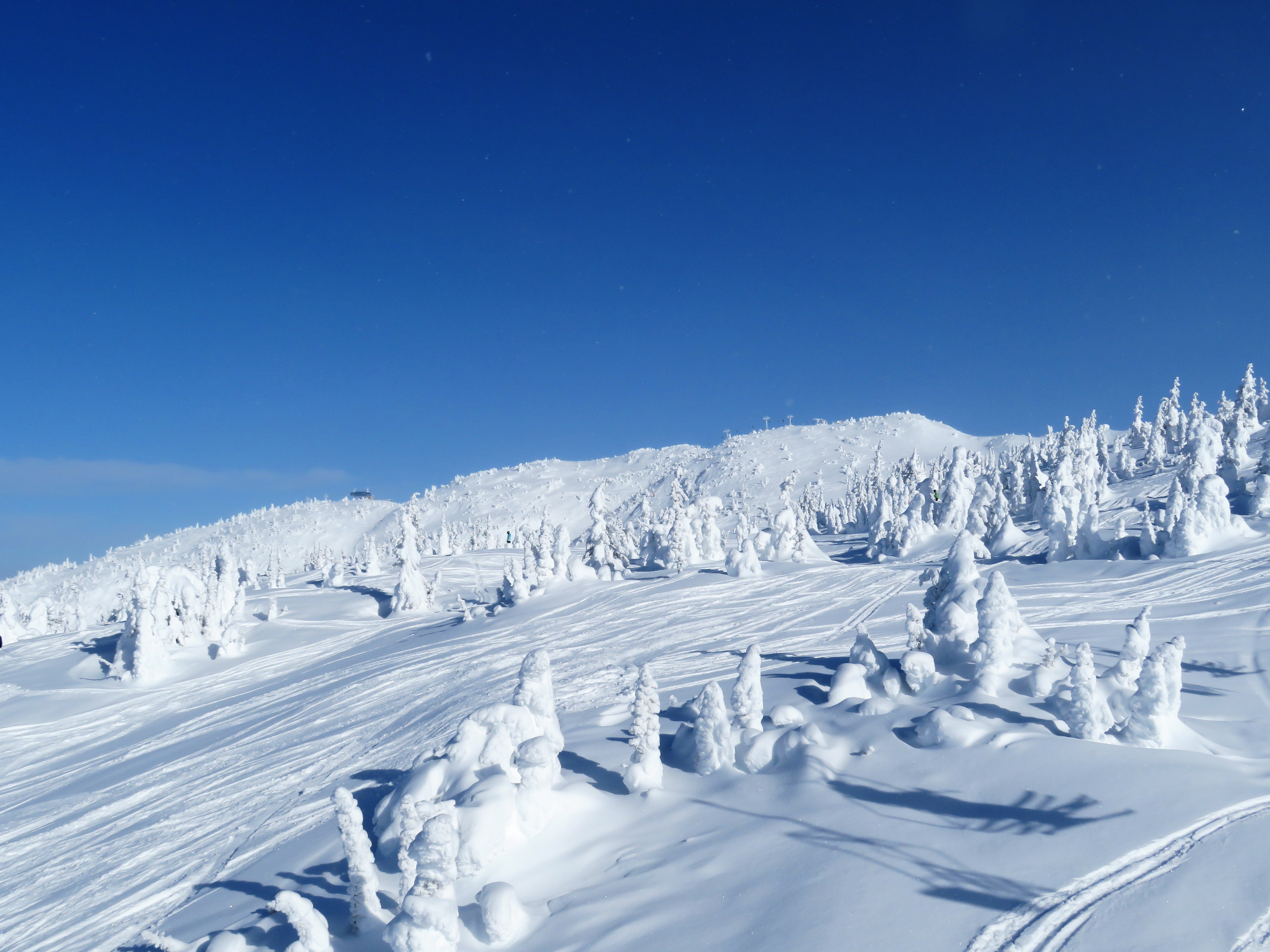
The Schumann Family is about to construct its twelfth new lift at Big White Ski Resort, the first lift addition in a dozen years here. Back in 1985, Australian Desmond Schumann bought the mountain out of receivership following his success at Mt. Hotham before acquiring nearby Silver Star to form Schumann Resorts Ltd. Back in the eighties, Big White was a sea of T-Bars and double chairs as primarily a day use area for nearby Kelowna. Fast forward to my first visit there in the 1990s and nearly every lift had been moved or replaced, with the eventual addition of a Leitner-Poma six-pack in 2006. Mr. Schumann died in 2012 and Big White and Silver Star went their separate ways with separate children. Today, the larger of the two is run by descendant Peter Plimmer and the last pre-Schumann-era lift will carry its final passengers on Sunday.

Now in its third-generation of family ownership, Big White has been working with Brent Harley & Associates of Whistler over the last 15 years on an ambitious master plan to guide development over the next many decades. It’s important to note that Canadian master plans tend to be aspirational and do not necessarily represent eventual reality. Whistler Blackcomb has its own big plan; Sun Peaks has one and so do unproven destinations such as Revelstoke and Valemount Glacier.

Part of the current Big White vision focuses on the Gem Lake area, which opened with a single 8,000’+ high-speed quad in 1996 that services approximately half of the entire resort. New lifts are eyed for either side of the current one to add more capacity and terrain. A much-needed mid-mountain infill lift is also planned for between Powder and Gem. As the first base area one encounters when driving from Kelowna, Gem Lake will continue to serve primarily as a base camp for locals. Two more lifts could rise on the west side of the highway for intermediate skiers and snowboarders.
News Roundup: Symphony
- Doppelmayr will bring D-Line to France for the first time this fall.
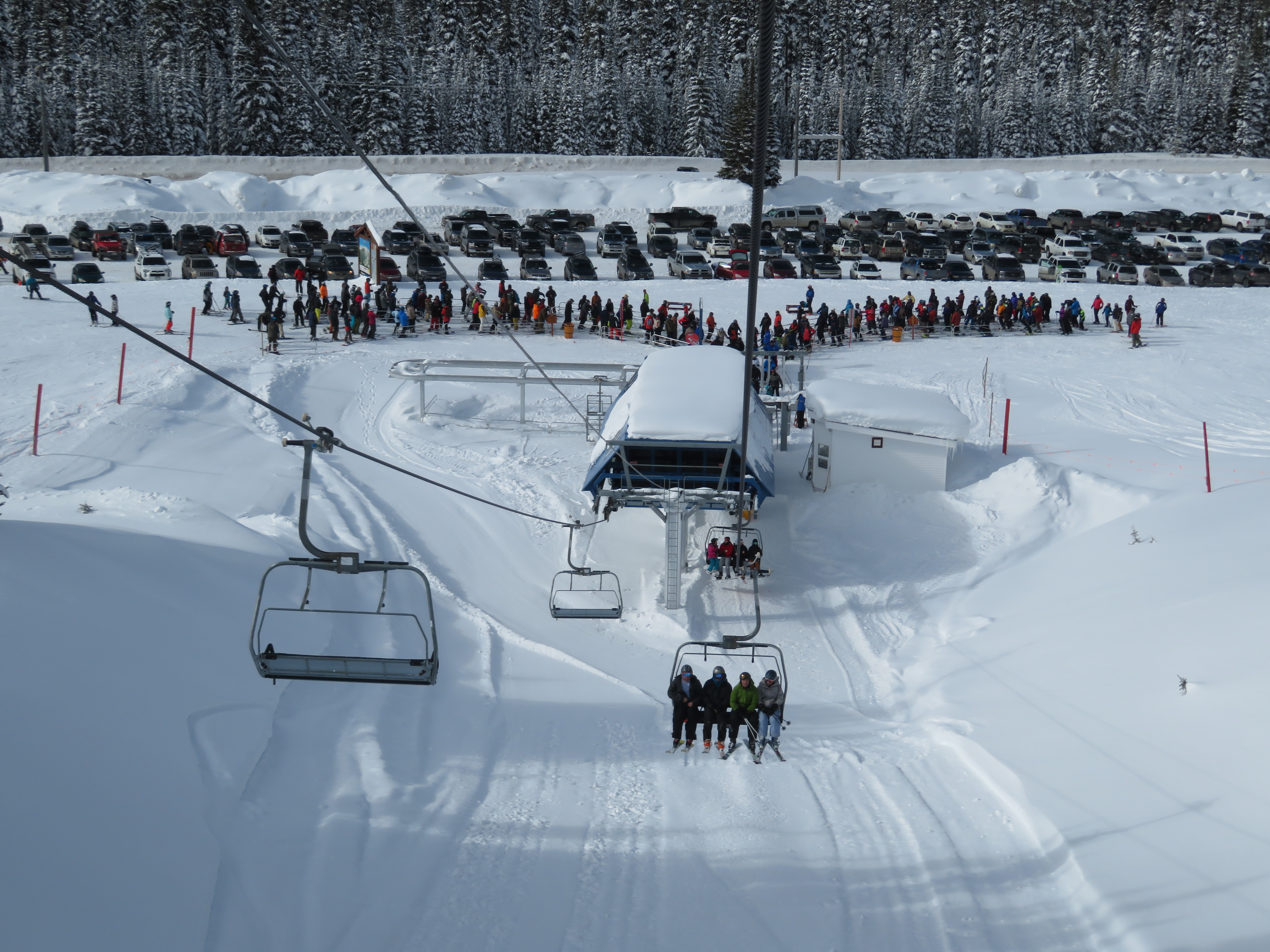
- A child is okay after falling from a Big White chairlift onto a busy road.
- Ski California to host its first Lift Maintenance and Operations Education Conference June 5-7 at Squaw Valley.
- After weathering a challenging season with a narrow profit, Sunlight considers building a truly new lift for the first time in half a century.
- An empty cabin falls from an early model Poma gondola in France, leading to a rope evacuation and significant media attention.
- Fatzer produces a 6.5 mile long, 60 mm wide rope for what may be the new longest monocable gondola, location unknown.
- Mt. Timothy, BC is “flat broke” and will likely close without public funding.
- Leitner delivers the first Symphony cabin for the world’s highest 3S by helicopter.
- The financially-challenged Hermitage Club closes for the season.
- Garaventa names a new CEO.
- A state economic development authority delays consideration of a $28 million loan guarantee for The Balsams.
Sun Peaks to Build New East Village Lift
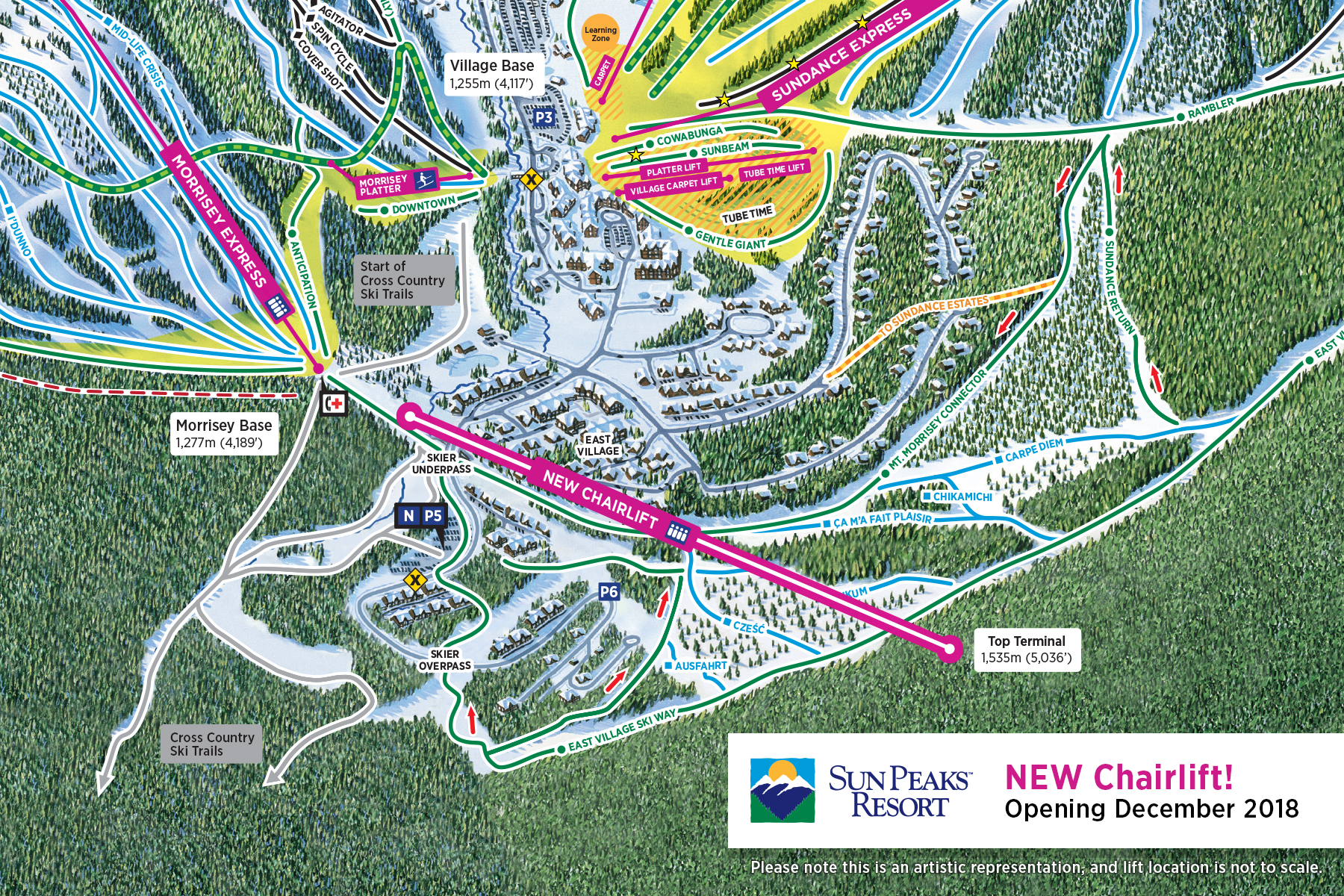
Canada’s second largest ski resort near Kamloops, British Columbia today unveiled plans for its tenth lift, a $3.1 million fixed-grip quad chair above the East Village. The new lift will complement Sun Peaks’ existing Morrisey Express with its bottom terminal located nearby. It will then cross the Sun Peaks road and climb over existing ski terrain with a top terminal above the East Village Ski Way. “This lift project is especially rewarding to announce today. Better access from the East Village is vital to our overall experience and future success,” said Darcy Alexander, Vice President and General Manager of Sun Peaks in an early morning press release. “The new lift is something we are really pleased to add to the mix for next winter and it will greatly enhance our industry leading ski-in ski-out design”
The specific run layout is currently in development but will see a green trail option to the village from the top of the lift consistent with all other resort lifts and a well-known element of the Sun Peaks ski experience. Additionally, the lift will provide improved access to some of the most underrated and underutilized ski terrain with family-friendly blue runs and pockets of glade skiing. New chairs will also be added this summer to the Sundance Express for a 30 percent increase in capacity as part of an overall $47 million capital plan for 2018. No manufacturer was named for the new quad but Sun Peaks is currently an all-Doppelmayr mountain and a wholly owned subsidiary of Nippon Cable, Doppelmayr’s longtime partner in Japan.
Instagram Tuesday: Turning
Every Tuesday, I feature my favorite Instagram photos from around the lift world.
Beech Mountain Adding Two Doppelmayr Quads
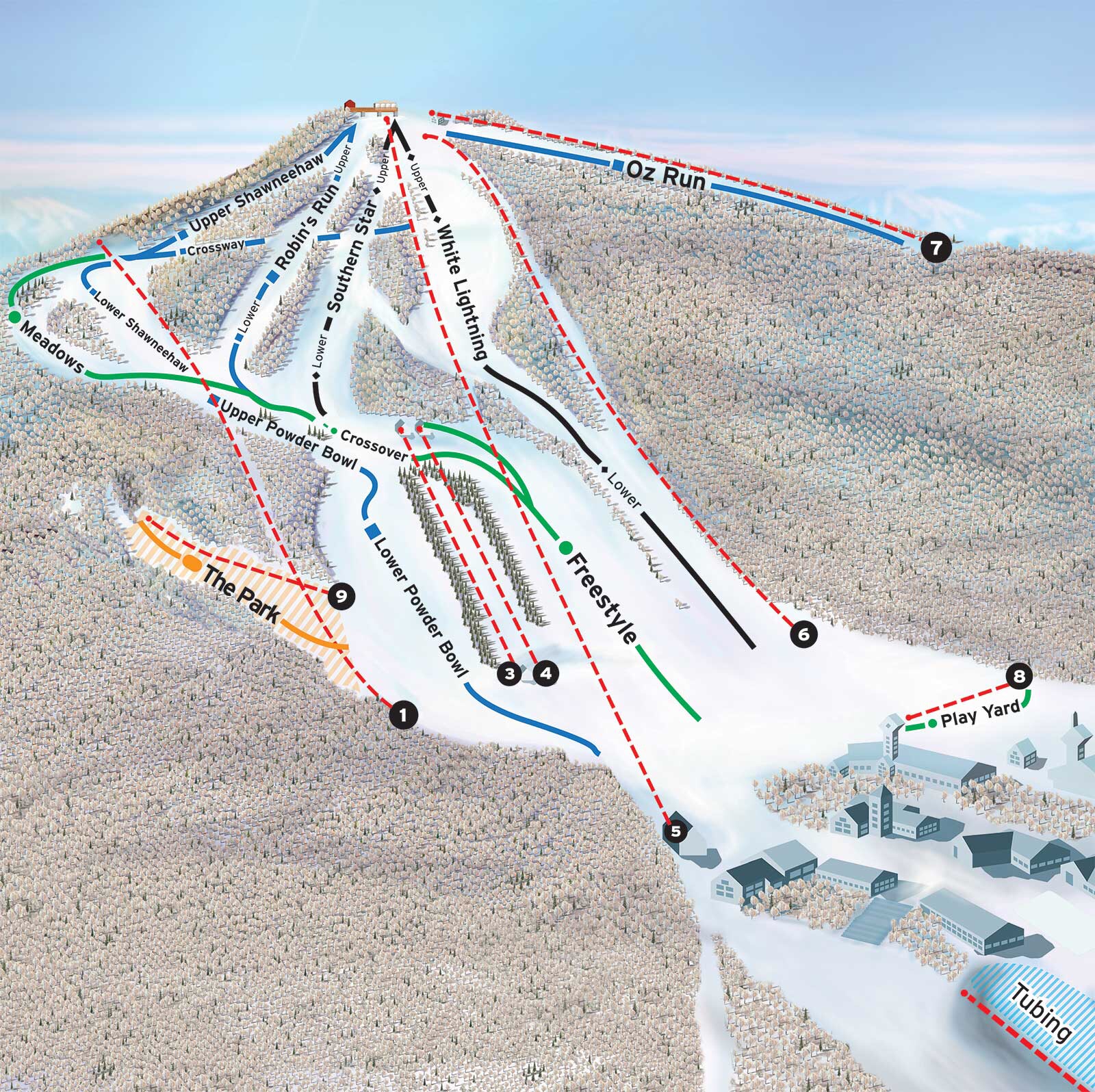
Beech Mountain, North Carolina will replace two of its workhorse chairlifts ahead of the 2018/2019 winter season as had been rumored for weeks. Lift 5, which ascends to the 5,506-foot summit and was originally built in 1987, is currently being disassembled in preparation for the installation of a new Doppelymayr fixed-grip quad. The new lift will include a loading conveyor to ensure safe boarding, higher travel speeds and shorter trip times. Lift 5 will now include 144 chairs with a 6.5 minute ride time accommodating 2,400 people per hour.
This marks only the second time in North American history that a fixed-grip chairlift will replace a detachable one, though there could be more in the near future. Sugarbush, Vermont swapped the 1990 Green Mountain Express for a fixed quad in 1995, though the route went detachable again in 2002. Willamette Pass, Oregon’s detachable six-pack is currently up for sale, eyed to be replaced with a fixed-grip lift that would be more affordable to operate. A used T-Bar may also rise this summer at Ascutney, Vermont on the site of a former high-speed quad. If Tamarack, Idaho is ever able to rebuild the Wildwood Express, it could be another detachable-turned-fixed-grip scenario.
Back to Beech, Lift 6, currently a double chair with parts from Goforth Brothers, Hall and Doppelmayr, will be replaced with another Doppelmayr fixed-grip quad. This one will feature 106 chairs and a 6.5 minute travel time with a capacity of 2,000 people per hour. Both quad lifts will feature footrests, upholstered seating and back rests. Guests can now expect to reach the mountain’s 5,506-foot summit with easy on-and-off loading, comfortable seating, and a more efficient layout to eliminate congestion.
As LiftDigital Spreads, Are We Viewing the Future?
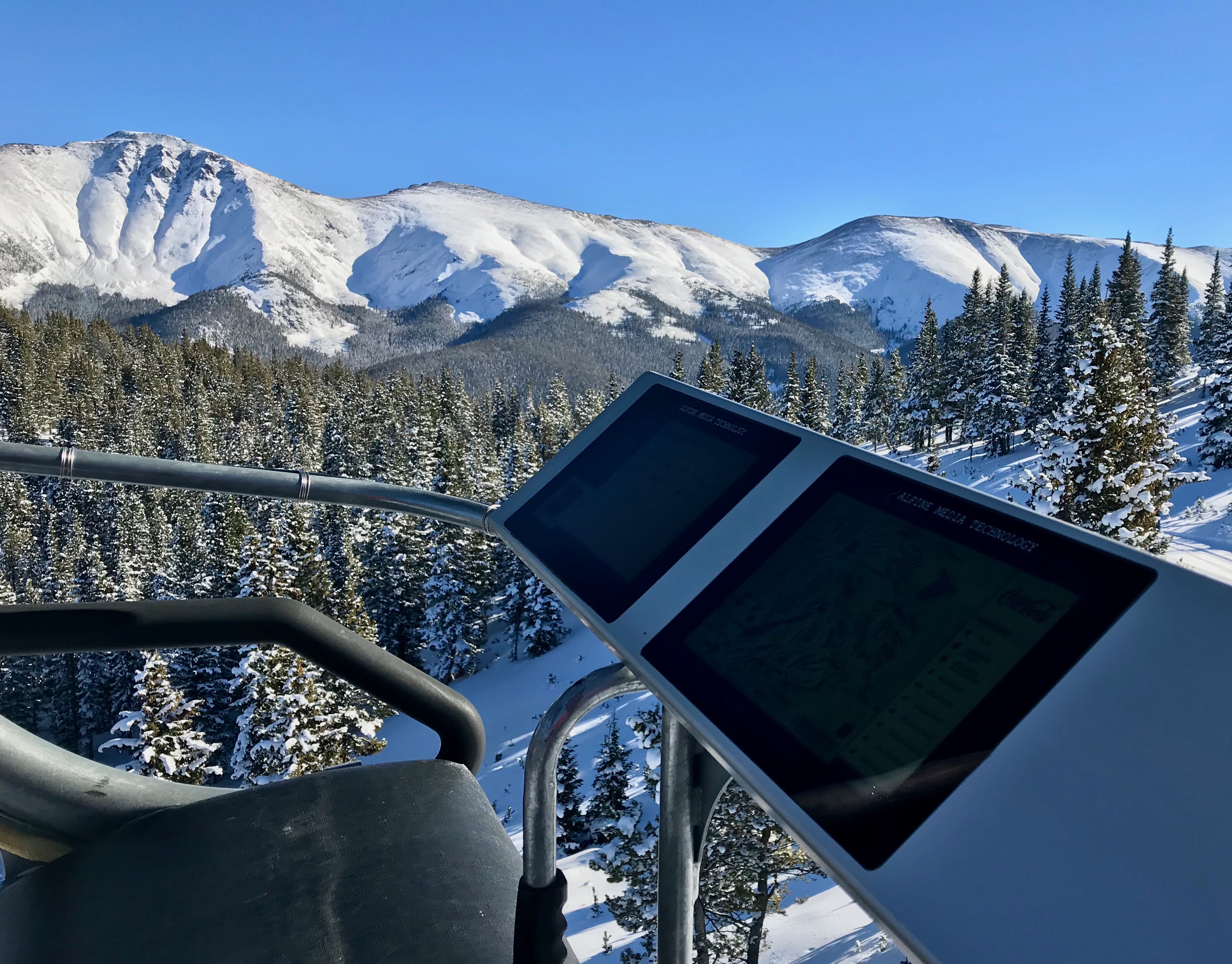
Freddie Peyerl, Gerrit VandeKemp, and Jeff Connors are on a roll. Their company, Alpine Media Technology, recently raised a million dollars to bring its digital guest engagement technology to ski resorts, including to chairlifts and gondolas. I’ve been following this project (with a dose of skepticism) since it launched and got the chance to catch up with the founders as LiftDigital’s first winter season wraps up.
Peter: What are your backgrounds and how did you guys come up with the idea for digital screens on chairlifts?
Gerrit: Our backgrounds are in Pharmaceutical & Biotech Consulting (Peyerl), Financial Services (VandeKemp), and Aerospace Engineering (Connors). So, we are definitely newcomers to the ski industry. The three of us were on a ski trip together, and a simple discussion on the growing presence of gas station media systems led to a weekend long brainstorming session surrounding the idea that digital information systems on chairlifts could provide a great number of benefits to maximize guest experiences. Ironically, our idea was hatched while skiing the very same resort we are now wrapping up our beta test on – Winter Park.
Peter: Your trial included displays on some of the Super Gauge Express chairs. How did it go this season?
Gerrit: Our beta test has surpassed all expectations, and a lot of the credit for this has to be given to the entire team at Winter Park. From Executive Management all the way to Lift Operations, we have benefited from an “all hands on deck” approach to making this season a success.
Peter: What do ski area operators like about the technology? What about the skiing public?
Freddie: For operators, it’s all about communication with resort guests. Our digital information system starts with LiftDigital, the restraint bar platform, and extends out onto indoor & outdoor kiosks around the mountain as well as a mobile app catered and branded specifically for each resort. These collective elements provide resort operators the opportunity to communicate real time information to guests including lift open/closed status, emergency notifications, lift line wait times, resort events and more. Our objective goes way beyond providing maps to guests – we want to help resorts provide their guests with as many resources as possible to maximize their time on the mountain. Consumer feedback from our beta test in Winter Park has supported our belief that we are accomplishing this, as resort guests have been very excited about the new access to information.


Peter: Your non-digital competitors are probably on less than 10 percent of American chairlifts. Why do you think that is?
Gerrit: Plastic map systems on chairlifts were definitely a novel breakthrough when they came out, and useful at that. But, advances in digital trends over the last decade have shifted the approach & strategies of marketing teams, ad agencies, and brands to gravitate more towards digital connection with consumers. Map systems would have probably achieved significantly more than 10 percent market share with a better head start over digital advancement. This is where we feel our company is primed to sync with current trends and partner with a high volume of resorts going forward.
La Paz Debuts Sixth & Seventh Urban Gondolas

Under blue sky at 12,000 feet, the President of Bolivia pressed start at high noon yesterday for Línea Blanca, the newest gondola in the world’s urban ropeway capital. Surprising thousands gathered for the occasion, President Evo Morales then proceeded to inaugurate the first section of the Sky Blue line, initially slated to open later this year.
The day was momentous as seven color-coded gondola lines now stretch contiguously throughout La Paz and El Alto with no significant gaps between them. From this weekend, Mi Teleférico (My Cable Car) includes approximately 140,000 feet of haul rope, 962 gondola cabins, 168 towers and 26 stations. The scale is almost unbelievable and there are still four more lines in development!
Built by Doppelmayr like most of Mi Teleférico, the White line services four stations with 131 10-passenger cabins. It’s capable of transporting 3,000 passengers each hour on a 13 minute trip between the Sky Blue (Celeste) and Orange (Naranja) lines. The initial section of Celeste was once planned to be part of a four-section White line which was later split to serve additional neighborhoods and prevent any one line from becoming too congested. Like most of the world’s largest gondola system, I’m pretty sure the White Line is made up of two separate haul rope loops and vault drive systems with cabins that rotate through both.
Lutsen Looks to Public Land for a Bright Future

The list of new lifts built in the Midwest since I started this website in 2015 is short. In Minnesota, a total of three – two quads at Giants Ridge and an $8 million gondola at Lutsen Mountains. Unlike both of its state-owned regional neighbors, Lutsen is a family business that also happens to be the largest ski resort for 2,000 miles between the Rockies and the Adirondacks. I’ve never been to this corner of Minnesota but it looks totally beautiful, surrounded by National Forest on three sides and Lake Superior on the fourth.
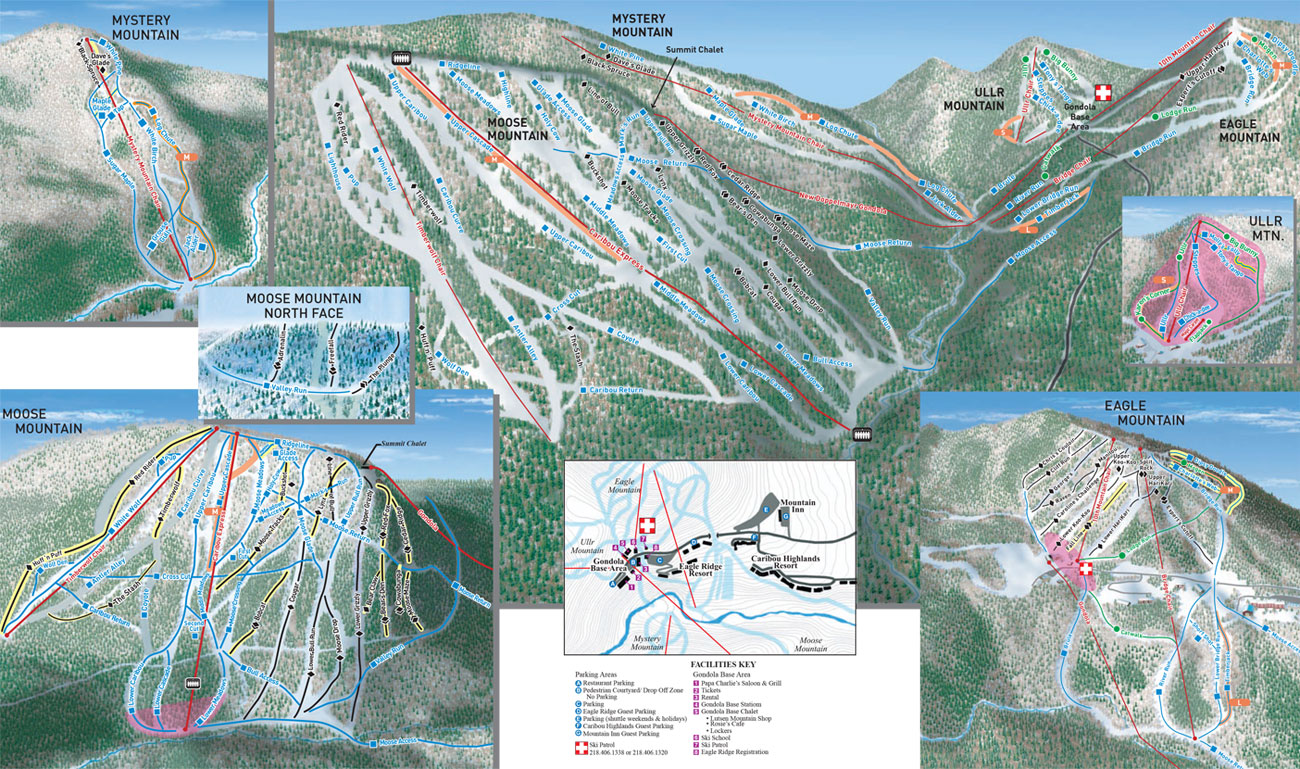
The popular new Doppelmayr gondola is like nothing else in the region and it came just two years after Lutsen owners Charles Skinner and Tom Rider launched a Leitner-Poma six place chairlift on Moose Mountain. With two key lifts upgraded, the brothers-in-law are looking to the future and more lifts servicing the types of terrain discerning skiers seek. Lutsen Mountains is a true destination resort and its competitors aren’t as much Afton Alps and Spirit Mountain as Breckenridge and Steamboat. For many, the Lutsen case is compelling – a couple hour drive, alluring scenery and plentiful natural snow at a reasonable price. “We’re a Midwest destination for families; not everybody can afford the airfare and the travel to go out west,” Mr. Skinner told the Cook County Board of Commissioners in a presentation last week. “We just need to be strong enough and appealing enough with enough terrain to go forward with the next generation.”

The co-owners are on a public outreach tour as they embark on a rigorous approval process with the United States Forest Service. If granted a special use permit for new ski terrain in the Superior National Forest, it would be the first brand new permit for a U.S. ski resort in decades. “The only available land for us to have more runs is federal land,” Skinner pointed out along with the fact that 90 percent of Cook County is publicly-owned. The expansion plan would first add 100 acres of much-needed beginner terrain with skier services on Eagle Mountain serviced by a new chairlift. Depending on the cost of a new lift, Lutsen may use one of a few retired lifts it has in storage. The next phases would add 400 acres of intermediate and advanced terrain on two sides of Moose Mountain including glades and up to six new lifts. “As the ski industry moves forward, we need to be larger in order to survive,” said Skinner, noting the eventual goal of doubling skier visits.
 Lift Blog