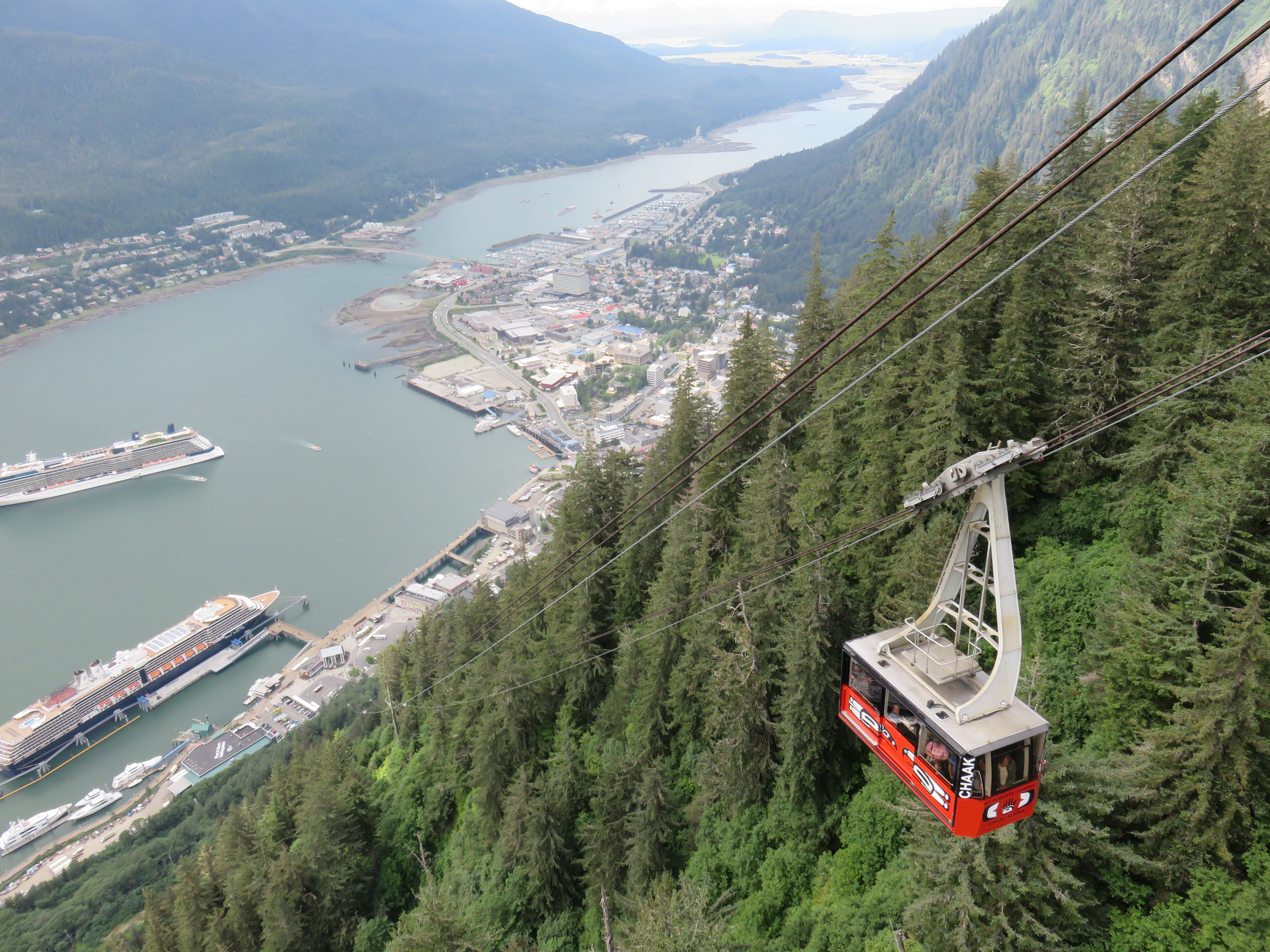
Opened in 1996, The Mt. Roberts Tramway flies above downtown Juneau from the city’s waterfront.
Rising from the cruise docks on the edge of Alaska’s capital, the Mt. Roberts Tramway is the undisputed steepest lift in North America with an average slope angle of 39 degrees. The now-famous tram carried its first passengers 1,800 feet above Juneau almost twenty years ago. It’s among the newest large aerial tramways in North America and one of two in the U.S. built by Poma. The summit terminal soars 165 feet above the forested slopes of Mt. Roberts, downtown Juneau and the massive cruise ships below. On August 10th, the tram will celebrate twenty years of service and more than 3.5 million riders.
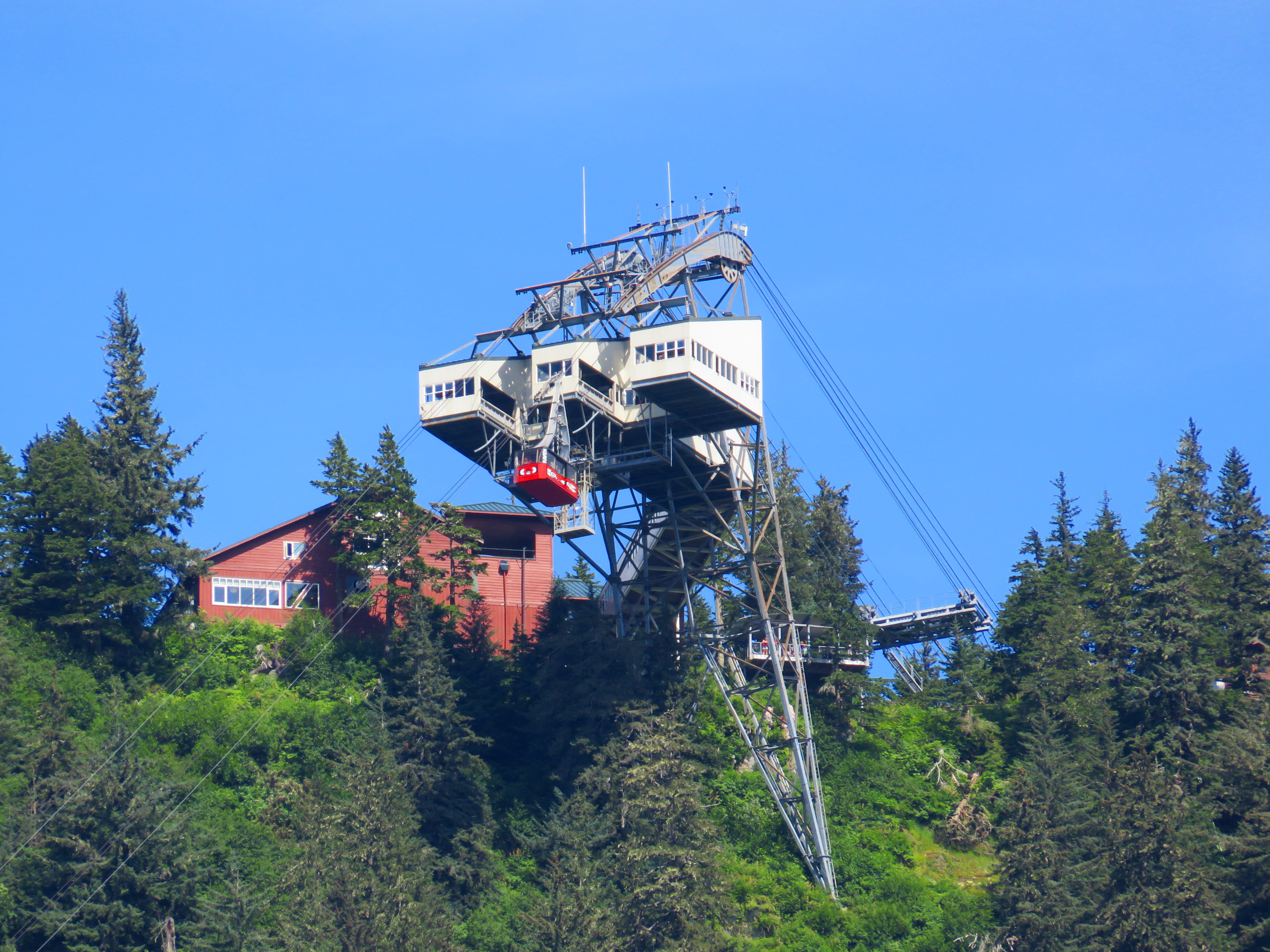
The top terminal is basically a tower, similar the Portland Aerial Tram but located in a more spectacular setting.
John Heiser proposed the lift in 1994, becoming President of the Mount Roberts Development Corporation before leaving to join Intrawest. He financed the $16 million project with investments from Anchorage businessmen and Goldbelt (an Alaska Native Corporation) and leased right of way from the City of Juneau. Goldbelt took 100-percent ownership of the tram in 1998.
The bottom terminal fits the definition of a tram dock! The motor room is located above rather than below due to its unique location.
Garaventa recently fabricated new hangers for the Grouse Mountain Red Skyride cabins so riders can stand on the roof for an extra charge. Photo credit: Max U.
The President of Simon Fraser University puts the Burnaby Mountain Gondola back on the table in hopes of replacing 25,000 daily bus trips between campus and Vancouver’s SkyTrain Millenium Line with a 3S.
The owner of Gletscherjet 3+4 built last summer in Austria say it has already carried 3 million passengers, believed to be a record for a winter lift. The system is an 8/10 combination lift interlining with a 10-passenger gondola.
Poma’s 2015 Reference Book is now online highlighting last year’s projects from around the world.
Doppelmayr and its contractors take responsibility for a construction accident at one of the terminals under construction in La Paz that injured ten people on Saturday.
“This work is dedicated to the men and women who have been part of Poma’s innovative and epic journey. It is for our clients and partners who have placed their trust in Poma throughout the world – whether up in the mountains or in the heart of cities.”
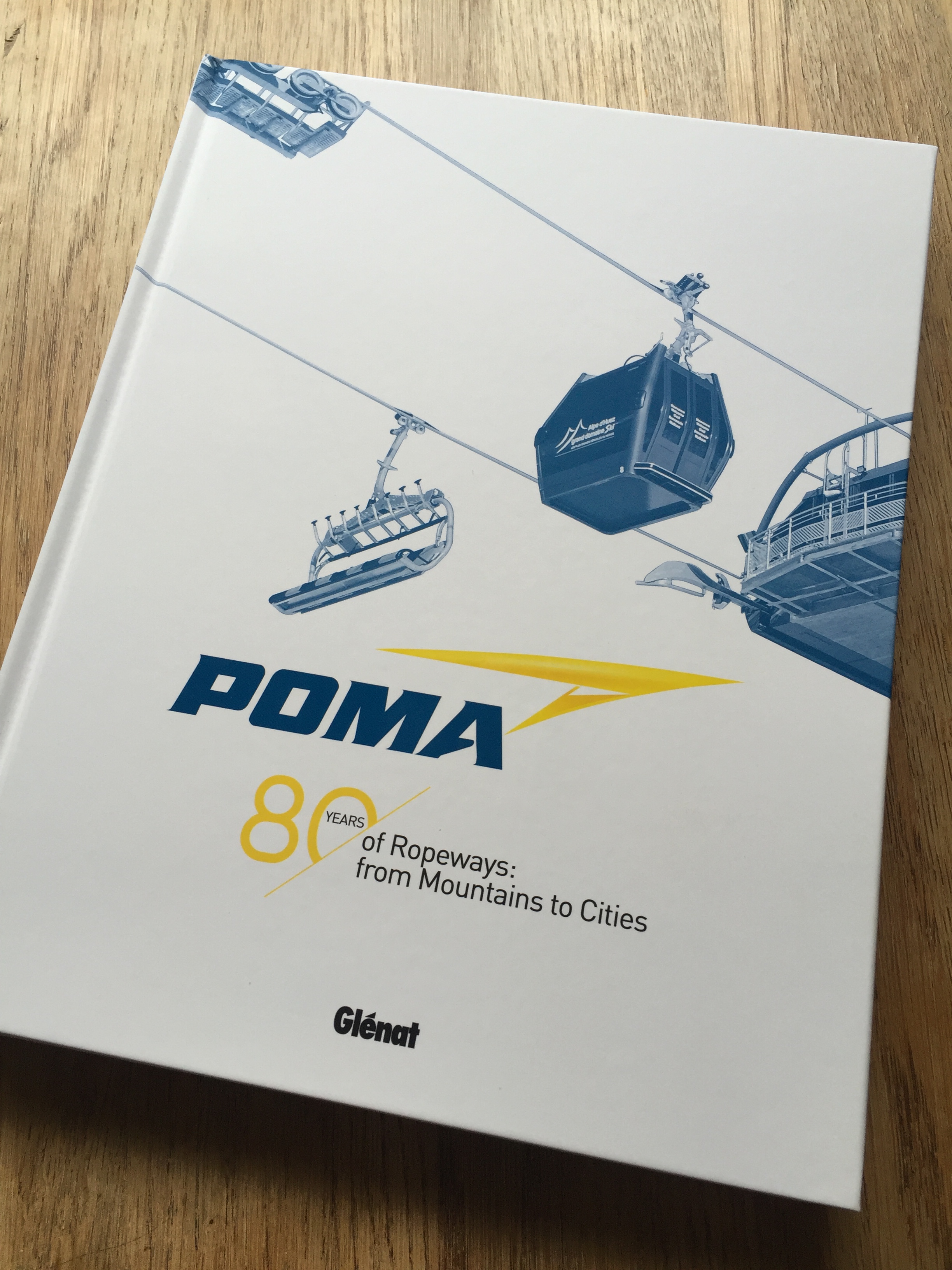
The above dedication sits on the first page of a new book celebrating eighty years of commercial success called Poma: 80 Years of Ropeways from Mountains to Cities. The 190-page work, written by Béatrice Méténier and Christian Bouvier, looks back at the firm’s more than 8,000 ropeway installations from the mountains of France to Colorado, South America and beyond.
A skier at heart, Jean Pomagalski installed his first surface lift in 1934 at Alpe d’Huez. He constructed it mostly out of wood and with a used Ford motor. After building three additional tows, Mr. Pomagalski had himself a company and filed a patent in 1936 for a “carrying device hauled by a rope moving at a constant speed.” After a break for Wold War II, Pomagalski S.A. grew to 15 employees by 1953. Even so, Mr. Pomagalski still found himself simultaneously a salesman, surveyor, designer and builder of lifts that were sent off as kits for installation by customers. The company’s first chairlift, a single-seater, debuted in 1955 near Chamonix.
Workers assembled, then disassembled early fixed-grip chairlifts in Poma’s French workshops before sending them to the field as seen in this 1963 photo.
By 1958, Pomagalski was selling 120 lifts a year, many of them to customers in the United States and Canada. Mr. Pomagalski decided to drop the latter part of his name from the company’s in 1965 to better appeal to English-speaking clients. Poma delivered its first gondola systems simultaneously in 1966 at Queenstown, New Zealand and Val d’Isère, France. A small new company called Sigma Plastiques provided the egg-shaped cabins. Poma trusted Sigma again the next year for the world’s first gondola with automatic doors and the rest is history.
Peak Resorts’ financial footing reportedly worsens amid staff layoffs, reduced operations and spending cuts. The company owns 14 resorts across the Eastern U.S.
Le Relais also has 2 liftsnewly listed (these are being removed to make way for a new six pack.)
LST signs La Plagne to launch the company’s first detachable lift next winter. MND Group CEO Xavier Gallot-Lavallee commented, “We are delighted to announce the initial commercial success of our brand new range of detachable chairlifts. The new contract signed with SAP, a subsidiary of leading ski resort operator Compagnie des Alpes, confirms the benefits of the innovative technology that we have developed and positions MND as a leading market player.”
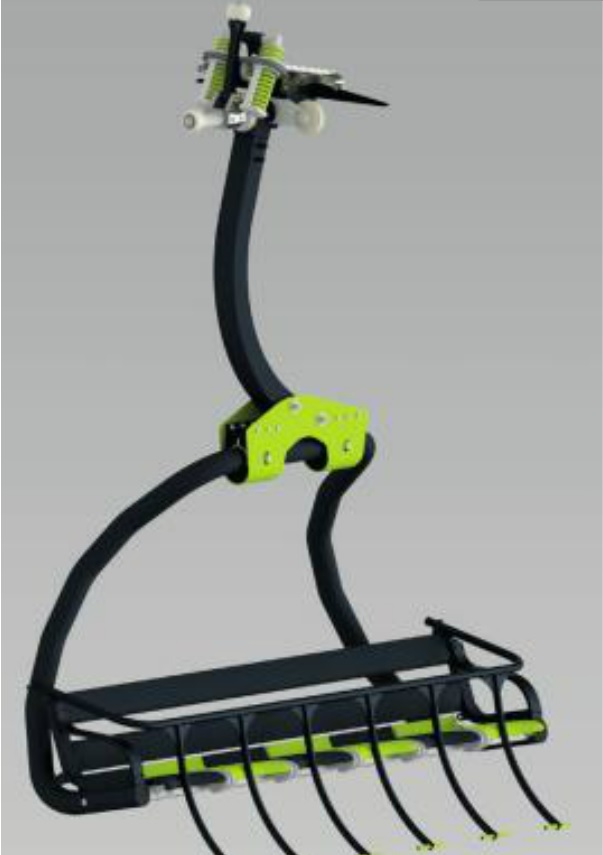
LST will debut unique new detachable chairs and terminals for a new six-pack chairlift in La Plagne.
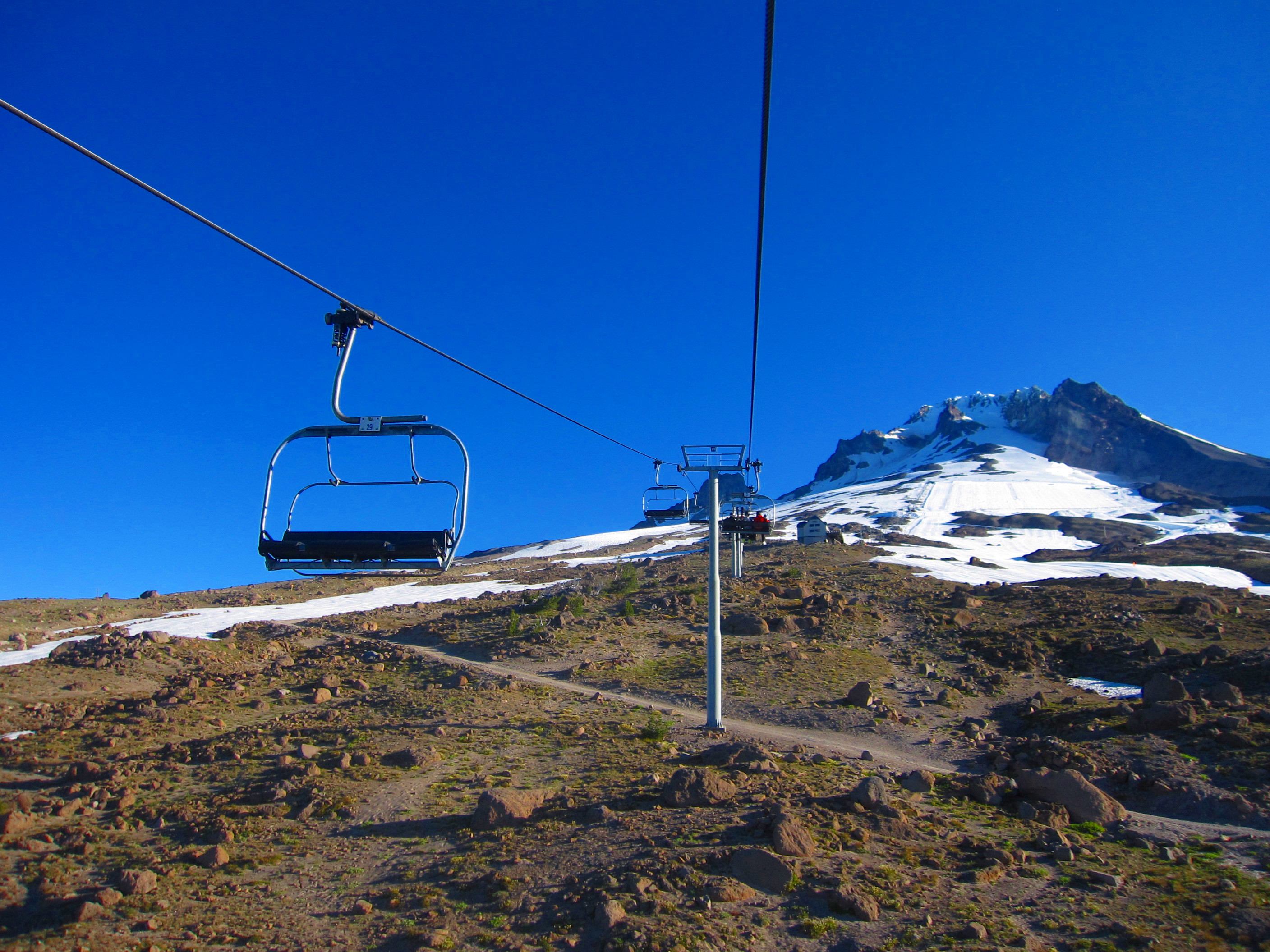
Timberline Lodge & Ski Area on Mt. Hood posted the following statement on Facebook Thursday afternoon after an empty chair fell from one of its high speed quads.
At approximately 1:45pm today there was a mechanical malfunction on the Magic Mile chair lift. A chair detached from the cable on the downhill side of the lift. The chair lift was not occupied. No customers or staff were involved in the incident. All guests were offloaded in a timely manner. The Magic Mile will be closed until further notice, pending a thorough investigation involving the lift manufacturer and a 3rd party lift engineer. Timberline Lodge thanks all guests on the lift for their patience and apologizes the inconvenience. We are compiling all details of the incident, which will be posted as soon as possible.
Poma built the Magic Mile in 1992 to replace a Riblet double. The lift is 5,472′ long, rises 1,089′ and has Poma’s TB-41 grips. Much of this lift operates above tree line, so both its terminals are housed inside buildings that can be buttoned up during storms. Magic Mile also has indoor parking for all its chairs and grip maintenance bays at the bottom terminal.
The Magic Mile operates year-round serving Timberline’s summer ski operation.
Almost exactly a year ago, an empty chair fell from a Doppelmayr detachable quad at Mt. Bachelor in a similar incident which was later blamed on component failure.
Update 4/2/16: Magic Mile has re-opened and Timberline posted the following update this afternoon.
This is a communications update regarding the Magic Mile chairlift malfunction, which we reported on March 31. The lift has been inspected by an independent chairlift engineer along with representatives from the US Forest Service. It was determined that failure of a key component of a carrier grip occurred, resulting in the detachment of an empty chair on the downhill side of the lift.
RLK and Company chairlift technicians followed the recommendations of the chairlift engineer and performed comprehensive inspections and testing on the entire chairlift. It has been determined that the chairlift conforms to industry standards, and is now operating.
Update 5/1/16: We’ve learned Magic Mile’s safety systems worked as designed and this incident was a combination of component failure and operator error.





 Lift Blog