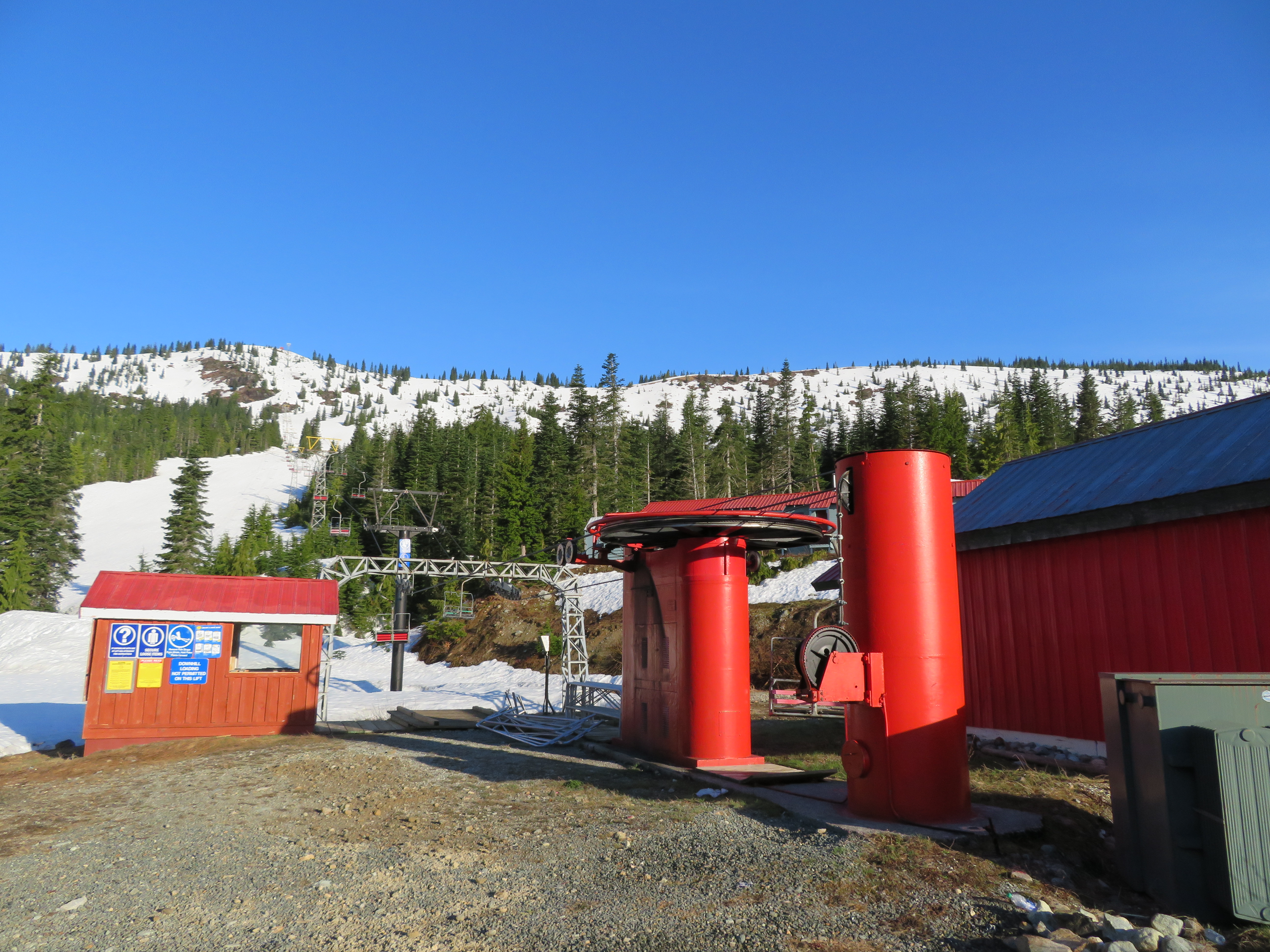
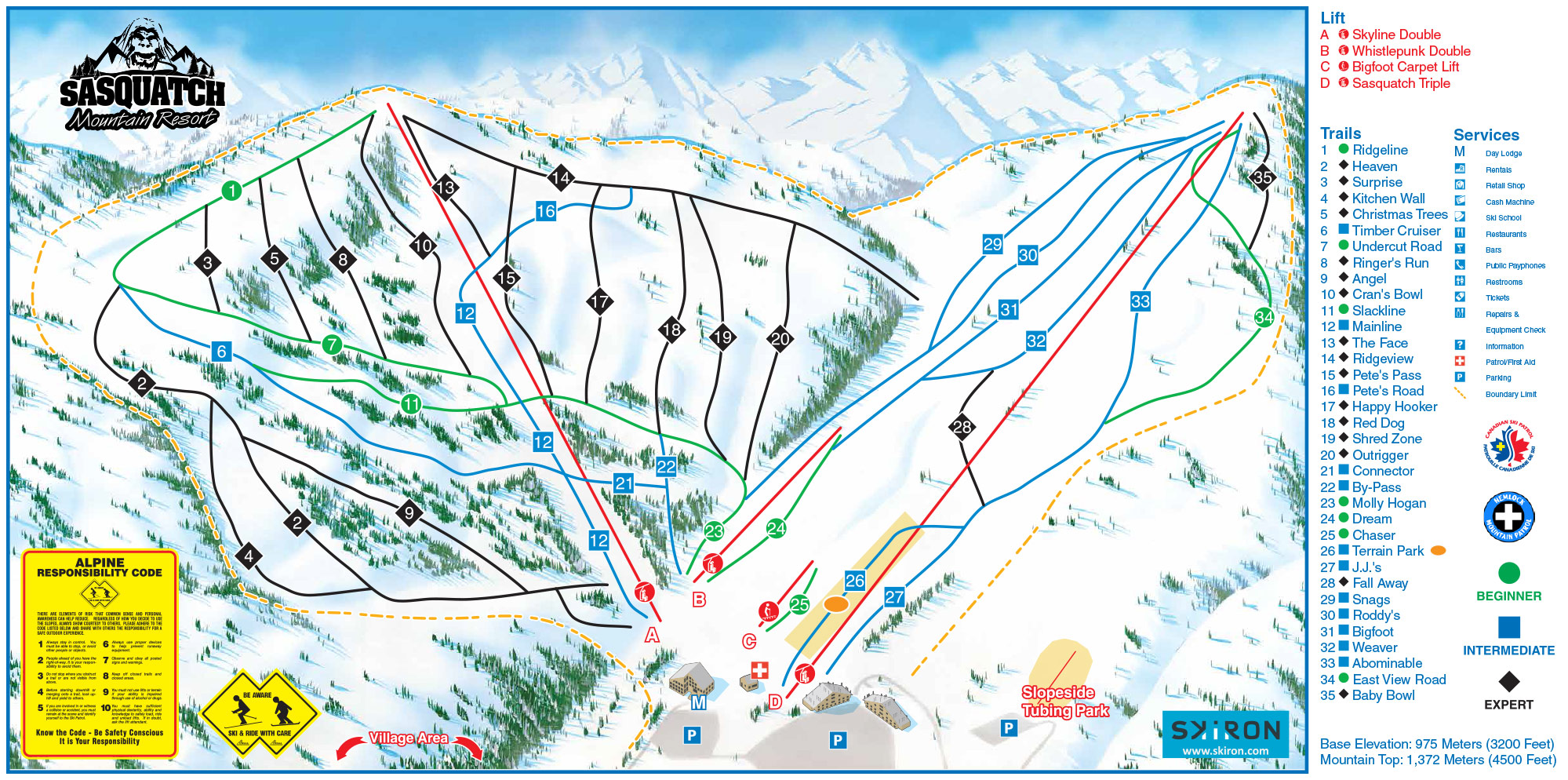
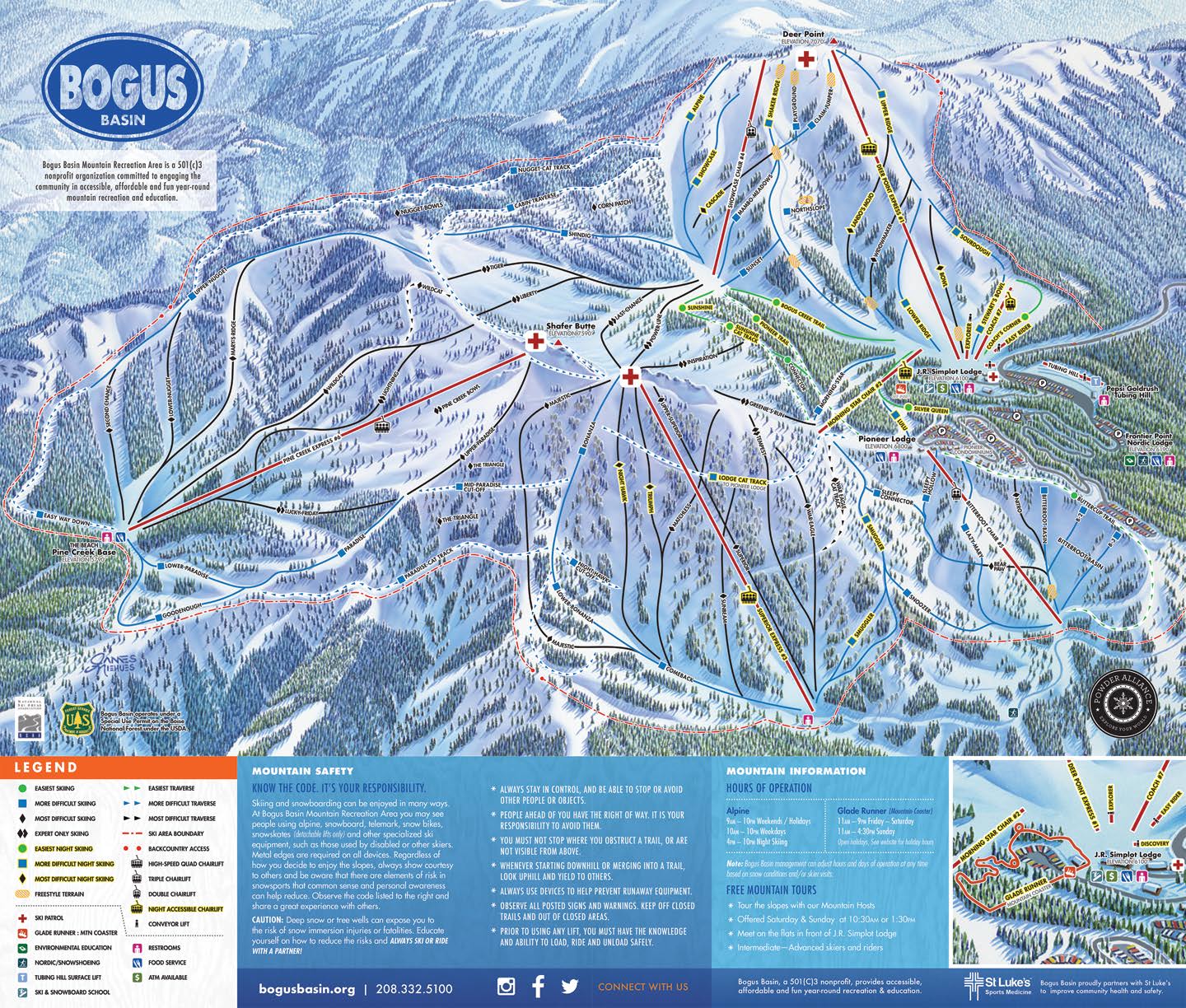
Searchmont, Ontario sells to Wisconsin Resorts, the firm behind Pine Knob, Mt. Holly and Ski Bittersweet in Michigan as well as Alpine Valley, Wisconsin.
Mike Solimano of Killington reveals what three lifts he would upgrade if given $100 million to spend at The Beast.
The new Winter Park gondola is creatively named Gondola.
Grand Junction’s NBC affiliate takes viewers inside the factory where Leitner-Poma lifts are created.
The two stage Blackcomb Gondola is almost finished; thanks Max for these pictures.
Next up for Ramcharger 8 at Big Sky: installation of an in-terminal video wall and the haul rope, which is going up right now.
Under a new concept, Whitefish Mountain Resort would remove the current Hellroaring triple and build two new lifts at higher elevations. Lift lines are approximate.
Following record attendance last winter and its most successful season pass sale ever this fall, Whitefish Mountain Resort is looking to better disperse guests across its 3,000 acres. Under a plan submitted to the Forest Service yesterday, the closest ski area to Glacier National Park would move one lift and add another in Hellroaring Basin. The generally west facing drainage is currently served only at the bottom by a 1985 CTEC triple. It loads at just 4,675 feet above sea level and offers only one trail for direct repeat skiing.
Hellroaring closes annually on April 1st to give waking Grizzly Bears peace and quiet.
On the heels of the successful Chair 5 realignment, Whitefish would like to move Chair 8 to begin at the junction of Hell Fire and Glory Hole, a spot known as Grand Junction. The upgraded triple would unload near the top of the 1,000 Turns run, approximately 300 vertical feet below the Big Mountain summit. It would be steep – around 2,900′ long by 1,050′ of vertical – with a seven minute ride time. This would be the CTEC’s third home; it was Chair 7 from 1985 to 1997 before moving to Hellroaring. The current lift line and lower portion of Hell Fire would be permanently closed and rehabilitated to a natural state.
A second new chairlift – Whitefish’s 13th overall – would also load at Grand Junction and ascend 1,340 feet to Hellroaring Peak. While the overall permit area wouldn’t grow, Hellroaring Basin would become much better utilized with a dedicated 4,300′ chairlift servicing eight newly-cut runs. Vertical rise of Chair 12 would be 1,350 feet and additional grooming would allow intermediate skiers to enjoy Hellroaring Peak for the first time. A specific lift type is not specified but Whitefish could opt to use Great Northern, a 1978 Stadeli triple (the mountain has quite the history moving lifts, having done ten relocations throughout its history.)
“We are excited to begin the process of possible future improvements in Hellroaring Basin,” Whitefish Mountain Resort CEO Dan Graves said in a press release. “The Hellroaring Basin improvement project will increase access, and add improved slope variety. Additionally, relocating the Hellroaring chairlift would allow riders to access more terrain than its current location therefore creating better flow around the mountain.” The Flathead National Forest is soliciting public comments on the proposal through November 20th. Forest managers will analyze it over the winter and expect to make a decision next June. If approved, implementation could take two or more construction seasons at Whitefish Mountain Resort’s discretion.
As Vail Resorts shakes up management in the northeast, outgoing Mt. Sunapee GM Jay Gamble reflects on 20 years of growth including four new lifts and 110,000 annual skier visits.
Vail also says goodbye to Sunapee’s Duckling double after 55 years.
The owner of Mt. Washington, British Columbia; Ragged Mountain, New Hampshire; Wisp, Maryland and Wintergreen, Virginia takes over operations at Powderhorn, Colorado.
The $2 billion Salesforce Transit Center in San Francisco, which features a short aerial tramway, is mired in problems unrelated to the lift.
Construction begins in Switzerland for the world’s second longest 3S with the most towers – seven.
With new six and eight passenger lifts, Big Sky Resort shifts away from the double/triple/quad lift lingo.
Alterra names KSL veteran Adam Knox Senior Vice President of Strategy and Corporate Development to lead the company’s acquisitions and resort partnership group.
Due to the amount of lift work needed after seven shuttered years, Cockaigne, NY won’t reopen this winter after all.
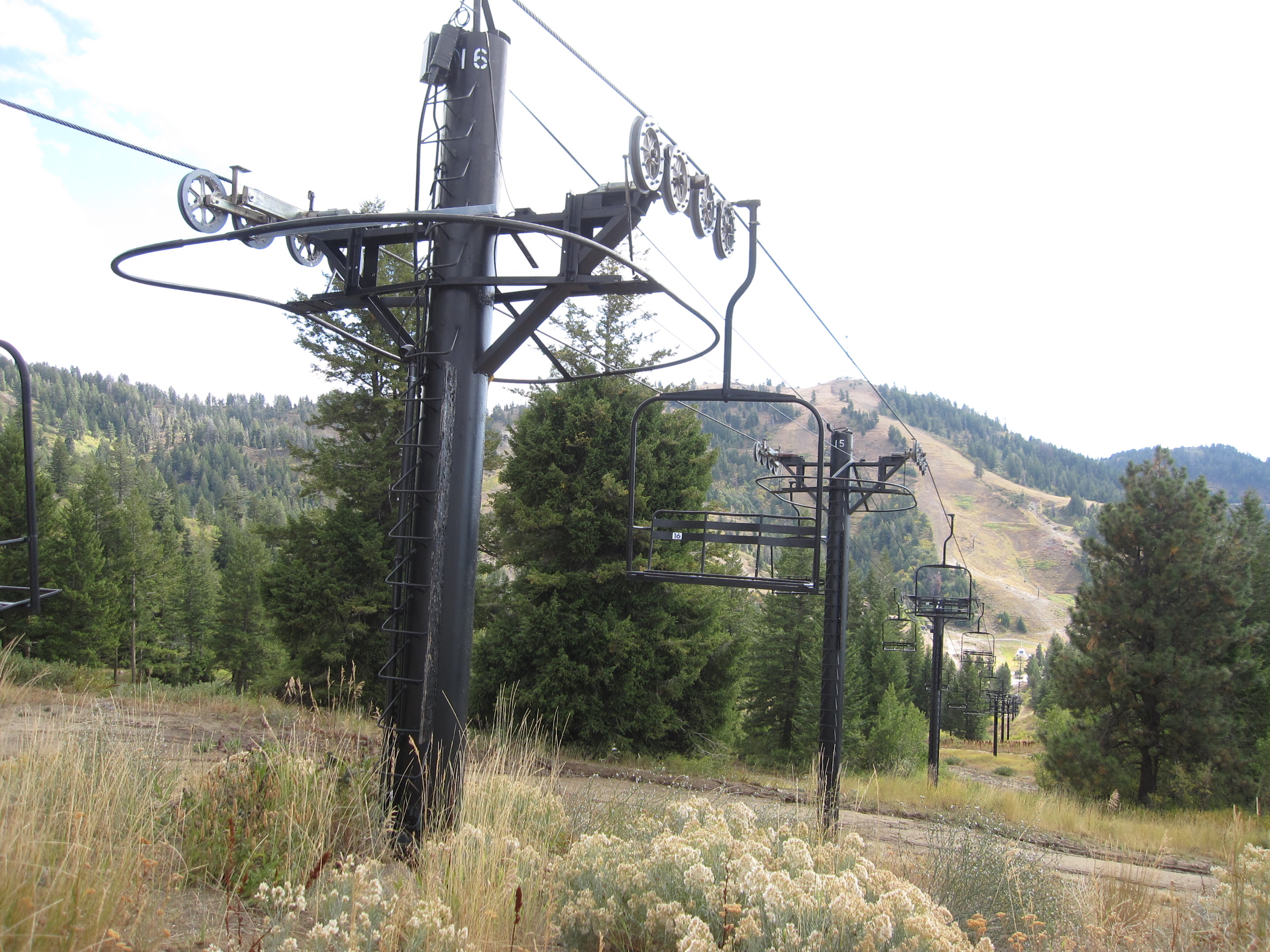
One of the longest Riblets retired from Snowmass turns up in the Pakistani town where Osama bin Laden was killed.
A freshly cut lift line is spotted in the Spanish Peaks development adjacent to Big Sky Resort, probably for the planned Highlands chair.
A judge quashes spending for lift maintenance at the Hermitage Club, which remains in foreclosure. A new lawsuit against the ski area alleges breach of contract and consumer fraud.
Another aerial tramway cabin crashes in Europe, this time on the one year old Bartholet jigback Staubernbahn. No one was hurt as the cabin that hit the ground was empty.
The Boston Globe talks with Mainers about a fourth winter without Saddleback.
In New Zealand, The Remarkables is set to build the inaugural D-Line in the southern hemisphere and Coronet Peak announces a Leitner Telemix.
The new Bretton Woods trail map indicates the gondola may not be called Presidential Bahn after all.
As Copper Mountain and Leitner-Poma crews work hard to finish two big lifts, opening weekend shifts to Super Bee.
With four recent additions, Vail Resorts Inc. now operates just over 10 percent of American and Canadian lifts, more than any other company. Vail prides itself on investing heavily in its mountains and the average lift at an Epic resort is three years newer than the rest of the industry. The company’s lifts now number 305 in the United States, Canada and Australia with an average age of 24.6 years. If we assume the average lift lasts 35 years, Vail would now need to replace an average of about nine lifts per year just to turn over its fleet.
A little less than a year ago, a smaller VR unveiled plans for seven new lifts as part of a $150 million annual capital plan, the largest in the company’s history. Back in 2016, Vail committed to building three six-packs as part of $103 million in capital spending for 2017 (VR later added a fourth detachable to that year’s class, the Red Buffalo Express at Beaver Creek.) In December 2015, the Broomfield-based company announced a high-speed quad for Vail Mountain and in 2014, it was $50 million in improvements including three new lifts at Park City plus another six pack at Vail. Over the last five years, more resorts have consistently led to more revenue and more capital investments. The company said it will invest $35 million at the four new mountains in the next two years, making it possible this December’s announcement will be the most valuable ever.
Going resort by resort, the most obvious projects are ones already in the pipeline, namely the Game Creek Express #7 replacement and Golden Peak race lift at Vail. But VR could go bigger like it did this summer at Whistler Blackcomb, spending $52 million to package four lift replacements together. On Vail Mountain, additional aging lifts likely to be up-gauged to six-packs eventually are Orient Express #21, Born Free Express #8 and Wildwood Express #3. The mothership mountain has the third largest and third newest lift fleet in the company and I expect investment to continue at Vail following this year’s pause.
Vail’s lift 7 is the only chair in Game Creek Bowl and could use more capacity.
On average, the newest lifts within Vail Resorts are at Beaver Creek, which opened decades later than its peers. A major expansion was approved in September – McCoy Park – which may be implemented in 2020. In advance of those two new lifts, the Strawberry Park Express could be updated in 2019 to a higher capacity gondola. The oldest lift at Beaver Creek is the 1988 Arrow Bahn Express, which eventually will be replaced by a newer detachable. Probably not this year though.
Sticking in Colorado, Breckenridge is usually the first or second most visited resort in America and did not see a new lift in 2018. I say a Riblet gets replaced here in 2019 and my vote would be 6-Chair with a high speed quad. My second guess would be C-Chair followed by 5, A, E and Rip’s Ride. If Vail decides to continue replacing older high speed quads instead, Beaver Run SuperChair is the logical candidate.
6 Chair at Breckenridge is wildly popular despite being fixed grip and 40 years old.
Keystone has both expansion possibilities and lifts that could be upgraded. The project everyone’s been clamoring for is a detachable lift from The Outback to replace Wayback. Peru Express is the oldest high speed lift at Keystone and a core workhorse, making it likely to be replaced with a six pack soon. Outback Express is one year newer and in a similar situation. Another possible replacement is Argentine, a 1977 Lift Engineering double that the 2009 Keystone Master Development Plan proposed replacing with a two stage detachable. The new lift would load near Peru, have an angle station above Lower Schoolmarm and continue all the way to the ridge of Dercum Mountain. The Keystone MDP also outlines major expansions that I expect we will hear more about over the next decade. They include a Ski Tip gondola, Bergman Bowl lift, Independence Bowl lift, Windows lift and Outback surface lift. Whatever Vail chooses, I am hopeful for a new lift or two at Keystone in 2019.
I don’t mind Wayback at Keystone but I also rarely ski in Colorado on weekends or holidays.
Crested Butte is the new kid on the block and Vail may wait a year or more to do anything lift wise. The mountain’s Teocalli II expansion is still moving through the Forest Service NEPA process. The Mueller family invested heavily in the Triple Peaks resorts over the years and I don’t see a whole lot needed near-term at CBMR. Replacing original Teocalli with a high speed quad would be a nice way to burn some of the promised $35 million.
The number of chairlifts at Utah Olympic Park will double within two years if the foundation that operates the Olympic venue successfully raises $11 million in donations. Located near Canyons Village, the park debuted with a CTEC double in 1992 and added its second chairlift in 1999. The Utah Legacy Foundation was founded in 2002 and created a model for post-Olympic sustainability, adding an alpine slide, two museums, zip lines and more to the facility. Utah Olympic Park still hosts hundreds of athletes for training in multiple disciplines and the proposed ski expansion would better support them.
The Nordic double will remain in place to service the summer alpine slide and largest ski jumps.
A $2.7 million phase one expansion would see Deer Valley’s Homestake lift re-purposed for intermediate training near the shorter ski jumps. The 1999 Garaventa CTEC quad chair would have a mid load station and be installed next summer in order to open by late 2019. This lift will be around 1,200 feet long with a vertical rise of 400′. An even more ambitious project would add 30 acres of skiing on West Peak near the Olympic bobsled and luge track at a cost of $5.8 million. At 3,280′ x 1,200′, this lift would be roughly comparable in size to Jupiter at nearby Park City Mountain. The West Peak project is tentatively scheduled for 2020.
Current Utah Olympic Park winter facilities and activities.
Utah Olympic Legacy Foundation President and CEO Colin Hilton told the Park Record this week that donations are off to a solid start. “Through the fundraising efforts, we feel pretty good that we are going to secure the first $3 million of the $11 million campaign to be able to progress. That’s why the Homestake lift is in the parking lot.”
The final Disney Skyliner towers rise from a lake and one station gets a mural.
Peak Pass sales are pacing ahead of last year by 19 percent in units and 22 percent in dollars despite increased northeast competition from Vail and Alterra.
The shut down Hermitage Club expects to close on $25-30 million in financing around Thanksgiving. One potential reopening complication: the chairlifts haven’t been touched by mechanics since March.
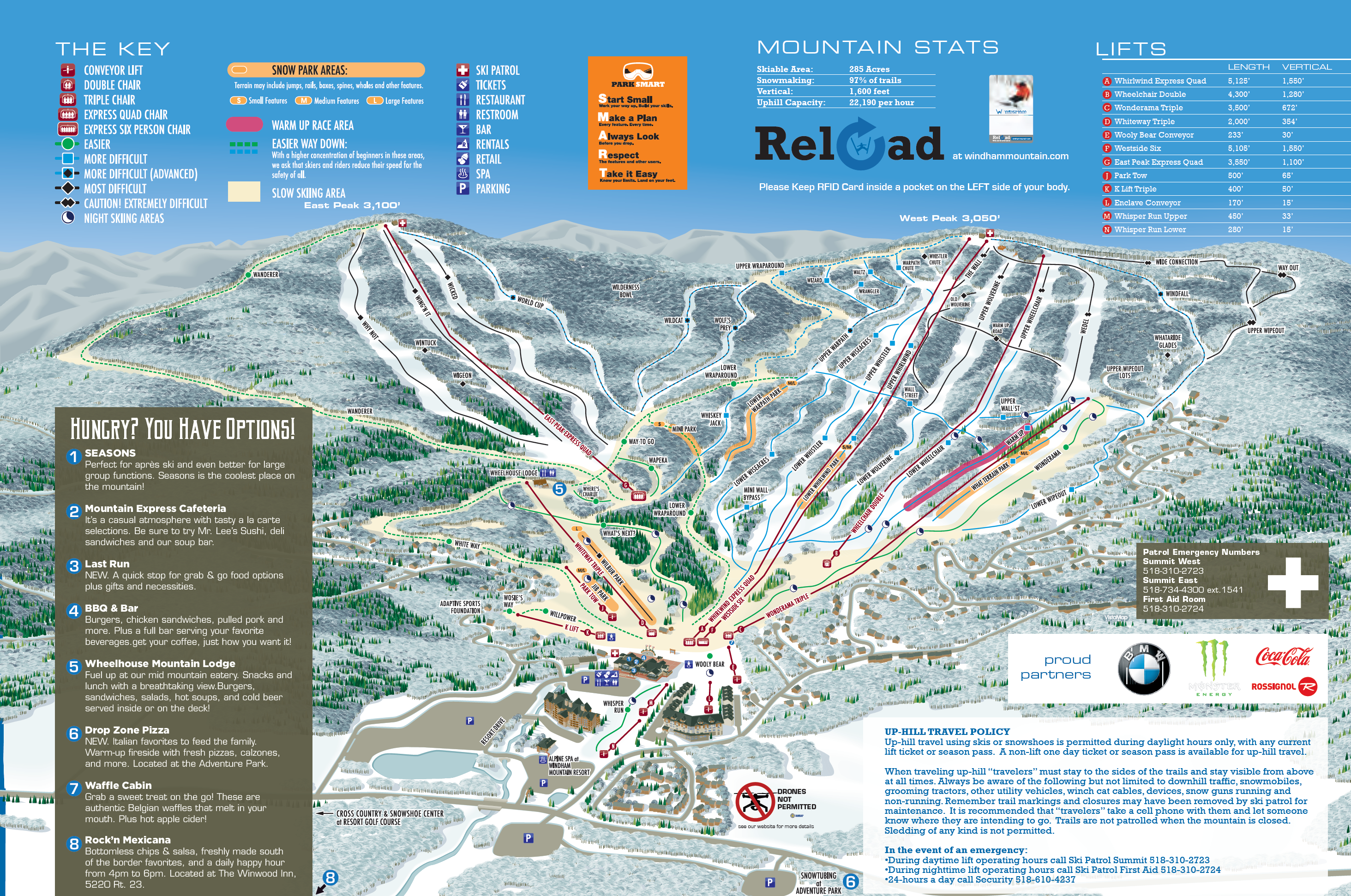
A new trail map shows the locations of Killington’s three new lifts.
Beech Mountain is rocking two new quad chairs this winter and an all new trail map.
Taos has an updated map to go along with its high speed quad.
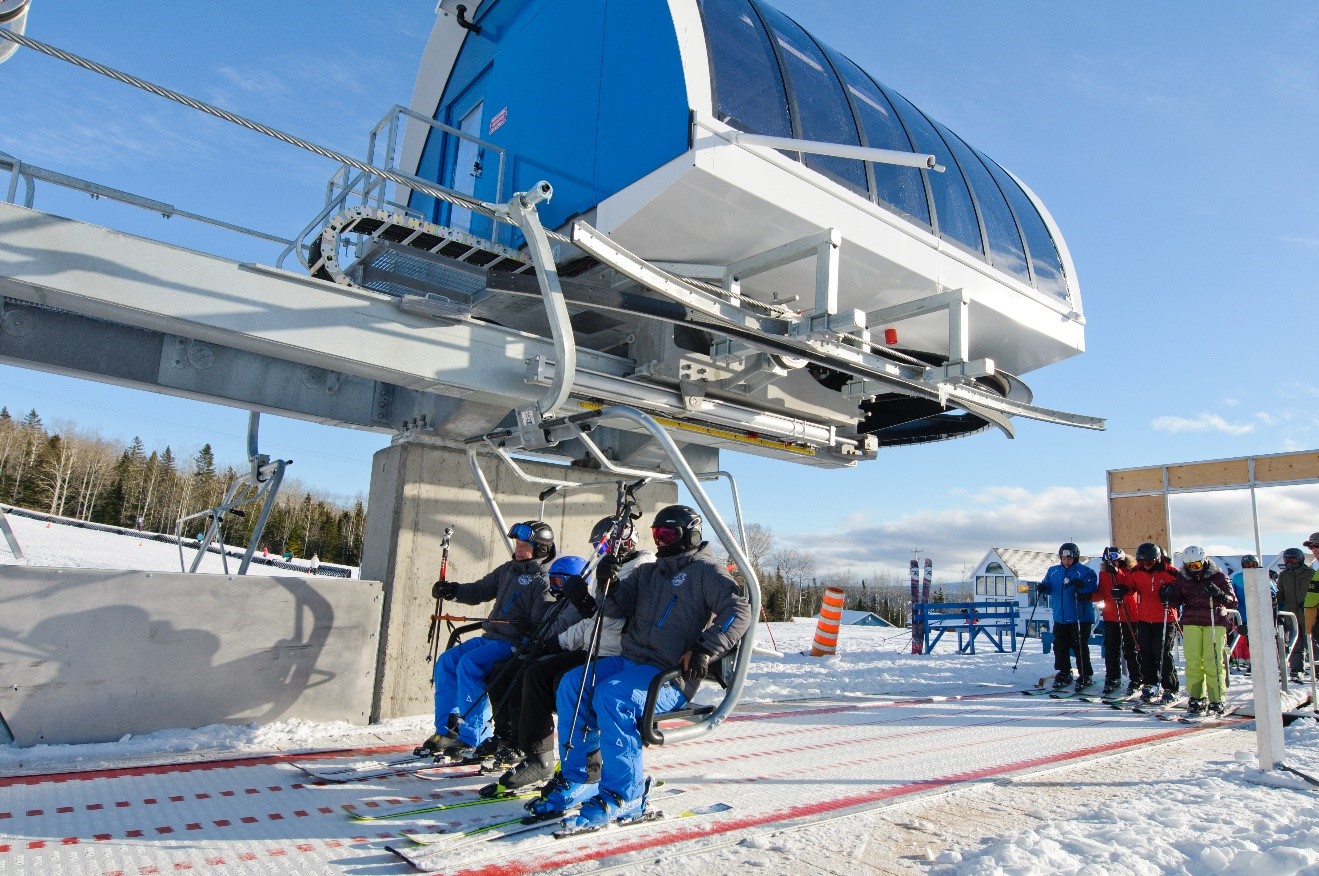
Ramcharger 8 at Big Sky Resort is both the first eight passenger chairlift and first Doppelmayr D-Line lift in North America. I headed to Montana yesterday for an update on this exciting project and a related one, the new Shedhorn 4. Touring Ramcharger, it became clear the decision to purchase this lift was not just about the eight passenger chairs, heated seats or loading carpet. D-Line has numerous small innovations made with mechanics and operators in mind that combine to create a new generation of Doppelmayr detachable. A few features I noticed: Every grate and cover is designed to easily open and close for quick access to moving parts. Belts that connect station tires each have individual tensioners. Stairs lead into the terminals rather than ladders. Many spots where metal meets metal are lined with rubber for noise and vibration dampening. Doppelmayr says D-Line has more than 200 improvements overall.
The massive Doppelmayr Direct Drive motor is in place at the top terminal and will be water cooled. It will quietly and efficiently spin at just 13 revolutions per minute. Because a gearbox and related shafts have been removed from the equation, all braking will be directly on the bullwheel. There is a single diesel evacuation drive rather than separate evacuation and standby engines. The west side of the top terminal features a 7,500 square foot parking facility for the chairs in two rows. Part of the floor opens up to an equally-sized basement where bike carriers can be hoisted onto chair hangers come summer. The outside of the barn is being wrapped in plastic for this winter and will be completed next spring.
The first four chairs and hangers arrived during my visit at the end of a long journey from Austria by ship, train and truck (the entire lift came over in containers, not just the chairs.) The 64 carriers are emblazoned with Ramcharger 8 logos, feature heated seats and sport blue bubbles. They are so large that only four fit in each shipping container!
Steel will be set at the bottom tension station over the next 7-10 days, which we will be able to watch live. This terminal’s legs, loading conveyor and gates are already in place. Operators will be able to raise and lower the deck on demand for children to board and capacity will be 3,200 people per hour to start. The 54 mm haul rope is also on site after its trip from Fatzer in Switzerland. The comm line for this lift is completely underground as is apparently common in Europe.
The beloved Snow Ghost double will be retired from Schweitzer Mountain Resort next spring after 47 winter seasons, the mountain confirmed today. In its place, two new chairlifts will service Outback Bowl in improved alignments. A Leitner-Poma high speed quad will climb through the Kaniksu Woods area with a Skytrac fixed-grip triple servicing the Lakeside Chutes vicinity above. “Overall, we expect the two chair arrangement to complement our existing lift system and provide better access to some of the most popular terrain at Schweitzer,” says Tom Chasse, CEO of the north Idaho mountain. Schweitzer completed a similar project on the front side in 2007, replacing 5,500 foot Chair 1 with the Basin Express and Lakeview lifts.
Snow Ghost is a very long Riblet double with more than 30 towers.
The detachable quad chair will offer a capacity of 2,400 skiers per hour and rise 1,447 feet in just over five minutes. The triple chair capacity will be 1,800 per hour with a vertical of 1,360 feet and an 8 minute ride time. “We’ve seen over the years how a similar two lift system in the South Bowl has been beneficial when we have weather challenges,” said Chasse. “By having the two lifts serving different aspects of the North Bowl, our hope is to combat similar challenges on the backside of the mountain.” As part of the project, Schweitzer will add gladed terrain and four new runs surrounding the new lifts, which have yet to be named.