
- The Denver Post talks details with Dave Perry, head of the new KSL-Crown Family resort company.
- James Coleman is buying Elk Ridge, Arizona and plans to build a chairlift.
- Nonprofit operator of Cape Smokey in Nova Scotia seeks private investor to revive a mothballed 1995 quad chair.
- T-Bar mania continues in New England as Ascutney proposes installing a 2,500′ Doppelmayr from Le Relais.
- Man falls from the Black Mountain Express on Arapahoe Basin’s opening day.
- Tram board finds insufficient evidence to act against Granby Ranch for allegedly leaving a child on a chairlift years ago.
- Granby also moves forward with replacing Quickdraw’s drive.
- Eldora takes local media on a tour of Alpenglow.
- Sometime after I took pictures of the Basin quad at White Pass, a wacky offset half tower was added.
- Groundbreaking at The Balsams is delayed yet again.
- The private owner of the former High Pond Ski Area in Vermont is installing a new Leitner-Poma T-Bar on the site.
- In a podcast interview, chief of Canada’s third largest transit agency says high-level talks are underway toward building the Burnaby Mountain Gondola.
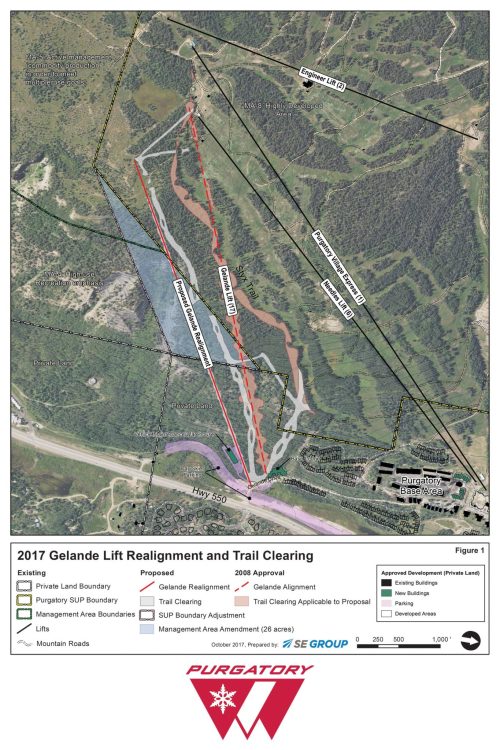
- Purgatory seeks approval to build a 4,200′ lift called Gelande to the south of Needles next summer.
Author: Peter Landsman
Instagram Tuesday: Heli Days
Every Tuesday, I feature my favorite Instagram photos from around the lift world.
Excitement Builds as Bear Valley Adds Second Detachable
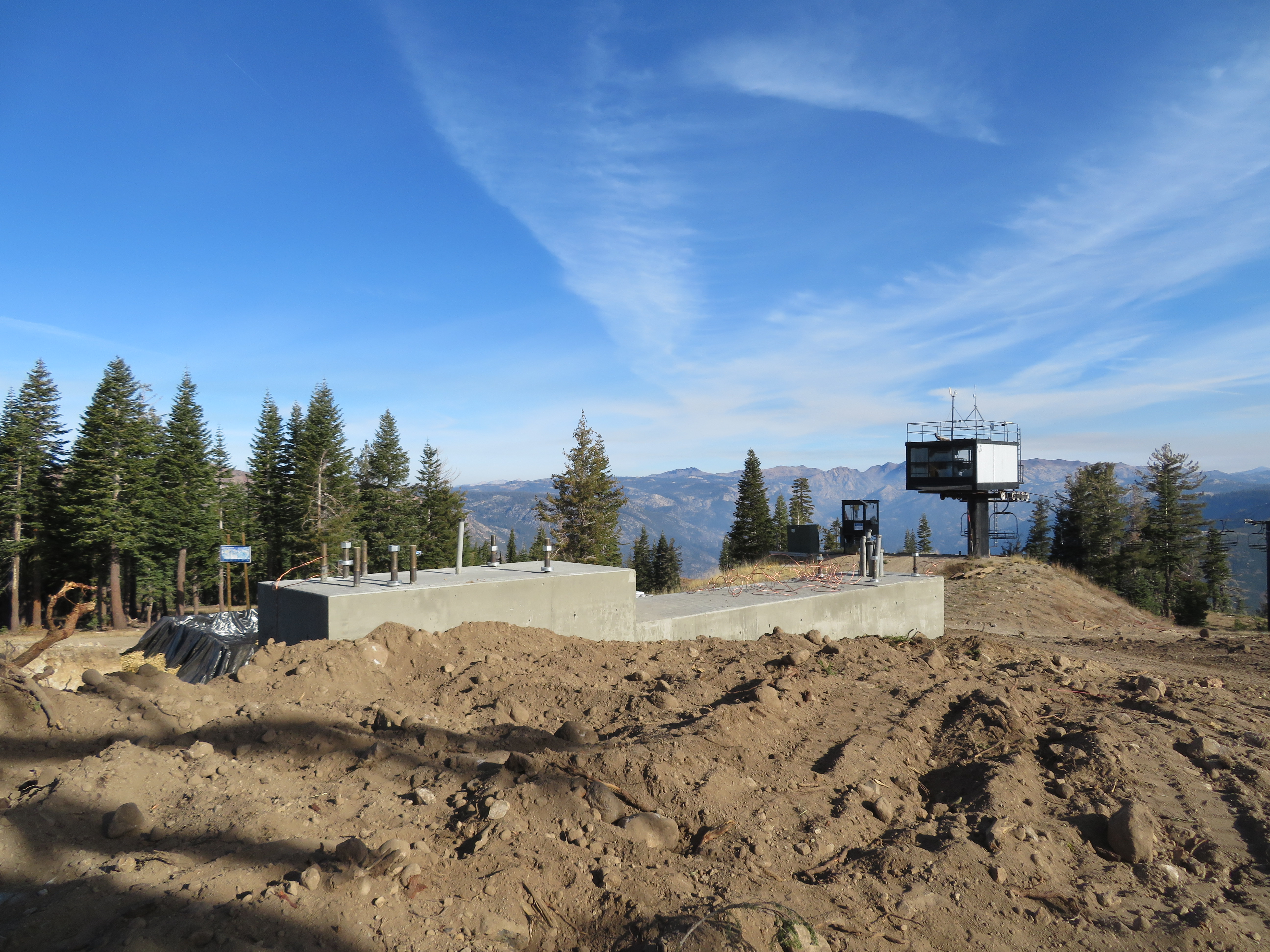


Bear Valley’s first detachable was an LPOA Omega-model built in 2006 on the back side of the mountain. Owner Skyline Development partnered last year with Leitner-Poma to build a similar six-pack at the company’s Horseshoe Resort. This year’s project is one of seven new six-packs that will debut across the U.S. this winter, tied with 2000-01 for the most ever. The new lift slashes the time to ride time up the heart of the mountain in half to just over three minutes and looks to feature 90-degree loading. “This lift investment is a game changer for Bear Valley that will greatly enhance our guests’ experience,” said Andrea Young, general manager at Bear Valley when the new lift was announced in April. “It is a continuation of the many improvements that Skyline Investments is making at Bear Valley on the heels of two strong winters which will elevate the guest experience and further establish the area as a year-round Sierra family destination.”
News Roundup: Dire
- Hemlock Mountain, BC re-brands as Sasquatch Mountain and eyes a high-speed quad to replace Skyline.
- Vail Resorts’ fiscal 2017 net income rose 40.6 percent and skier visits 20.1 percent over 2016 with Epic Pass pass sales trending 17 percent higher for 2017-18.
- Och-Ziff sells Mountain High back to previous ownership group.
- Frost Fire, ND won’t open this winter, citing the “dire” condition of its triple chairlift. The nonprofit mountain estimates $1.35 million is needed to buy a replacement. The statement makes no mention of the mountain’s other lift, a double chair with Poma components.
- Sugarloaf’s five year plan would turn the SuperQuad into a SuperSix in 2019, move the CTEC Stealth to Timberline and add a T-Bar to Brackett Basin in 2021.
- Kevin Mastin paints a new trail map for Whiteface.
- Belleayre’s gondola will feature a new rack design for snowboards and skis of different sizes.
- Steamboat Resort won’t operate Howelsen Hill.
- Resorts grapple with whether service dogs should ride chairlifts.
- Allen Peak Tram’s new tower is in at Snowbasin.
- Doppelmayr’s latest Wir magazine features Oakland’s new gondola and more.
In a Changing Market, Snow Valley Adds a Six-Pack
Back in April, Snow Valley made a big bet, investing millions to build Southern California’s first six-pack. For a resort with a dozen Yan fixed-grips built in the 1970s and ’80s, the new Snow Valley Express is a big deal. In the months since the announcement, new owners have coincidentally taken over SoCal competitors Bear Mountain, Snow Summit and Mountain High, hinting at further capital improvements in a market which hasn’t seen a new chairlift since 1999. Just down the road from two new KSL/Aspen resorts, Snow Valley prides itself on family ownership and is committed to improving the ski experience for its 80th season.


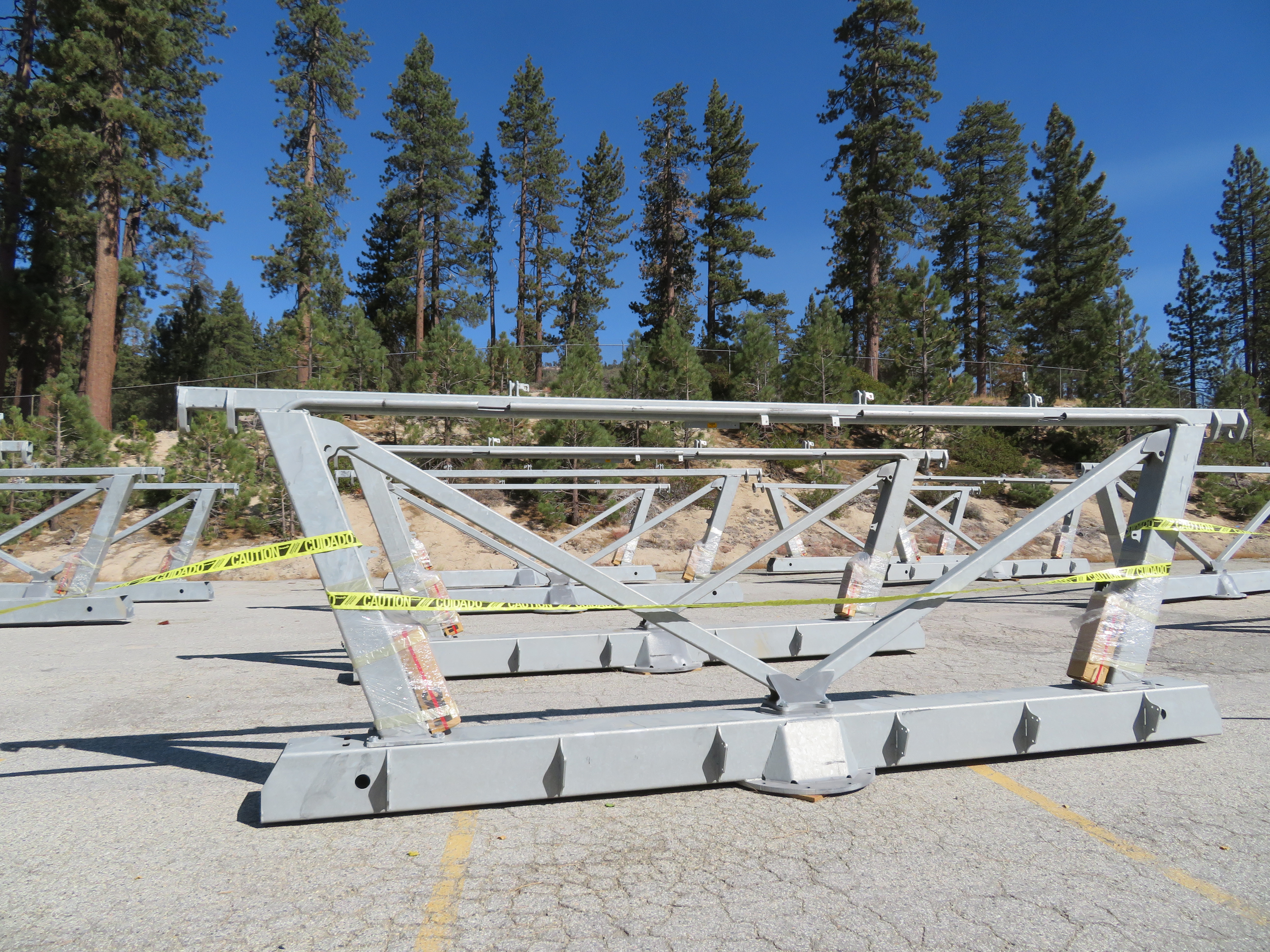
The turnkey Leitner-Poma six-pack project replaces Chair 1, a double serving the mountain’s front side. LPOA is very busy this fall with six new LPA detchables going up across the West and Midwest, the most since the new product debuted in 2010. Snow Valley’s towers have arrived from Grand Junction and crews were finishing up concrete work at the top terminal today. The bottom return terminal showed up last week, joining the seven strand Redaelli haul rope from Italy. The drive terminal, line equipment and chairs will follow soon.
Instagram Tuesday: Euro Tech
Every Tuesday, I feature my favorite Instagram photos from around the lift world.
A Giant Tramway from Desert to Mountain

I escaped Jackson Hole’s early snow this weekend and headed southwest, destination tramway number fourteen on my hit list. One I should have gotten to long ago, the Palm Springs Aerial Tramway is the king of North American jig-backs with a ridiculous vertical rise of 5,873 feet. That’s second highest in the world, though the German number one was retired in April with a replacement not scheduled to open until December, giving SoCal’s tram the loftiest lift worldwide title for the moment. At 2.5 miles, it’s just 317 feet longer than Jackson’s Big Red but with almost 1,800 more vertical in Chino Canyon. A modest sign points to the tram from a traffic light 670 feet above sea level on the edge of Palm Springs and the access road (Tram Way) and the tramway combine to lift visitors to 8,516 feet on Mt. San Jacinto. Of all the lifts I have ridden, this one rivals the best, both in terms of the core machine and the impressive operation surrounding it.


Francis Crocker, an employee of the California Electric Power Company first envisioned the tram while on vacation to Palm Springs in 1935. It took almost thirty years and a war for his dream to come alive, beginning with the creation of the Mount San Jacinto Winter Park Authority by the California legislature in 1945. Construction began in 1960 and from the day California Governor Pat Brown cut the ribbon in September 1963, the tram was a hit. It would be the first of seven large aerial tramways for VonRoll in the United States.


News Roundup: Retirements
- Telluride weighs building at least one big detachable next summer as the Forest Service tentatively approves replacements for Plunge, Sunshine Express and Village Express.
- White Pass, WA retires its platter in favor of a 380’ carpet.
- LiftDigital goes live for testing at Winter Park.
- Taos says goodbye to two more chairlifts – that’s four in one summer!
- Song Mountain, NY is replacing its 1965 Thunderbird T-Bar with a chairlift.
Anyone know where it’s from? - The Rainforest Adventures crew gets one Skytrac back in action and works to repair the other following Irma’s devastation of St. Maarten.
- Scroll through these photos of a new high-speed quad in Switzerland with four stations, three sections, two haul ropes and only one drive!
- Albany gondola group to be led by former chief executive of the New York State Department of Transportation and Federal Highway Administration Thomas Madison, Jr.
- Authorities briefly seize Granby Ranch, site of last season’s fatal lift incident, over delinquent taxes.
- Spout Springs in Oregon won’t open for a second year in a row and remains for sale.
- Mi Teleférico’s Orange Line did 93,847 riders its first weekend.
- Frank F. sent over these photos of the new Skytrac Buttercup Quad going in at Mt. Hood Meadows:


Instagram Tuesday: Projects
Every Tuesday, I feature my favorite Instagram photos from around the lift world.
Record Fifth Urban Gondola Opens in La Paz
There’s quite a party in the urban gondola capital of the world tonight as Mi Teleférico (My Cable Car) opens the Bolivian capital’s fifth urban gondola line. The Línea Naranja (Orange Line) carried its first public passengers just after 6:00 pm and will serve some 30,000 La Paz commuters daily. Joining the Red, Yellow, Green and Blue lines already in service, the new 10-passenger Doppelmayr system features the world’s first underground gondola station and amenities such as free Wi-Fi, video monitoring and cabin lighting. As La Paz builds out its eleven-line subway in the sky, the Orange Line forms an impressive continuous gondola route 6.1 miles long with the Blue and Red lines.
Like its predecessors, the newest line is technically two gondolas with four stations, a combined 26 towers and 127 cabins representing a $66 million investment. One way ride time is 9.5 minutes with a capacity of 3,000 passengers per hour, per direction. The project uses a mix of UNI-G and tunnel-style terminals built into modern station buildings.


