
Every Tuesday, I feature my favorite Instagram photos from around the lift world.
https://www.instagram.com/p/BQJff70lIsi/?taken-by=canadaskilifts
Every Tuesday, I feature my favorite Instagram photos from around the lift world.
https://www.instagram.com/p/BQJff70lIsi/?taken-by=canadaskilifts
Let me start by noting this post, like all others here, is my own and not an official account of my employer, the Jackson Hole Mountain Resort.
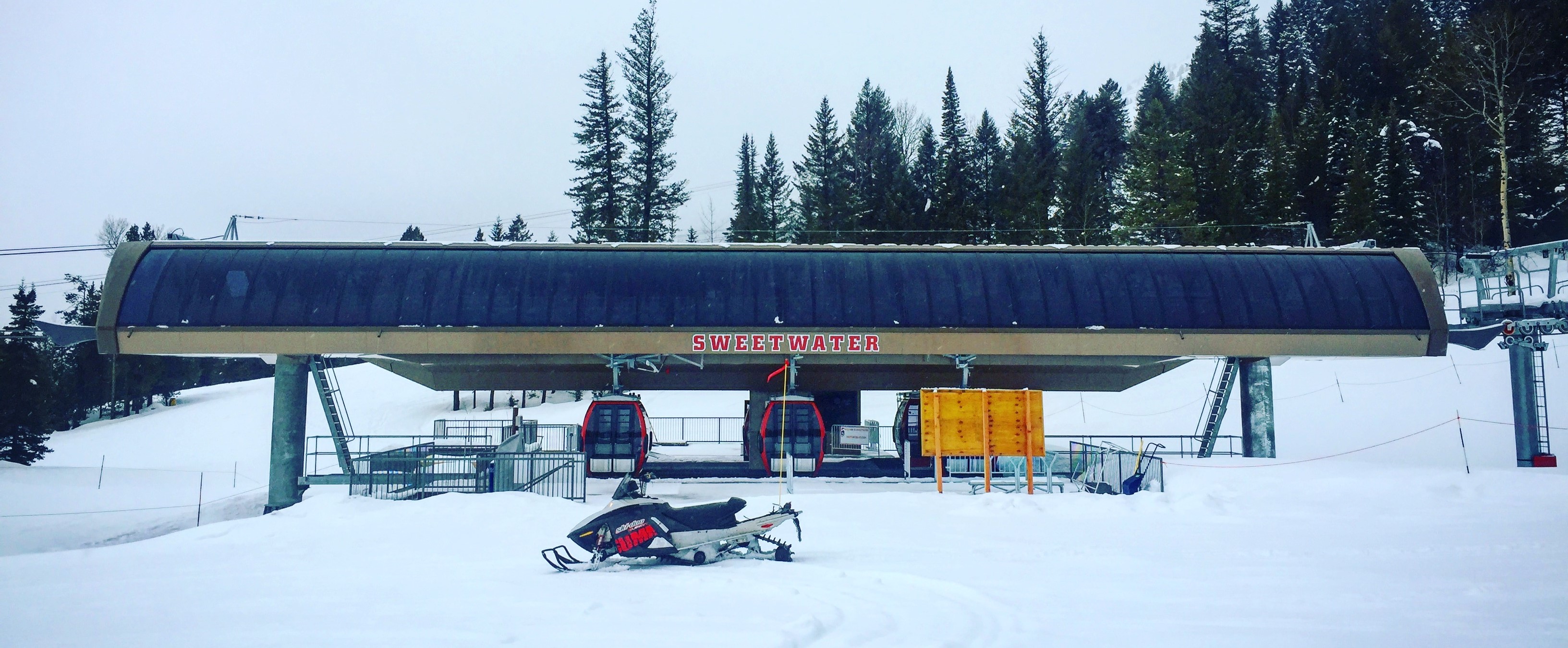
Tuesday nights are my Sunday nights at home before I start my work week every Wednesday. I was watching the news last Tuesday when our risk manager casually posted on Facebook that the power was out in Teton Village. I didn’t think much of it on a day when the roof of the local bowling alley had collapsed due to snow and with both a Winter Storm Warning and Flood Watch in effect. Unlike at some ski areas, losing power is a rarity for Jackson Hole (Crystal Mountain, where I grew up skiing, has its own dedicated power plant for such occasions; Kirkwood and Mt. Baker run without grid power every day.)
Seven minutes after the initial Facebook post, another employee wrote, “the power poles along the village road totally toppled,” just as thousands of workers and guests were headed home. We later learned seventeen 75-foot steel transmission poles had indeed fallen to the snow along ‘the windy mile,’ that last stretch of Wyoming 390 before Teton Village. The time was 6:05 pm, the stamp that would grace the webcams on jacksonhole.com for days. It was no doubt howling that night, but the poles had withstood forty years of fierce winds Wyoming is known for.
Lower Valley Energy is the electricity provider in Teton County. It’s a co-op, owned by 15,000 members like myself. While our tiny utility got to work recruiting much-needed regional help, ski area employees who could make it rallied first thing Wednesday morning. Instead of heading up, cat operators headed out to push ten feet of snow away from the power corridor. Lower Valley conceded at 9:40 am to “expect Teton Village to be out of power for 5-7 days,” and the resort announced it would not open until at least the following Monday. The internet thought it was crazy, we knew it was not.

Complicating matters, Teton Pass has closed earlier that day and ended up staying closed for almost five days amid the biggest storm cycle since 1986. WYDOT also closed the two canyon routes leading into Jackson Hole due to avalanches relentlessly coming down across them. The Teton Village substation also serves the Jackson Hole Airport and all Tuesday night flights were canceled. Whether it was workers, generators or fuel, it became tough to get anything we needed. The mountain was able to buy every available 2000-watt generator from a Honda dealer in Afton, Wyoming.
Every Tuesday, I feature my favorite Instagram photos from around the lift world.
Three months since a wildland fire ripped through Gatlinburg, Tennesee, two brand new lifts are under construction as the gateway to the Smoky Mountains rebuilds. As many suspected, the Gatlinburg Sky Lift will be replaced with a new version this spring. “We are investing in a total replacement and are excited to be in process with installation of a new scenic chairlift,” spokeswoman Julie Ard of Boyne Resorts tells the Mountain Press. The Riblet double’s haul rope and chairs have already been pulled in preparation for tower removal. The new Sky Lift will be the third version following the original Heron that operated from 1954-1991 and the Riblet that followed from 1991 until last November. I’ve reached out to Boyne for the manufacturer of Sky Lift 3.0 and am waiting to hear back. Update 2/6/17: The new lift will be a Doppelmayr Alpen Star triple chair with custom wooden seats.
Before the fire, Boyne Resorts had planned for and received approval to build an adventure park on the site, where the company has operated continuously for more than sixty years. Zip lines, a suspension bridge, walking trails and more will eventually occupy 17.5 acres. While that expansion will take some time, the lift project is progressing quickly. “Reopening of the Gatlinburg Sky Lift is expected to be April/May 2017,” says Ard. “Just as our past guests who want to come back to Gatlinburg to continue traditions of experiencing this iconic attraction, and locals who are aware of its draw among tourists, we are eager to have this lift spinning again just as quickly as possible.”
https://www.instagram.com/p/BQHpR7IBmKs/?tagged=gatlinburgskylift
Every Tuesday, I feature my favorite Instagram photos from around the lift world.
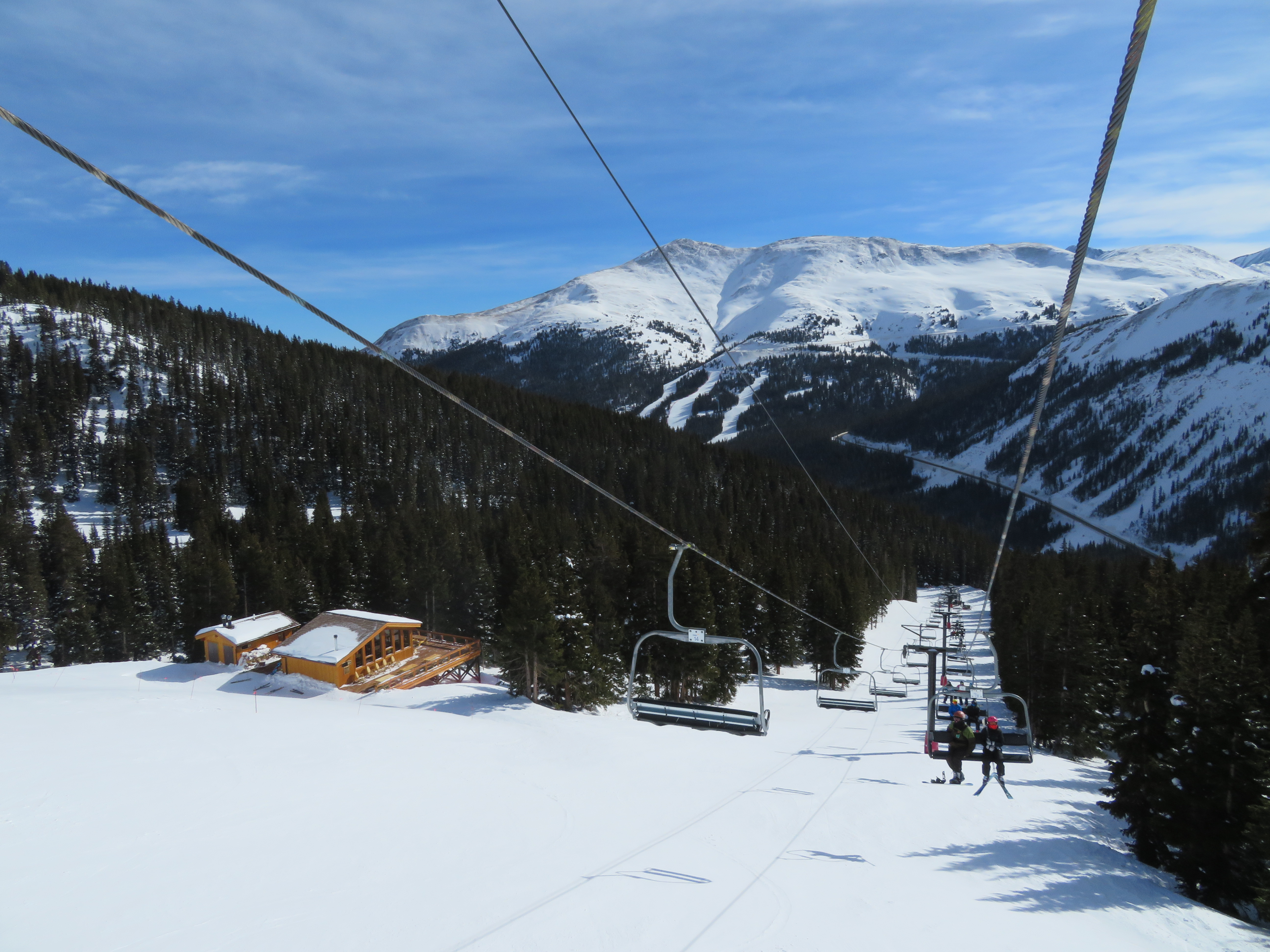
As one of America’s oldest resorts, Loveland Ski Area has welcomed skiers to the Continental Divide continuously since 1937. Although now surrounded by the likes of Keystone, Breckenridge and Winter Park and with I-70 literally cutting through it, Loveland remains a local favorite with plentiful snowfall and varied terrain served by nine fixed-grip chairlifts. The first double chair – a Heron – debuted at Loveland Basin in 1955. A second ski area, Loveland Valley, opened in 1961. A number of Heron, Heron-Poma and later Lift Engineering lifts were added through 1990. The first modern Poma quad chair debuted in 1996, followed by a series of Leitner-Poma triple and quad chairs to modernize the fleet. When Lift 9 opened in 1998, it became the highest-elevation chairlift in North America, a title Loveland held until Breckenridge opened the Imperial SuperChair in 2005.
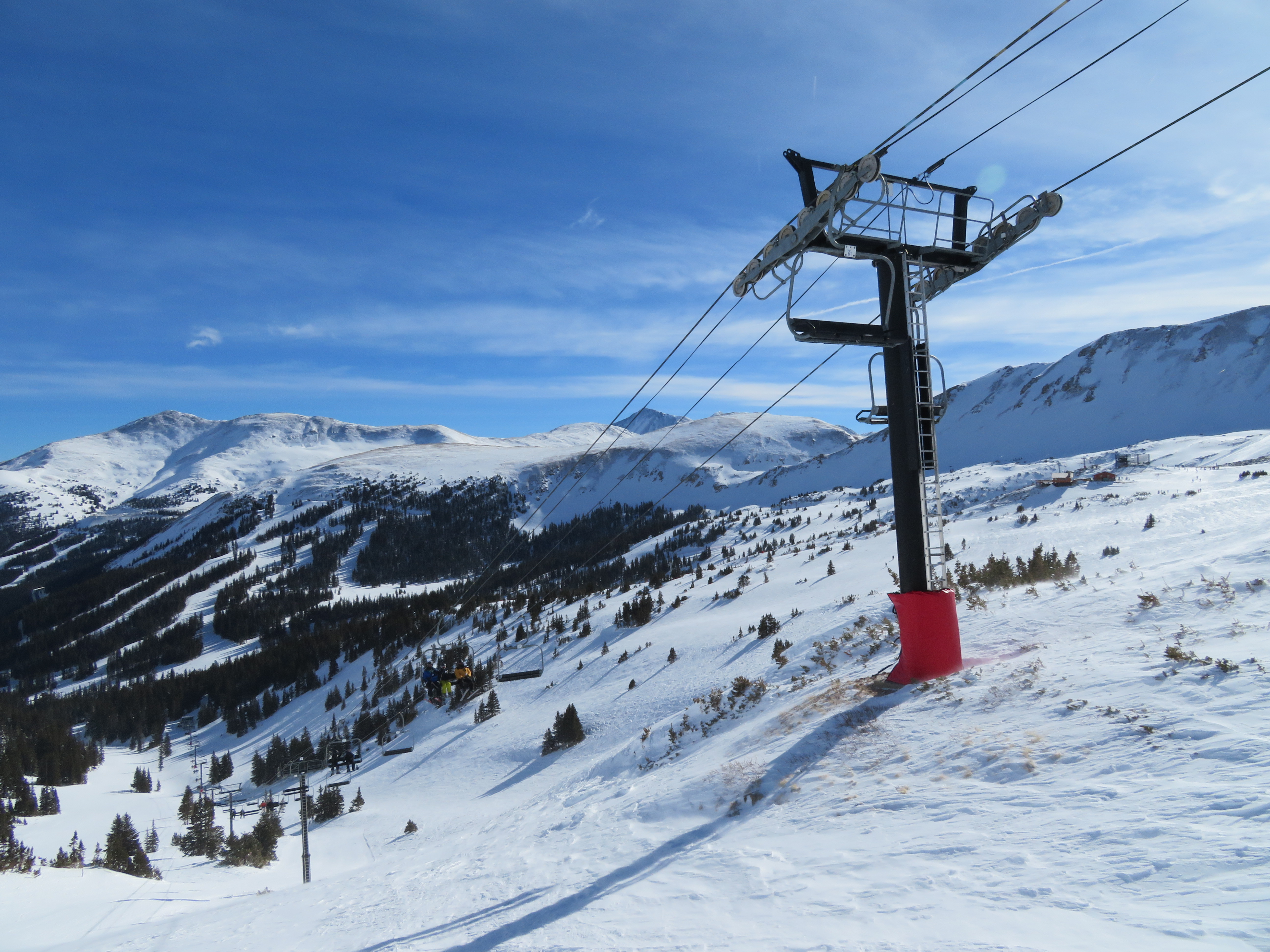
Loveland generally builds lifts below maximum capacity and skier density is much lower than the industry average, with 1,800 acres of skiable terrain and an hourly lift capacity of over 14,000 skiers. The development plan notes that Loveland’s lift network generally serves the terrain well, but some lifts are approaching the end of a typical 35-year lifespan and a few changes should be made. Just last week, lifts 1 and 6 had to be closed for multi-day repairs but have since re-opened.
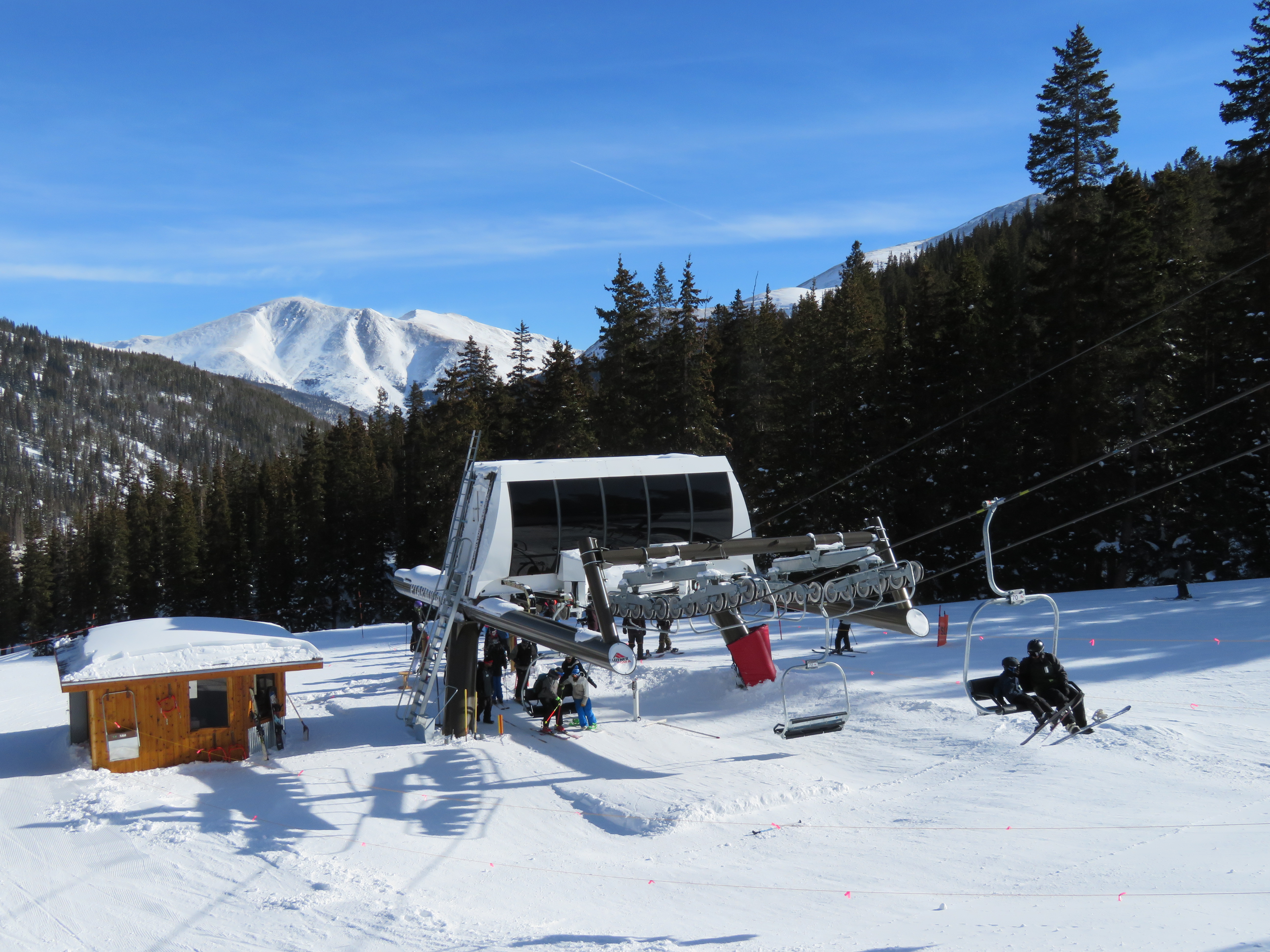
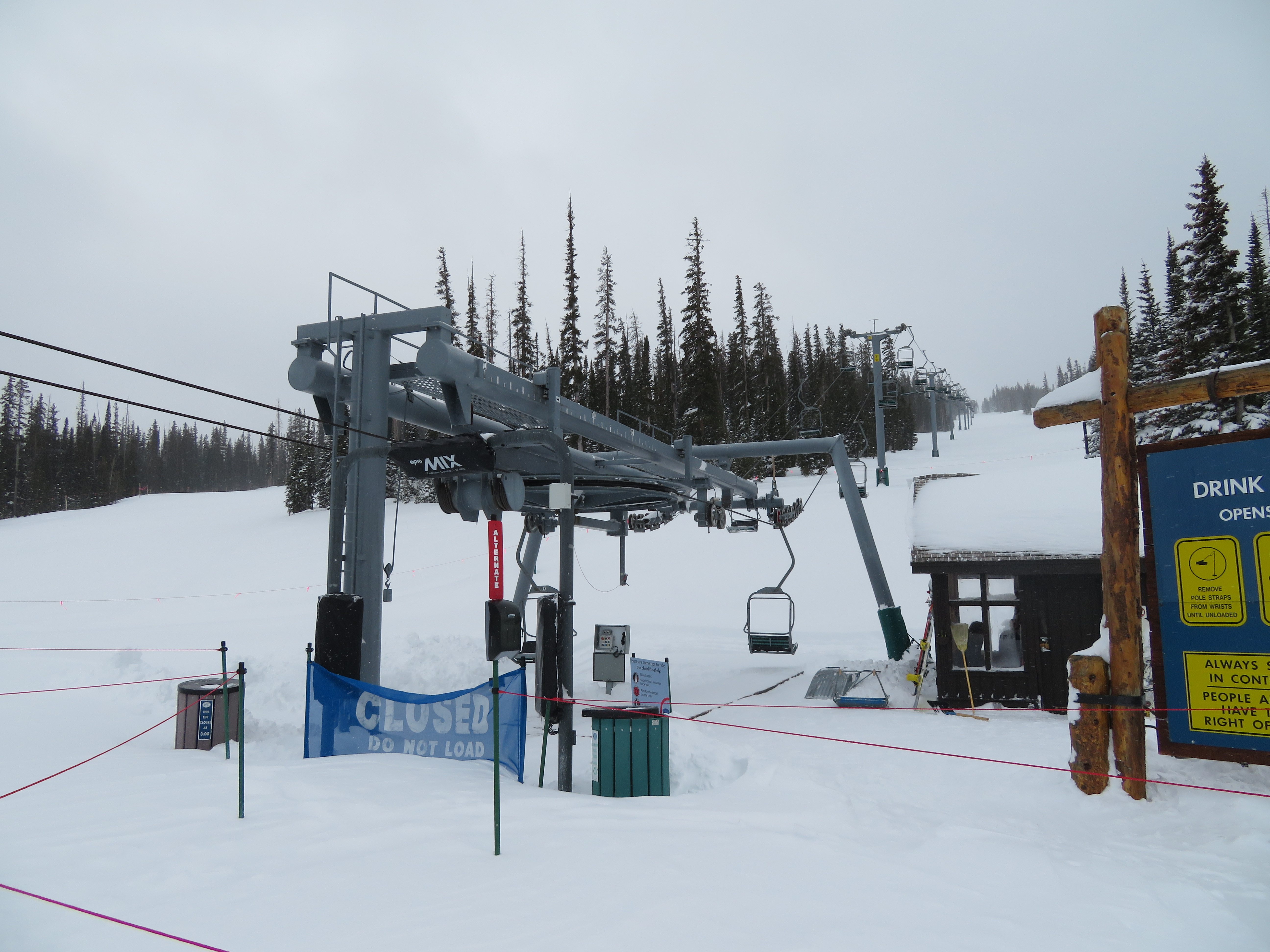
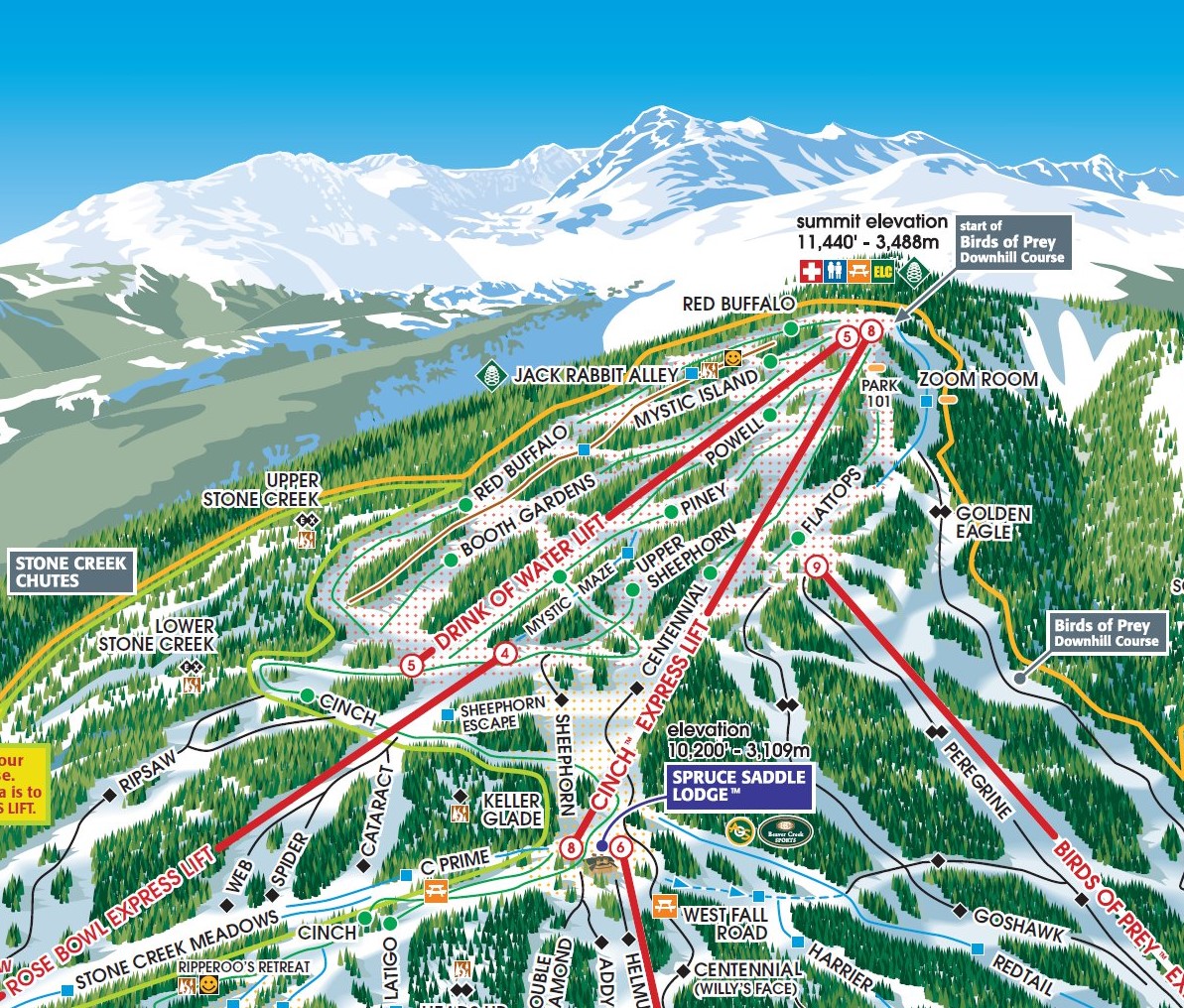
Adding to the big December announcement of new six-packs at Vail, Breckenridge and Keystone, Vail Resorts today revealed another high-speed lift will replace Drink of Water at Beaver Creek. The new 4,300′ high-speed quad will reduce the ride time from 8.6 to 4.3 minutes and nearly double capacity. “Upgrading this essential beginner lift will provide high-speed lift access to the amazing beginner and intermediate terrain at the top of Beaver Creek, increasing capacity and making for a seamless lift experience for our guests on the hill,” said Beth Howard, chief operating officer. “We expect this improvement to take significant volume off Cinch Express, Beaver Creek’s second most-popular lift, and it really is an improvement befitting of Beaver Creek’s luxury, family experience, as it enhances a key beginner and family area of our mountain.” The Drink of Water double is the last remaining lift at Beaver Creek from the resort’s inaugural season in 1980.
The Red Buffalo Express will almost certainly be built by Doppelmayr USA, as Beaver Creek operates an all Doppelmayr/CTEC fleet of 16 lifts. The four new detachable lifts in Colorado are part of Vail Resorts’ $100 million capital plan this year and we learned this week the six-packs at Vail, Breck and Keystone will be installed by Leitner-Poma. Eldora, Wolf Creek and Aspen are also likely to build new lifts for 2017-2018.

Eight new eight-passenger chairlifts debuted this ski season, the highest number in history. Twenty years since the technology debuted, Doppelmayr, Garaventa, Leitner and Poma have now built a combined 78 of these mega chairlifts on three continents and in eleven countries. With 2016 seeing the greatest number of eight-passenger chairlifts constructed, a question on everybody’s mind should be: when will the world’s second largest ski market finally build one?
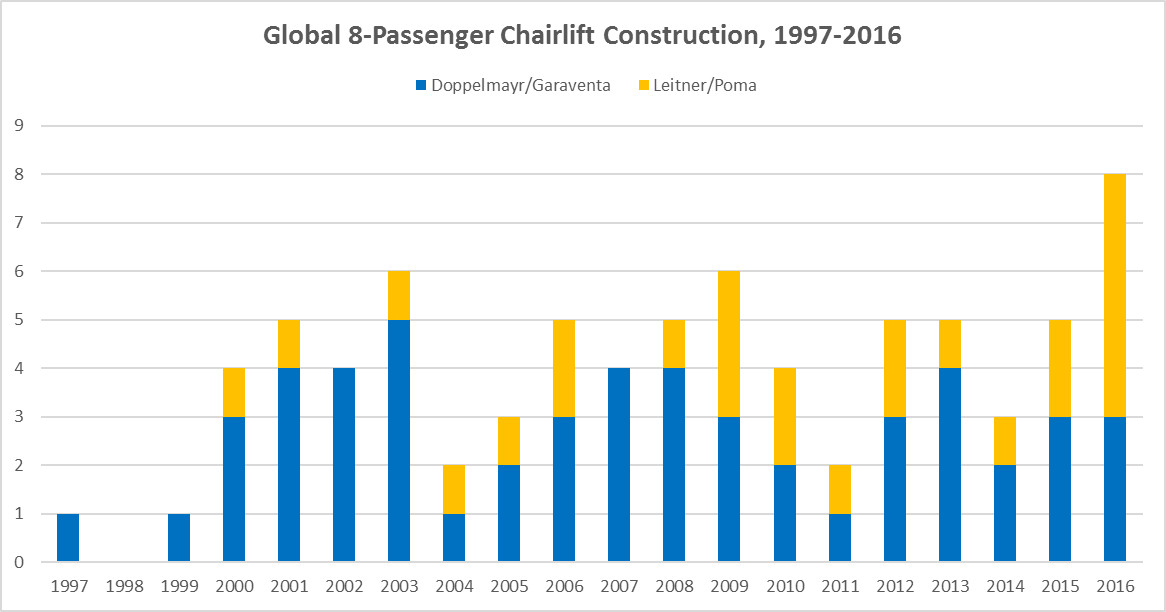
Doppelmayr debuted eight-passenger chair technology in 1997 (in Norway of all places) and continues to be the market leader, having built two-thirds of those operating today. But for the first time ever the Leitner-Poma Group installed more than Doppelmayr and Garaventa combined last year. In 2006, Leitner built the first combined installation with eight-passenger chairs and 10-passenger gondola cabins and there are now seven of these across Europe. Bubble chairs and seat heating came along in 2000 and nearly every new eight-passenger lift features both these days. In total, 60 percent of eight seaters globally have bubbles and half sport heated seats.
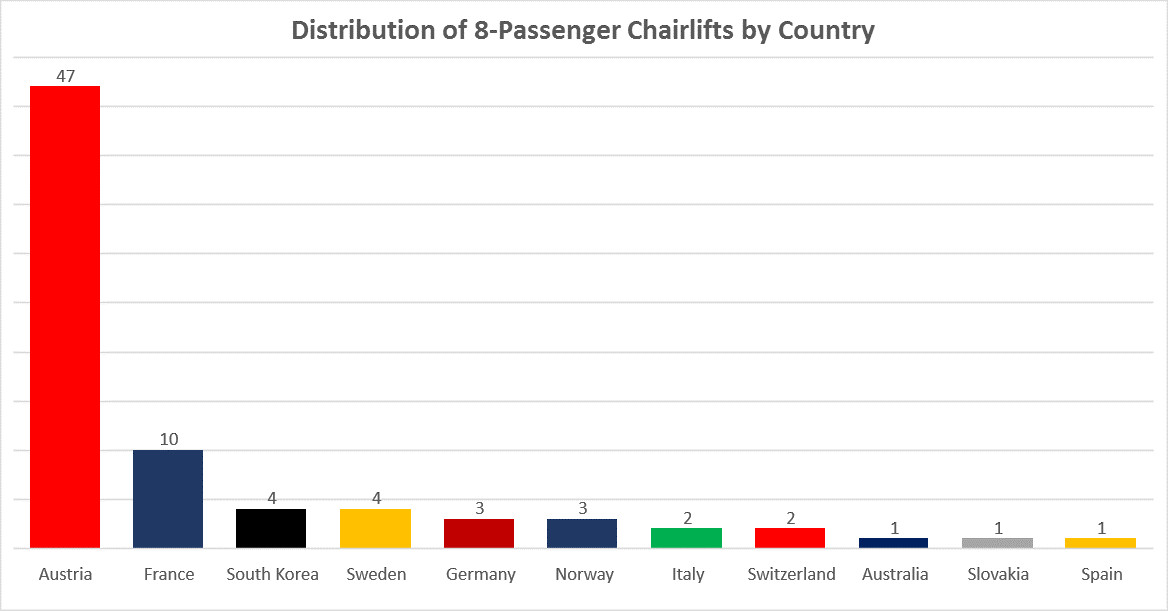
Austria is home to over 60 percent of the world’s eight-passenger chairlifts and exactly five have ever made it out of Europe. Australia and Asia each got their first in 2003 but several leading ski markets have never gone there – among them Japan, Canada, China and the United States.

