
Every Tuesday, I feature my favorite Instagram photos from around the lift world.
Author: Peter Landsman
Leitner-Poma to Build New Quad Chair at Whitewater, BC
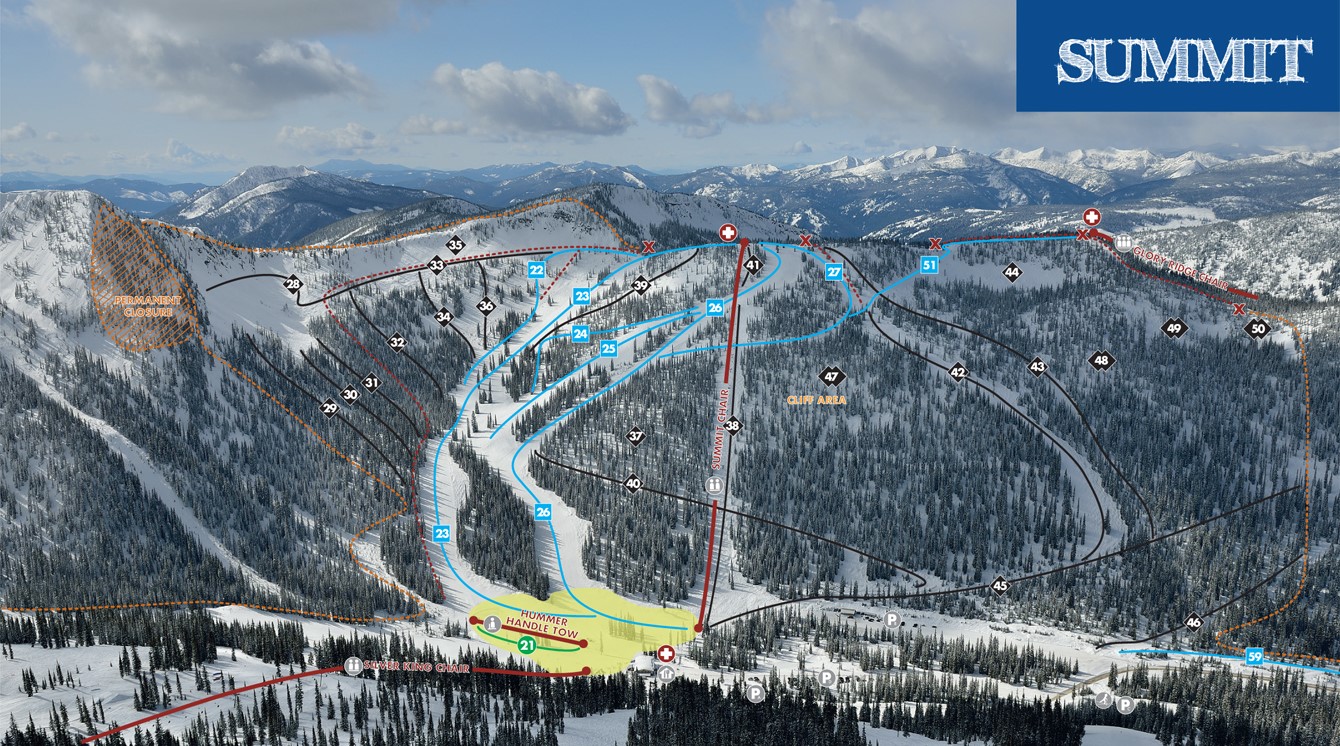
Whitewater Ski Area will get its first new chairlift since 1975 this coming summer, when a Leitner-Poma fixed-grip quad will replace the Summit double chair in time for next ski season. “The team at Whitewater is really excited to be able to further improve the experience we offer here at the resort,” said General Manager Kirk Jensen on Monday. “It is going to be a significant upgrade for the resort and ultimately for our guests.”
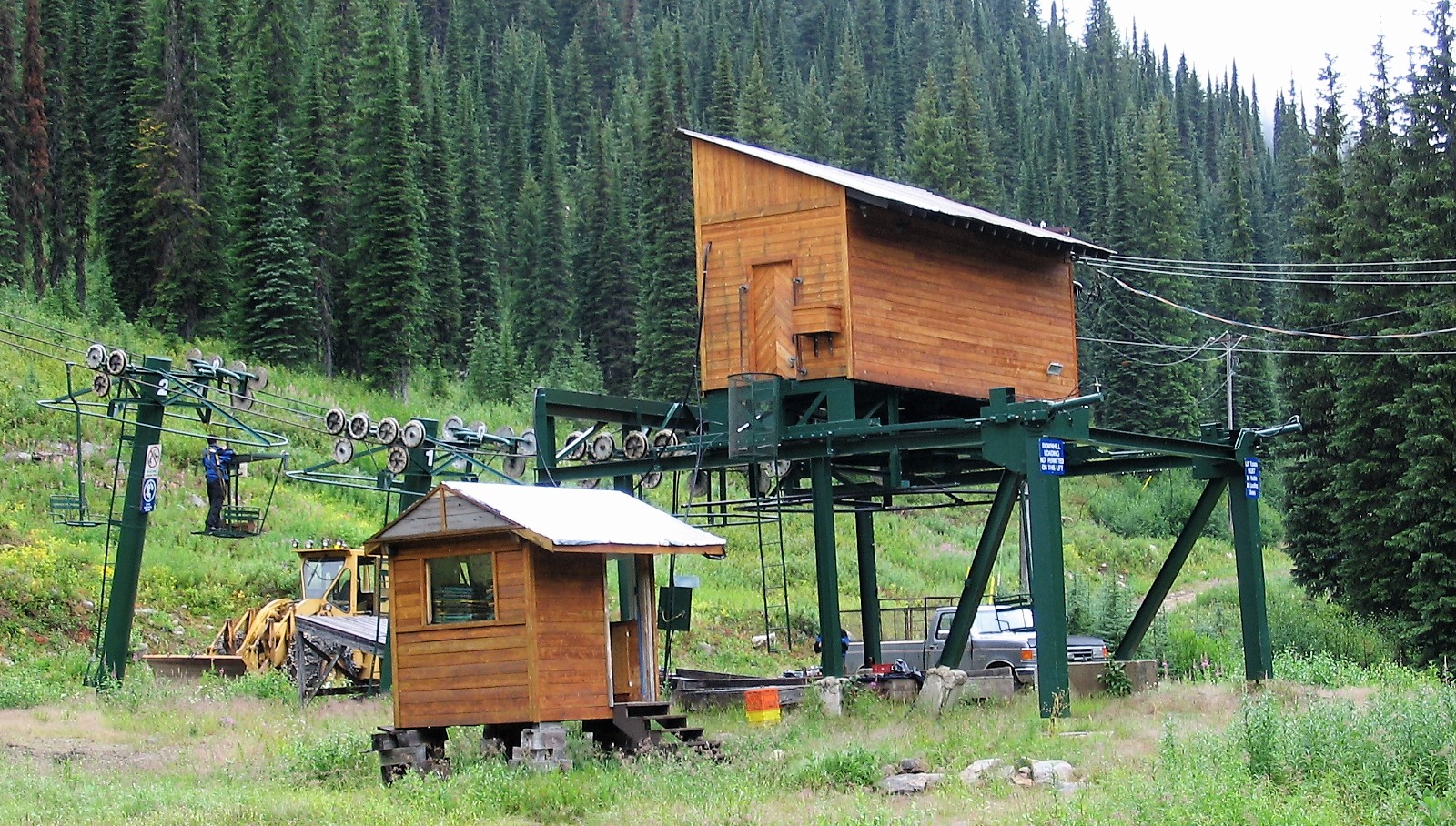
The 3,088-foot lift will run in the same alignment as the old with a 6.2 minute ride time and a vertical of 1,241 feet. Towers will be taller, the center pole Riblet chairs gone and loading/unloading areas improved. Whitewater is owned by Knee Deep Developments Ltd. in a nod to the massive snow pack that usually graces Nelson, BC. The mountain’s two other chairlifts were relocated from other ski resorts, most recently the Glory Ridge triple from Vail in 2010. A truly new lift will be a welcome addition for guests at this gem of a ski area in the Selkirk Mountains.
New York Governor Announces Gondola & Skyride at State Fair
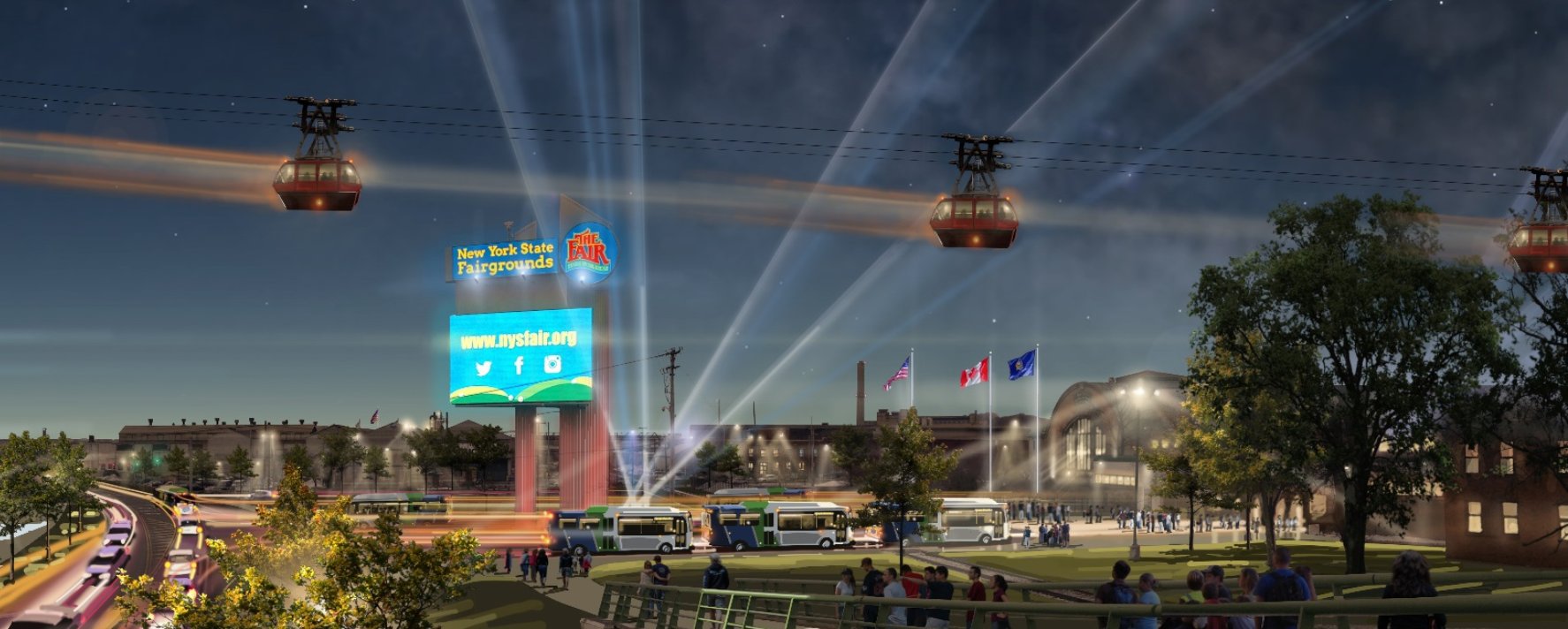
A $15 million gondola system will connect the New York State Fairgrounds in Syracuse to a nearby amphitheater, Governor Andrew Cuomo announced this morning. “This is very, very exciting and it brings the energy of both facilities together for a synergy between the two,” Cuomo noted, calling the planned gondola “world class.” The lift’s 38 cabins will cross Interstate 690 along a 3,700′ route. The project still requires federal approval but is scheduled for completion in June 2018.
The gondola will link more than 15,000 parking spaces at the fair to the 17,500-seat Lakeview Amphitheater, which will host major acts such as Zac Brown Band and Third Eye Blind this summer. The amphitheater gondola station will also serve Onondaga Lake Park and its network of popular trails. The state- and county-owned facilities are currently connected by shuttle buses operating on a circuitous route during major events. Capacity of the eight-passenger lift will be 1,200 passengers per hour. An expansion to 75 cabins would achieve an ultimate capacity of 2,400 per hour. A manufacturer has not yet been selected and the state will hold a competitive bid process in the coming months.
A separate, privately-funded and operated skyride lift will also be built this spring, traveling 1,500 feet over the fairgrounds with between 100 and 120 double chairs. Dozens of fairs across the country operate either chairlifts or gondolas for fair-goers, among them a new Skytrac ride at Cal Expo, a Partek chairlift at the North Carolina State Fair and the Texas Skyway gondola built at the Texas State Fair in 2007.
Governor Cuomo also announced $20 million in improvements at the state-owned Belleayre, Gore Mountain and Whiteface ski resorts today, including a new enclosed upper terminal building for Gore’s Northwoods Gondola and a new lift connecting Whiteface’s learning center to mid-station. New York State owns more lifts than any other state – 27 in total – including the Roosevelt Island Tramway. The government has been a frequent customer of both Doppelmayr and Leitner-Poma over the years.
News Roundup: Huge
- The Grand Canyon Express is a huge development for Arizona Snowbowl and the entire Flagstaff region.
- New York State Fairgrounds to build a gondola, though details are scarce.
- Mi Teleférico hits 75 million riders, will surpass 100 million in April.
- Searchmont finally reopens its quad chair after a six-year repair.
- The Portland Aerial Tram transported a record 2.1 million riders last year. In ten years, it has indirectly contributed $1 billion to the Portland economy while creating 4,000 jobs.
- This forum thread is an interesting read on how guests can perceive lifts.
- The Denver Post reports Fortress Investment Group is considering selling Intrawest, operator of Blue Mountain, Snowshoe, Steamboat, Stratton, Tremblant and Winter Park.
- Editorial in the Summit Daily hates on Vail Resorts’ six-pack push with a jab at Leitner-Poma (though the lift pictured is actually a Doppelmayr.)
- Ray’s lift at Sundance is rope evacuated, remains out of service three days later.
- Bearing issues apparently caused the closures of lifts 1 and 6 at Loveland.
- Waterville Valley’s only summit access lift rope evacuated for the third time in three weeks, now closed until further notice.
- Poma’s new eeZii terminal offering in Europe features a footprint 20-30 percent smaller than its predecessor.
- Power outage leads to partial rope evacuation at Sandia Peak.
Leitner-Poma to Install New Drive on Quickdraw at Granby Ranch Following Accident
Leitner-Poma wasn’t involved in recent work that likely caused last month’s fatal fall at Granby Ranch, but the original manufacturer of the lift will fix it. Ten days after re-opening using only the lift’s diesel auxiliary, Granby Ranch has a plan to restore Quickdraw to full capacity with a new electronic drive. In a statement issued today, The ski area acknowledged a third-party company modified the drive system over the summer, as I reported last week. “Preliminary investigation has revealed that the issue that likely caused the incident was the independent contractor’s modification to the lift’s electrical drive/control system,” the release notes. The third-party installed system only operated 13 days before a chair hit a tower Dec. 29th, killing 40-year old Kelly Huber of Texas and injuring her two daughters.
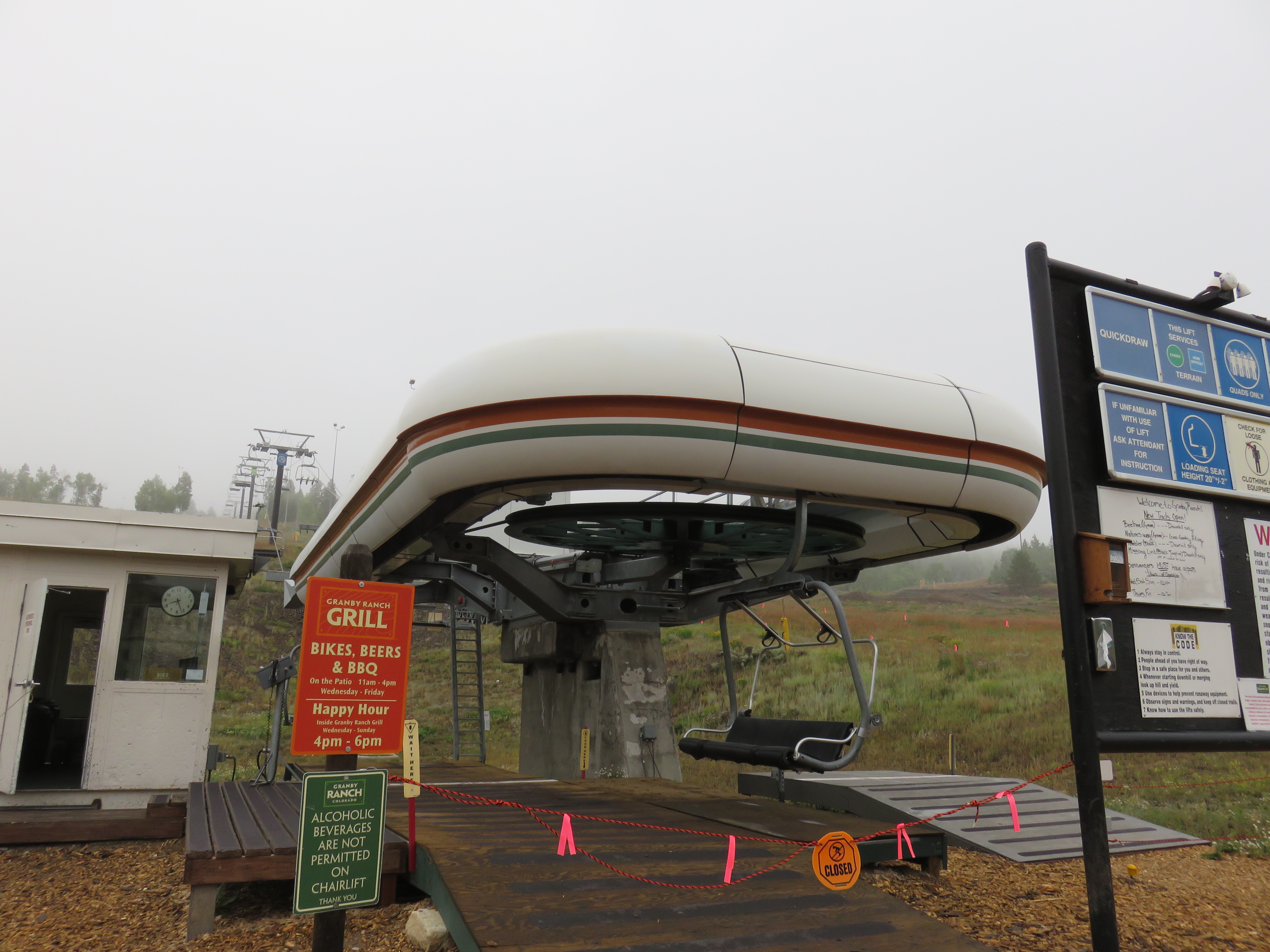
Earlier today, Granby Ranch said Quickdraw would be closed today and tomorrow for additional testing, as ordered by the Colorado Passenger Tramway Safety Board. The area hopes to re-open again under diesel power in the next few days and Leitner-Poma will install the new electronic drive system in the near future. The CPTSB will release its official report on the December incident in the coming months.
Update 1/21/17: A state spokesman says the CPTSB ordered the lift closed until further notice at an emergency meeting after reviewing “unusual/irregular conditions” observed while Quickdraw was operating with the diesel auxiliary.
Mt. Bachelor Releases Stunning Cloudchaser Short Film
A new lift changes a mountain. In this story, the mountain is a volcano and the actors are Mt. Bachelor, Doppelmayr, Highlander Lift Services & Construction, Timberline Helicopters and the Forest Service. Cloudchaser: The Story Behind Building a New Lift is one of the best videos you’ll see in awhile.
Congratulations to the team on a job well done. Thanks to their efforts, Mt. Bachelor is now the sixth largest ski resort in the United States!
“We don’t fly the helicopter and we don’t tie the knot.” – Paul Johnston, Highlander Ski Lift Services & Construction.
Loveland Closes Two Yan Lifts for Unspecified Repairs of Similar Issue
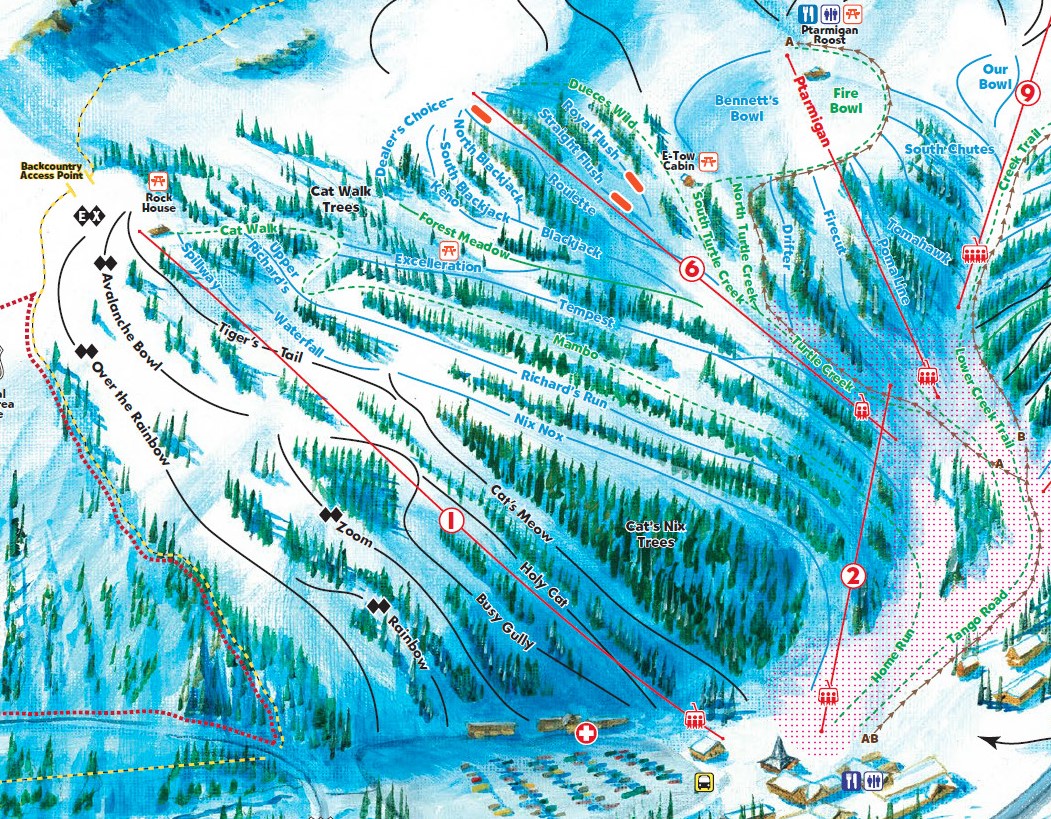
Loveland Ski Area has closed its two oldest chairlifts – Lifts 1 and 6 – following discovery of similar problems at each. Lift 6 is a 1977 Lift Engineering double chair that closed in the middle of the day on Sunday, January 15th due to a problem at the top terminal. Lift 1 is a 1981 Lift Engineering triple that operated until an inspection found the early stages of a similar issue today (interestingly, Lift 1 opened as a double chair before being upgraded with larger chairs a few years later.)
“We are dedicated to safe lift operations and have decided to close Lift 1 to immediately perform the necessary repairs,” Loveland said in a statement this evening.
While Loveland’s social media posts do not specify what is wrong, they say repairs to Chair 1 should take about two days with Lift 6 taking longer. Both chairs are bottom drive/bottom tension, so the list of things that could go wrong up top is limited. In the meantime, the mountain is offering $51 discounted tickets.
Update 1/20/17:
Yellowstone Club to Expand with Gondola & More on Eglise Mountain
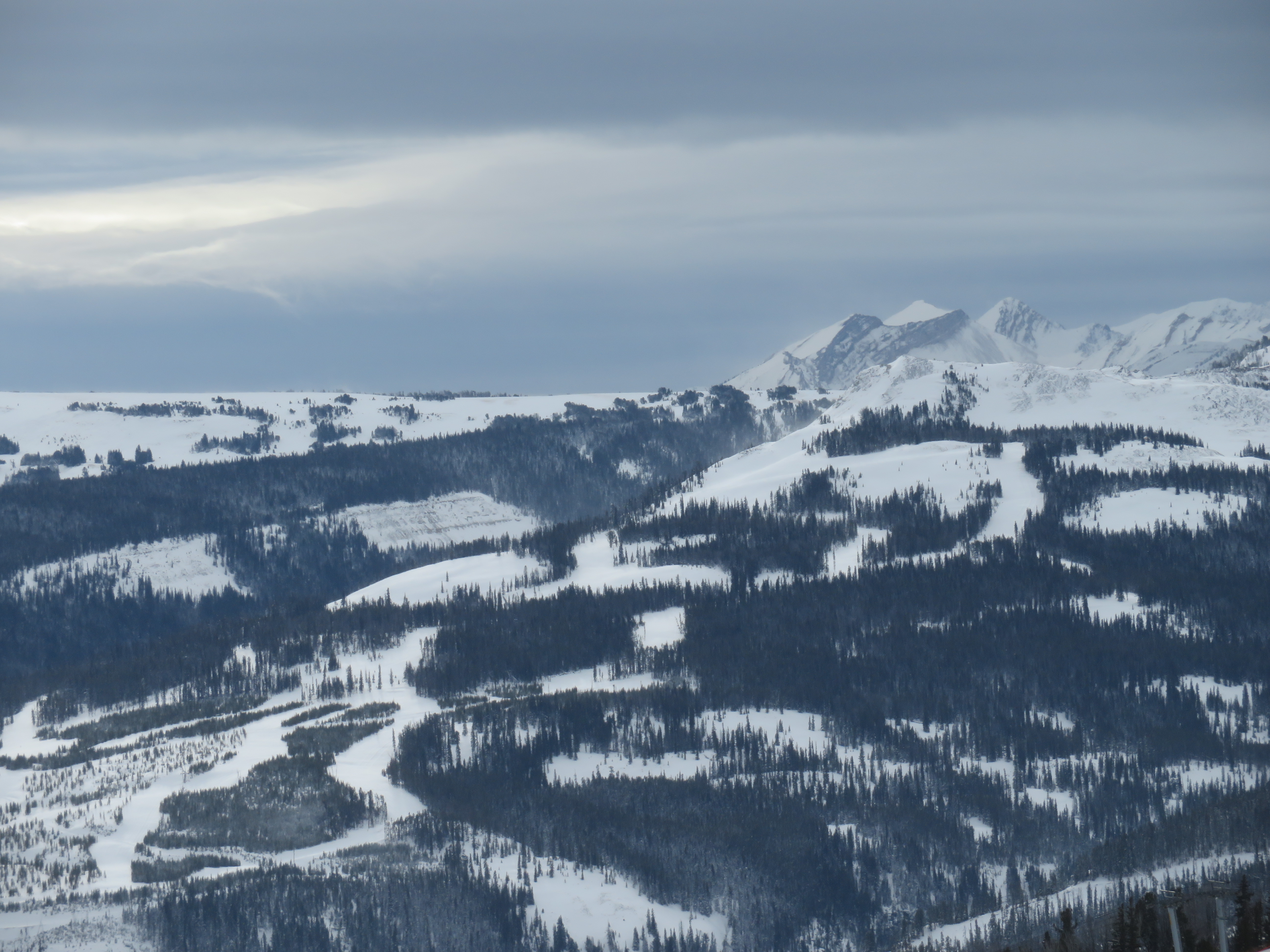
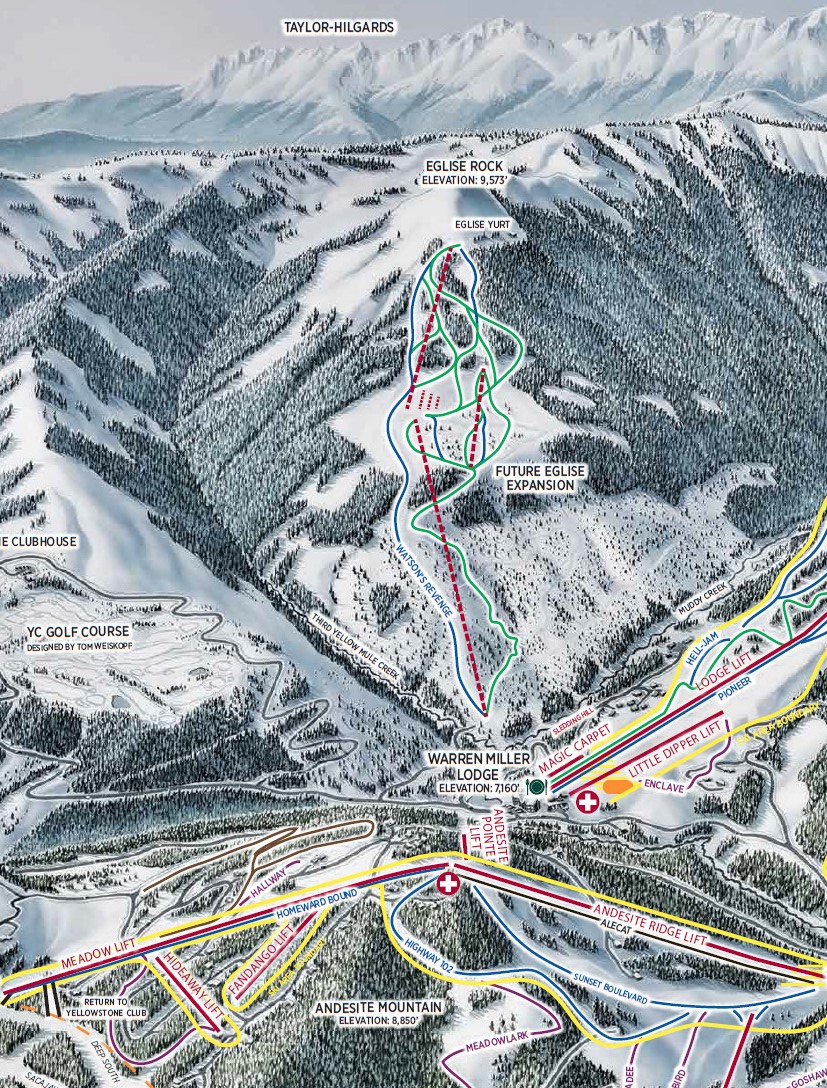
Doppelmayr USA will build the new lifts and already poured many of the tower and terminal footings last summer. The upper section of the 8-passenger Eglise Gondola will debut first, with the lower stage to be added when the 550,000 square-foot Village Core is substantially completed. That project, located adjacent to the Warren Miller Lodge, is also underway and currently the biggest construction project in Montana. A dedicated building in the village will eventually house the new gondola’s base terminal, not far from the Lodge lift.
News Roundup: Building
- I talk six-packs with the Vail Daily.
- Heavenly’s Comet Express remains closed following a Jan. 1st rope evacuation, apparently due to a gearbox issue. This is one of the reasons Vail Resorts is replacing its fleet of 1980s-vintage detachable quads.
- Doppelmayr and the United Nations are hosting a week-long urban mobility ropeway class in April.
- The New York Times tells the tale of Big Sky Resort.
- Ski patroller severely injured in fall from chair at Terry Peak.
- Gondola proposed to serve airport in Vietnam’s congested largest city.
- BC Parks considers a gondola to Mt. Seymour to alleviate parking and traffic problems.
- Ski Area Management‘s lift construction survey dropped this week. Highlights from its outlook for 2017:
- “We’re off to a strong year for ’17, there are lots of people asking about lifts…It’s very positive compared to the previous two years.” – Jon Mauch, Senior Sales Manager at Leitner-Poma
- “There’s a lot of enthusiasm about what could happen under a Trump administration. People expect deregulation and a more business-friendly climate.” – Mark Bee, President at Doppelmayr USA
- “We’re seeing lots of requests quotes, lots of major modifications and retrofits…It’s all being driven by the age of the existing lift infrastructure.” – Carl Skylling, General Manager at Skytrac
- I’ve already identified 29 new lifts likely to be built in 2017, pacing well above the last few years for mid-January.
- Slovakian manufacturer Tatralift debuts its third detachable lift using a Wopfner grip. That makes seven companies capable of building a detachable lift globally – Bartholet, BMHRI (China), Doppelmayr/Garaventa (Austria), Leitner–Poma (Italy), LST (France), STM (Turkey) and Tatralift (Slovakia.)

