Telluride Weighs Future of Mountain Village Gondola

telluride-gondola
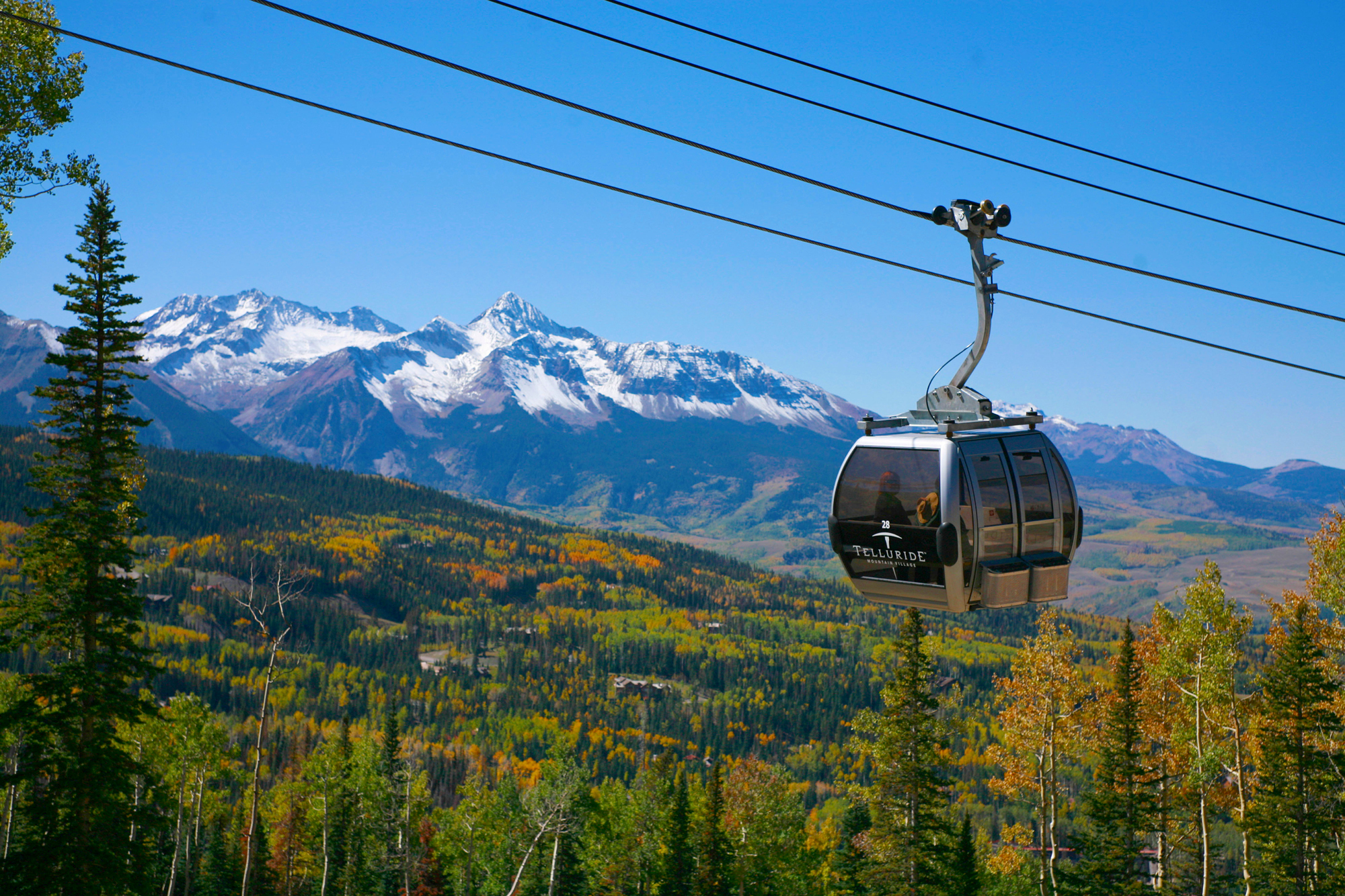
A gondola cabin rises from Mountain Village towards the Town of Telluride.  The transit system now operates into the fall each year in addition to winter and summer. Photo credit: Telluride Ski Resort

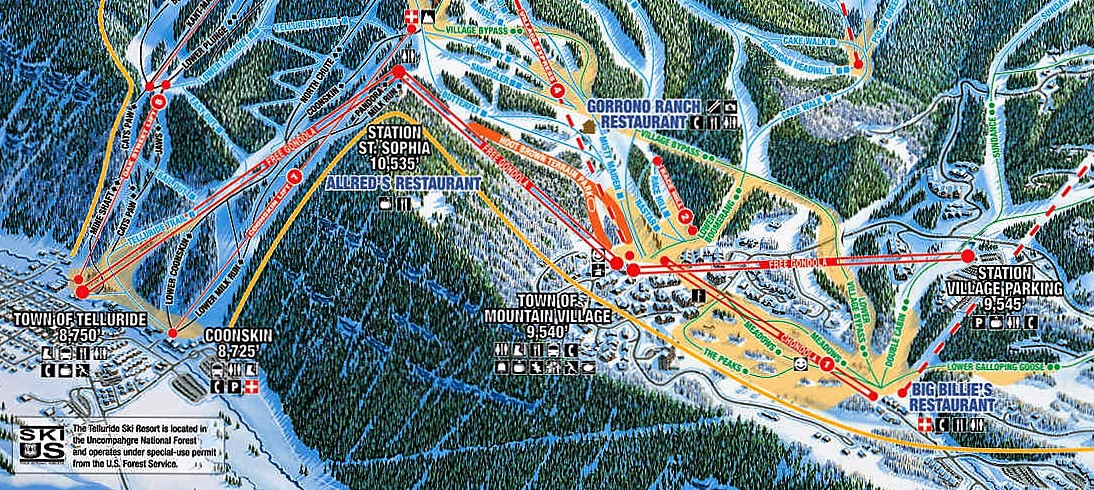
Twenty one years ago this December, a first-of-its kind gondola system opened between Telluride and Mountain Village in one of the world’s great mountain towns.  The 3-stage Garaventa CTEC gondola cost $16 million to build but is completely free to ride.  Thirty-nine million passengers later, this unique system operates 275 days each year and 19 hours per day.  The lift features three haul ropes and cabins interline between sections 1 and 2, from Oak Street to Station St. Sophia and Mountain Village.  Section 3 further connects Mountain Village Center to Station Village Parking.  The Town of Mountain Village owns and operates the gondola (at a cost of $4 million a year) with funding from Telluride Ski & Golf, the Telluride Mountain Village Owners Association and San Miguel County.  The parties in 1999 agreed to fund the gondola through 2027, but with over 100,000 operating hours the existing machine may not last until then.

To give you an idea how critical this transportation link has become to people who live, work and visit Telluride, dates of operation are announced three years in advance and a fleet of buses replaces gondola service whenever down time reaches 30 minutes or more.  Custom lightning protection on towers maximizes up-time year round.  The gondola’s aggressive operating schedule makes upgrading an aging system challenging.  A $6 million overhaul completed in 2007 and 2008 replaced many of the systems moving parts in phases.
telluride-trail-map

In 2014, the U.S. Department of Transportation agreed to fund an engineering study of the gondola due to its crucial role in public transportation.  Not surprisingly, Doppelmayr submitted the winning bid to perform the study and released their findings last fall.  The 239-page report looked at adding system capacity, transitioning to level walk-in boarding, replacing major components and/or rebuilding the entire system.  Russ Oberlander of Doppelmayr concluded ultimately that, “past and continued maintenance, along with the capital replacements and upgrades of the Mountain Village Gondola system could allow the system to run indefinitely.”

Continue reading

News Roundup: Transactions

After 45 Years, Snowbird Tram Still Soars

img_5031
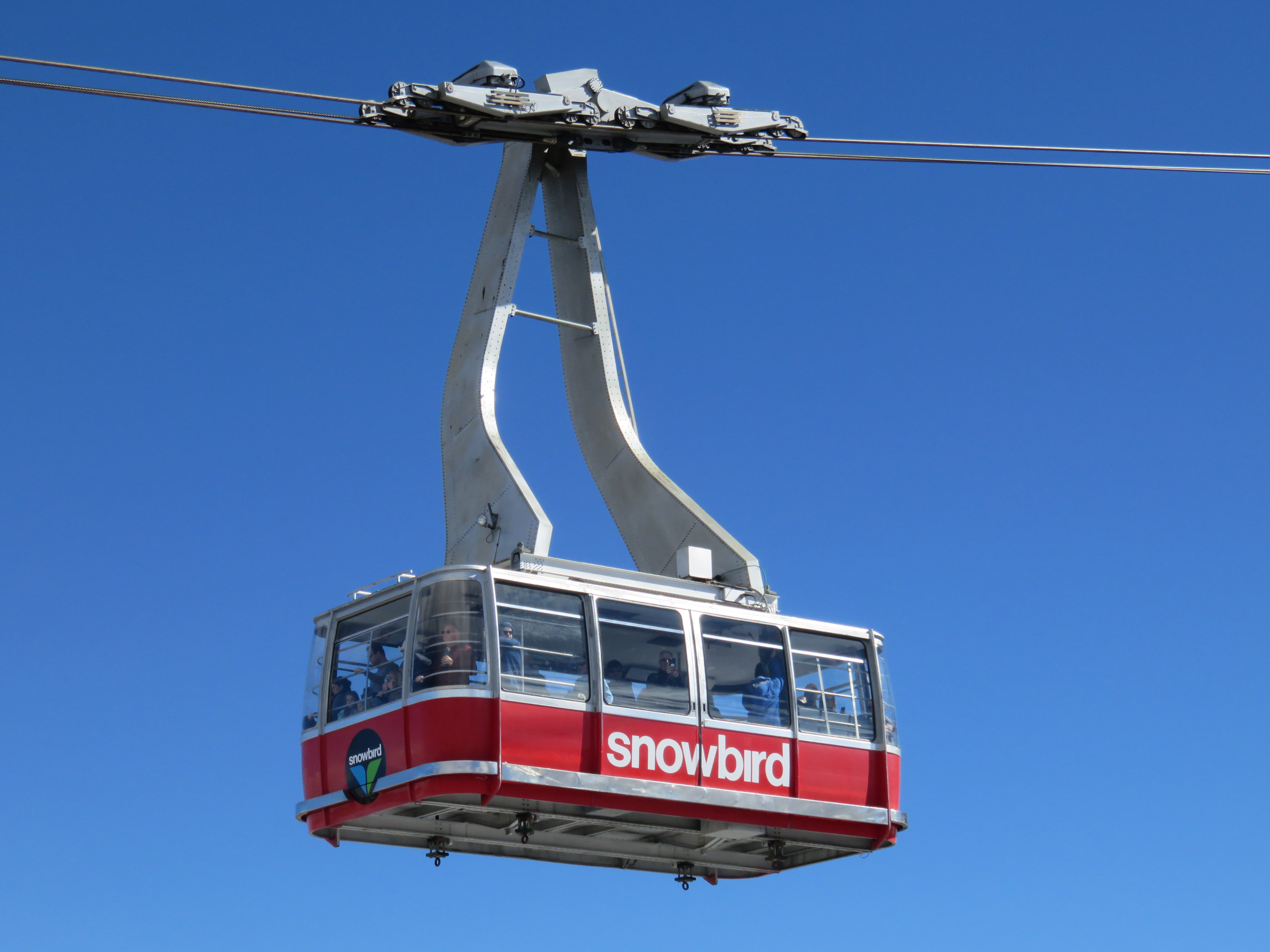
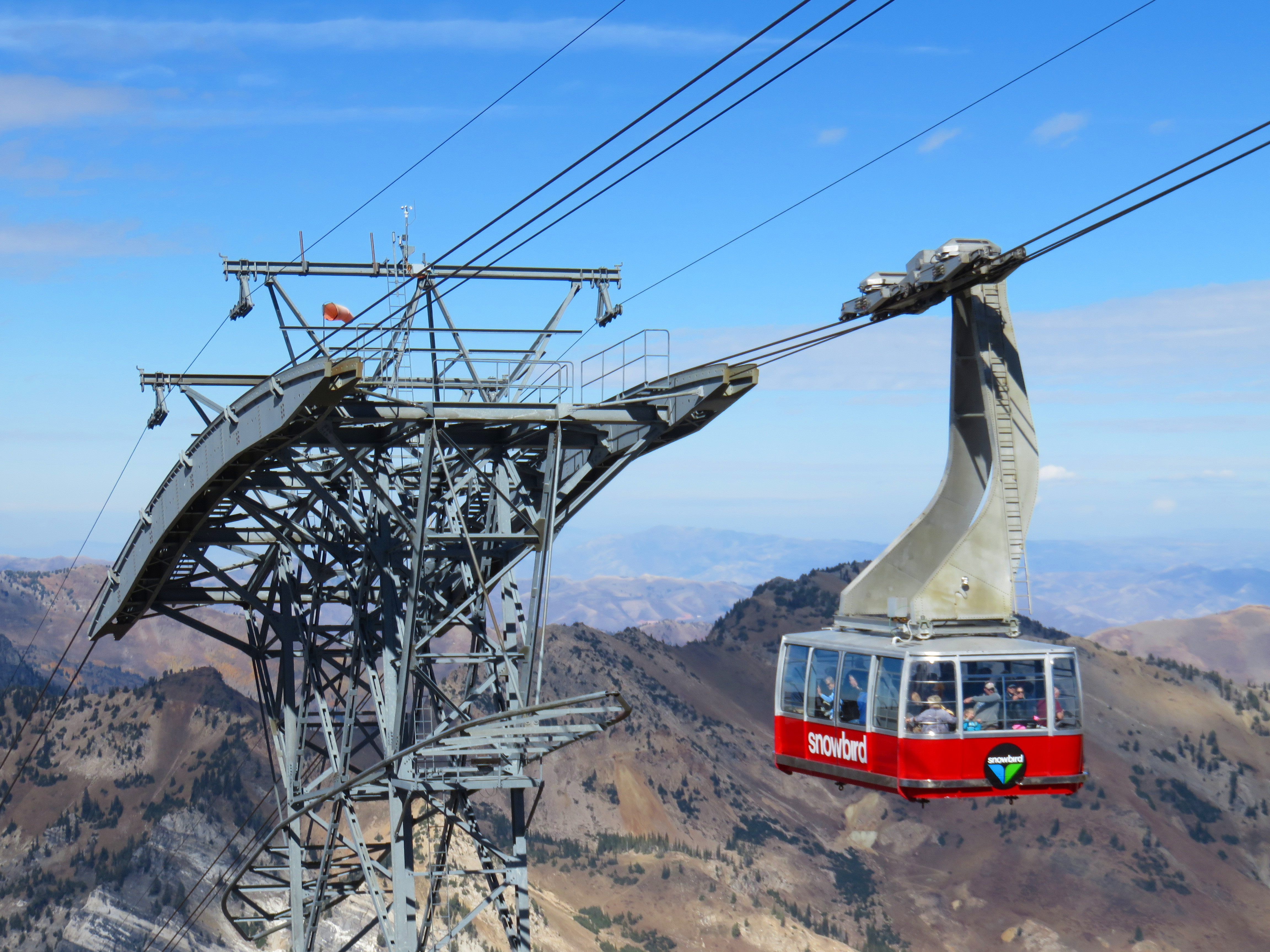
The iconic Snowbird Aerial Tram has carried skiers up Hidden Peak in style for 45 years.

Few lifts in the world are as iconic as the Snowbird Tram with its 125 passenger red and blue cabins rising from Little Cottonwood Canyon to Hidden Peak.  When it opened in 1971, the tram was one of the longest, largest and most powerful aerial tramways in the world and remains so today.  In his 168-page book dedicated to this machine, Walt McConnell said of the tram, “It was loaded with innovative features and immediately became the symbol of Snowbird.”  A timeless style combined with recent upgrades mean the tram is sure to remain an icon of the Wasatch for years to come.

img_5002
The tram has just four support towers along its 8,395-foot length.

Decades after the founding of nearby Alta, Ted Johnson envisioned a carefully-designed, 40-acre resort village with modern American design anchored by a tramway.  After a trip over from Vail, Dick Bass agreed to join team Snowbird and provide financial backing.  Ted quietly began buying mining claims in Little Cottonwood Canyon while still working at Alta.  In Ted’s mind, a tram was the only lift to build and the route to Hidden Peak was clear.  “The awesome massiveness of the tramway and its terminal buildings-to-be set the stage for the bold architectural statements of all of Snowbird,” he declared.    He went public with the Snowbird development in 1966, forming Snowbird Design Group.

img_4996
Snowbird’s twin tram cars are designed for 125 passengers or 21,420 lbs. each.

Continue reading

Eisgratbahn 3S Opens Today in Austria

The 2.8 mile 3S gondola Eisgratbahn, believed to be the world’s most expensive lift, debuts today after two long summers of construction.  The two-stage system features 49 32-passenger Symphony cabins transporting up to 3,014 passengers per hour 4,000 vertical feet.  The goal is to reduce the frequency of wind closures versus the former gondola lift.  Congratulations to Leitner Ropeways and Stubaier Glacier on completing this monster project.

News Roundup: Vacation

Hello readers- for the next two weeks I am floating the Grand Canyon without access to the internet.  I’ve scheduled a few posts for my absence, otherwise lift blogging will resume Nov. 5th     –Peter from Flagstaff, Arizona.

Arizona’s First Six-Pack Takes Shape at Arizona Snowbowl

img_5919
The new Grand Canyon Express at Arizona Snowbowl is more than a mile long with over 1,500 feet of elevation gain.

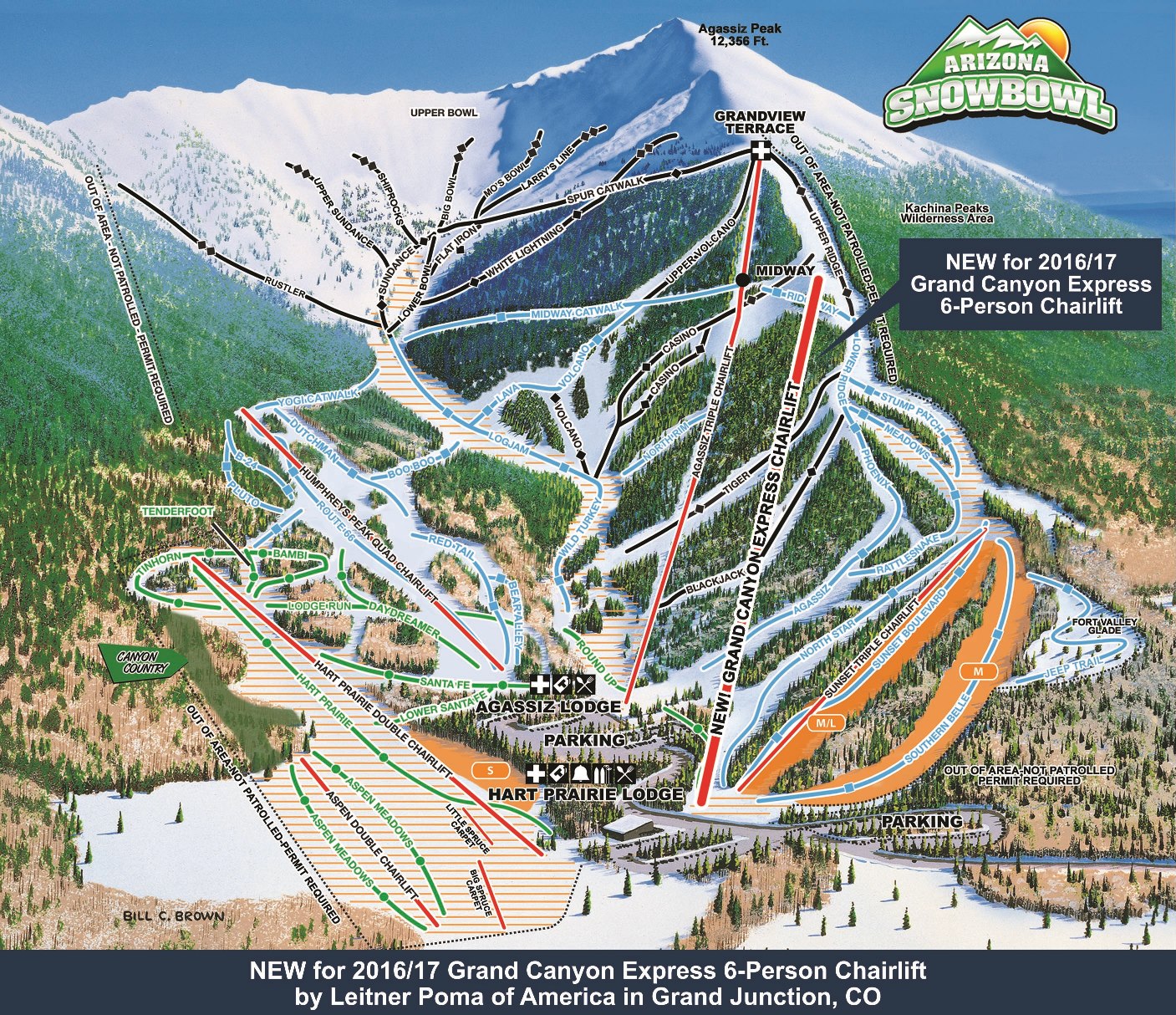
Just over a year ago, Arizona Snowbowl near Flagstaff hadn’t seen a new lift in 30 years. Now under the ownership of James Coleman, the resort is undergoing a renaissance with two new lifts in the last two years, new snowmaking coverage and expanded terrain.  Last fall, Skytrac installed a new quad chair on the lower mountain named Humphrey’s Peak, a nod to Arizona’s highest mountain.  This winter, Snowbowl will add the largest new chairlift in the country called the Grand Canyon Express.  Built by Leitner-Poma, the six-pack is nearly complete and staff couldn’t be more excited about their mountain’s first detachable lift serving popular intermediate terrain with a six minute ride.

2016-17-new-chairlift_bold_0

The first six-place lift in the state is large by any measure, not just gauge but also length (5,801 feet) with an impressive vertical of 1,546 feet.  The line will have 61 chairs initially, moving up to 1,800 skiers per hour at 1,000 feet per minute.  Arizona Snowbowl will be able to add 54 more chairs to reach 3,400 pph in the future.  The new lift serves all of the terrain formerly accessible from the Sunset triple chair, which may eventually be removed.  The Grand Canyon Express also accesses 90 percent of the acreage off Agassiz, Snowbowl’s workhorse lift that takes 13 minutes to ride.

Continue reading

At Sundance, Doppelmayr Races to Replace Arrowhead Lift in 95 Days

Robert Redford’s Sundance Resort faced a challenge last fall.  How could it find enough time to replace an aging lift that brings skiers to the mountain’s summit but also provides access to a hugely popular zip tour?  With ski resorts increasingly becoming hubs for summer recreation, this is becoming a more frequent problem.  Building a lift typically takes at least four months although there are exceptions.  In 2015, Snow King Mountain replaced the heavily-used in both summer and winter Rafferty lift with a Doppelmayr quad in record time – under three months – between closing day of ski season and Independence Day weekend.  This fall, Doppelmayr is making a similar push at Sundance to complete the new Arrowhead Quad.

Sundance’s other triple chair, Flathead, is actually ten years older than Arrowhead, which begs the question of why the latter will be modernized first.  Built by Lift Engineering in 1985, the old Arrowhead could only download 240 guests per hour which no longer worked for summer operations.  Furthermore, Yan used aluminum sheaves (with hubcaps!) on many of its later-model lifts which became prone to cracking.  You’ll notice many Yan lifts of Arrowhead’s vintage sport upgraded line gear from Doppelmayr or Poma.  Rather than upgrading piecemeal, Sundance announced last December it would replace the entire lift with a brand new quad chair.  “With the amount of use Arrowhead Lift sees year-round, this upgrade is exciting to the skiing, snowboarding, ZipTour and summer programs that our guests love so much at Sundance,” director of mountain operations Czar Johnson said in a release announcing the project.

Continue reading