The non-profit organization that bought Soldier Mountain in Idaho from Bruce Willis wants out after three years. Now the entire ski area is for sale for just $149,000 (that’s the amount the organization owes its bank.) Included are two Stadeli double chairs built in 1970 and 1974. I’ve also heard Soldier has at least one lift from nearby Sun Valley in storage for expansion. The ski area’s master plan includes four new lifts that we may never see.
Doppelmayr and Skidata think they have perfected gondola loading with the “easy boarding gate.” The system uses multiple ‘pods’ with turnstiles to enter. Flat screen monitors display how many spaces remain in each pod and guests self-select where to go. As gondola cabins enter the loading area, full pods are assigned to cabins with LED lights directing riders. I’m sure it works but why would a ski area want to pay hundreds of thousands of dollars to do what a $9 an hour lift operator can do?
Drone footage of Crystal Mountain, Michigan’s “Backyard” expansion with eight new runs served by a used CTEC triple chair.
Leitner-Poma takes the Facebook plunge. Their counterparts in Europe also have a pretty cool page!
Peak Resorts, the fourth largest operator of lifts in North America, secures a $15 million line of credit for “resort development and acquisitions.” Might we see a new lift at one of their 13 resorts next summer?
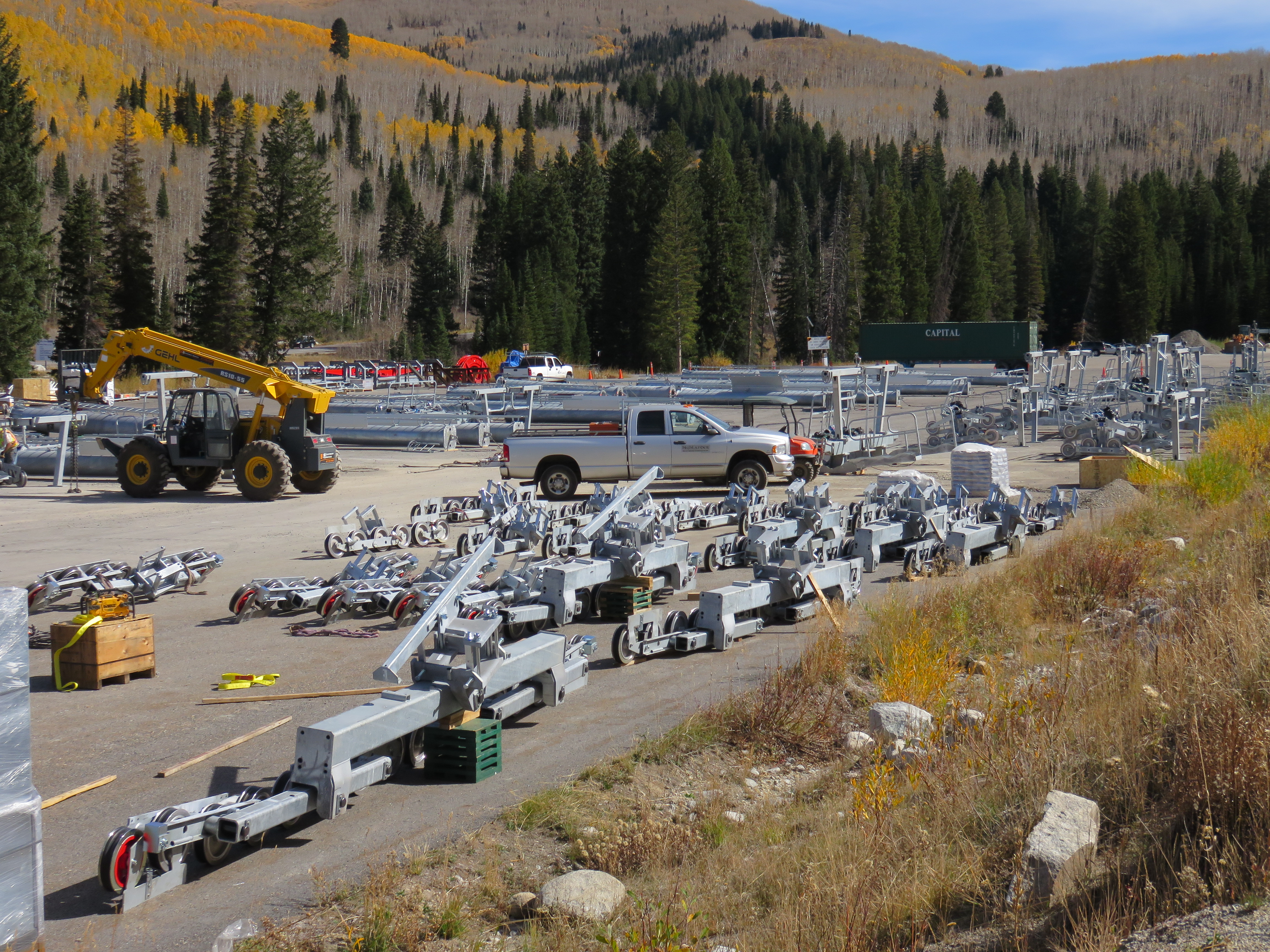
Lift tower and terminal components for Solitude’s Summit Express as seen last week. Towers were flown up the hill on Saturday.
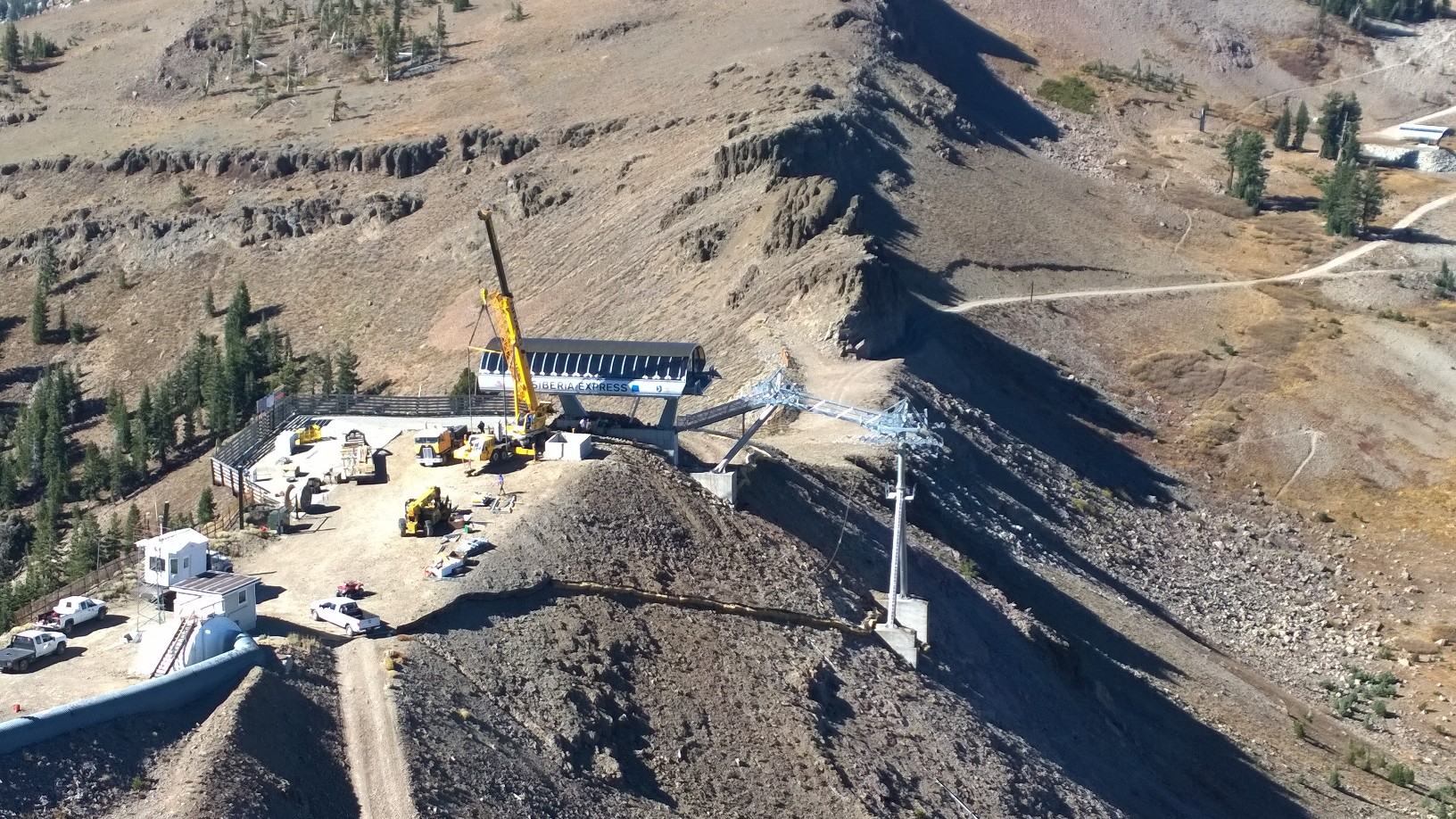
Squaw Valley has removed ten of its lifts since 2007 while building only four new lifts in the same period. What’s going on? Squaw is strategically removing redundant/older fixed grips like Cornice II and replacing first-generation detachable quads with newer technology. This summer’s project replaces the Siberia Express (a 1985 Poma) with an all-new Leitner-Poma six-pack. The new Siberia will be Squaw’s second lift with LPA grips and terminals. The first was the Big Blue six-pack, which replaced not one but three Yan lifts in 2012. The LPA grip is now used worldwide by both Leitner and Poma but terminals used in North America are designed and built in Grand Junction, Colorado.
The original Siberia was a workhorse at Squaw for thirty years, operating in a harsh above-treeline environment. It had an old-school Alpha drive building and chain-driven contours. In addition to upgraded technology, the new Siberia should be less subject to wind closures with heavier chairs. In a press release announcing the project, Squaw Valley CEO Andy Wirth noted, “upgrading the Siberia Express lift to a high-speed six-passenger chairlift is guaranteed to have a positive impact on the skier experience on the upper mountain at Squaw. In addition, the lift has been designed in a way that will improve its ability to operate during inclement weather.” Because its line is so exposed, the new lift has parking for all 56 chairs at the drive terminal.
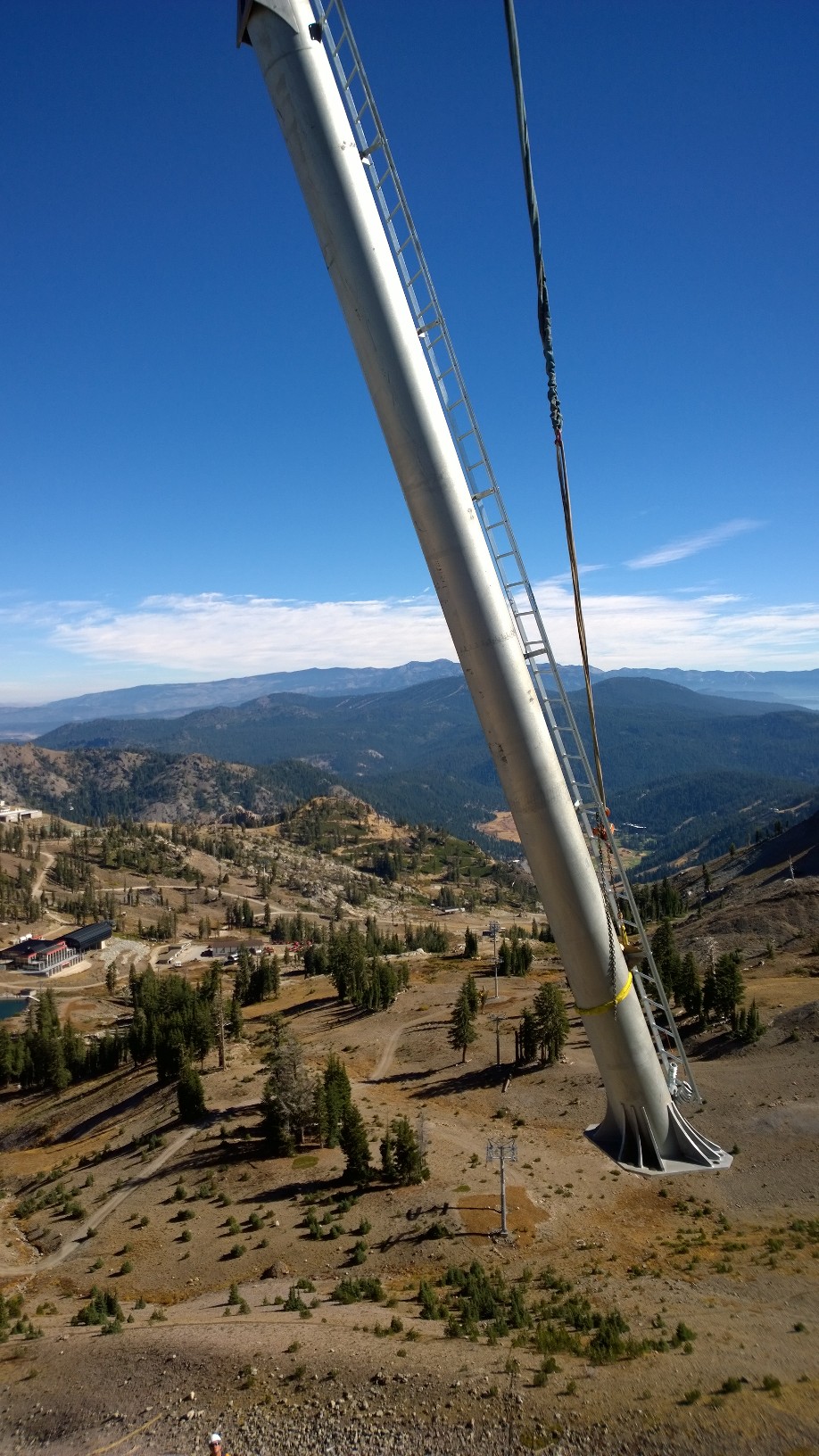
The first leg of a unique tower 13 is lowered into place.
Take a photo tour of Doppelmayr’s new six pack and new-used double chair at Sugar Mountain, North Carolina. Looks like it will have 90-degree loading and unloading.
The Gondola Project has a new interactive map showing the world’s urban ropeway systems.
Speaking of urban gondolas, Poma won a $70 million contract for a 10-passenger gondola in Santo Domingo, the capitol of the Dominican Republic. Looks like this one will be built in Europe even though it’s not that far from Miami (where coincidentally Leitner-Poma is currently building an airport people mover.)
The last rides on Lutsen Mountains’ Hall Skycruiser gondola will be this Sunday, October 18th. The gondola is coming down this fall along with the Bull and Eagle double chairs.
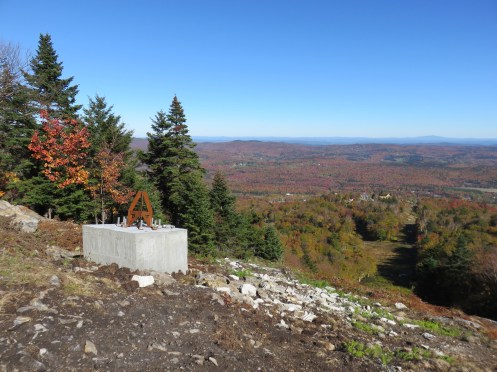
Tower footing for the new six pack at the Hermitage Club.
Just south of Mt. Snow in southern Vermont, $75 million is being spent to redevelop the former Haystack Mountain into the Yellowstone Club of the east. Jim Barnes, founder and CEO of the Hermitage Club, purchased 1,400 acres back in 2011 and has sold 250 memberships at $65,000 a pop (up to 250 residents of nearby towns can ski for $85 each day.)
View down the line of the new base-to-summit six pack.
The ski area last operated as a public mountain in 2009 when it was jointly owned with Mt. Snow. Both mountains were part of the American Skiing Company empire from 1991 until 2007. When Jim Barnes purchased the property, it had two Poma triples and a CTEC triple. The club expanded with two SkyTrac quad chairs serving the lower mountain built in 2012 and 2013. This summer, the Barnstormer triple (Poma) was removed and a Doppelmayr six pack with heated seats and bubbles will take its place.
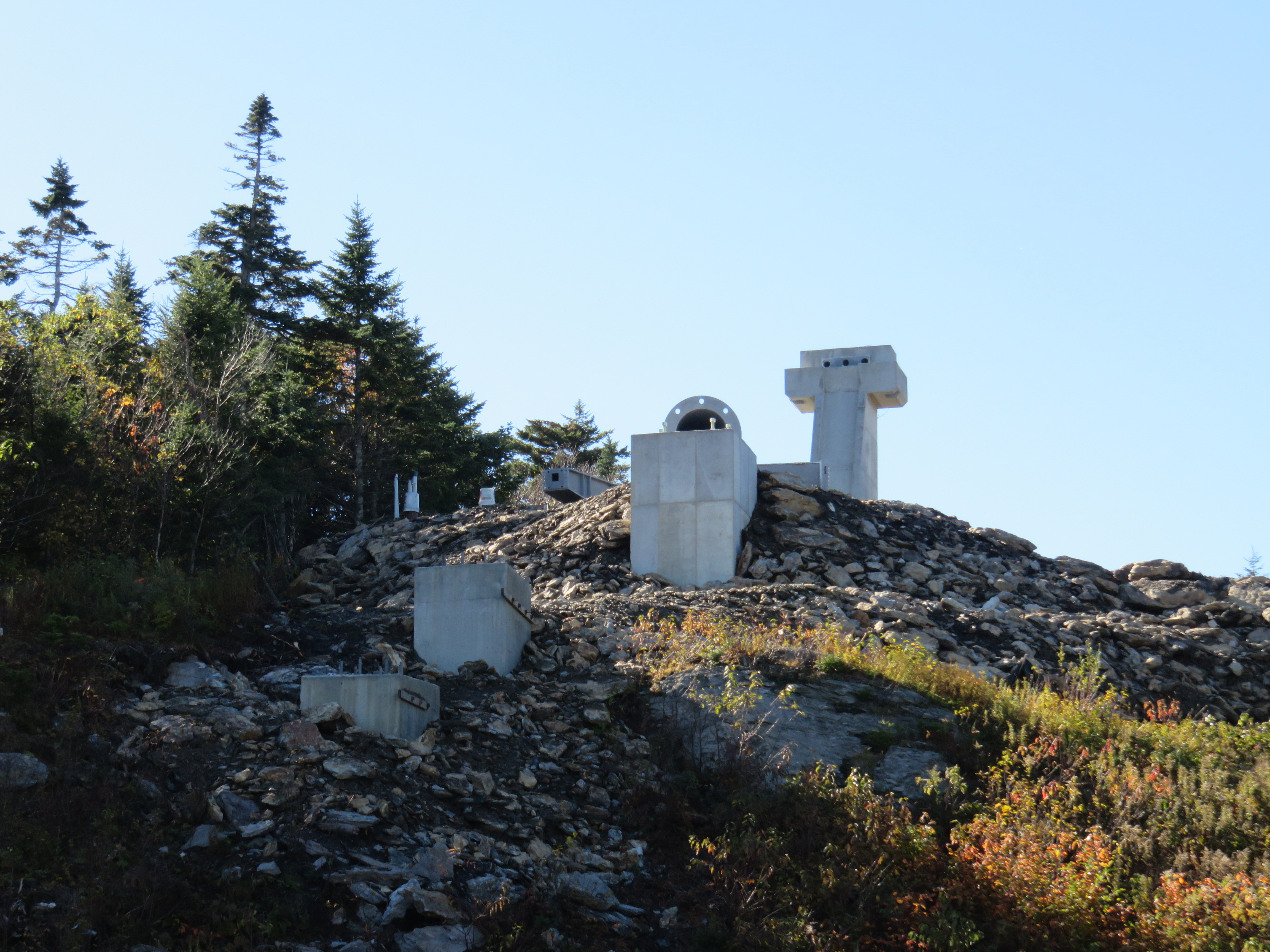
Terminal location on the top of Haystack Mountain.
Leitner-Poma is busy this summer at Okemo Mountain Resort installing one new lift and turning the Jackson Gore Express into Quantum Four, Vermont’s fourth lift with bubble chairs. The new Sunshine Quad will have 11 towers and provides access to a new real estate development called South Face Village. As of this week, all concrete footings are finished and steel is going up. It will have a bottom drive/tension Alpha terminal with a fixed return up top.
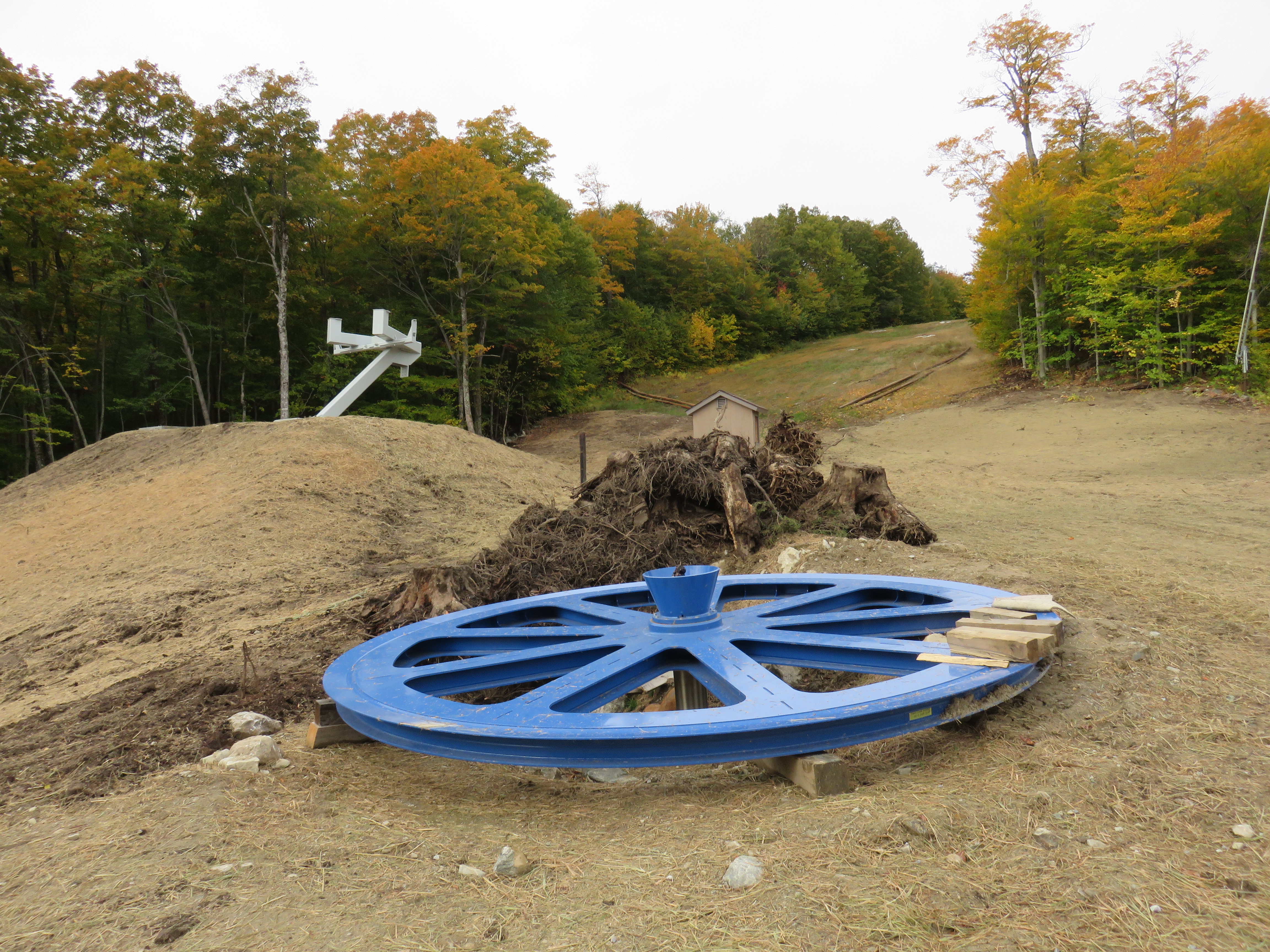
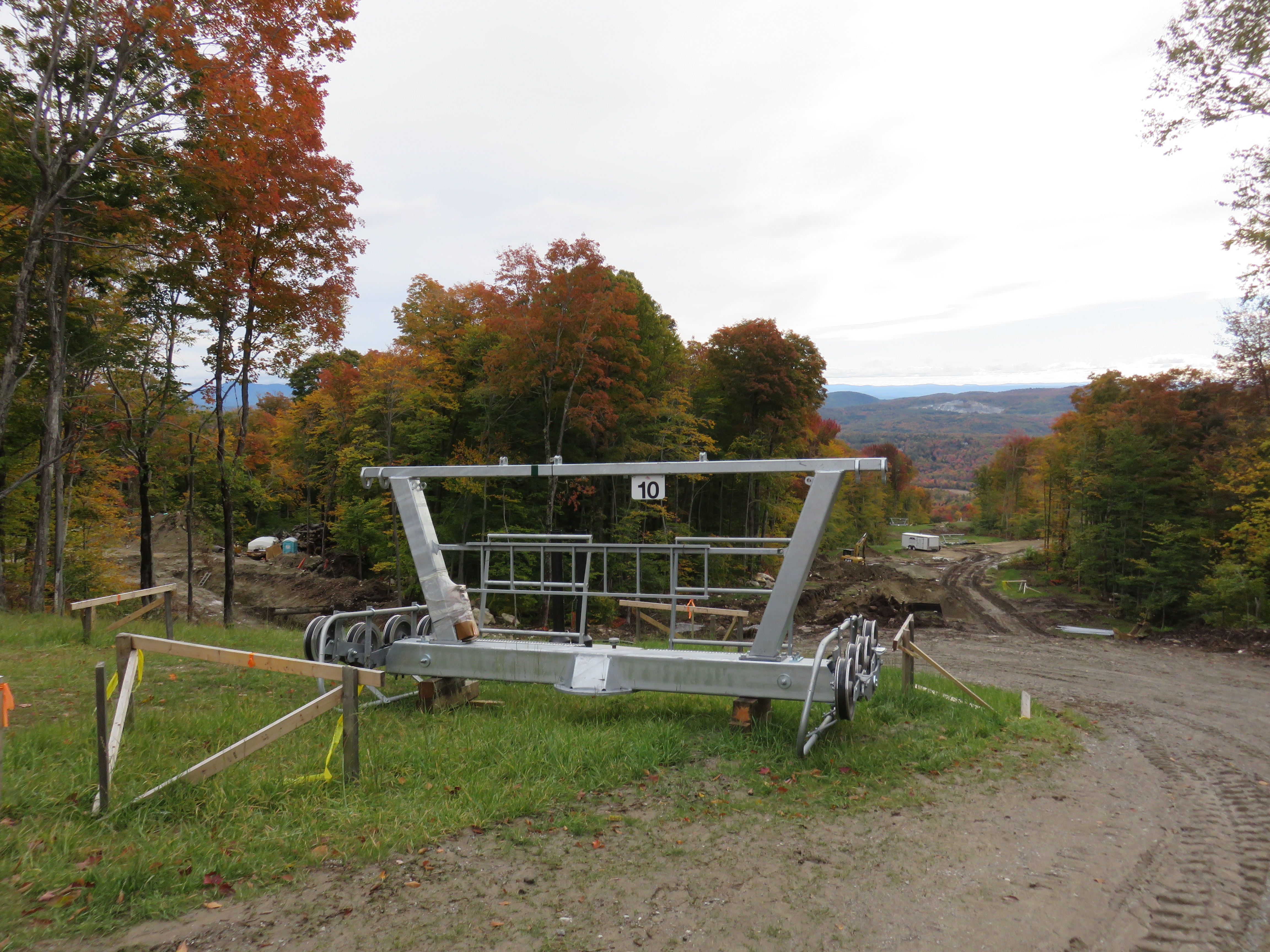
Top bullwheel with support structure in place.Tower head #10 still needing a tube.Footings for the Alpha drive terminal are ready to go along with the haul rope.
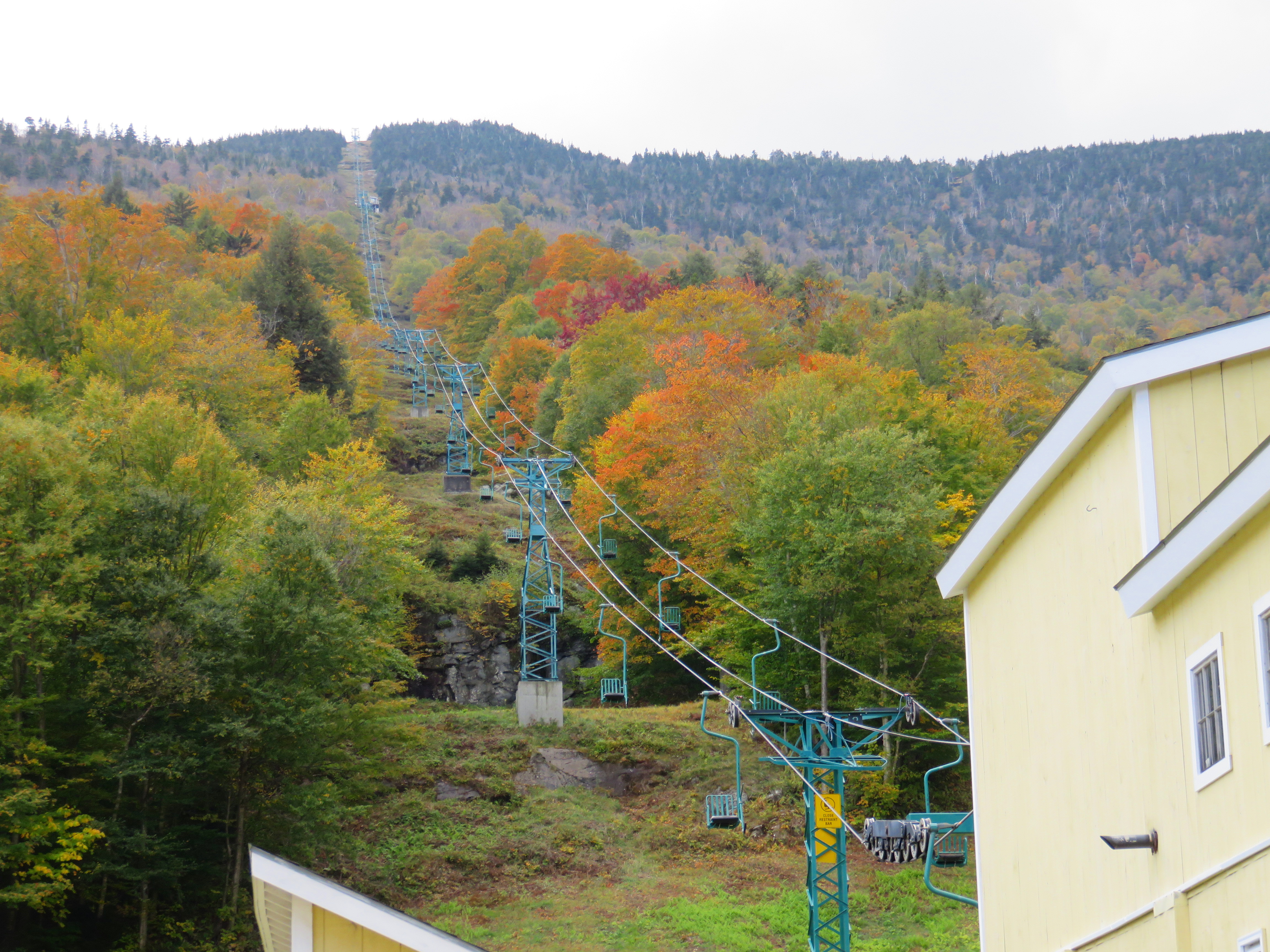
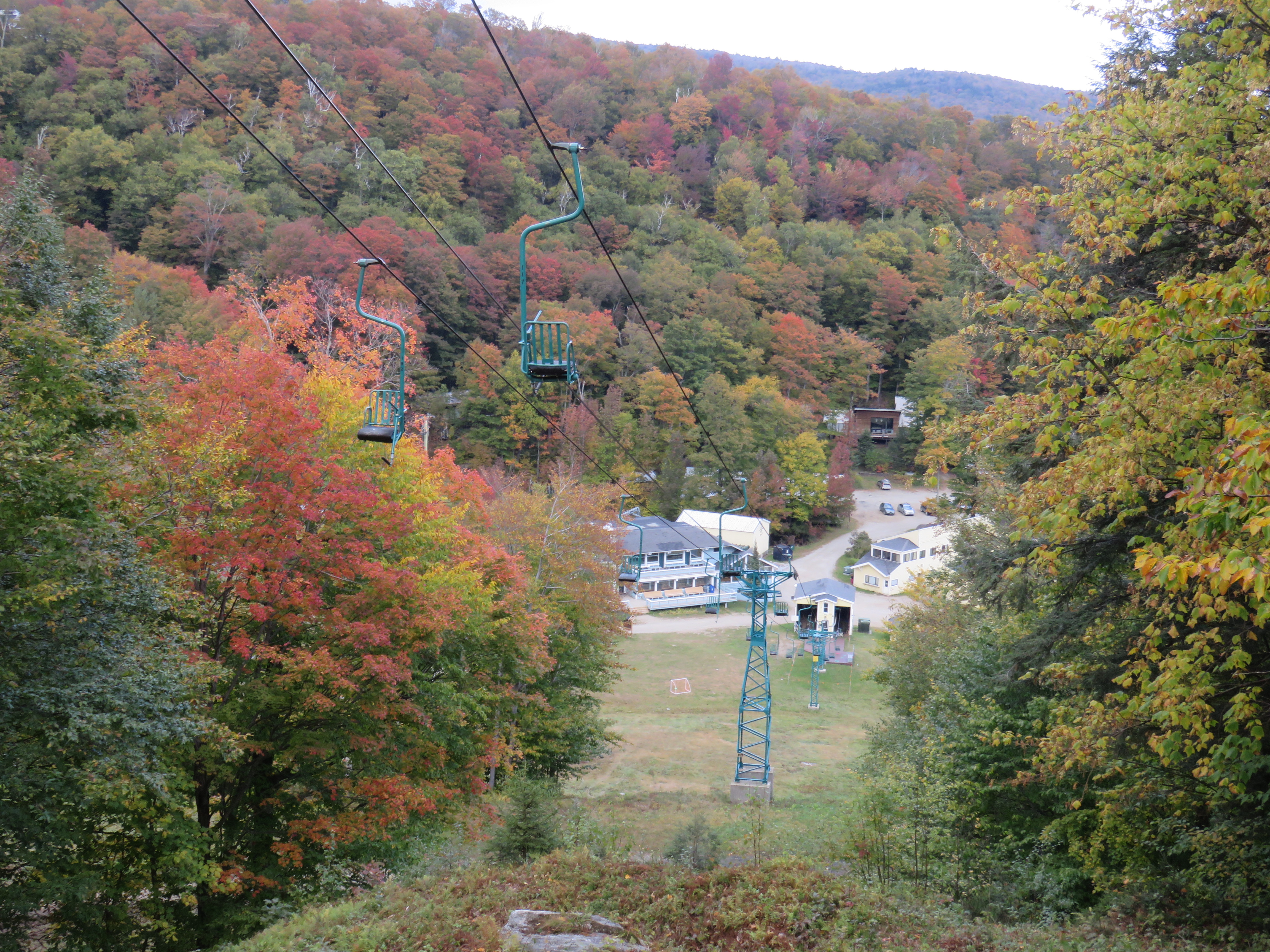
The single chair at Mad River Glen in Vermont is not the only single chair around but it’s certainly the newest, nicest and most famous. Originally built in 1947-48 by American Steel & Wire Company, it has hauled skiers up Stark Mountain for the past 65 years. The chair at MRG was AS&W’s 15th and cost $75,000 not including installation. Originally powered by a diesel motor, it had no electrical circuit at all during the early years. Safety systems on towers and bullwheels were added later. In 1995, Mad River Glen became the first ski area member-owned co-operative in the United States and it still does not have any slopeside lodging nor does it allow snowboarding.
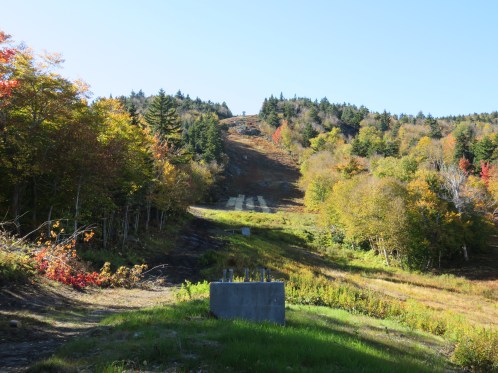
The Single Chair during fall foliage season.
By 2005, the diesel-powered single chair had become too expensive to maintain. Chairs were failing NDT, the lift had no cable catchers or bullwheel retention and replacement parts were no longer available (except ones cannibalized from the AS&W single that had been replaced at nearby Stowe.) Doppelmayr CTEC was brought in by the co-operative’s Board of Directors and developed two proposals – a $1.54 million rebuild of the single chair or an all-new double chair for $300,000 less.
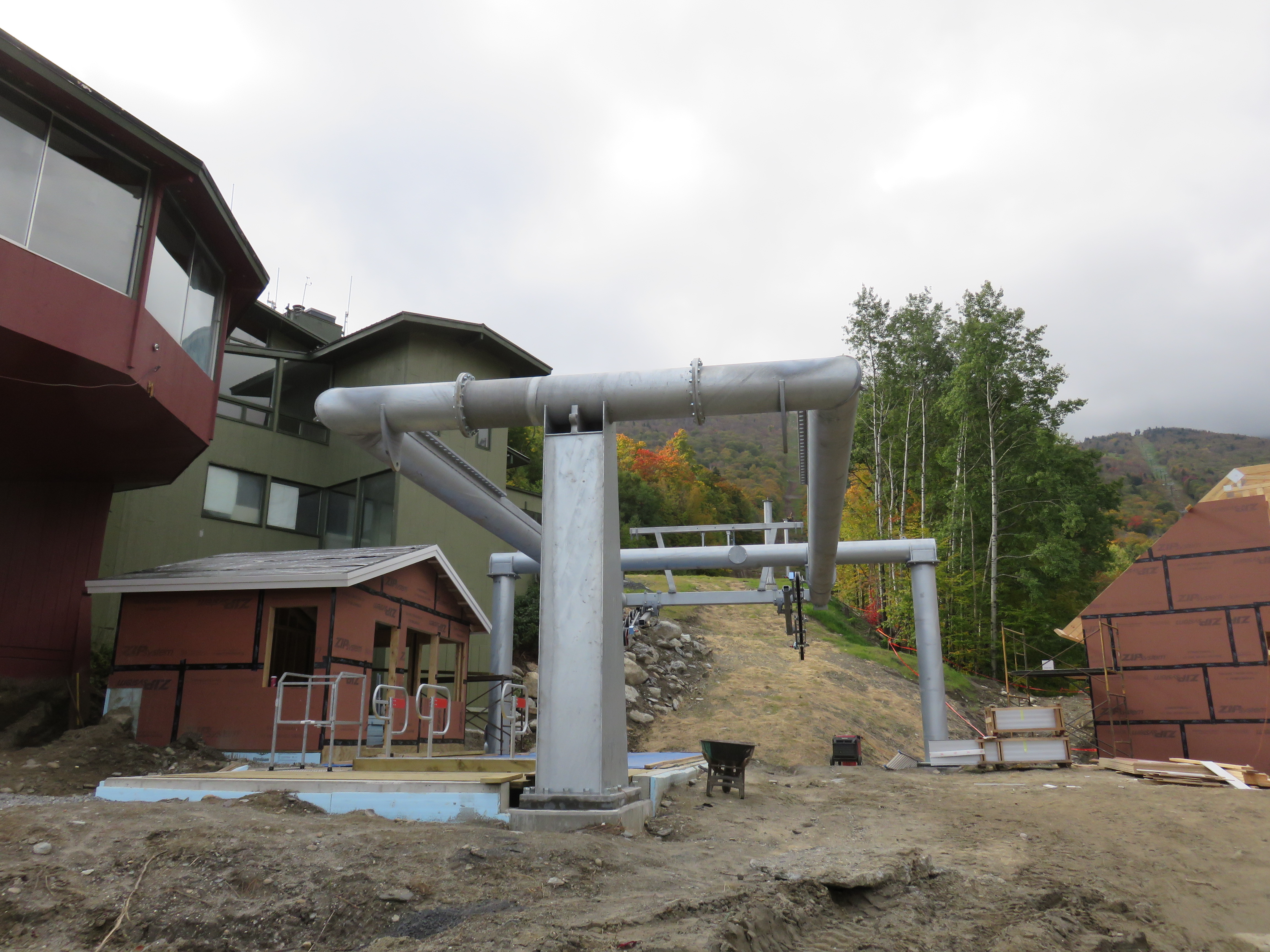
Support structure for the Doppelmayr Tristar drive terminal.
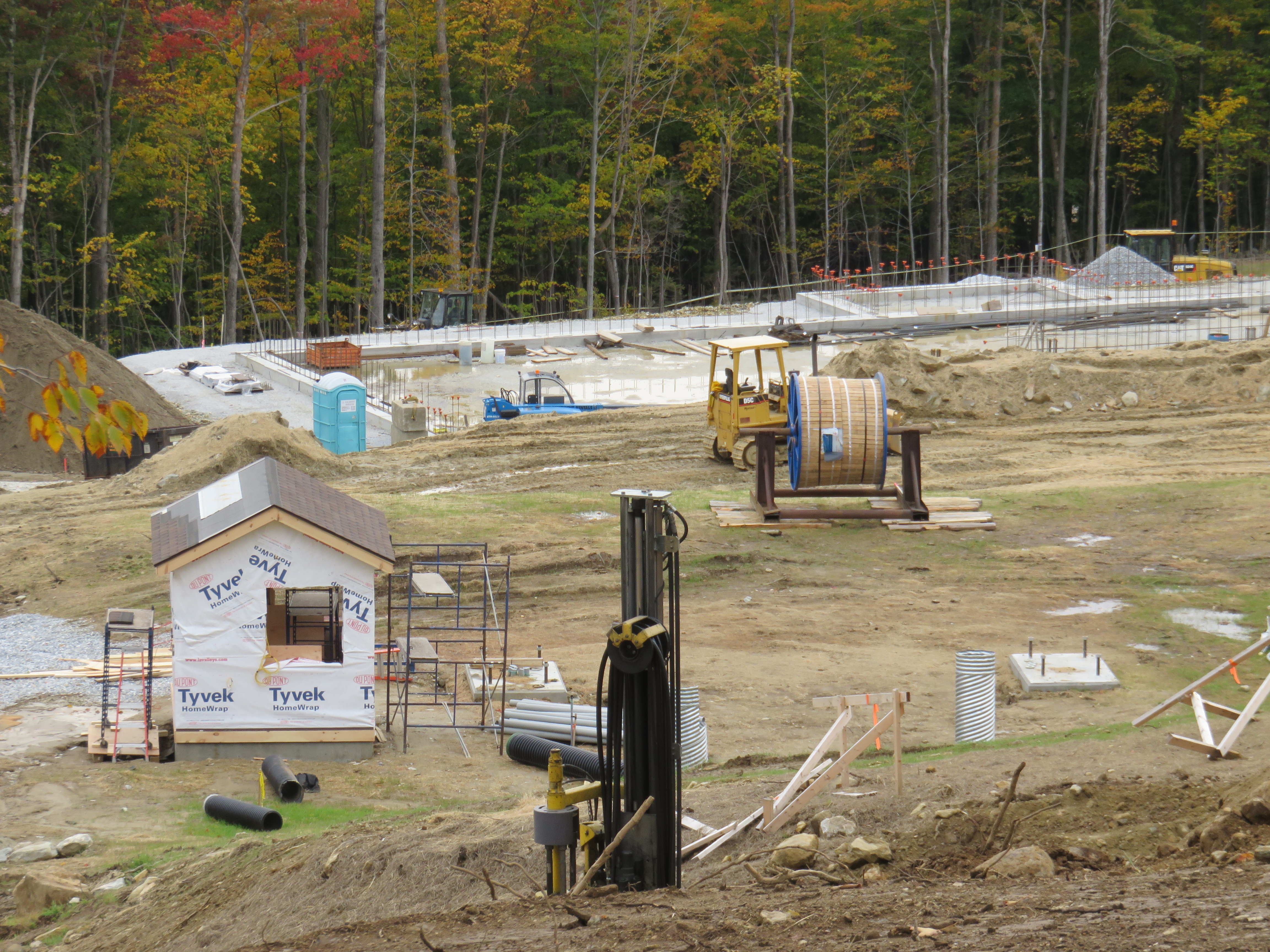
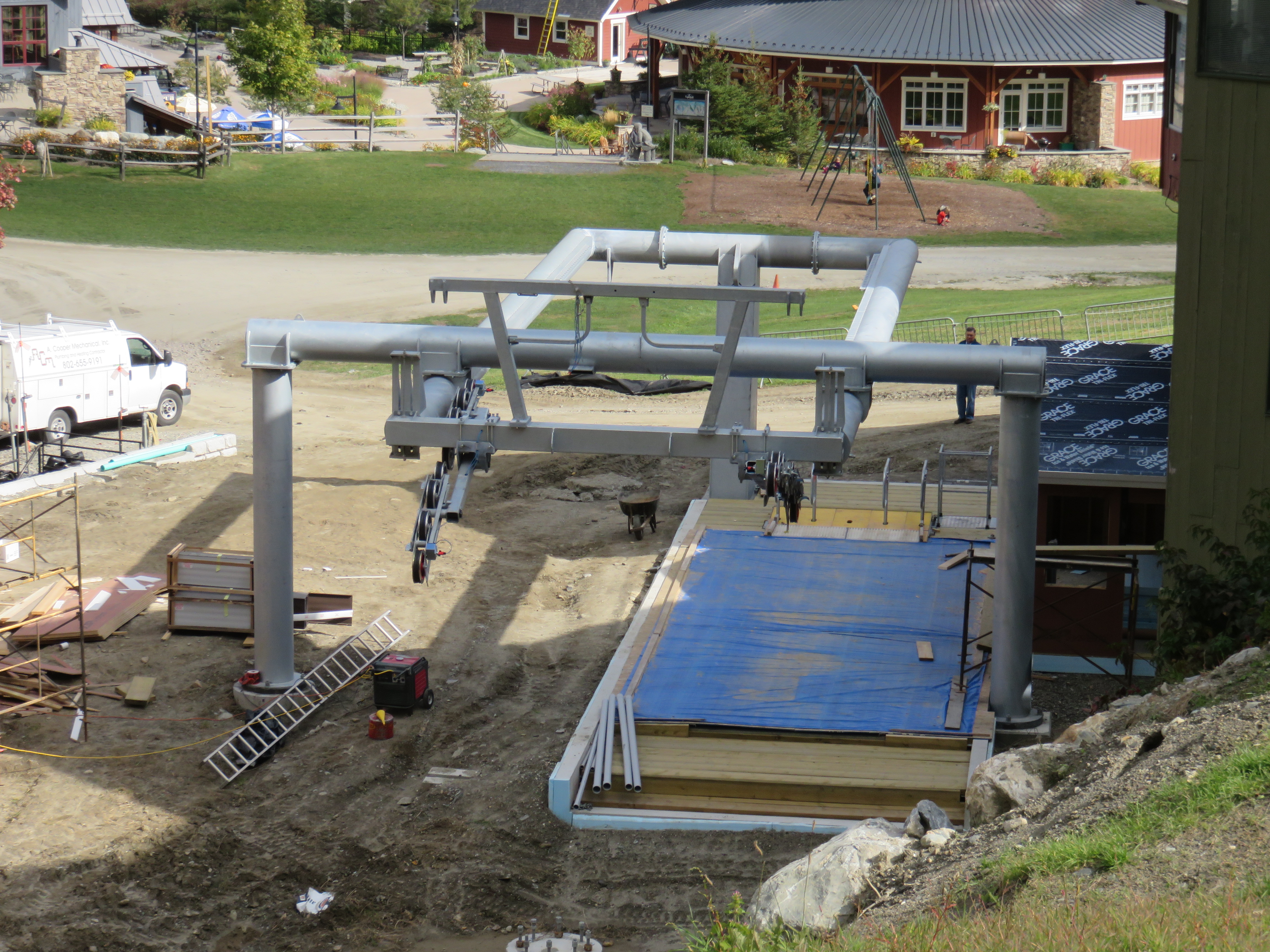
New England ski areas are building three new lifts this summer and all of them happen to be in Vermont. At Sugarbush, the Valley House double (a 1960 Carlevario-Savio) is out and a Doppelmayr fixed-grip quad is going in. At some point the old lift got a new Poma Alpha drive terminal and Borvig chairs. The perfectly good Poma terminal is off to West Mountain on the other side of Lake Champlain in New York. Sugarbush’s new lift looks like it’s going to have the Tristar-model terminal like many other recent Doppelmayr lifts in New England. The bottom terminal has been moved downhill to be much closer to the Super Bravo Express than the old lift. This will be Sugarbush’s 8th quad chair between Lincoln Peak and Mt. Ellen. Doppelmayr still has a ways to go on this project with just a couple towers and sections of both terminals standing but all the important concrete work is done.
The US Forest Service denies much of Eldora’s proposed expansion in a surprise decision. Approved: six-person detachable replacements for Corona and Challenge/Cannonball. Rejected: new Jolly Jug and Placer lifts.
Crystal Mountain, BC (not to be confused with resorts of the same name in Washington/Michigan) will stay closed for another season. The BC Safety Authority revoked the ski area’s operating permit on March 1st, 2014 when a Mueller double chair de-roped and sent four people to the hospital.
Doppelmayr’s September 2015 customer magazine Wir is now available online with a huge focus on urban ropeways.