US Skier Visits Declined 13.9 Percent Last Season

American ski resorts were on track for their fourth best season in history before coronavirus forced closures, according to data released today by the National Ski Areas Association. Spring traditionally accounts for about 20 percent of total visitation and the shortened season yielded a total of 51.1 million skier days. On the heels of 59.3 million skiers in 2018/19, 2019/20 will go down as the worst season since 2011/12 and second worst since 1991/92.

Despite visitation declining in all six NSAA regions, there is reason for optimism. “To have two years in a row potentially rank in the top five seasons ever shows the strength of the industry,” said NSAA President and CEO Kelly Pawlak, referring to the 2018/19 winter and truncated 2019/20 season. “That being said, it is astounding how quickly this season went from promising to a complete disappointment.” The impact of snowfall, traditionally a major factor in visitation, was difficult to assess this year due to many resorts ending reporting in mid-March.
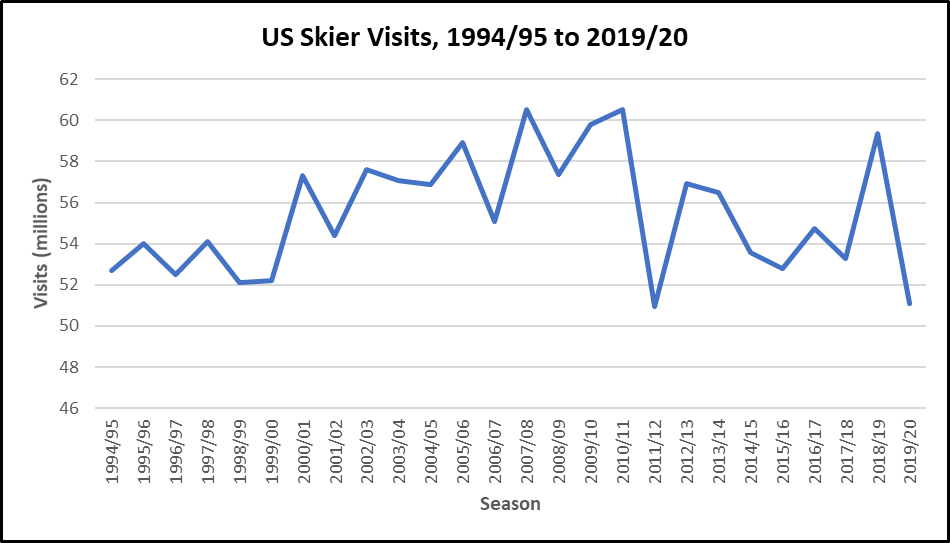
The Kottke National End of Season Survey also revealed six fewer operational areas in 2019/20 with a total of 470. Each resort was open an average of only 99 days, down from 121 in the 2018/19 season. That means each resort averaged about 108,000 visits. A skier visit is defined as a skiing or snowboarding guest visiting a resort for any part of a day.

The industry group estimates COVID-19 will cost resorts at least $2 billion and as much as $5 billion depending on continued impacts during the 2020/21 season. Within weeks of closing early, many resorts opted to delay capital projects such as new lifts planned for next winter. At least nine major projects were postponed in the month of April. As of today, new lift orders are pacing almost 30 percent below last year.
Searchmont to Install Two New Lifts

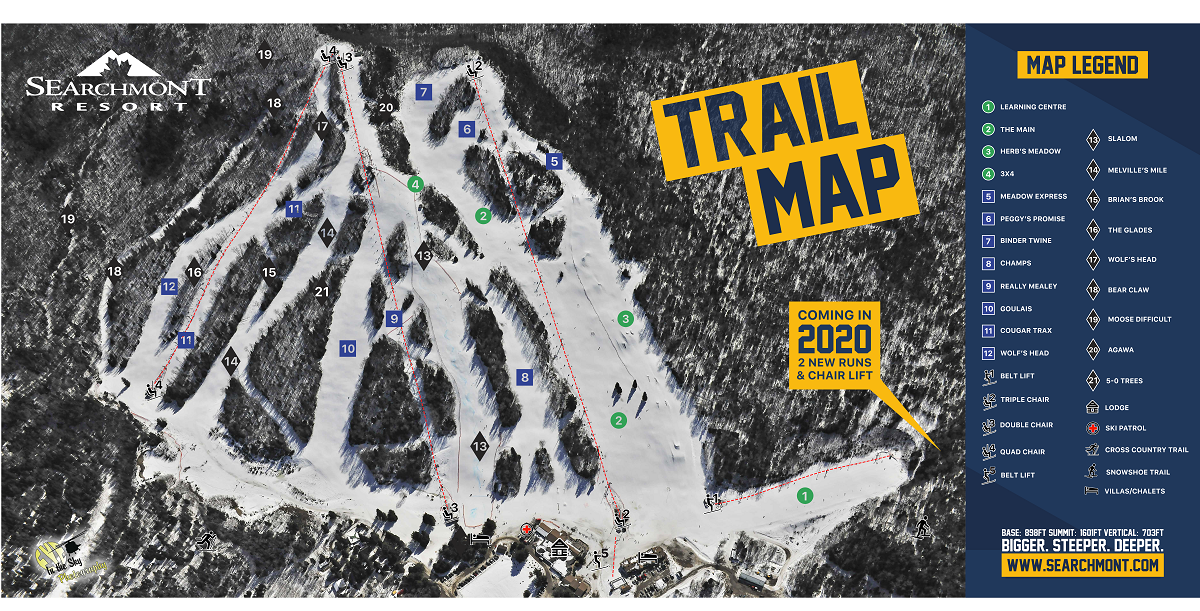
Ontario’s Searchmont Resort will add two Skytrac triple chairs this summer as part of a major modernization. US-based Wisconsin Resorts purchased Searchmont in 2018 from a public economic development agency and promised to make significant capital investments. The longer of the two lifts will replace the mountain’s original double chairlift, built in 1972. The double ran up the center of the mountain and was one of the last remaining Borvig lifts in Canada (only eight remain now.) Chairs from the lift are being sold tomorrow on a first come, first served basis for CA$200 apiece.

A second new triple chair will service a dedicated beginner area, which Searchmont lacks currently. This lift will be 2,000 feet long and open new terrain west of current trails. Combined, the lifts will cost US$2.6 million and will be installed by local contractors. An existing Doppelmayr quad chair and a Blue Mountain triple chair will remain in service as well.

Searchmont is one of four mid-sized ski areas in North America installing more than one new chairlift this summer. The others building two are Arapahoe Basin, Colorado, Gore Mountain, New York and Timberline Mountain, West Virginia.

News Roundup: Workers

Could a Gondola Solve Little Cottonwood Canyon’s Woes?

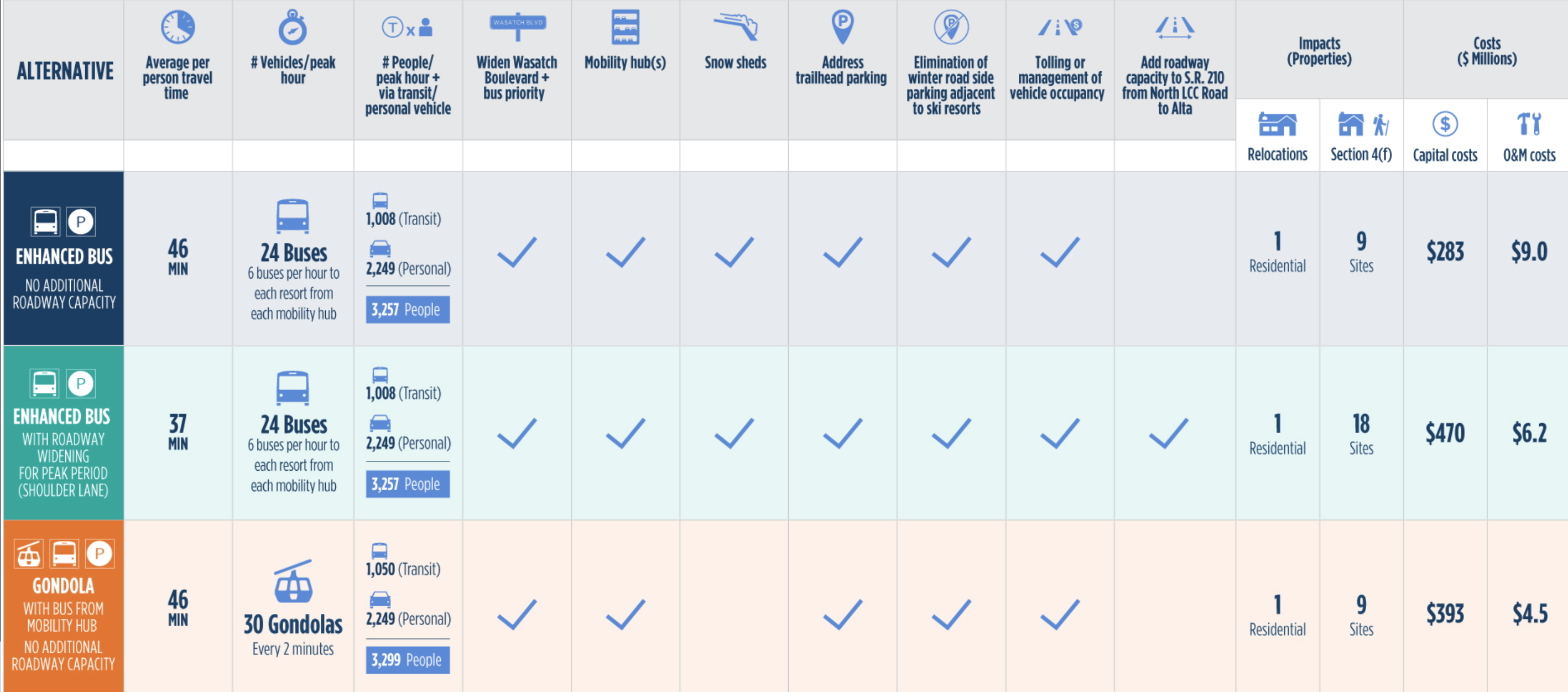
Between crush loads of cars, large avalanches and frequent collisions, Utah State Route 210 can be a nightmare in winter. The 13.5 mile road connects the Salt Lake Valley to Little Cottonwood Canyon’s legendary Alta and Snowbird resorts. Utah’s Department of Transportation is currently studying ways to improve mobility in and out of the canyon with a focus on peak winter demand. Starting with 105 possibilities, the DOT last week narrowed its focus to three options: enhanced bus service, bus service combined with road widening and a hybrid bus/gondola option.

Stretching more than eight miles, the gondola would be among the longest in the world with more stations than any 3S system built to date. A tricable design was chosen for its ideal balance of speed, capacity and tower spacing. The lift would begin at the bottom of LCC, pass through an angle station at Tanners Flat and arrive at Snowbird 24 minutes later. Another 10 minute hop would link the eastern terminus at Alta Ski Area. The premise of the gondola is not to replace the road but rather divert a portion of trips to the air. This would be the second lowest capacity 3S ever built with thirty 30 passenger cabins arriving at stations every two minutes. A modest capacity would help manage costs and allow for towers spaced thousands of feet apart.

The Little Cottonwood Canyon gondola could operate in winds up to 68 miles per hour and strategically placed towers could keep it running when snow slides and crashes close the road. Guests and employees would enjoy an aerial journey through the canyon unlike anything in the United States. The system would cost $393 million, $77 million less than road widening but $110 million more than an enhanced bus solution. The gondola itself would run $240 million while the other $153 million is associated infrastructure such as parking and tolling. The aerial option would cost the least to operate, just $4.5 million per year versus $6.2-9 million annually for the bus options.

Continue reading

News Roundup: Switzerland to Italy

News Roundup: Wild Times