
Every Tuesday, we pick our favorite Instagram photos from around the lift world.
https://www.instagram.com/p/BLJMo5BhtJP/?tagged=liftmaintenance
Every Tuesday, we pick our favorite Instagram photos from around the lift world.
https://www.instagram.com/p/BLJMo5BhtJP/?tagged=liftmaintenance
Every Tuesday, we pick our favorite Instagram photos from around the lift world.
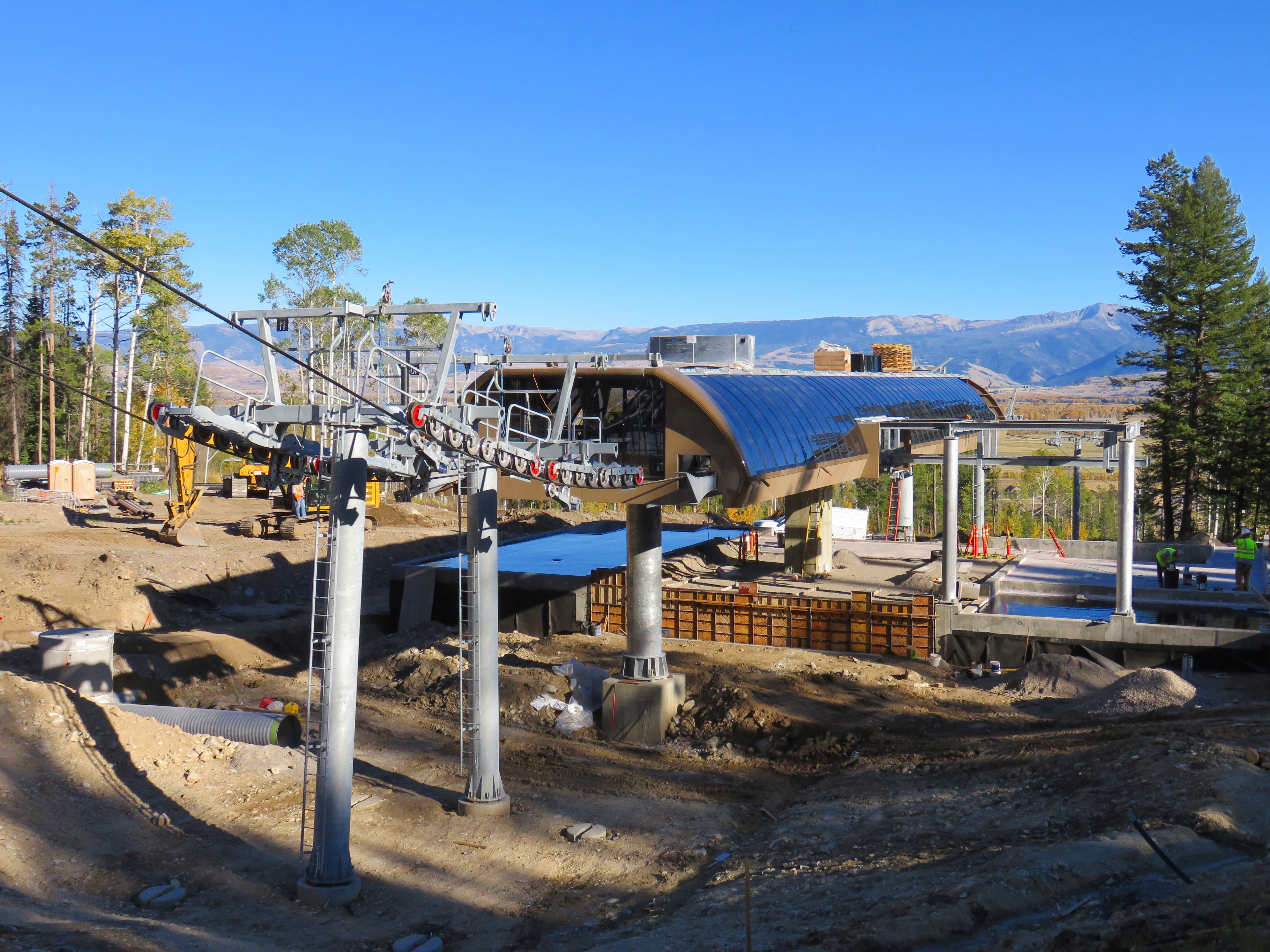
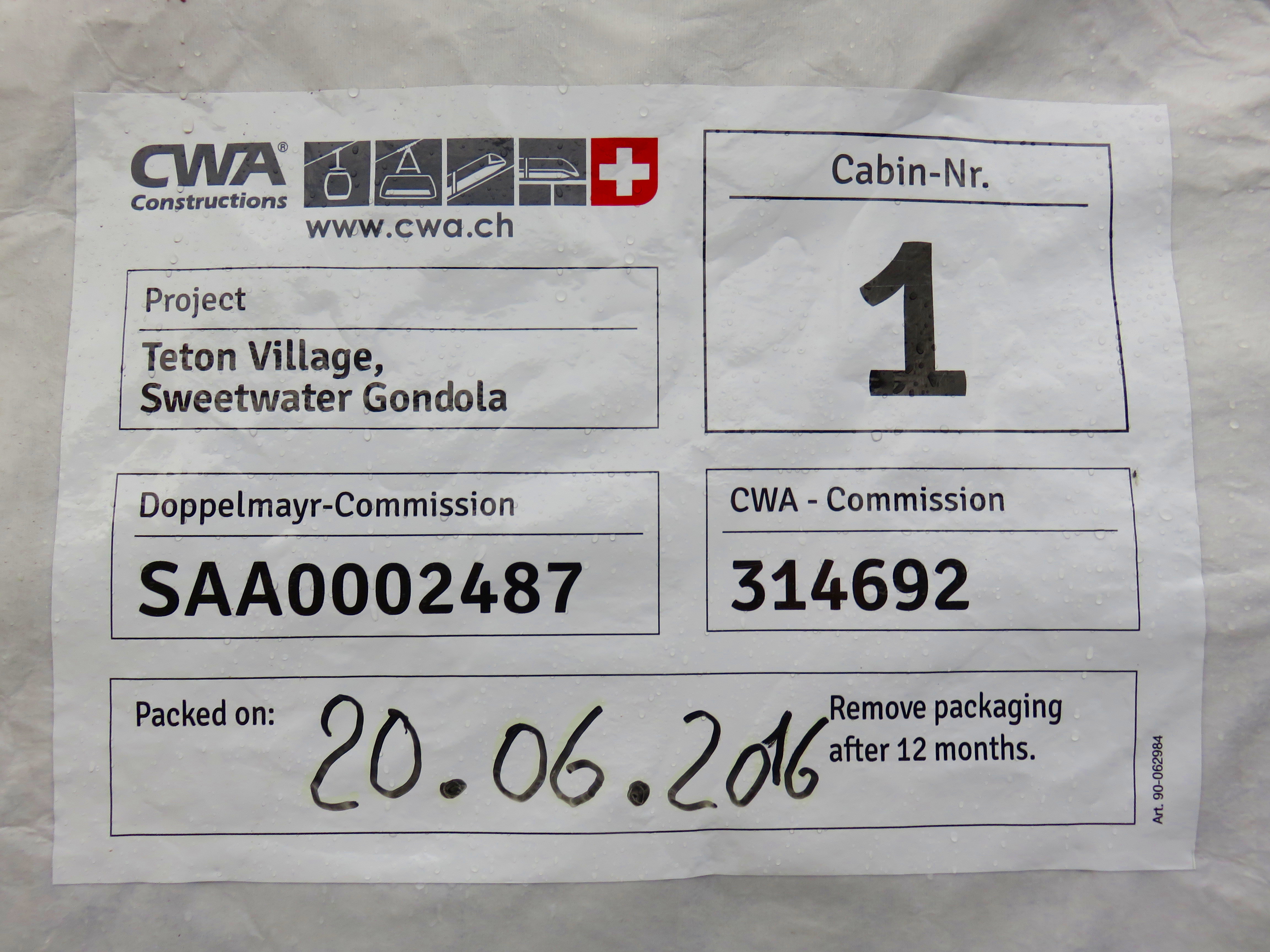
A winter weather advisory is in effect all week for Teton Village and the top of the Jackson Hole Tram is already buried under feet of snow. Luckily the Sweetwater Gondola project lies mostly below the snow line, where the Doppelmayr crew is working on final assembly of America’s only new gondola for 2016. All three terminals now have roofs and local resident Norm Duke presided over a splice of the 45mm haul rope Sept. 20th. This week, the team is finishing the final, giant enclosure at Solitude Station. The mid-station also got its maintenance/parking rail last week, which will eventually link to a storage barn on the south (downhill) side. JHMR has always parked Bridger’s cabins inside on winter nights but Sweetwater’s will remain on the line this winter.
An eagle-eyed reader, Charles Von Stade, advised me the other day that Sweetwater’s rounded UNI-G enclosure at the return station is not the first in the world after all. Doppelmayr designed a similar enclosure for the top station of a 2009 six-pack in Austria called Kettingbahn that looks just as sweet as Sweetwater’s.
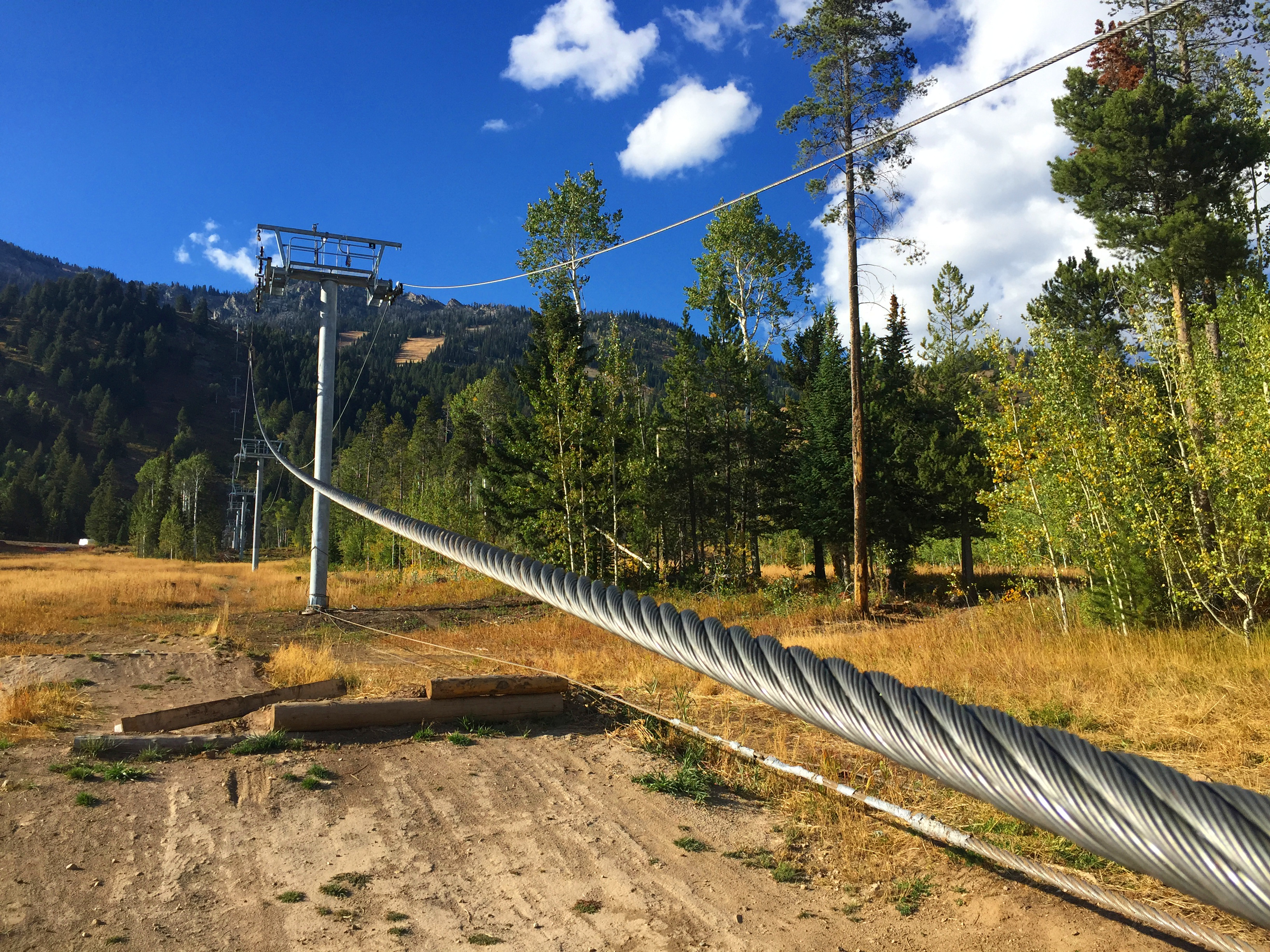
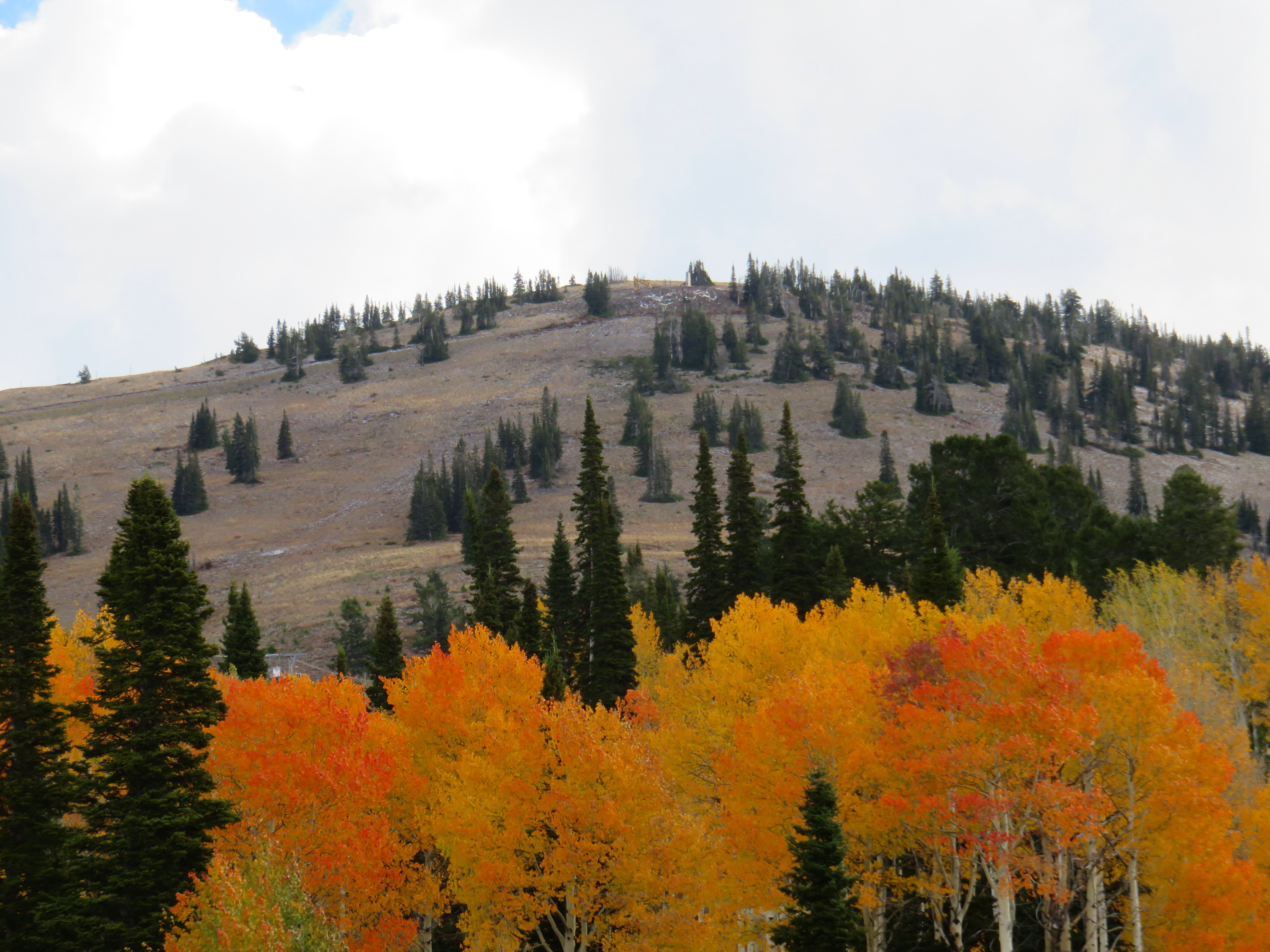
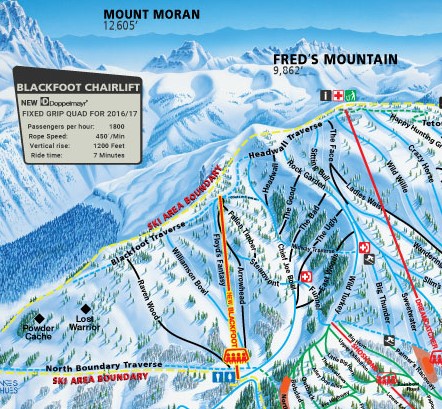
Work on Grand Targhee’s fourth quad chair is in full swing this weekend with new stations and towers arriving for the all-new Blackfoot quad amid fall foliage and fresh snow. The first shipment of steel from Doppelmayr included 13 towers and the support structure for the bottom station, which is in a new location uphill of the old Riblet. Still to come are the CTEC-style operator houses, bullwheels, motor room, haul rope and chairs. Concrete is in the ground and towers are nearly assembled for when the weather cooperates to fly them. Although Grand Targhee is scheduled to open Nov. 18, Blackfoot usually doesn’t usually open until December.


The new Blackfoot will utilize a Tristar-model drive/tension station at the bottom with a fixed bullwheel on a concrete mast up top, the same setup as Challenger up the road at Big Sky. We’ve now seen at least three different return station styles and four drive station models on this year’s new Doppelmayr fixed-grips, including the Alpen Star (Wilmot, Red River); Tristar (Big Sky, Caberfae, Targhee); and Eco (Mont Bellevue). I find it interesting how many different station models Doppelmayr continues to offer when their competitors each have basically just two.
Stay tuned for more updates in the coming weeks from Arizona Snowbowl, Big Sky, Jackson, Powder Mountain and Sundance as the snow flies and this year’s crop of new lifts is completed.
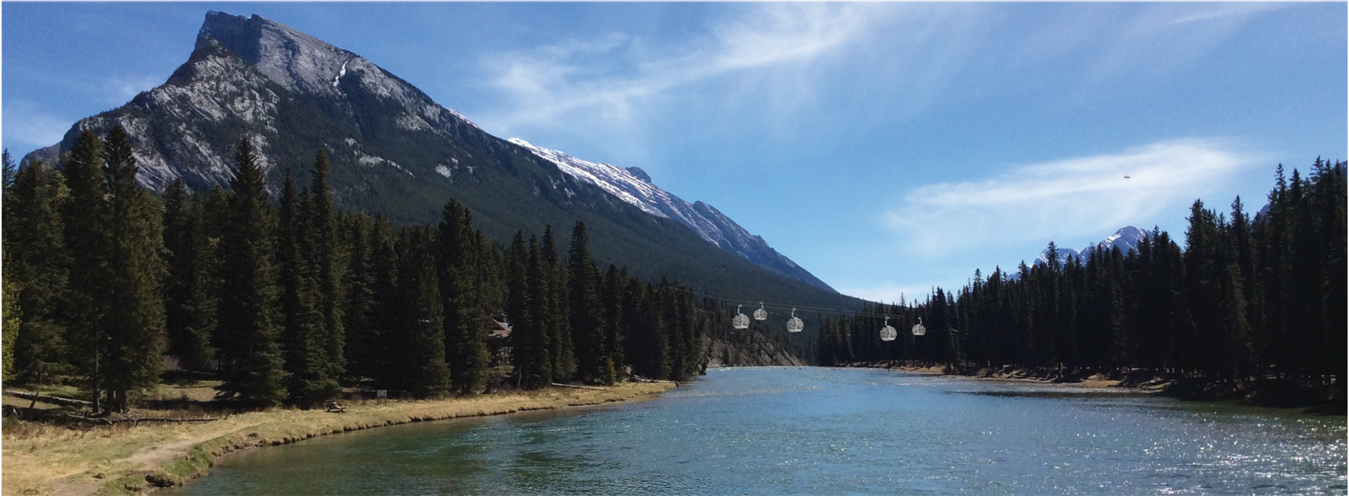
93 percent of the 3.8 million people who visited Banff National Park last year arrived in a personal car. Across North America in places like Yosemite, Glacier and Banff, resource managers are struggling to find transportation solutions amid record visitation and constrained capacity. Banff National Park is unique – a very popular town of the same name with 7,500 residents that lies in the middle of a 2,500-square mile park. In 2015, the Town of Banff saw the most visitors in at least the last 15 years, continuing its average growth rate of 1.8 percent per year. So far in 2016, the daily vehicle count in town exceeded its 24,000-car comfortable capacity on at least 48 occasions. More troubling, vehicle volume increased eight percent this summer and is projected to exceed 24,000 on 270 days a year by 2045, with a crush load of 40,000 vehicles on peak days. This is in a town smaller than two square miles surrounded by mountains.

Challenging problems demand innovative solutions. This spring, the Town of Banff embarked on a long-term transportation study to examine parking, road improvements, traditional transit and a possible gondola to connect key points surrounding downtown. The Edmonton-based consulting company Stantec identified and studied three possible gondola alignments in addition to two intercept parking lots and increased bus service. The firm’s draft report notes, “without new interventions, congestion delays are expected to increase in both severity and frequency; Banff’s road system is finite and actions must be taken to solve the issues caused by the volume of vehicles on the road system.”
The Banff community knows gondolas. The Sulphur Mountain Gondola, a bi-cable Garaventa system operated by Brewster Travel Canada sits just south of town and will likely anchor the southern end of any new gondola. Sunshine Village ski resort also lies within Banff National Park and its huge gondola connects an offsite parking lot to the slopes and village with two mid-stations along the way.

Every Tuesday, we pick our favorite Instagram photos from around the lift world.
https://www.instagram.com/p/BIvNsO5BRBP/?tagged=telepherique

With construction underway on a new lift for the ninth time in ten years, Vail Mountain will have only three fixed-grip chairlifts this winter. Adding to what is already the largest detachable lift fleet in the world outside of Europe, Vail and Leitner-Poma are now building the mountain’s 19th high-speed lift in the famous Back Bowls to replace the Sun Up #17 triple. This is a major milestone for a mountain that in 1984 operated a whopping 19 fixed-grip chairlifts. Following on the heels of two new six-packs from Doppelmayr USA in 2013 and 2015, Vail switched back to Leitner-Poma for its newest high speed quad, which will be designated Lift #9. With its production facility down I-70 in Grand Junction, Leitner-Poma also supplied Vail’s Gondola One in 2012 and seven high speed quads in a row before that. Vail regulars will note that number 9 used to belong to the Minnie’s lift from 1972 until it was removed without being replaced in 2008.

The Sun Up Express will achieve 65 percent higher capacity than the 1992 triple version it replaces, which was actually one of the original lifts Doppelmayr built at Beaver Creek in 1980. Fun fact: B.C.’s Centennial was originally two separate triple chairs. What became Sun Up at Vail was the upper lift called Horseshoe. The triple chair is now history and will probably find a third home somewhere in the Vail Resorts empire or beyond.
Sun Up Express’ uphill capacity will be 2,400 skiers per hour which should help alleviate crowding on lifts 5 and 9. The Back Bowls and Blue Sky Basin will now have a combined seven high speed quads. Lift 9 will feature 82 quad chairs and 14 towers, most of which were set last week by helicopter. The lift will have a vertical rise of 1,115 feet and will be 3,865 feet long with a 670 HP AC top drive located near Two Elk Lodge. Sun Up Express will be Vail’s third lift with the new LPA (Leitner Poma Automatic) grips and terminals.

New York City’s iconic Roosevelt Island Tramway could soon be joined by a gondola linking Staten Island to Bayonne, New Jersey serving commuters and tourists alike. Staten Island has all the ingredients for a successful urban gondola: a dense (and growing) population, a geographic barrier surmountable by cable, and connections to other transit modes at both ends. This week, the Staten Island Economic Development Corporation (SIEDC) crowned Leitner-Poma of America the winner of a design competition it launched in January to promote a ropeway solution. A jury of engineers, architects and business leaders selected Leitner-Poma’s 10-passenger gondola proposal that would cross the Kill Van Kull tidal strait to New Jersey.

According to the development group’s request for proposals, subway-less Staten Islanders suffer from some of the longest commutes in the country, averaging 90 minutes to Manhattan by ferry. A new rail tunnel under New York Harbor is estimated to cost $400 million per mile and would not be completed for a generation, if ever. Despite mobility challenges, $1 billion of redevelopment is currently underway in this suburban borough. The SIEDC’s competition encompassed 4-6 possible routes, the most ambitious of which would connect Staten Island’s northeast tip with Battery Park in Manhattan over five miles of water.
Leitner-Poma recognized the technical and political challenges of 10,000-foot spans skirting the Statue of Liberty over New York Harbor and instead settled on a shorter connection to New Jersey and its rail network. Other entrants chose routes from Staten Island to Brooklyn, where the East River Skyway is separately proposed to connect to Manhattan.

