North America Fuels Growth for Doppelmayr

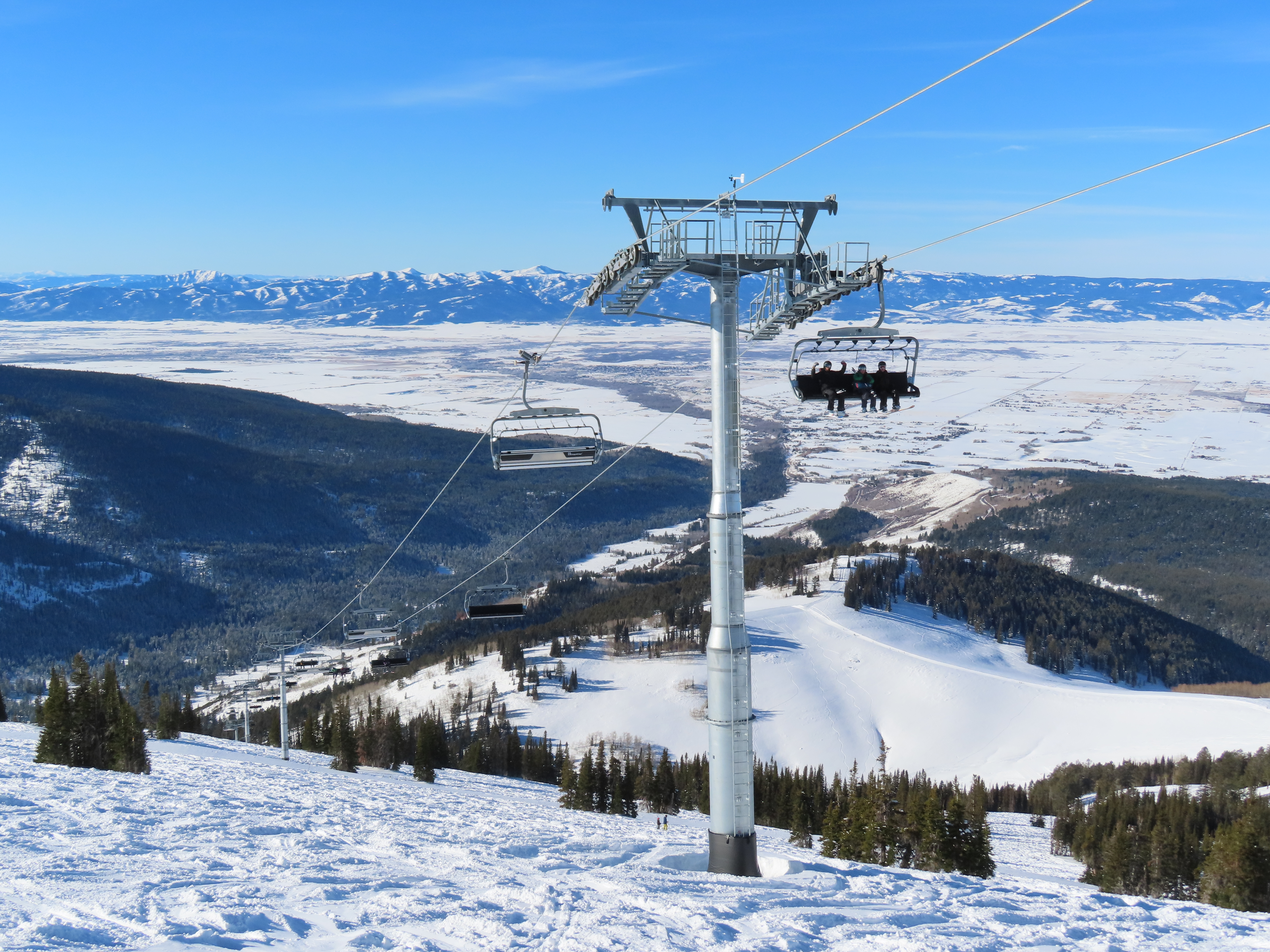
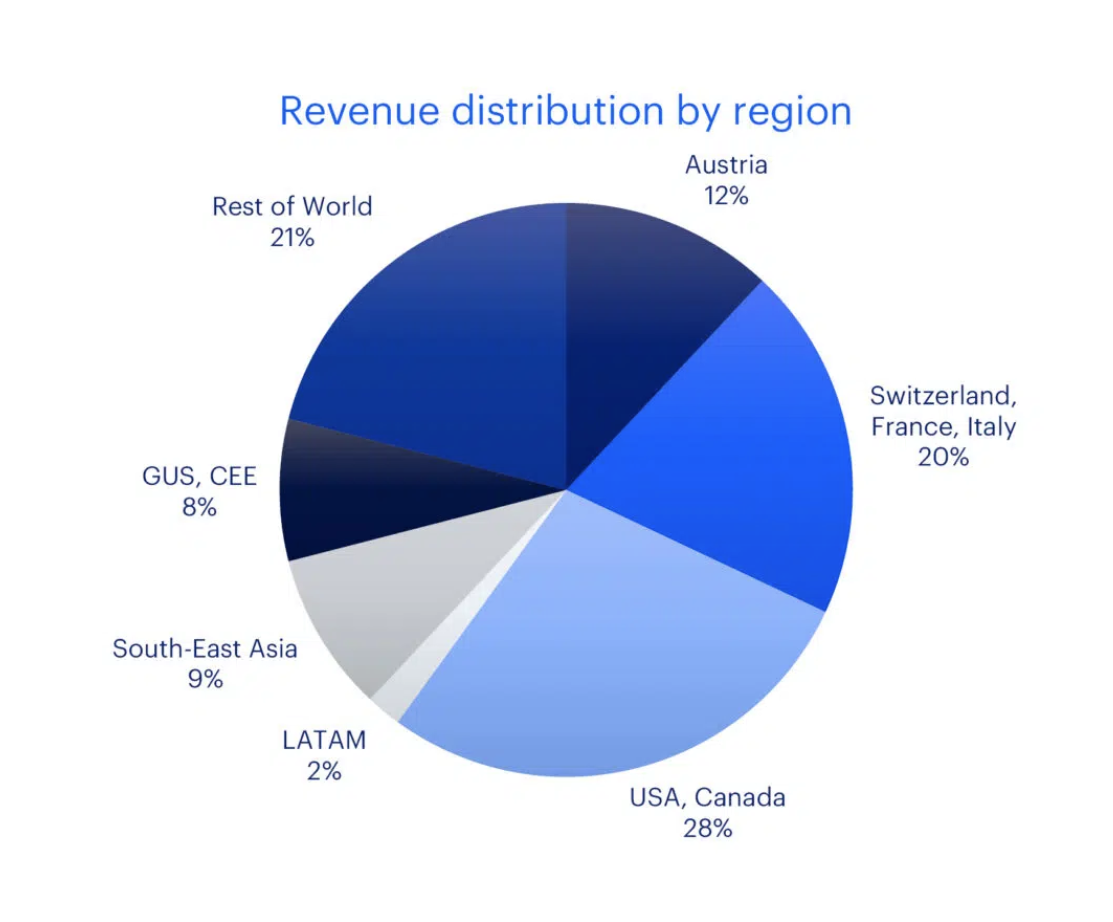
The Doppelmayr Group reported annual financial results today, and for the first time ever, North America surpassed Austria as the firm’s largest market. Doppelmayr reported total revenue of €946 million (US$1.0 billion) in fiscal year 2022-23, an annual increase of 6.7 percent and near a record high for the 130 year old company. The United States and Canada accounted for 28 percent or approximately $280 million during the fiscal year, which ran from April 2022 through March 2023. The last year before Covid North America represented only 17 percent of global turnover while the domestic Austrian market comprised 24 percent of the business.
The group delivered 104 ropeways globally in 2022-23, 30 of which landed in North America. US ski resorts reported a record 64.7 million skier visits last season and have 31 more Doppelmayr lifts under construction for the coming winter. “One of the reasons for this market development is the continuing attractiveness of outdoor sports,” noted the Doppelmayr Group annual report. “Many ski resorts are replacing outdated installations with modern ropeways in order to offer their guests enhanced comfort. In addition, the new lifts feature higher capacity to provide the growing numbers of visitors with rapid access to the ski slopes.” Doppelmayr went from installing just one D-Line detachable in North America in 2018 to five last year and nine this year. Doppelmayr also increased its global employee headcount to 3,335 full time equivalents, an increase of 5.7 percent. Part of that growth was the group’s acquisition of cabin manufacturer Carvatech last October.

Doppelmayr also reported a strong order book despite some economic headwinds. “The investment strength of ski area operators in North America remains at a very high level,” the company noted. The Alps market is also strengthening with three AURO autonomous gondolas under construction. On the urban front, Doppelmayr is working to build expansive gondola systems in both Paris and Mexico City. Doppelmayr also expects revenue growth from new products, including its clair software platform, upcoming TRI-Line 3S system and new 20-MGD D-Line.
Three New Lifts Coming to Lake Louise

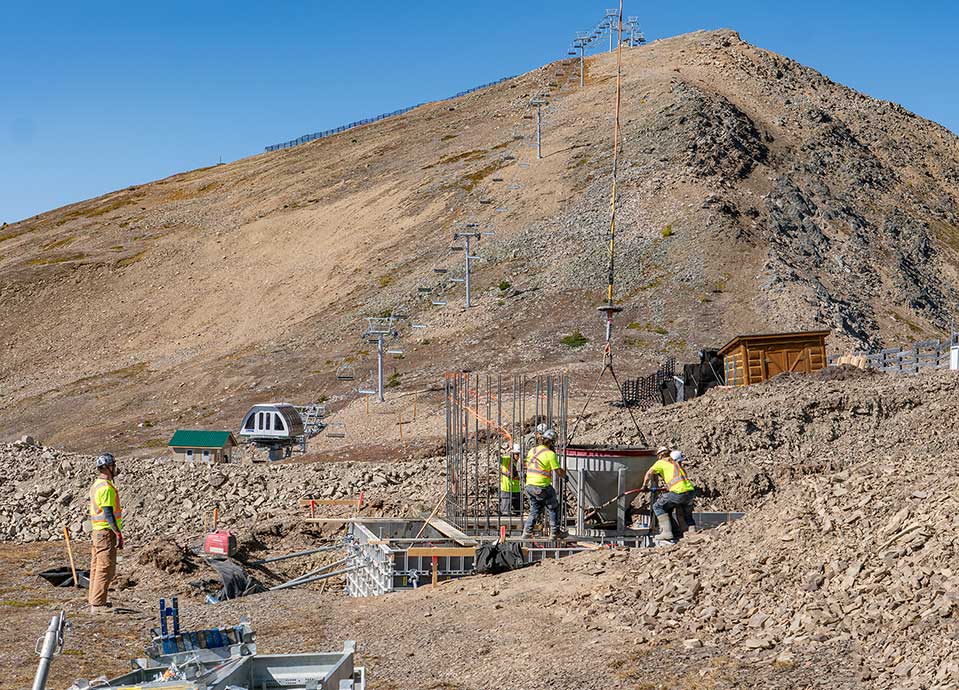
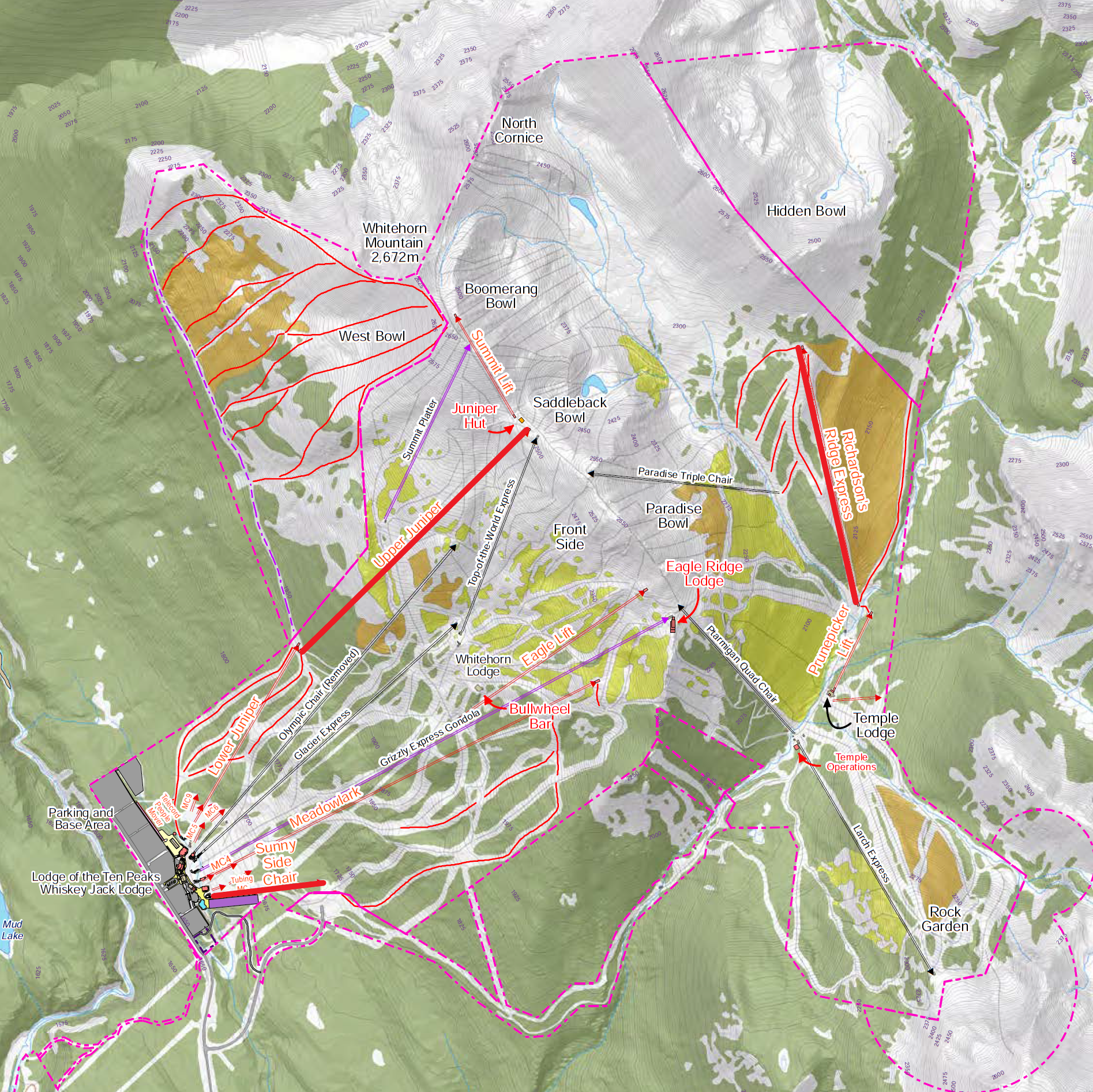
One week after Sunshine Village announced a new bubble chair with heated seats, Lake Louise says it will build one too. Foundation work is already underway for the Upper Juniper detachable quad, which will connect the top of the two year old Juniper Express with the Top of the World. Upper Juniper Express will be constructed by Doppelmayr Canada and open for the 2024-25 ski season. “This new lift should not only enhance accessibility to the upper mountain, but substantially alleviate base area congestion even during peak days,” said Lake Louise.

Two additional chairlifts will debut for the 2025-26 season, one a beginner lift called Sunny Side and the other an expansion behind Paradise Bowl. Richardson’s Ridge Express will service a “vast expanse of intermediate and advanced terrain,” said the ski area. Construction of the second new high speed quad will take two years with foundations installed in 2024 and steel following in 2025. The Sunny Side beginner chairlift will also be constructed in the summer of ’25. “This new chair will provide comfortable and quick access to our superb beginner terrain,” noted Lake Louise.

Big Sky Readies America’s Next Great Tram

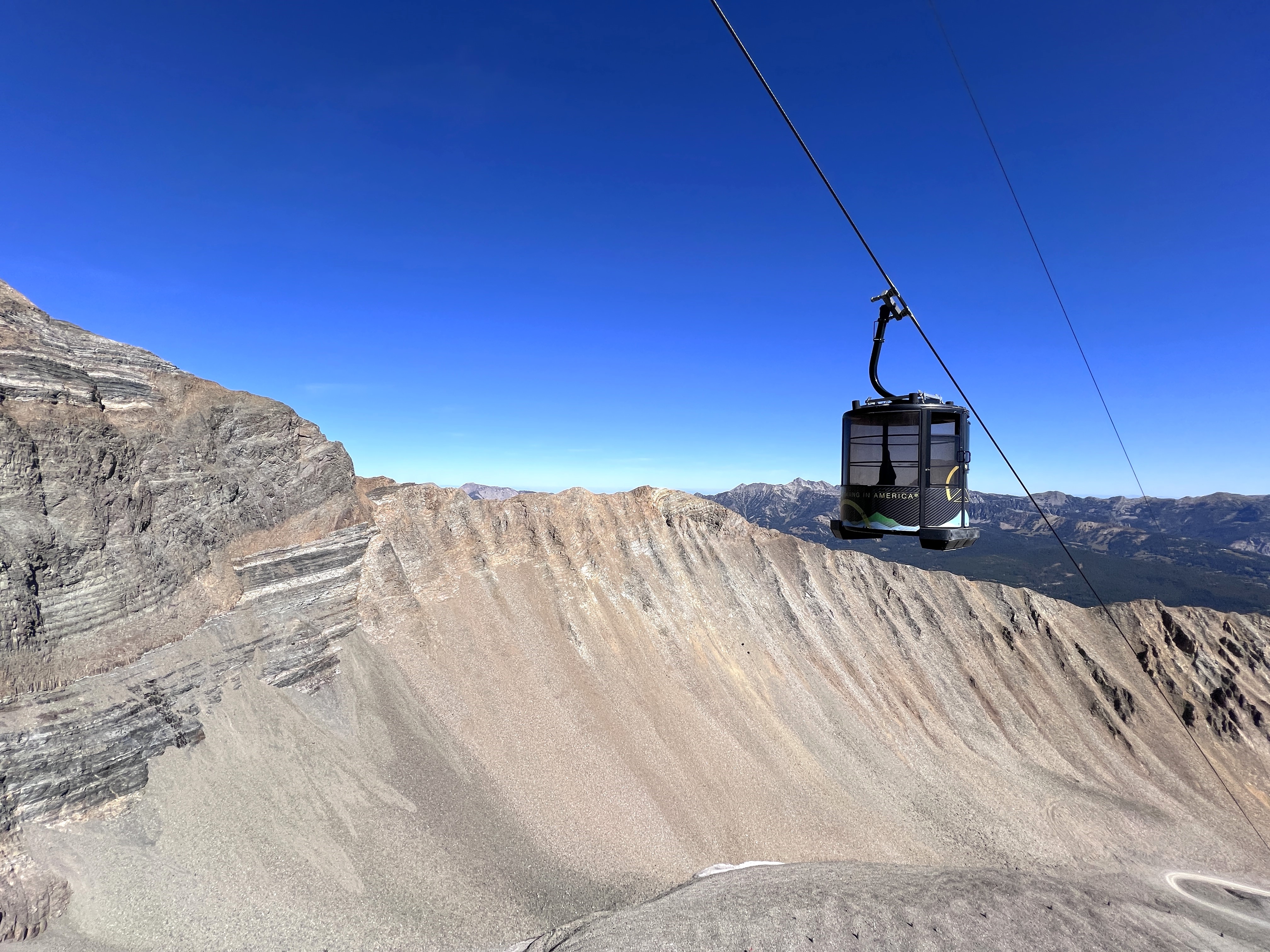
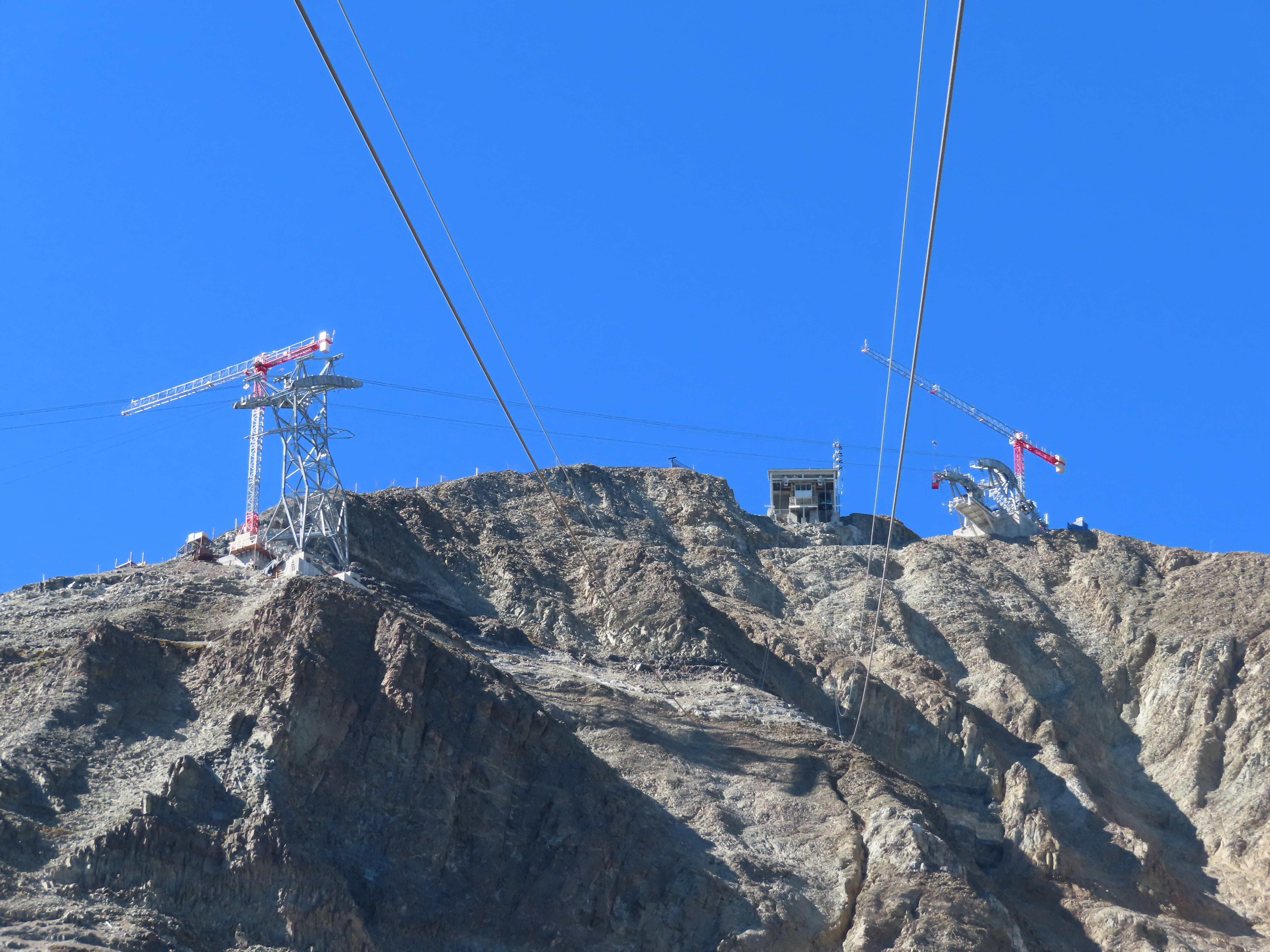
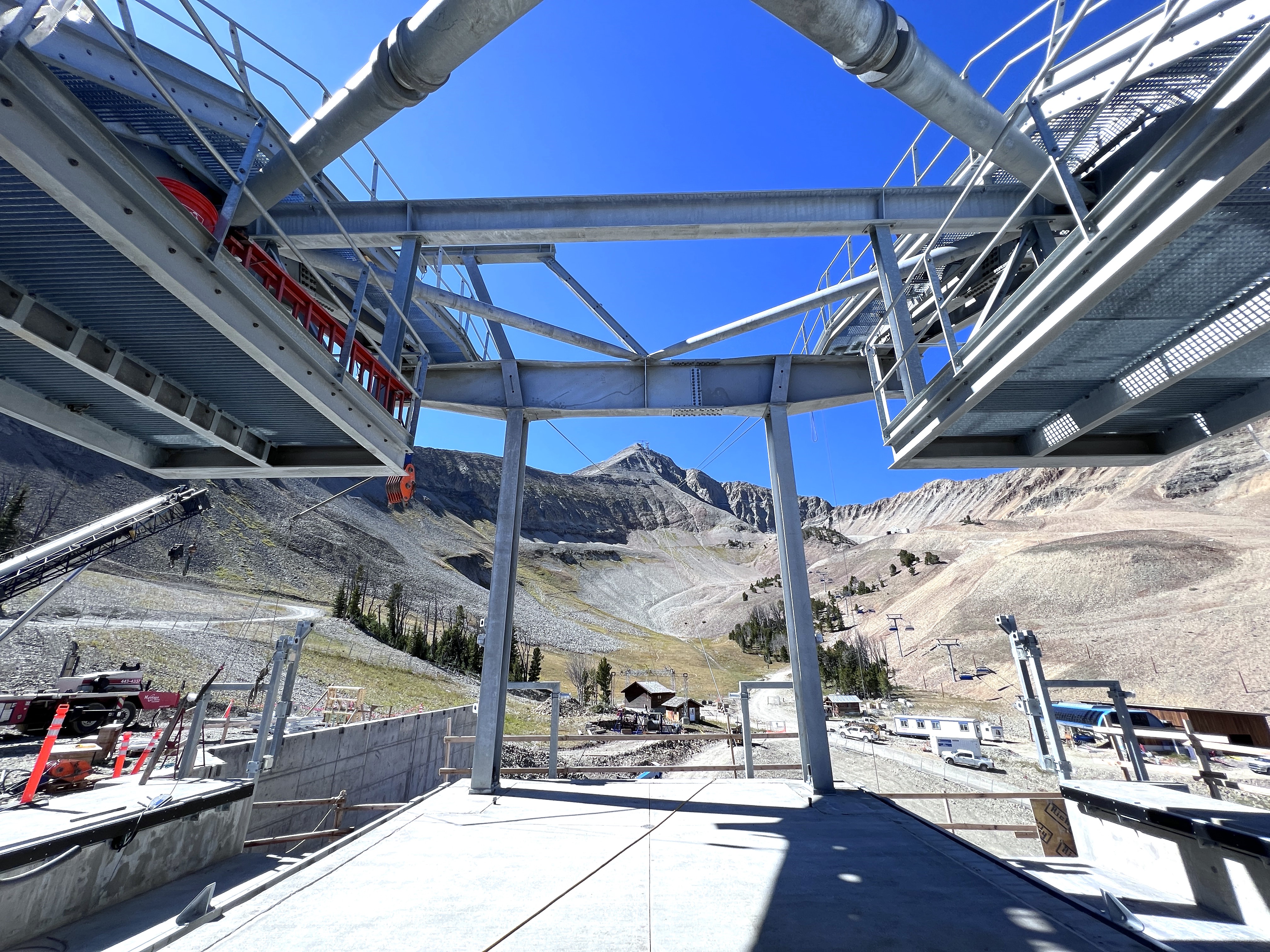
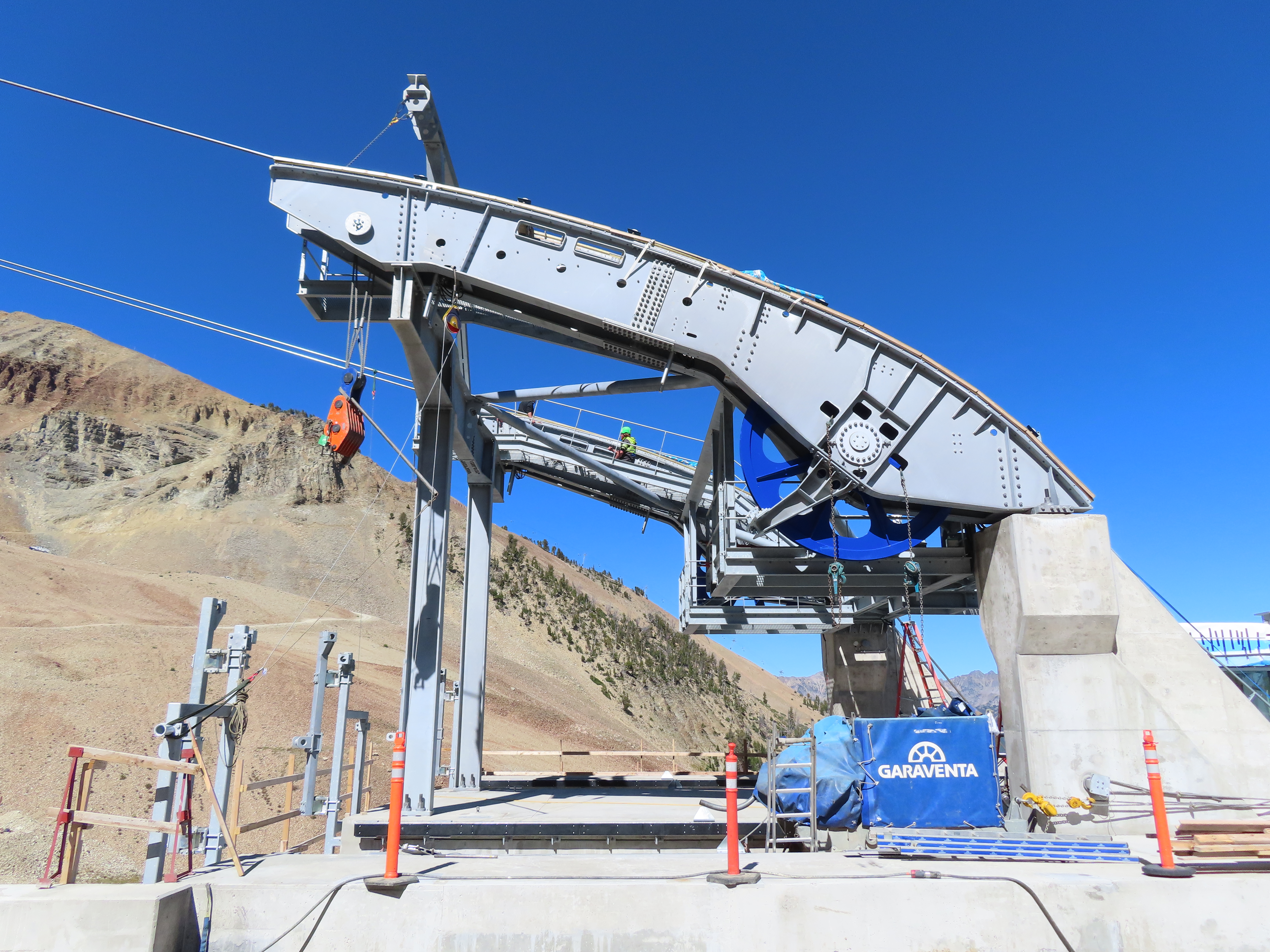
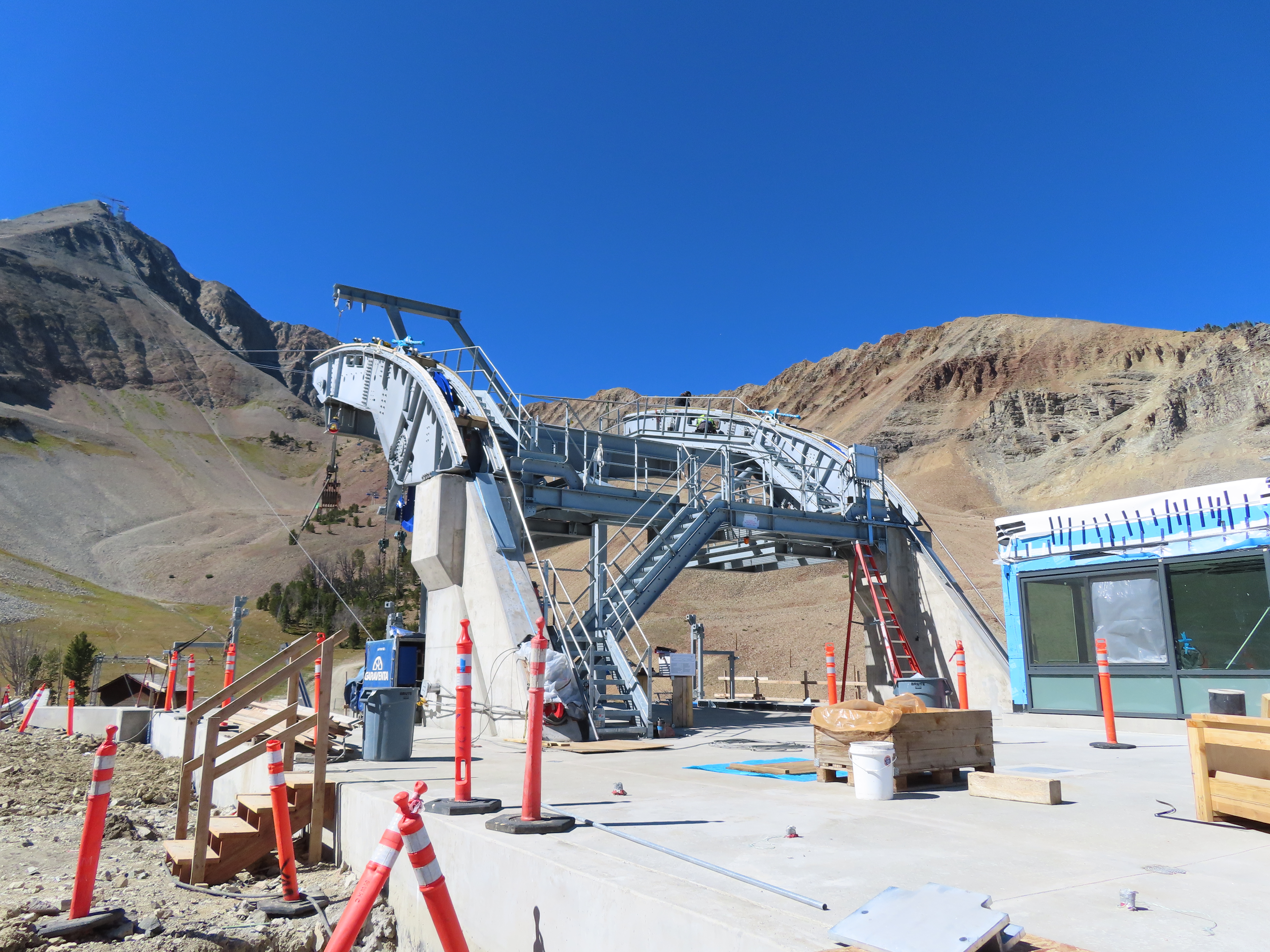
Garaventa and Big Sky Resort are in the home stretch of a herculean effort to bring modern lift service to Lone Peak, the first new tram built at a North American ski area since 2008. Switzerland-based Garaventa is the same outfit that brought skiers the new Jackson Hole tram 15 years ago, the Snowbird tram in 1971 and the Palisades Tahoe tram before that.

The original Lone Peak Tram, which catapulted Big Sky to the upper echelon of extreme skiing in 1995, will carry its final souls a few weeks from now. The only passengers left to hoist are construction workers and a few lucky spectators touring the progress. With one rope and 15 passenger “beer can” cabins, the tram is more jig-back gondola than a true aerial tram. It was built by Doppelmayr, the Austrian heavyweight which absorbed Garaventa six years after skiers began conquering Lone Peak. Garaventa remains a specialized subsidiary of the Doppelmayr Group focused on aerial trams, funiculars and the Swiss market.

The old tram needed to go. The bottom terminal was built atop a rock glacier and, while designed for it, flowed at least 25 feet downhill over the past 28 years. The lower dock no longer sits level such that water pools in triangles at corners. Erroneous faults occur routinely as the tram completes its final missions to 11,166 feet (it’s not a safety issue, each fault is investigated before the lift is restarted).

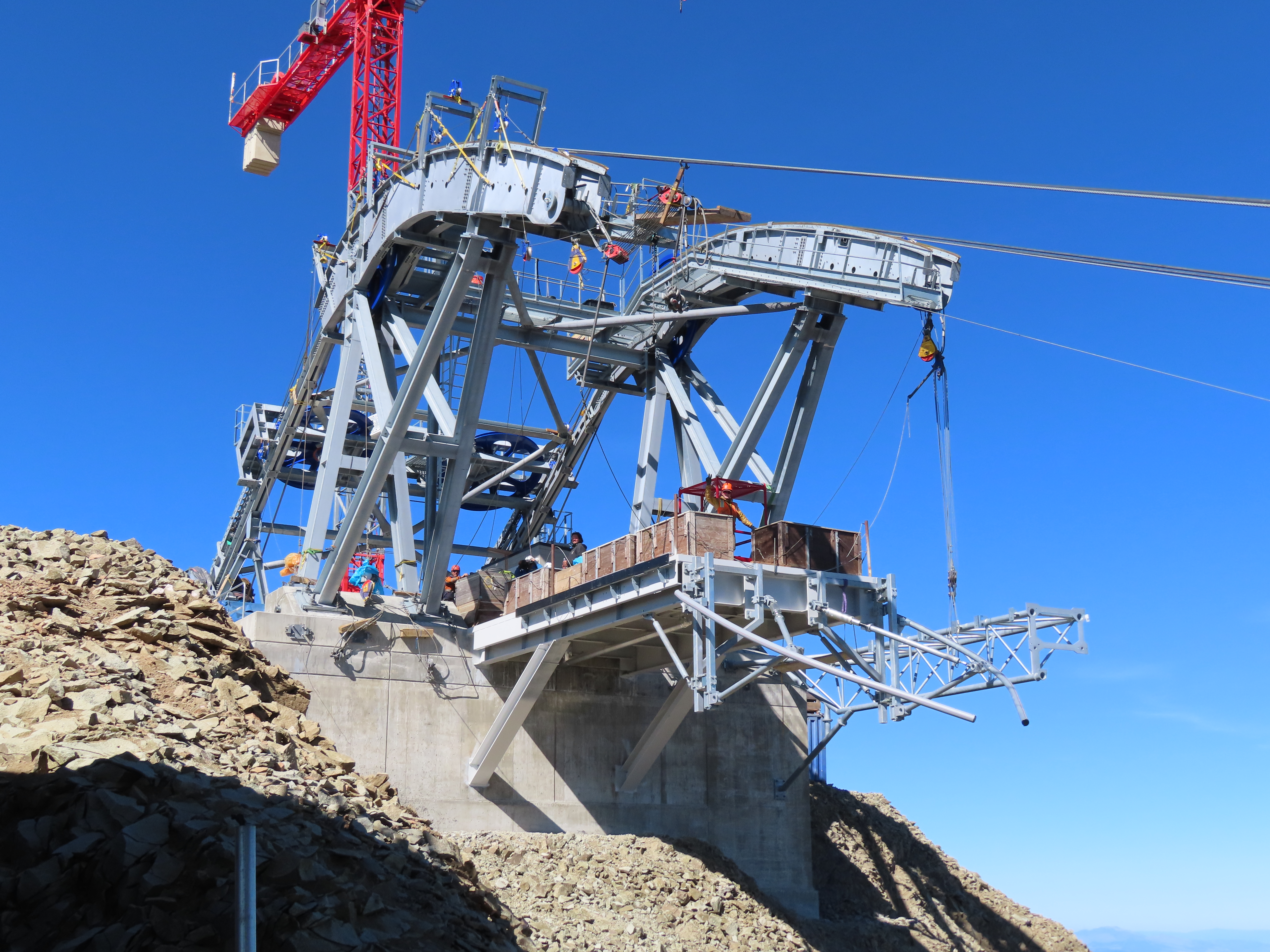
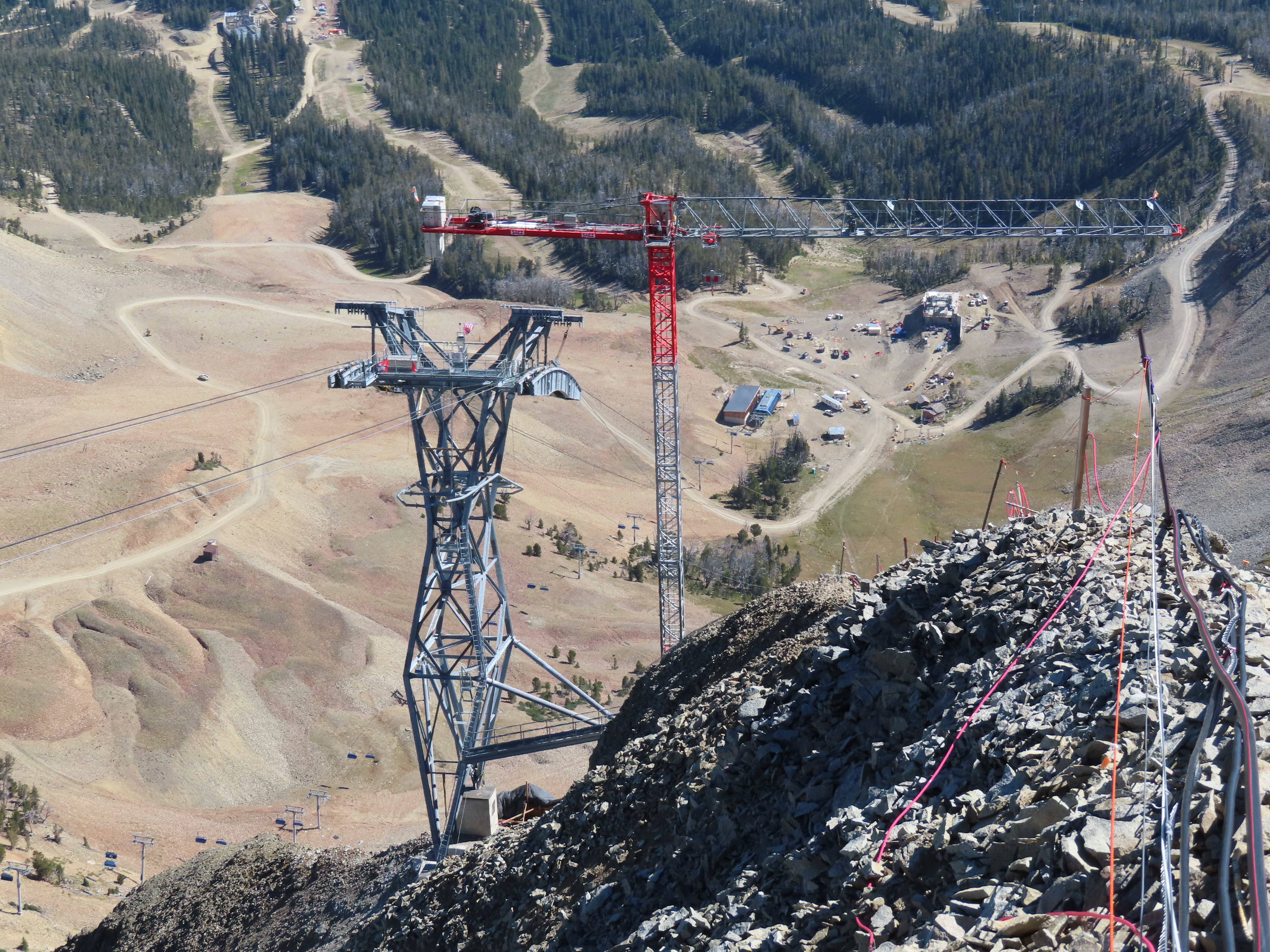
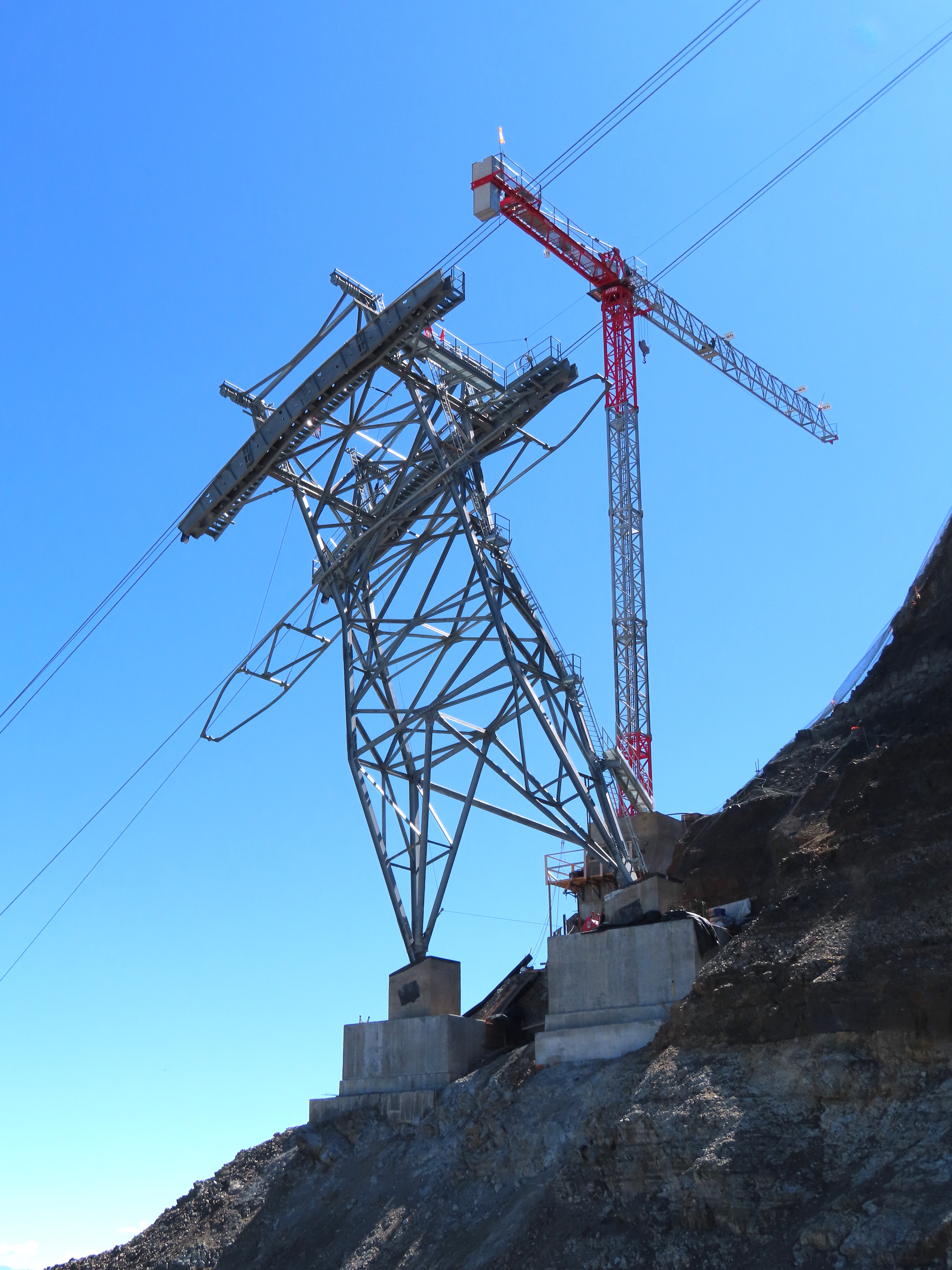
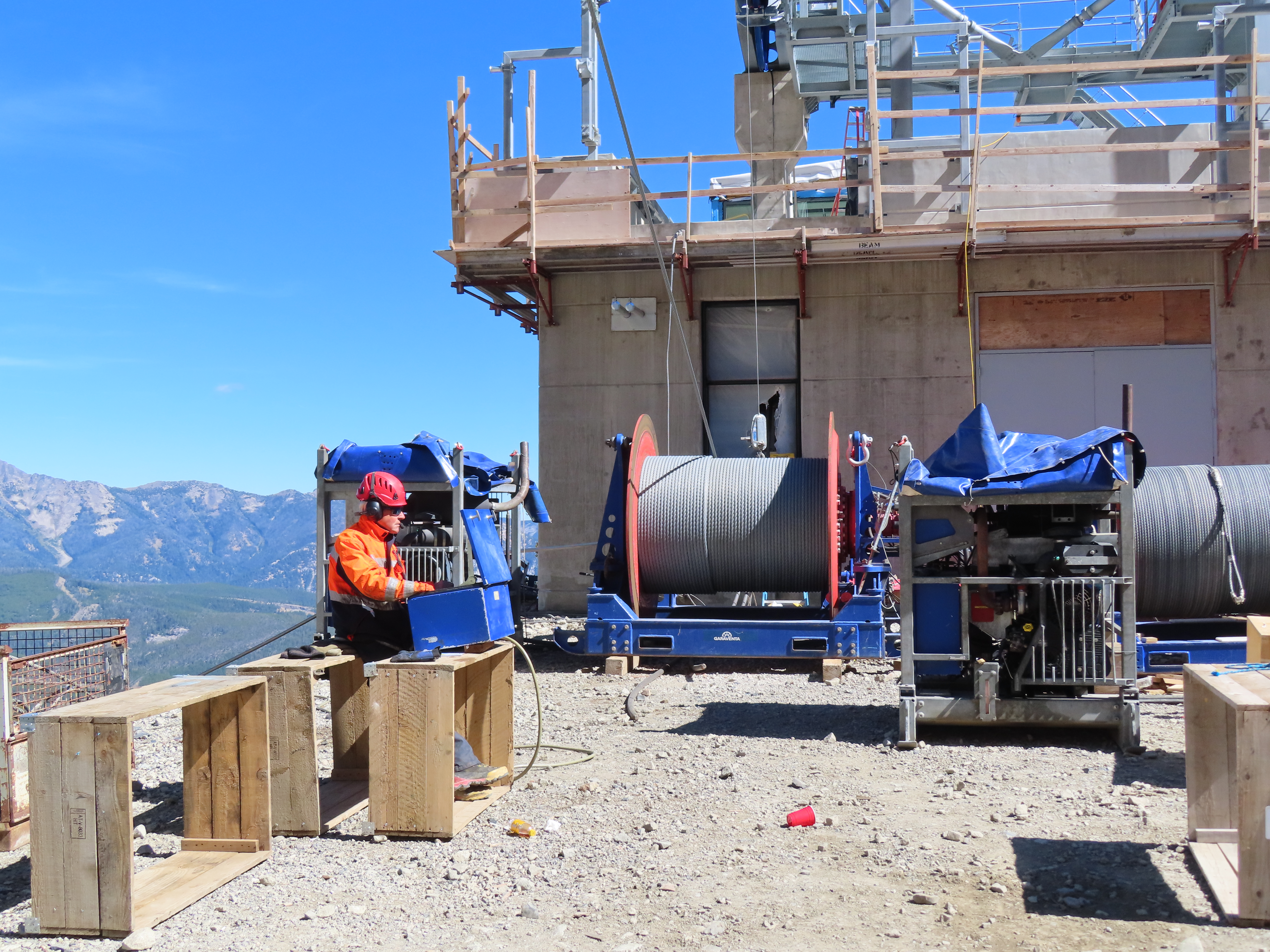
This summer’s greatest challenge was not the tram installation itself but rather setting twin tower cranes needed to build the 100 foot intermediate tower and top terminal. Each crane had to be flown in sections weighing up to 9,000 lbs. It took multiple Chinook helicopters weeks with pauses for bad weather and other setbacks. Once the cranes were live and Big Sky’s own employees trained to operate them, the installation team from Garaventa could get to work.

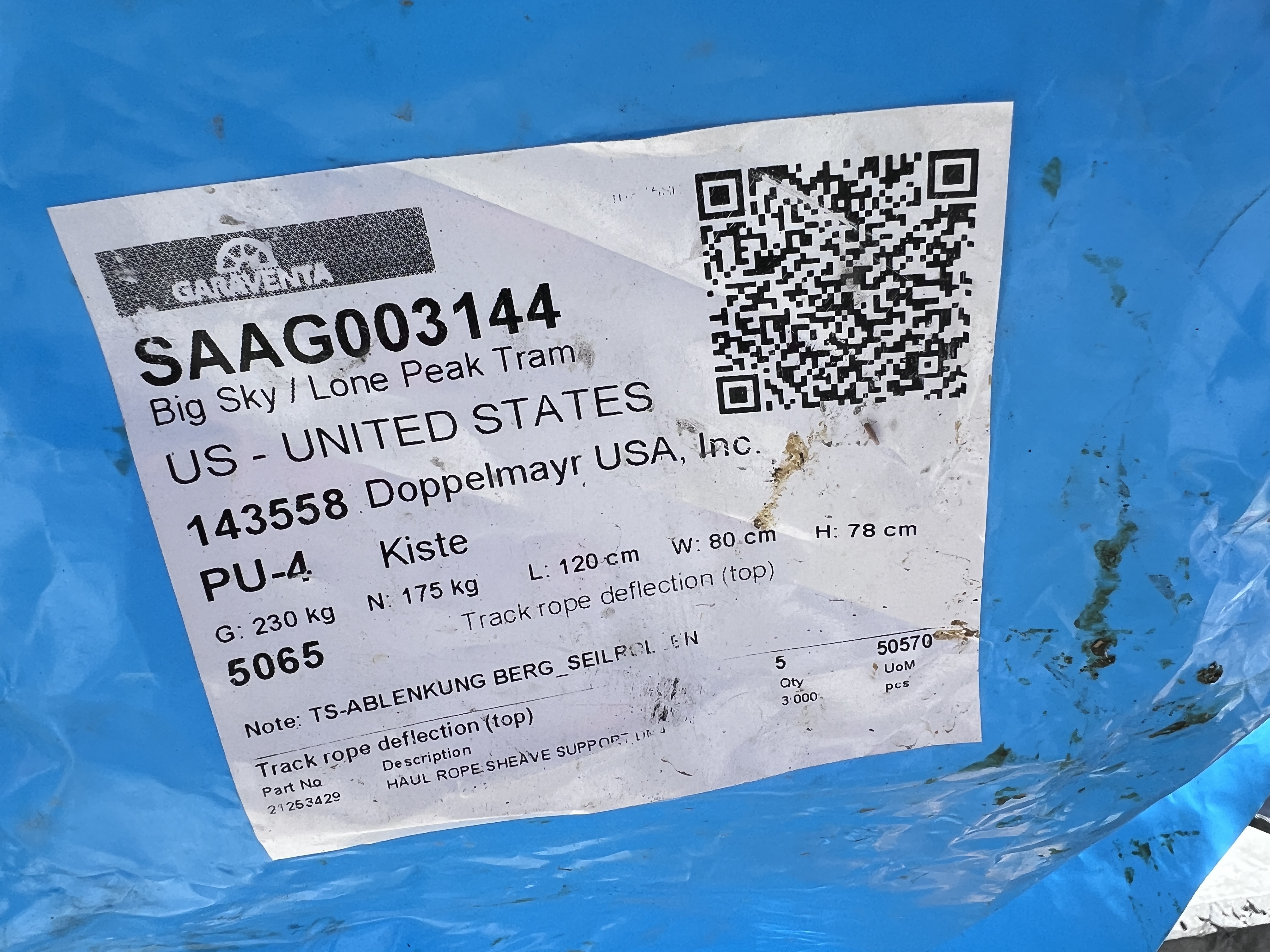
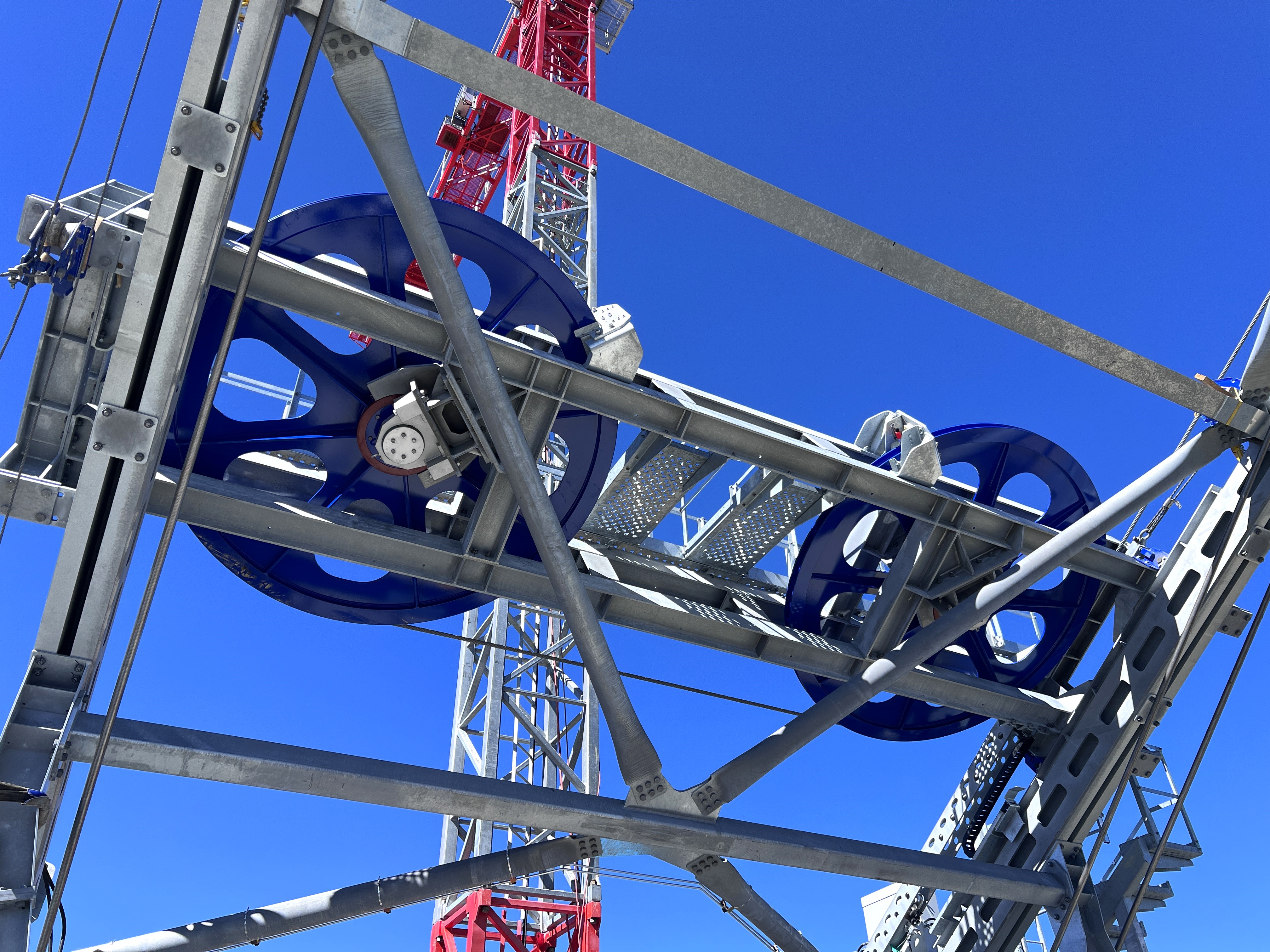
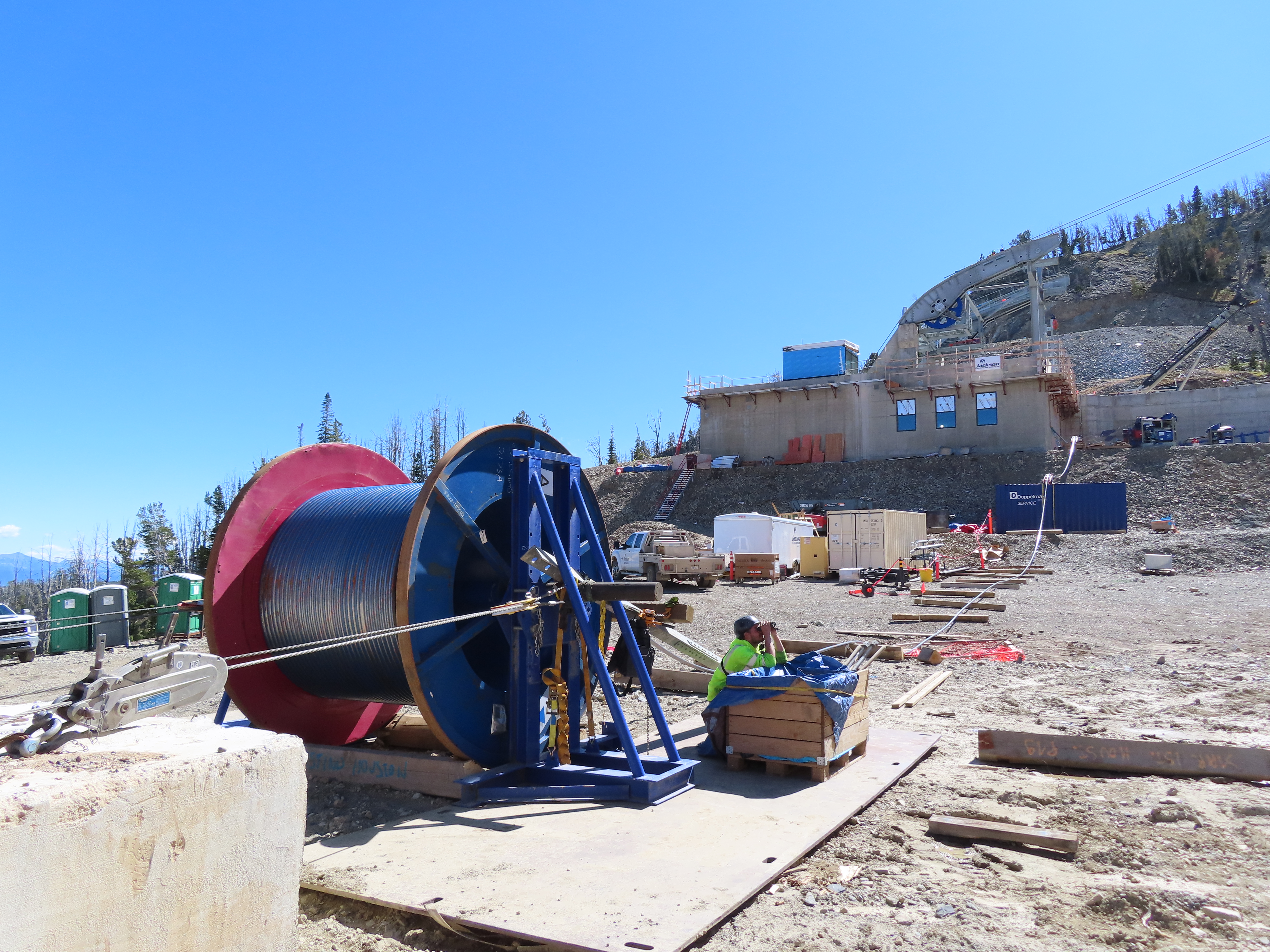
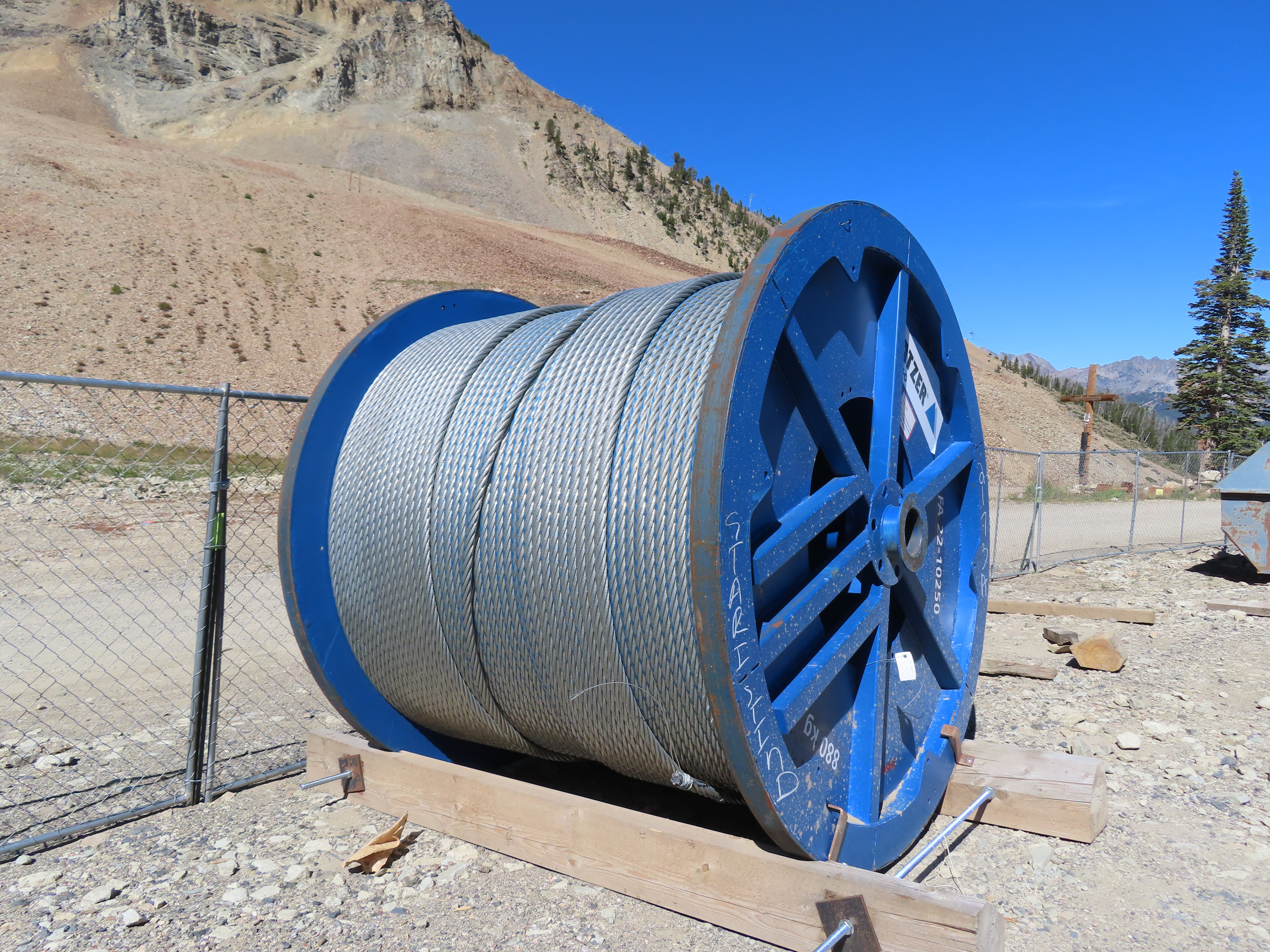
Big Sky and contractors completed micropiles, tiebacks and concrete work last summer, setting the stage for this summer’s steel erection and rope pulling marathon. As of today, three of the four track ropes are on their bollards. A fourth track rope pull is in progress with the haul rope on deck. For each track rope, a helicopter pulled a 10 mm pilot line up to the top terminal and back down. Then crews attached and pulled successively larger 18 mm, 22 mm and 32 mm ropes until finally the smooth 48 mm track rope was up the line. The process is slow and steady with up to 10 Swiss men on headsets and binoculars monitoring every inch of progress for 5-6 days per rope. The 37 mm haul rope will be pulled in similar fashion and spliced into a continuous loop like more traditional ski lifts. The tram will be driven from the bottom station with no counterweight required for tensioning. Redundancy is built in everywhere, from multiple transformers to dual motors, evacuation drives and generators. Frey AG Stans supplied the lift’s state-of-the-art control system, similar to one recently installed on Snowbird’s tram.

This winter, guests will pay per tram ride rather than a daily rate as they did in the final years of the old tram. Big Sky notes the average tram day pass purchaser only rode 1.8 times. The privilege cost $20 to $100 depending on demand and some were riding the tram multiple times solely to feel better about their investment. This added to long lines and detracted from the Lone Peak experience. New tram access will cost less – $10 to $40 per ride – charged automatically to a credit card with each scan at the bottom dock.

Big Sky Ski Patrol will monitor conditions hourly and decide how many skiers and snowboarders to let on the cars, which can hold up to 75 riders. Big Sky will also debut a sightseeing specific line designed to fill excess tram capacity with guests not utilizing limited ski terrain off the summit. Come 2025, foot passengers will be able to ride a new 10 passenger gondola from the Mountain Village right to the base of the new tram. This boarding location lies 700 vertical feet lower than the old tram station, eliminating the need to ride Powder Seeker for a tram lap. Most importantly, it’s below the rock glacier. The new tram will eventually open year round, though summer 2024 will be spent completing glass enclosures around each station.

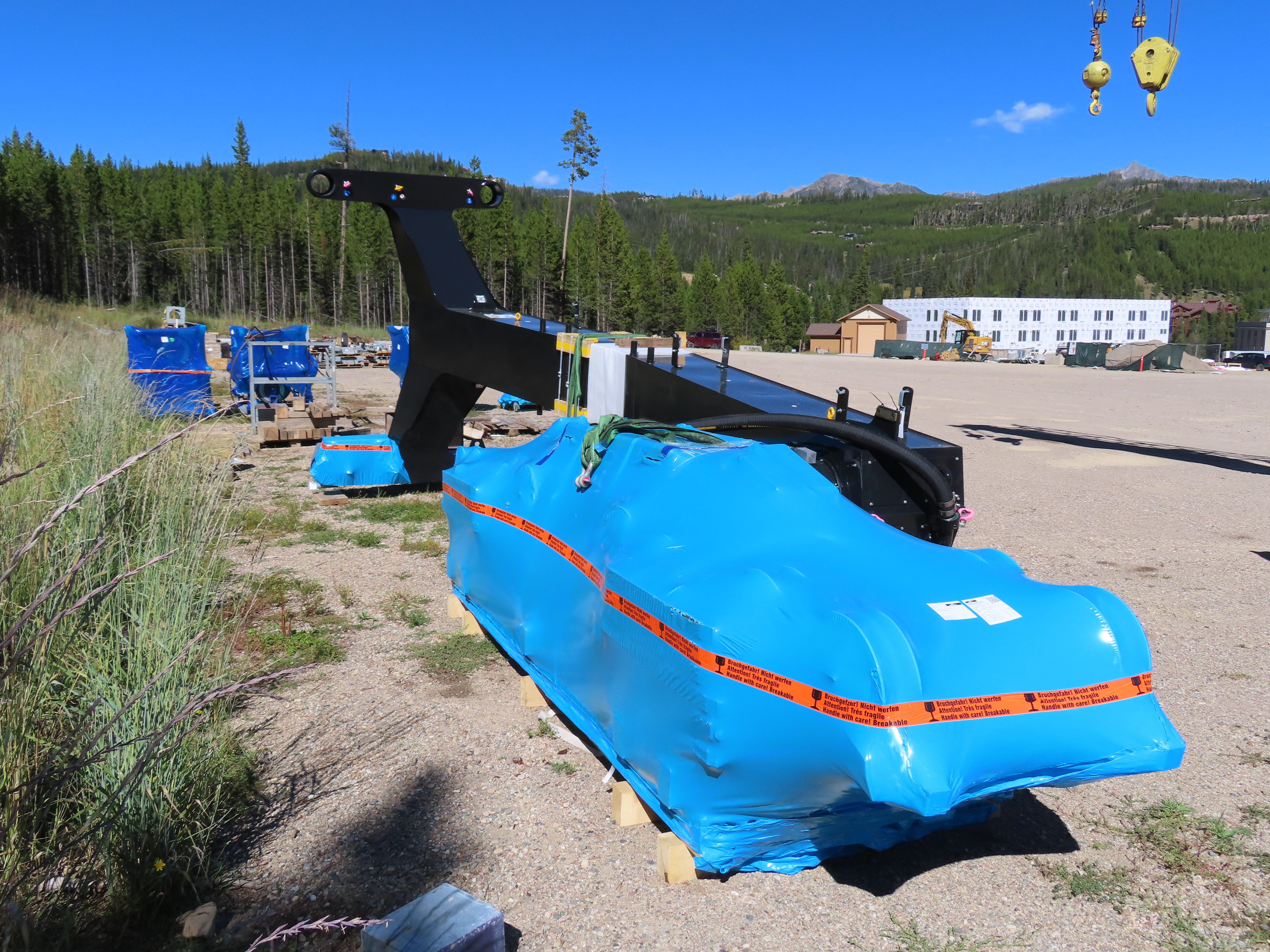
Once rope pulling wraps up, the tram’s two cabins will be driven up from the village and attached to the haul rope. The CWA cabins will feature automatic doors, a glass floor panel and seating for 12. Acceptance testing is expected to take four to five weeks. Big Sky has been careful not to advertise a grand opening date, but the word December is being thrown around. That month will mark 15 years since the last new tram debuted in this part of the world and 50 years since Big Sky opened.

Wolf Creek to Debut New Beginner Chair

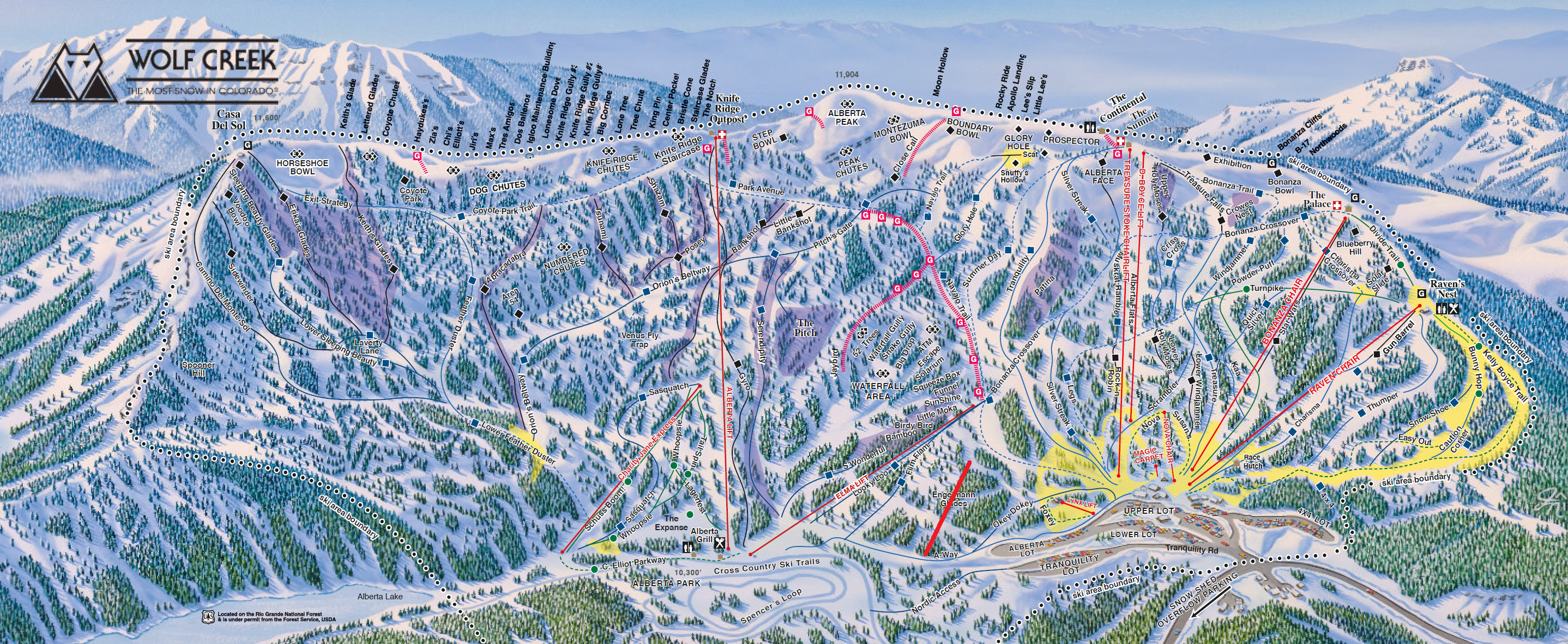
A surprise eighth chairlift is under construction at Wolf Creek Ski Area in Southwest Colorado this September. The Tumbler quad will service a modest new beginner pod in the area of Engelmann Glades. With this late season addition, Colorado is up to six new chairlifts and a new gondola for the upcoming 2023-24 ski season.

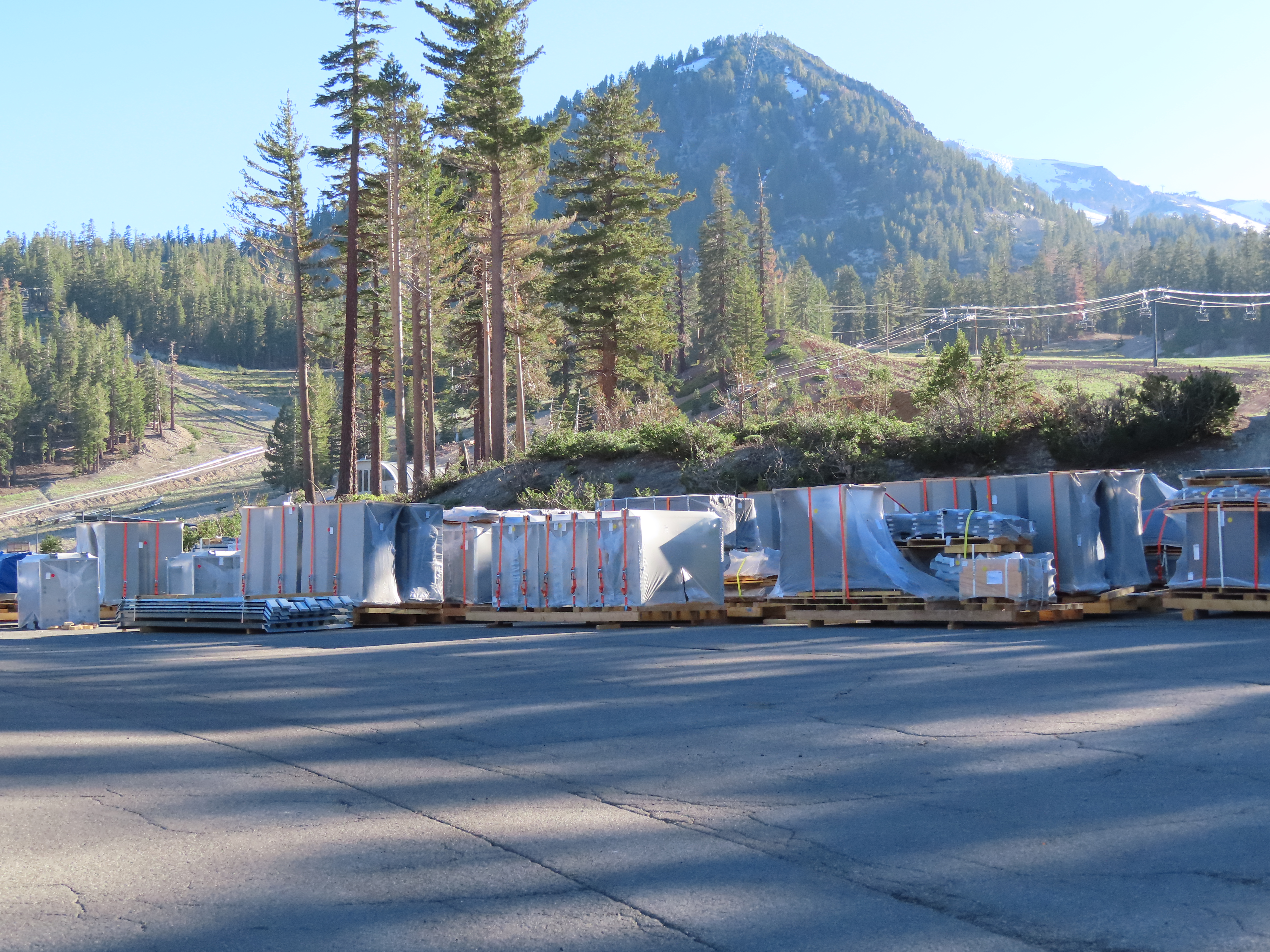
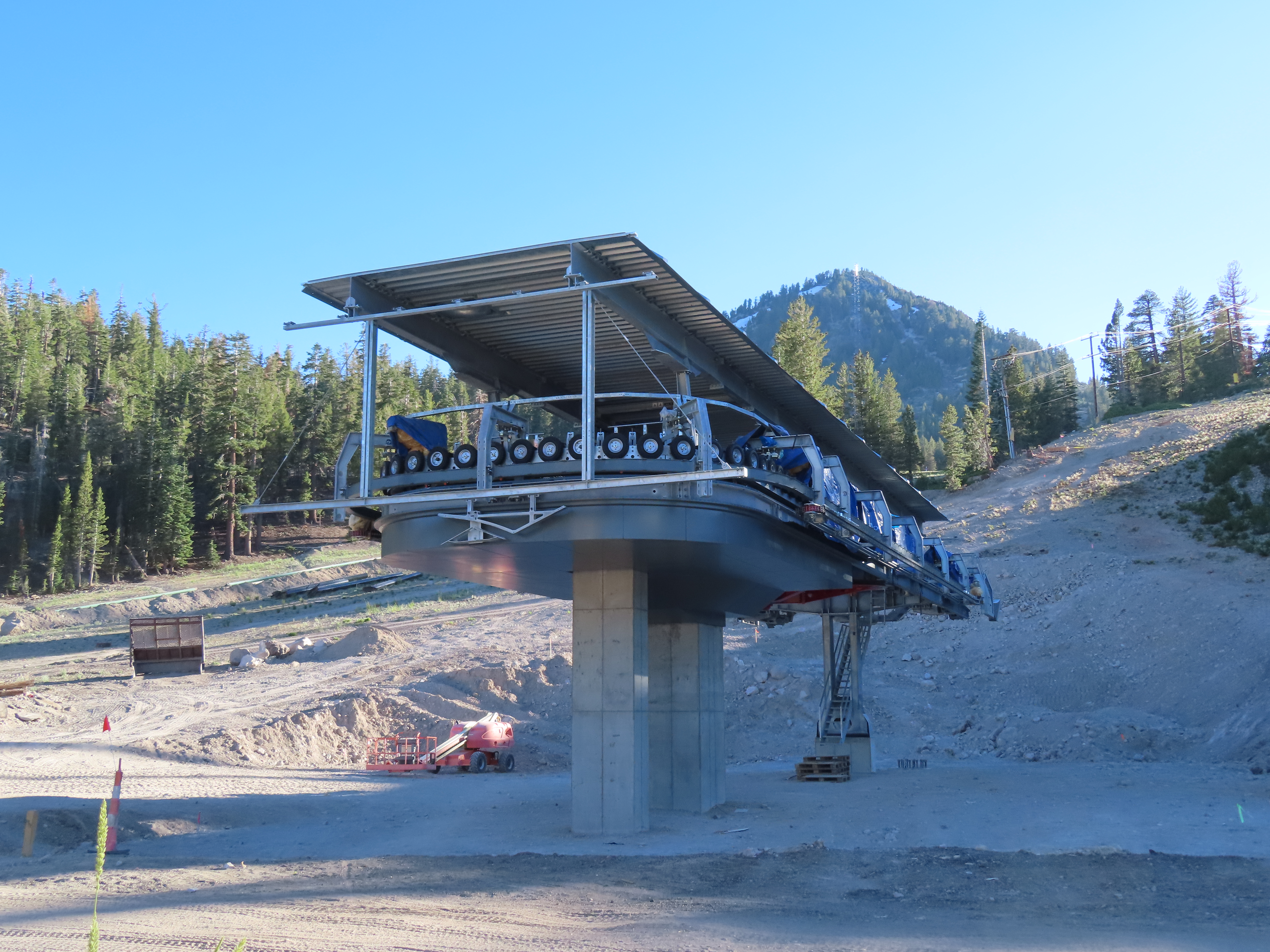
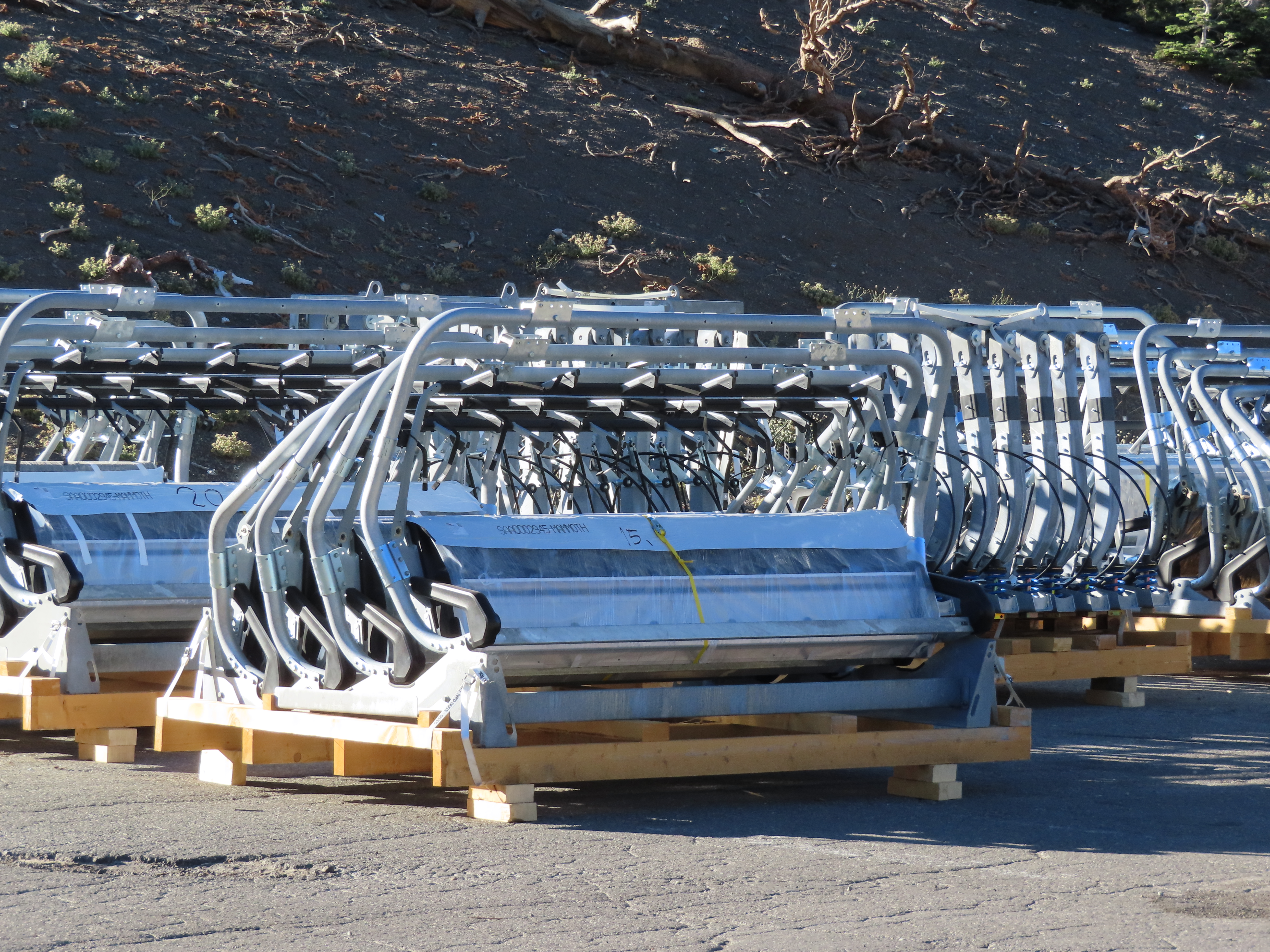
The Forest Service only approved the project on August 10th and satellite imagery shows tree clearing began shortly thereafter. Wolf Creek has not formally announced details but a teaser shows a Doppelmayr fixed grip quad in the parking lot and tower foundations under construction. The Forest Service notes Tumbler will “provide additional infrastructure to the ski area to support operations, disperse use and provide for a quality recreation experience.”

Marmot Basin Announces New Knob Chair

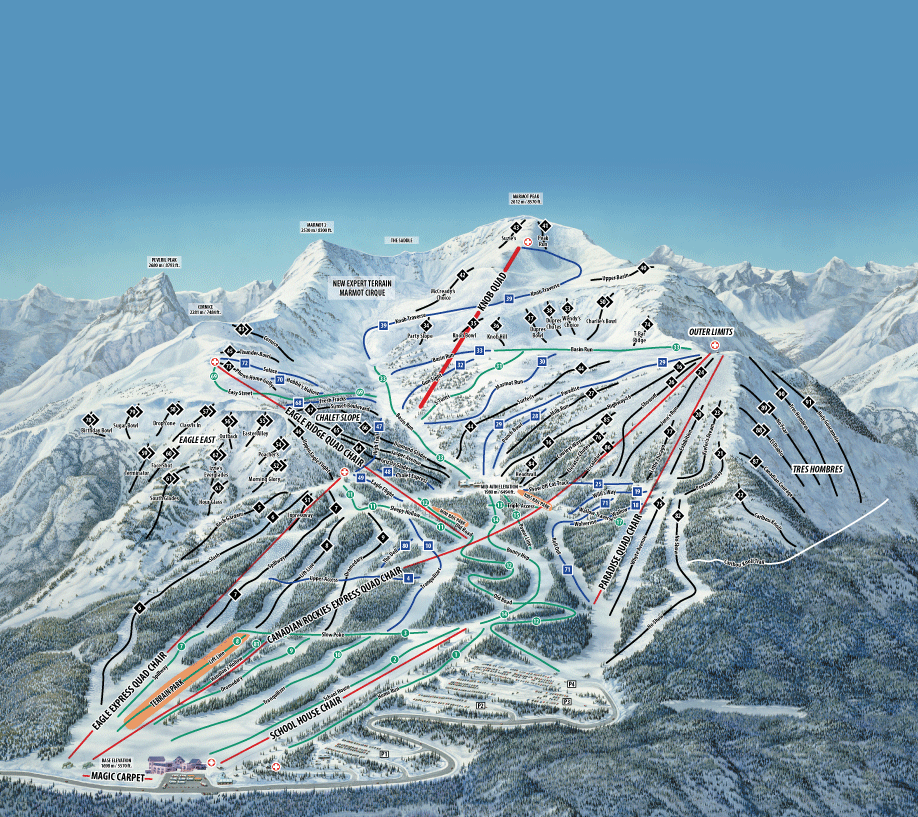
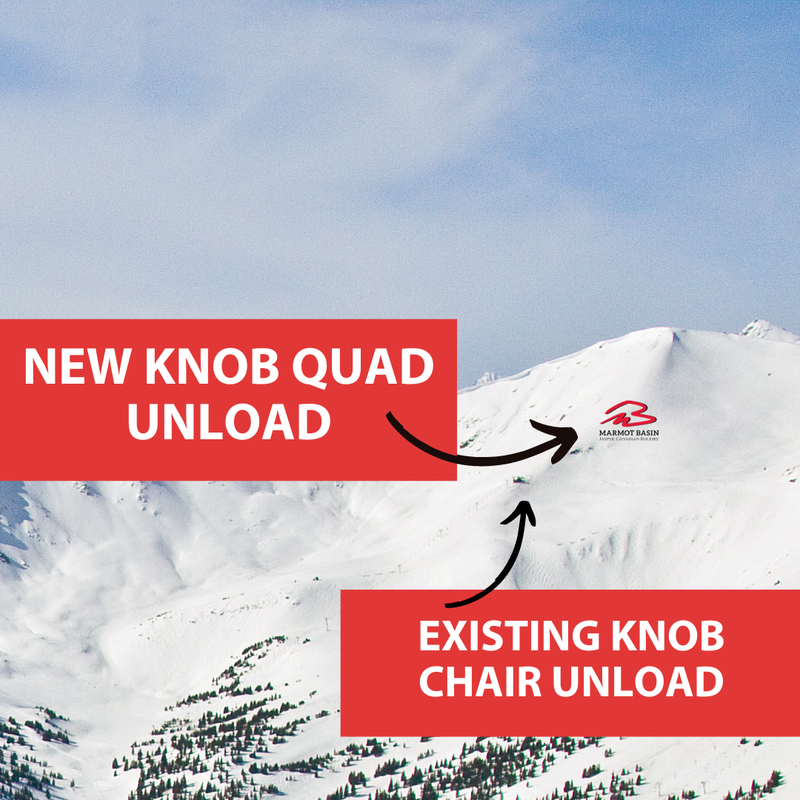
It’s been an open secret for months but Marmot Basin made it official this weekend: a new summit chairlift will debut this winter. Not only will the new Knob Quad replace the mountain’s oldest lift, it will also increase Marmot Basin’s lift-served vertical by 415 vertical feet. The Doppelmayr fixed grip quad will replace a 47 year old Doppelmayr double of the same name but run in a modified alignment. The new machine will be longer and taller, rising 1,289 vertical feet over 3,566 feet of slope length. A Chairkit conveyor will enable loading at 2.3 meters per second with up to 1,200 skiers per hour enjoying a sub eight minute ride. The new lift will improve access to the Cirque terrain as well as Marmot Peak.

When the project is complete, Marmot Basin will feature one of the youngest lift fleets in Canada. Marmot and Doppelmayr plan to open the Knob Quad this coming season as soon as snow permits.

News Roundup: Ponderosa

News Roundup: Repaired

News Roundup: Sigma

Manufacturers Introduce Innovations at Interalpin

If the last week and a half was quiet on the blog, it’s because I was skiing my way around Austria, Germany and Switzerland with a few lift factory visits along the way. The last stop on my journey was Interalpin, the world’s largest trade show for mountain technology which takes place in Innsbruck every two years. Thanks to Covid, this was the first Interalpin in four years with an estimated 35,000 people attending.

Doppelmayr

Doppelmayr made a splash the first day with the introduction of a new logo, the company’s first brand refresh in decades. For the first time Doppelmayr Group companies like CWA, Carvatech, Garaventa, Gassner and Frey all have logos matching the parent company’s identity. The new brand will be introduced to international subsidiaries over time.

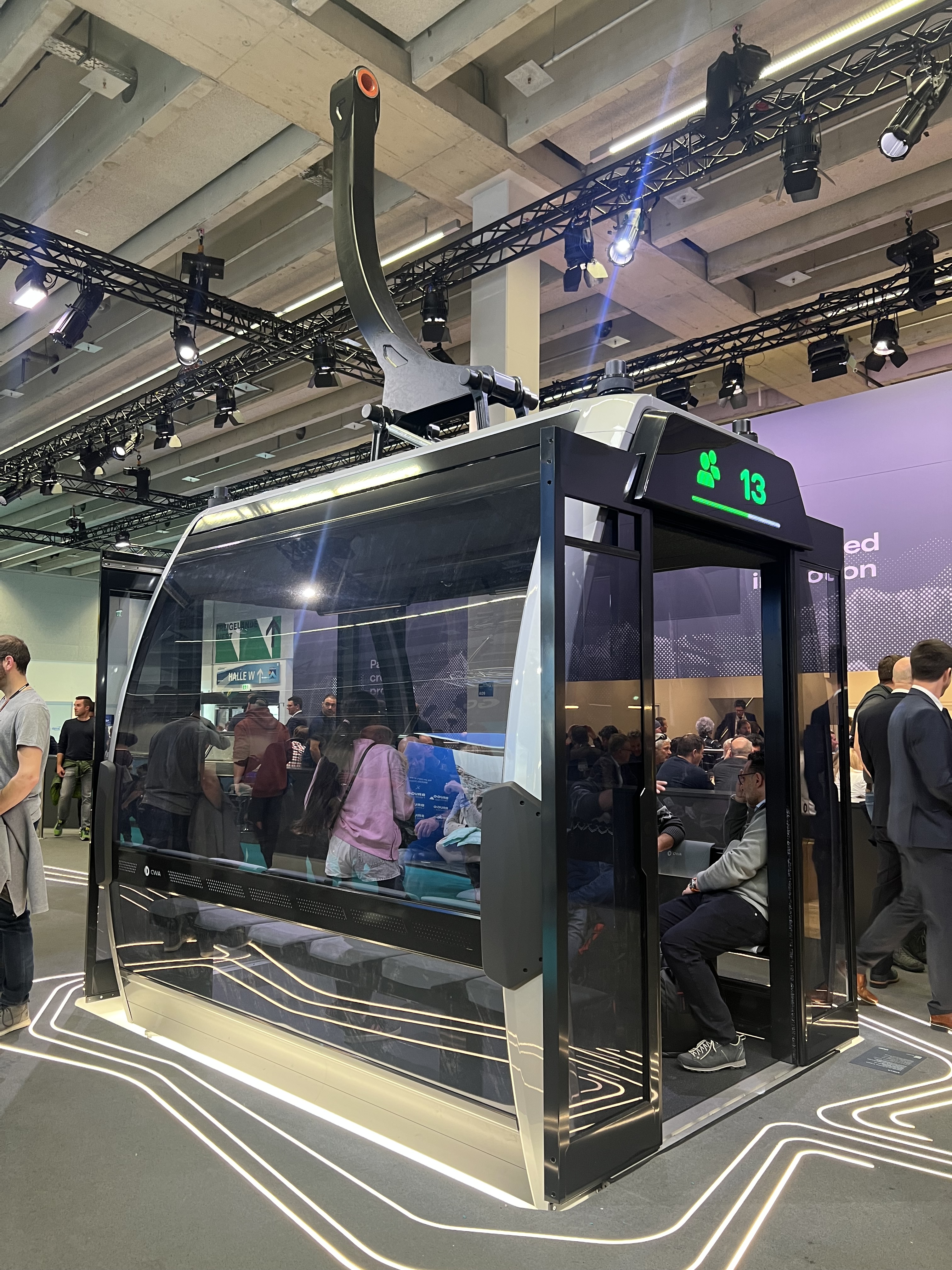
Doppelmayr’s sprawling two story booth featured numerous cabins, chairs, grips and carriages from an 8 seat Carvatech gondola all the way up to a 32 passenger CWA Atria.

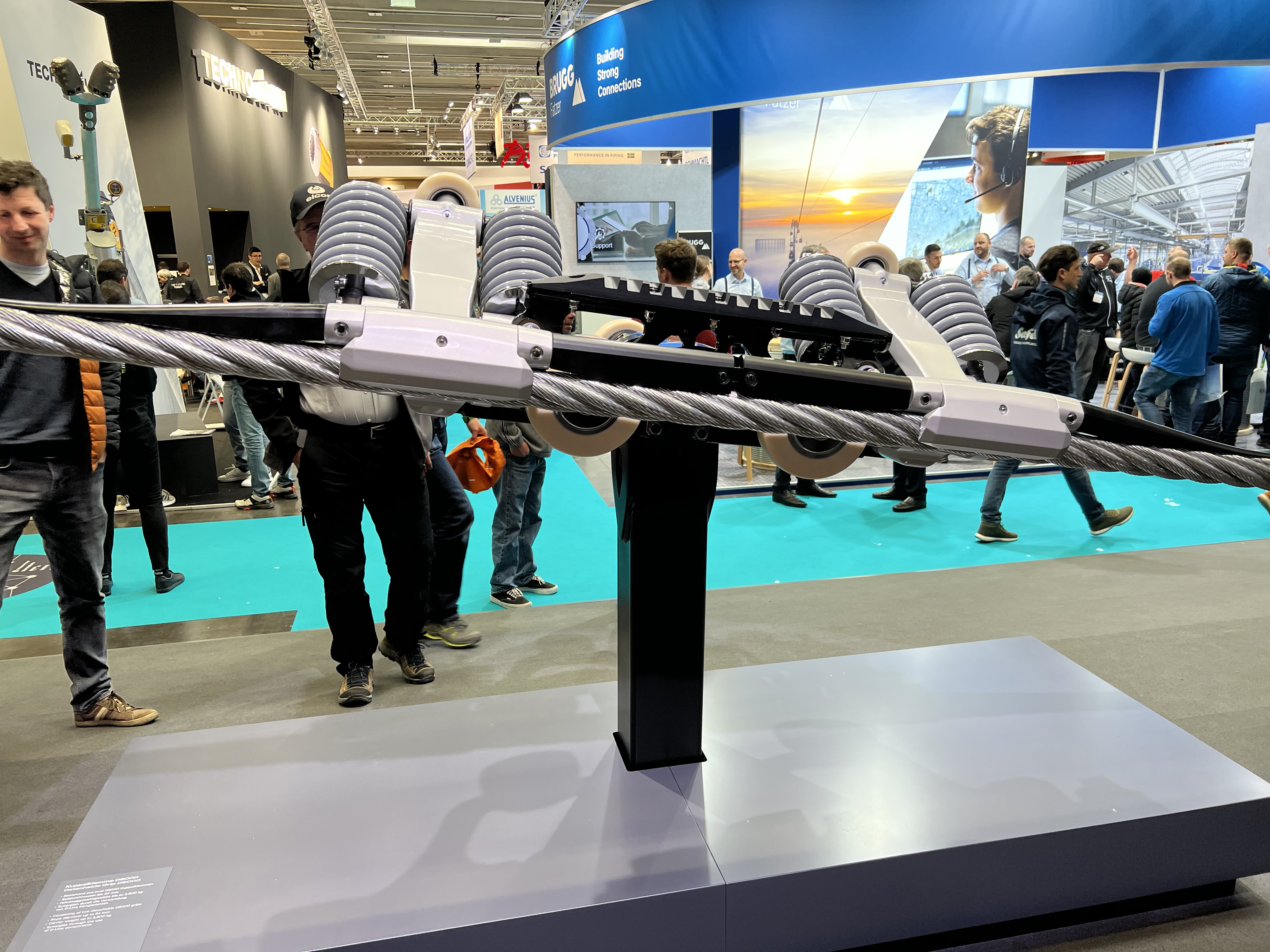
A 20 passenger cabin called Stella debuted for the first time. This cabin will be available for both Tri-Line 3S and 20 passenger monocable gondolas. Stella fills the gap between the ubiquitous Omega and much larger Atria model, which has only been used to two lifts to date. Future 20 passenger monocable gondolas will utilize a new D9000 carriage, which is built around two side by side D5000 grips.

Introduced last year, Tri-Line is a streamlined version of the 3S gondola with smaller stations requiring less concrete. The first Tri-Line is under development at Hoch-Ybrig, Switzerland. Both Tri-Line and 20-MGD are based off standard D-Line stations and can achieve up to 8,000 passengers per hour with Stella cabins that fit closely together and can open on two sides. On the three rope Tri-Line, Stella cabins will be capable of spanning longer distances between towers than monocable gondolas with high wind stability.

Doppelmayr also showcased a simplified surface lift product family called S-Line.
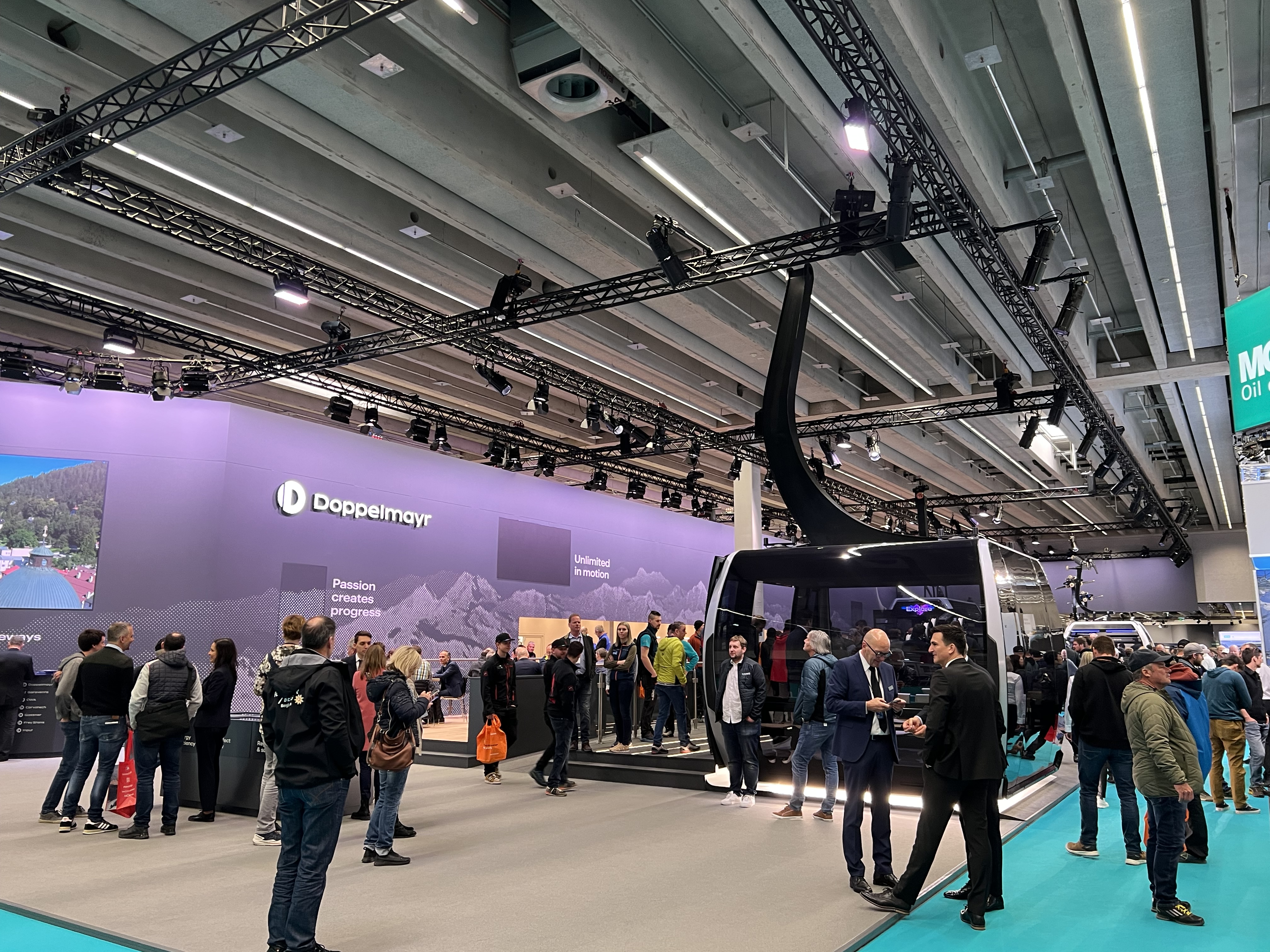
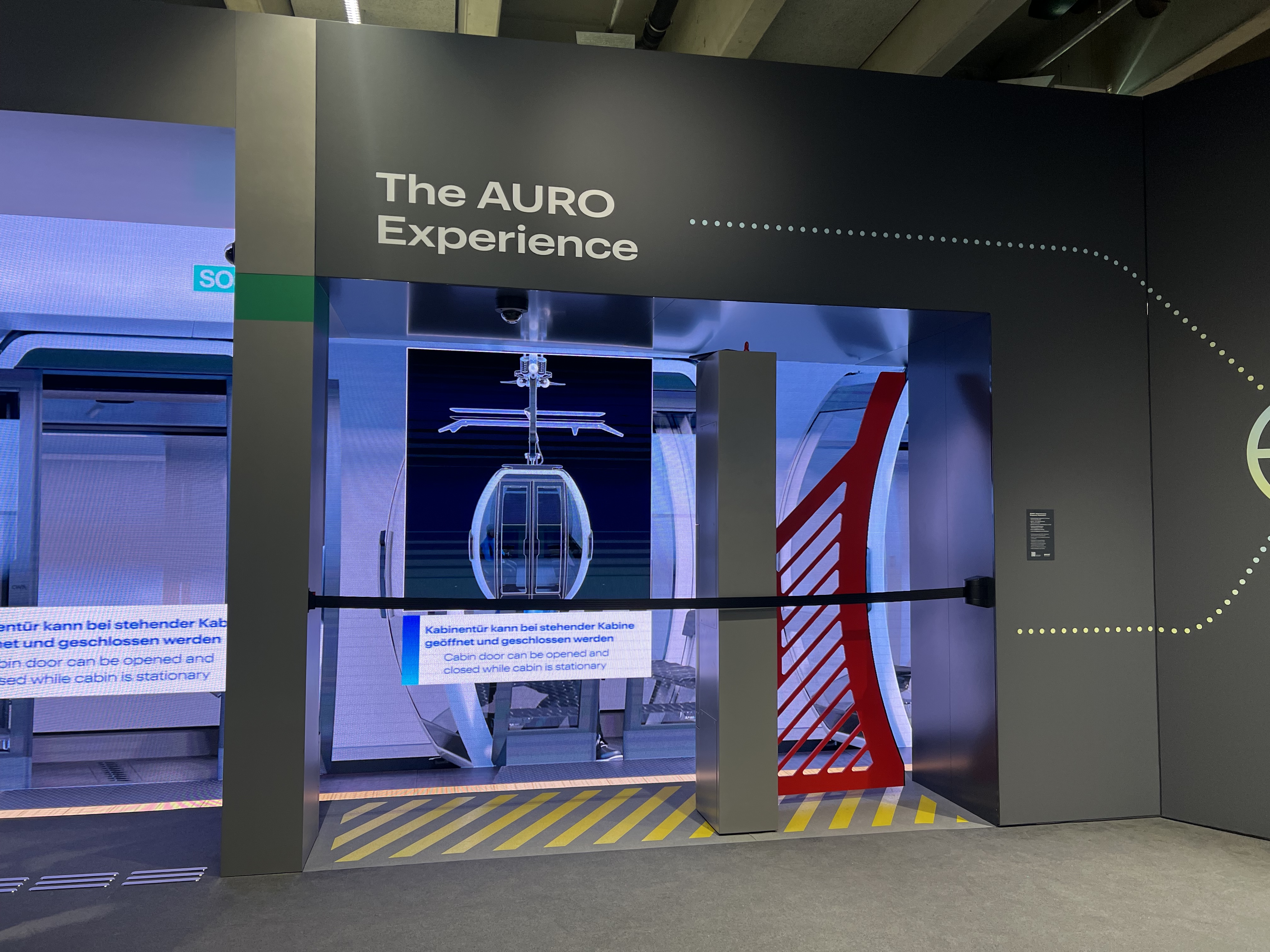
Doppelmayr had a full size mockup of an Auro autonomous gondola station which can be monitored remotely from a ropeway operations center. A chairlift version is also undergoing testing on two lifts in the region using artificial intelligence to monitor unloading. In both cases, large detachable lifts could be operated by just one person.
Also on the software front, Doppelmayr’s resort management software clair now integrates with other mountain technology providers such as Fatzer, Skidata and TechnoAlpin.

HTI Group

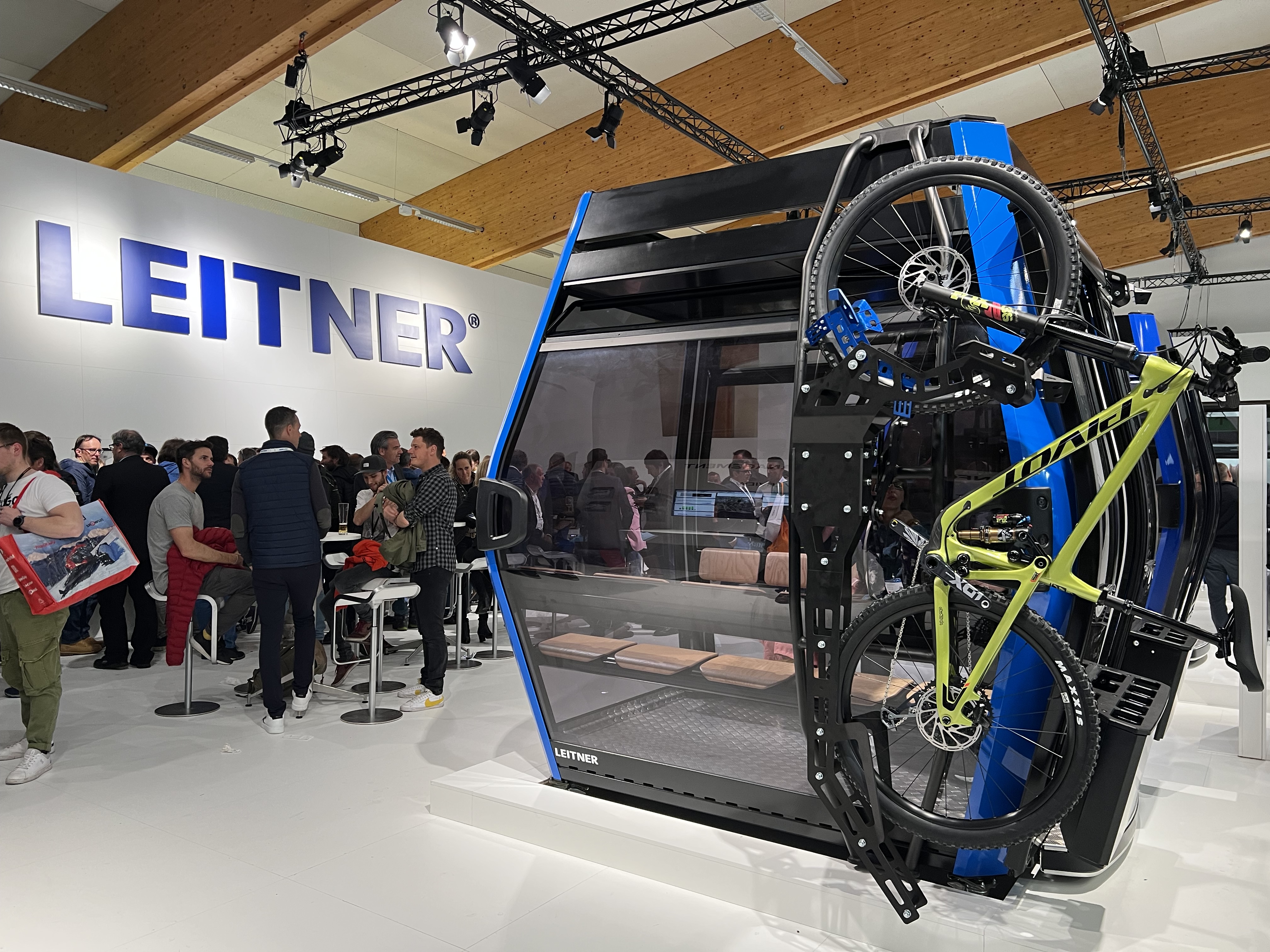
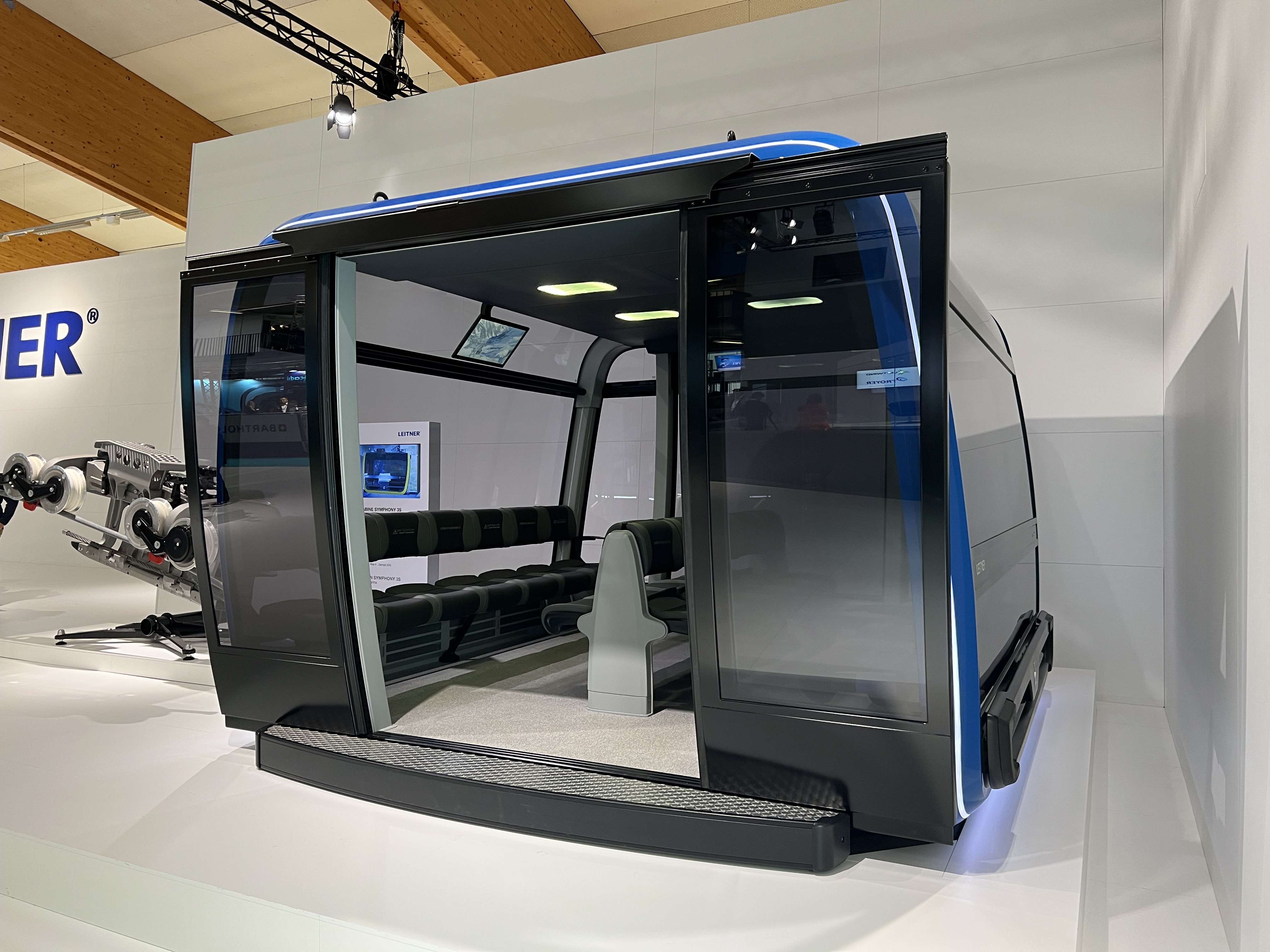
HTI group hosted another large booth shared between Prinoth, Leitner, Poma and DemacLenko. For the first time Bartholet was also part of the HTI area. With three different lift brands now under one umbrella, HTI showed off multiple Diamond cabins, a premium chair, Symphony gondolas and Bartholet chairs/cabins.

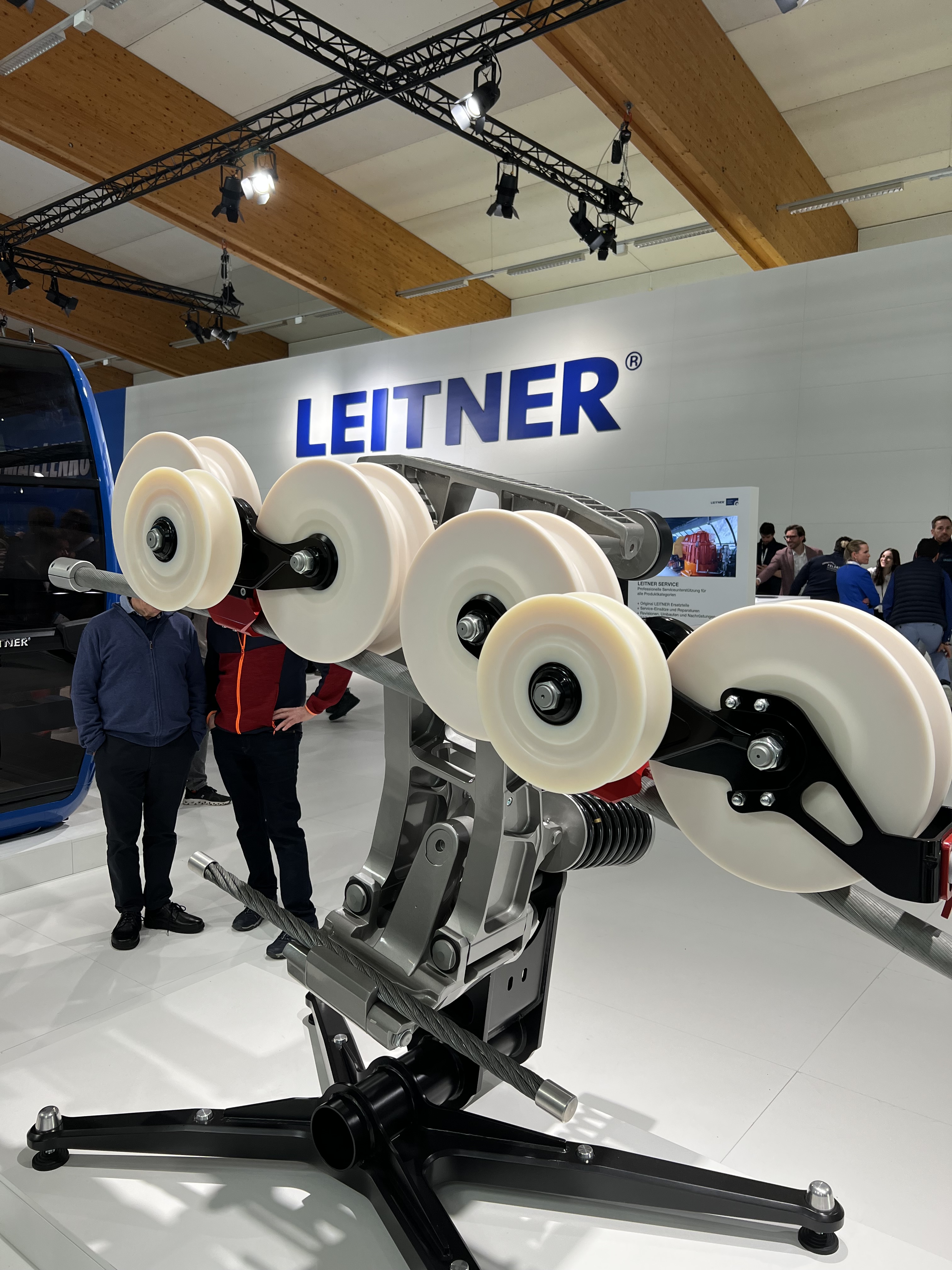
I got to experience both Leitner’s 2S and 3S gondolas in the surrounding mountains and was very impressed with their smooth ride and quality. The newest 2S design utilizes plastic carriage rollers and can span long distances between towers more economically than a 3S.

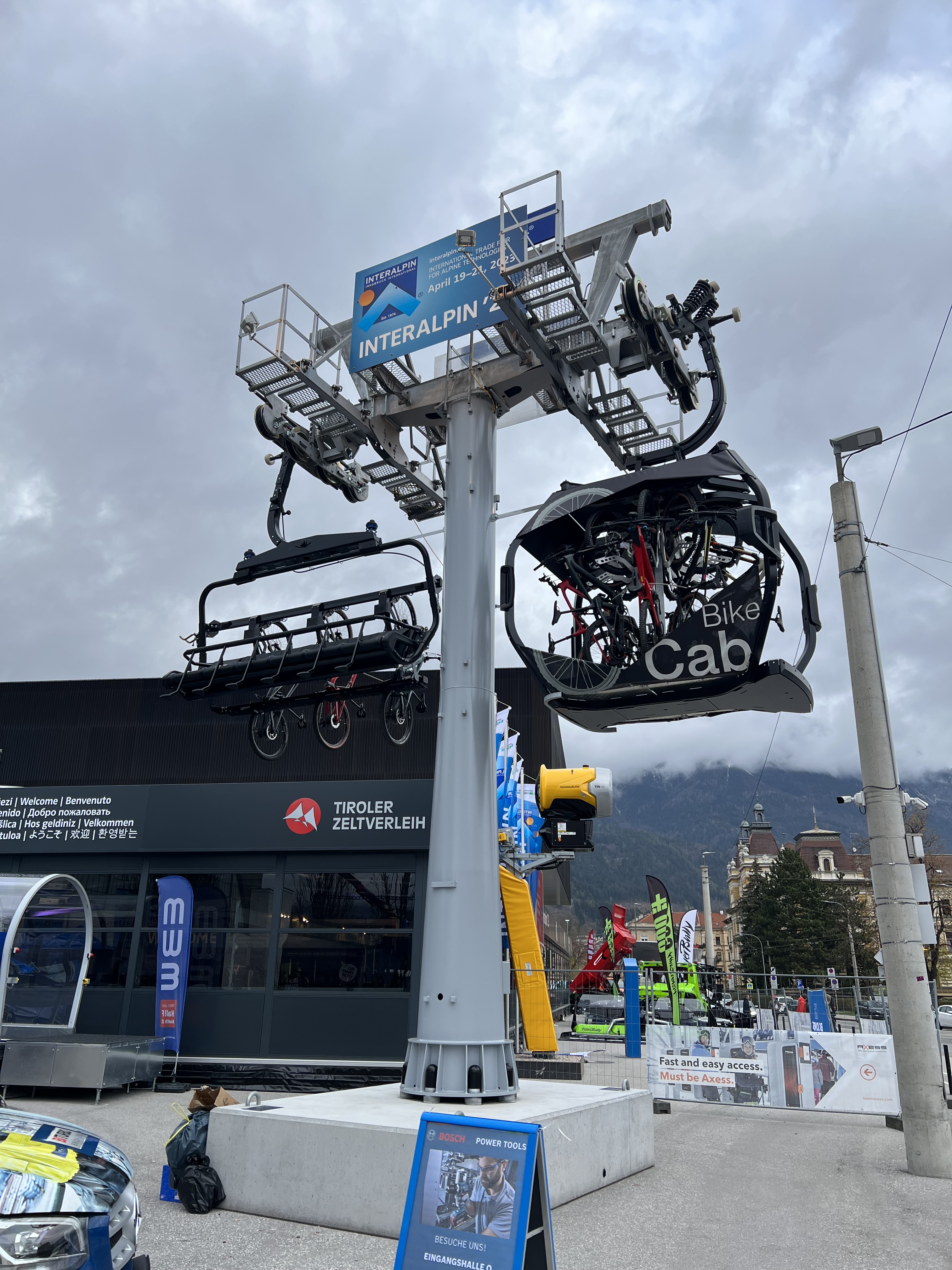
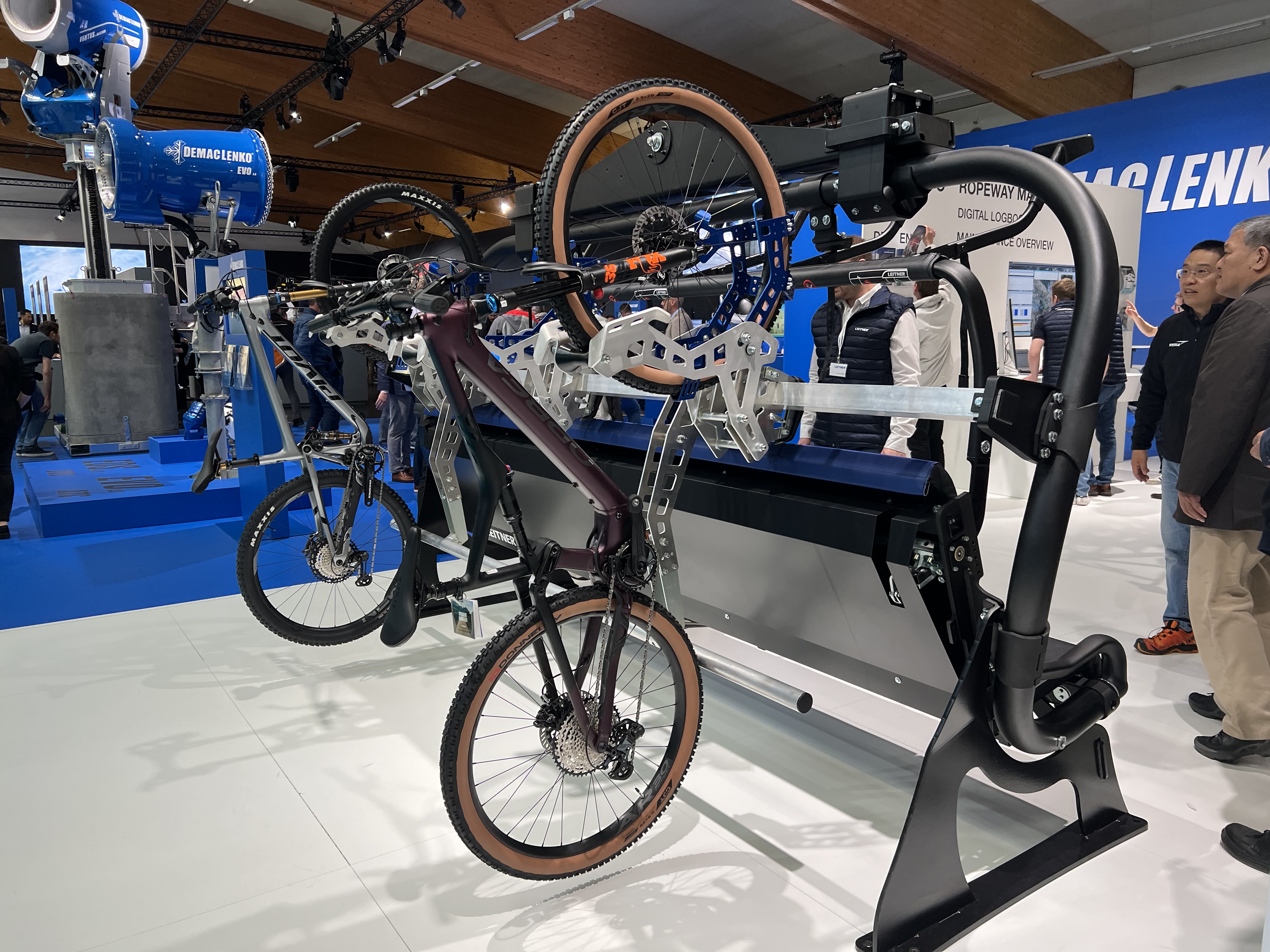
Bikes were a big focus with both chair and gondola loading solutions on display. The European industry has embraced vertical racks so passengers can ride on the same chairs as bikes without having to skip chairs with trays.

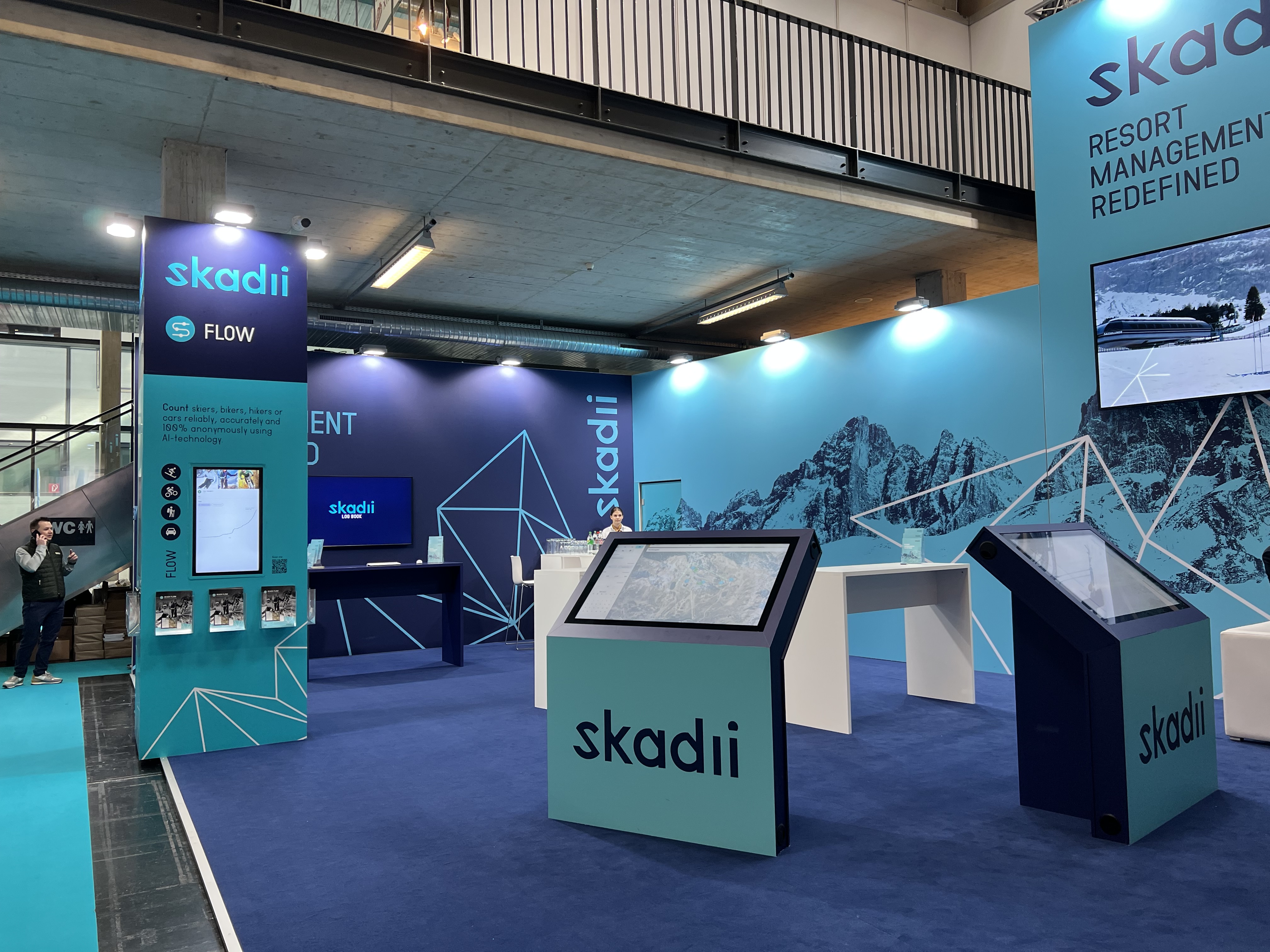
HTI is also getting into the software game with a resort management program called Skadii including digital logbooks to manage documentation.

Energy efficiency is a huge focus in Europe and HTI also showed off its Ecodrive program, which uses cameras to analyze lift queues and automatically adjust lift speed to save energy.

MND

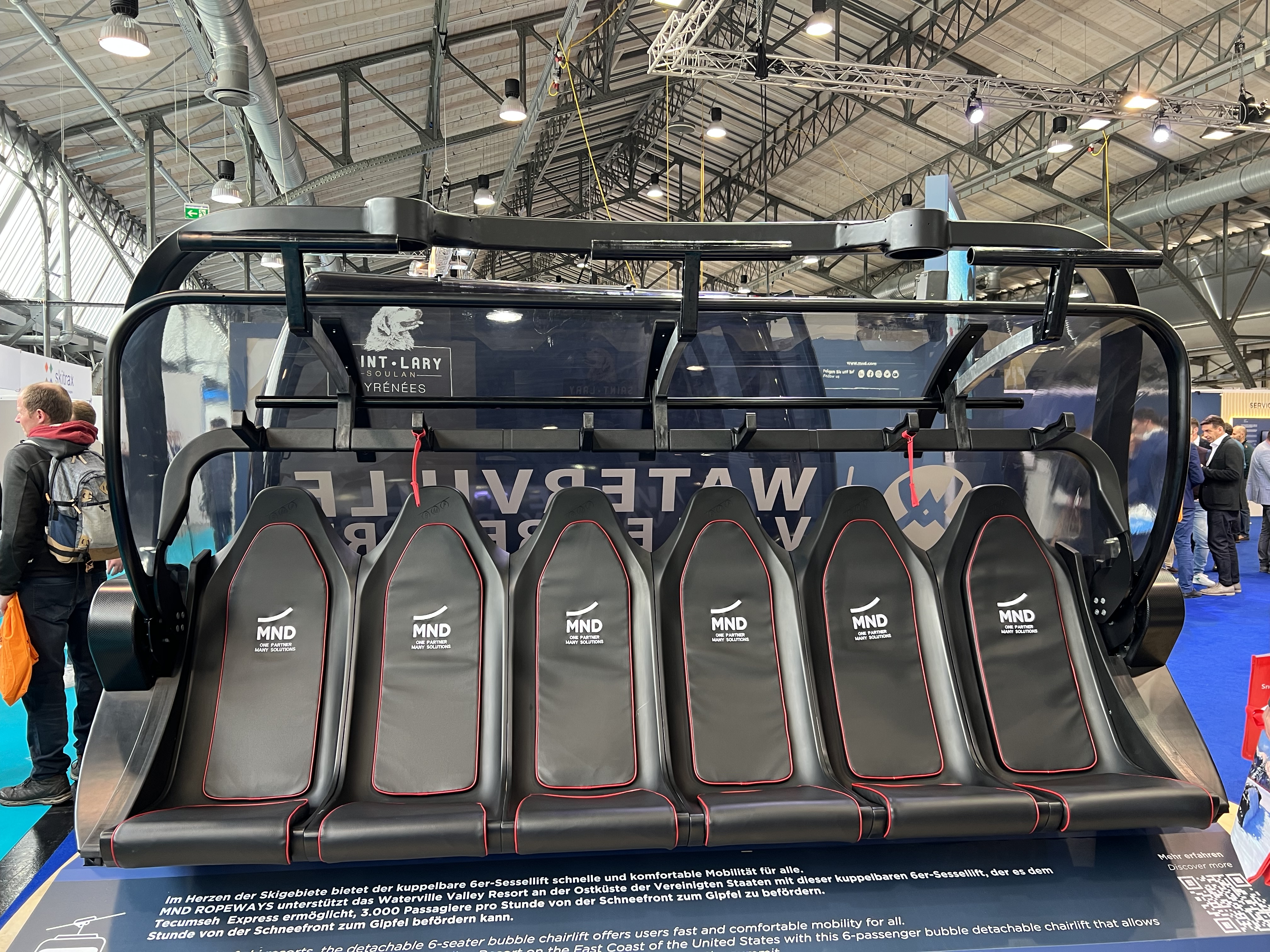
MND Ropeways had a Waterville Valley style six place chair along with a gondola cabin on display. The company continues to push the benefits of providing lifts, snowmaking, avalanche control systems and summer attractions all from one supplier.

News Roundup: Interconnect