- Eaglecrest needs $1.86 million in additional parts for its used pulse gondola, which has already cost $3.1 million before construction.
- 2023 was “by far the most successful year” in North America for the Doppelmayr Group.
- An upcoming Garaventa tram in Europe will feature robotic cargo loading.
- Mechanics at the Portland Tram vote not to unionize.
- Unionized lift mechanics at Park City reach a two year contract with Vail Resorts.
- Gore Mountain issues an RFP to replace Northwoods Gondola cabins in 2024.
- Doppelmayr wins a contract for a 189 cabin urban gondola in Bogotá, Colombia and begins construction on a 122 cabin urban gondola in Santiago, Chile.
- A viral video shows a chairlift in China bouncing wildly due to a malfunction.
- Heavy rains close Sunday River for 5 days and knock the Chondola out of service.
Doppelmayr
News Roundup: Utah Olympics
- Vail Resorts agrees to acquire Crans-Montana Mountain Resort in Switzerland for $136 million.
- Hickory, New York needs to raise $38,000 to operate lifts this winter.
- The International Olympic Committee designates Salt Lake City its preferred host for the 2034 Olympic Winter Games. Gondola or not, Little Cottonwood Canyon won’t host any events.
- Skiers hike for opening day at Tyrol Basin, Wisconsin as a chairlift suffers “technical problems.”
- A new report recommends training and policy changes following a six year old’s death on a T-Bar in Quebec last winter.
- Montana Snowbowl, undergoing a safety review and still lacking permission to open this winter, issues a progress report.
- Scale model D-Line lifts are now available in the United States.
- Doppelmayr presents 10 possible routes for urban gondolas in New Zealand.
- Whiteface issues an RFP for modifications to Little Whiteface.
News Roundup: The Stache
- Two riders who claim they were injured in a Riblet clip ejection incident in 2020 sue Red Lodge Mountain.
- Red Lodge names its new detachable lift Stache Express in honor of longtime General Manager Jeff Schmidt.
- Texas Parks & Wildlife has raised most of the $36 million needed to build a new Wyler Aerial Tramway in El Paso.
- Doppelmayr works with a Utah adaptive organization to make D-Line chairs more accommodating to sit skiers.
- A judge upholds Park City’s decision to block Eagle and Silverlode replacement projects at Park City Mountain.
- Park City continues to look at gondolas as possible public transportation.
- Deer Valley applies for its first lift construction permit for eastward expansion.
- Lutsen Mountains new trail map shows the new Raptor Express.
- Sundance seeks information on chairlift vandals (update: caught).
- Alterra appoints Mammoth and Steamboat leaders to new regional positions overseeing multiple resorts.
- The world’s largest urban gondola network in Bolivia plans more expansion as it nears 500 million rides.
- County commissioners allow the nonprofit seeking to reopen Cuchara to resume work.
Homewood Plans D-Line Gondola
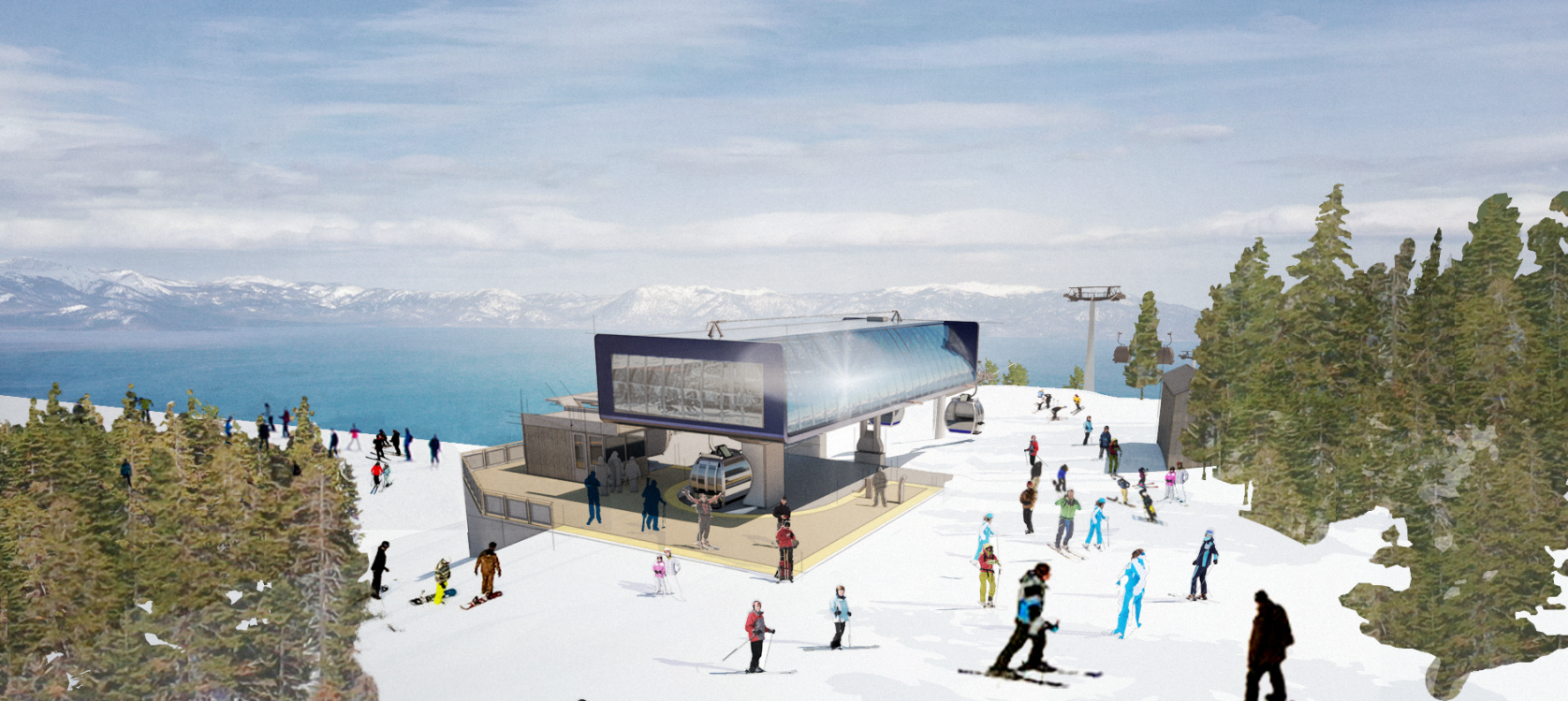
Lake Tahoe’s Homewood Mountain Resort has abandoned plans for a private club in favor of remaining open to the public alongside selling club memberships. Homewood hopes this hybrid model will pave the way for installation of a new gondola, which was postponed this summer due to public outcry over privatization. The new gondola is the second recent lift project for JMA Ventures, which just yesterday celebrated the completion of the new Stache Express at its resort in Red Lodge, Montana.

Under a new draft agreement sent to the Tahoe Regional Planning Authority (TRPA), Homewood will remain open to the public in both winter and summer via season passes and daily lift tickets. This should allow the TRPA to approve gondola construction under an existing 2011 master plan. In a statement, TRPA said it is “reviewing the information and is in consultation with Homewood Mountain Resort to understand how the earlier proposal to change the character of the resort’s operation is being revised. This information will help the agency determine if the resort will be required to amend the larger resort master plan. A determination on that will be made before action is taken on the gondola project or any other project application at the resort.”

The gondola, which was already ordered and partially delivered to Homewood, will be built by Doppelmayr and run from the North Lodge to mid-mountain, replacing the Madden triple. The gondola will feature eight place Omega V cabins and become the third D-Line lift in California. The gondola will rise approximately 1,000 vertical feet, making Homewood’s entire 1,840 foot vertical drop accessible via detachable lifts for the first time. Homewood plans to build a new mid-mountain facility at the top of the gondola, which will be open to the public alongside club members. Pending approval, the new lift could open as soon as the 2024-25 ski season.
News Roundup: Modernizing
- Skytrac modernizes a Hall double at Snow Trails, Ohio.
- Arapahoe Basin eyes transport gondolas and a new chairlift.
- Arkansas may get its first lift.
- Black Mountain, New Hampshire will operate this season after all with support from Indy Pass.
- Residents seek a restraining order to halt construction at Wasatch Peaks Ranch.
- Quebec’s government pours cold water on funding Mont-Sainte-Anne upgrades with Resorts of the Canadian Rockies.
- Big White teases future lift and terrain expansion.
- Cannon Mountain’s tram modernization will go out to bid soon.
- Okanagan Gondola eyes a 2025 opening.
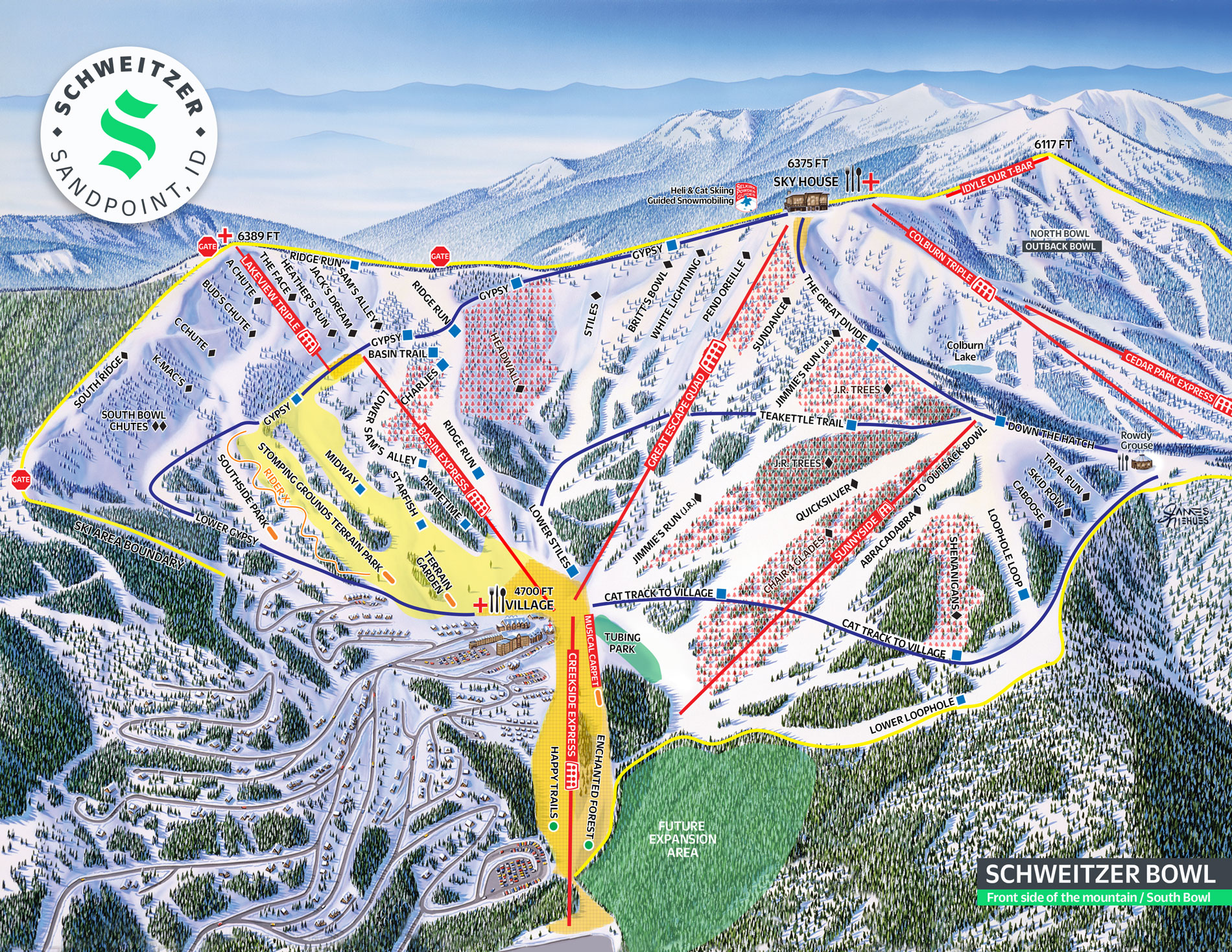
- More expansion maps are out: Sugarloaf, Keystone, Schweitzer, Red Lodge, Trollhaugen.
- Okemo seeks a five year extension on approval of a Jackson Gore beginner quad.
Sommet Morin Heights Announces New Quad
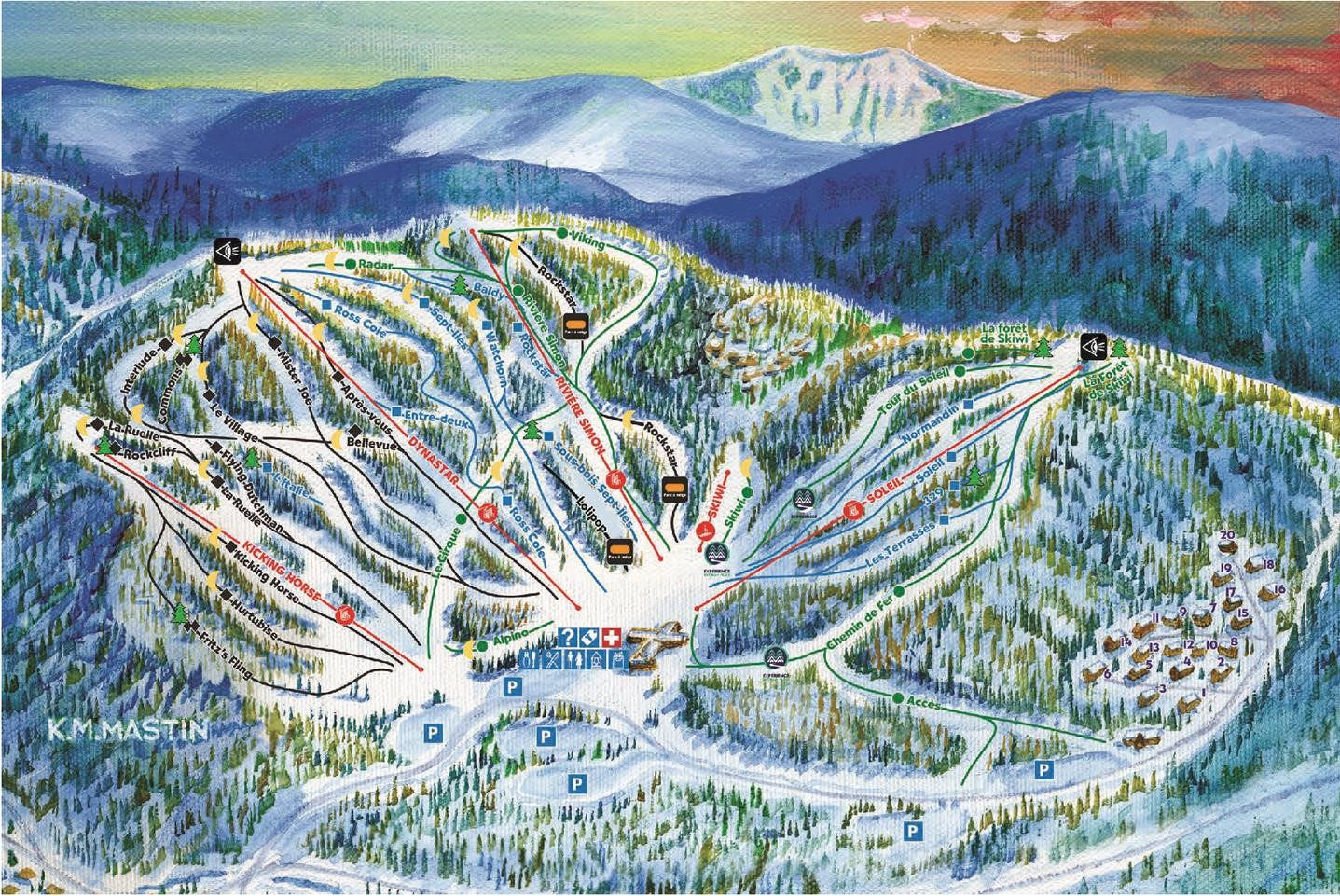
Quebec resort group Les Sommets will build its fourth new lift in six years next summer at Sommet Morin Heights. The group has been investing heavily of late with four of its five mountains receiving new chairlifts since 2019. The Sommet Express opened at Sommet Saint-Sauveur in 2019, La Laurentienne debuted at Sommet Gabriel in 2022 and Apollo will launch this season at Sommet Olympia. Next up will be Sommet Morin Heights.
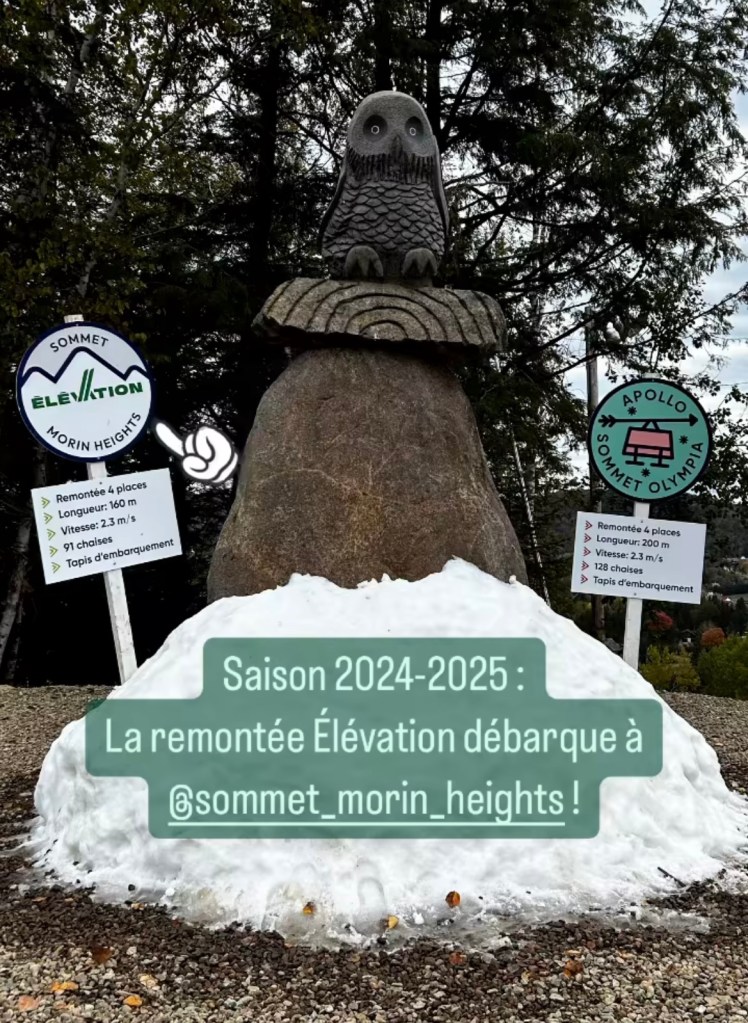
Morin Heights’ new lift will be called Élévation with the exact alignment to be announced. The planned vertical of 525 feet suggests it will replace Dynastar, a 1980s quad which operated previously at Ski Wentworth, Nova Scota. Élévation will feature 91 chairs moving at 450 feet per minute and will open for the 2024-25 ski season.
News Roundup: Raven
- Smugglers’ Notch abandons plans for a gondola to Stowe.
- Marmot Basin removes the long-closed Caribou double.
- Whitewater names its new quad Raven, posts an expansion map.
- Boyne Mountain’s new map shows two new lifts.
- Ditto for Sun Valley.
- Winter Park’s 23-24 map shows the new mid-station for Wild Spur Express.
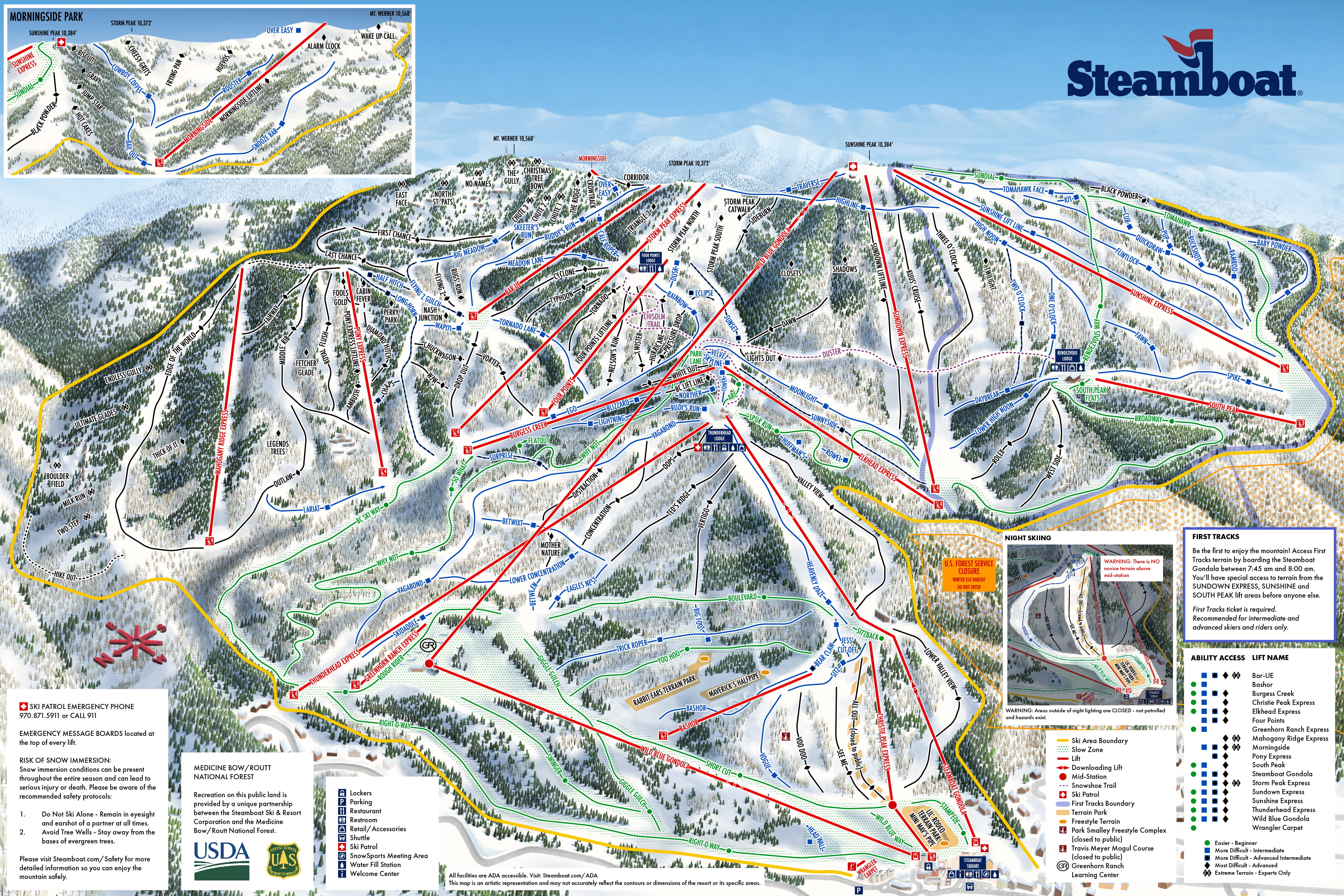
- Steamboat introduces a completely new map with Wild Blue and Mahogany Ridge.
- Steamboat begins testing Wild Blue II a.k.a. The Monster.
- Cooper and Mt. Shasta join the Powder Alliance.
- More than 50 new resorts will join the Indy Pass next week, including Great Bear, South Dakota.
- The No Boundaries Pass says Indy Pass banned its resorts from participating.
- Lost Colorado area St. Mary’s Glacier goes up for sale.
- Windham Mountain rebrands as Windham Mountain Club, will no longer sell single day tickets during peak periods.
- The Forest Service says it’s working with Montana Snowbowl to correct lift issues from last season before winter.
- Doppelmayr turns 130.
- An Ontario mountain needs a $100,000 lifeline to operate this winter.
- The Summit at Snoqualmie will sell chairs from the old Easy Rider triple.
- Rabbit Hill, Alberta moves lift towers due to ground movement.
- The Okanagan Gondola project continues to move forward in British Columbia.
News Roundup: Baldy
- Blue Mountain and Camelback, Pennsylvania join the Ikon Pass.
- Willamette Pass converts its backside chairlift from diesel to electric.
- California’s newest gondola opens October 29th.
- Big Sky’s new trail map shows the new tram route.
- New Hampshire lost ski area Mt. Whittier goes up for sale.
- Vail Resorts resurrects plans for a new six pack at Perisher.
- Silverton Mountain is sold to new owners from Aspen.
- Revelstoke adds more chairs to The Ripper.
- Eaglecrest hopes to open its used pulse gondola in fall 2025.
- Doppelmayr wins a contract to build a six station, 94 cabin urban gondola in Uruapan, Mexico.
- Mt. Ashland plans to build a new chairlift in long lost terrain with $2.5 million from Lithia Motors.
Snowbird to Replace Wilbere Lift
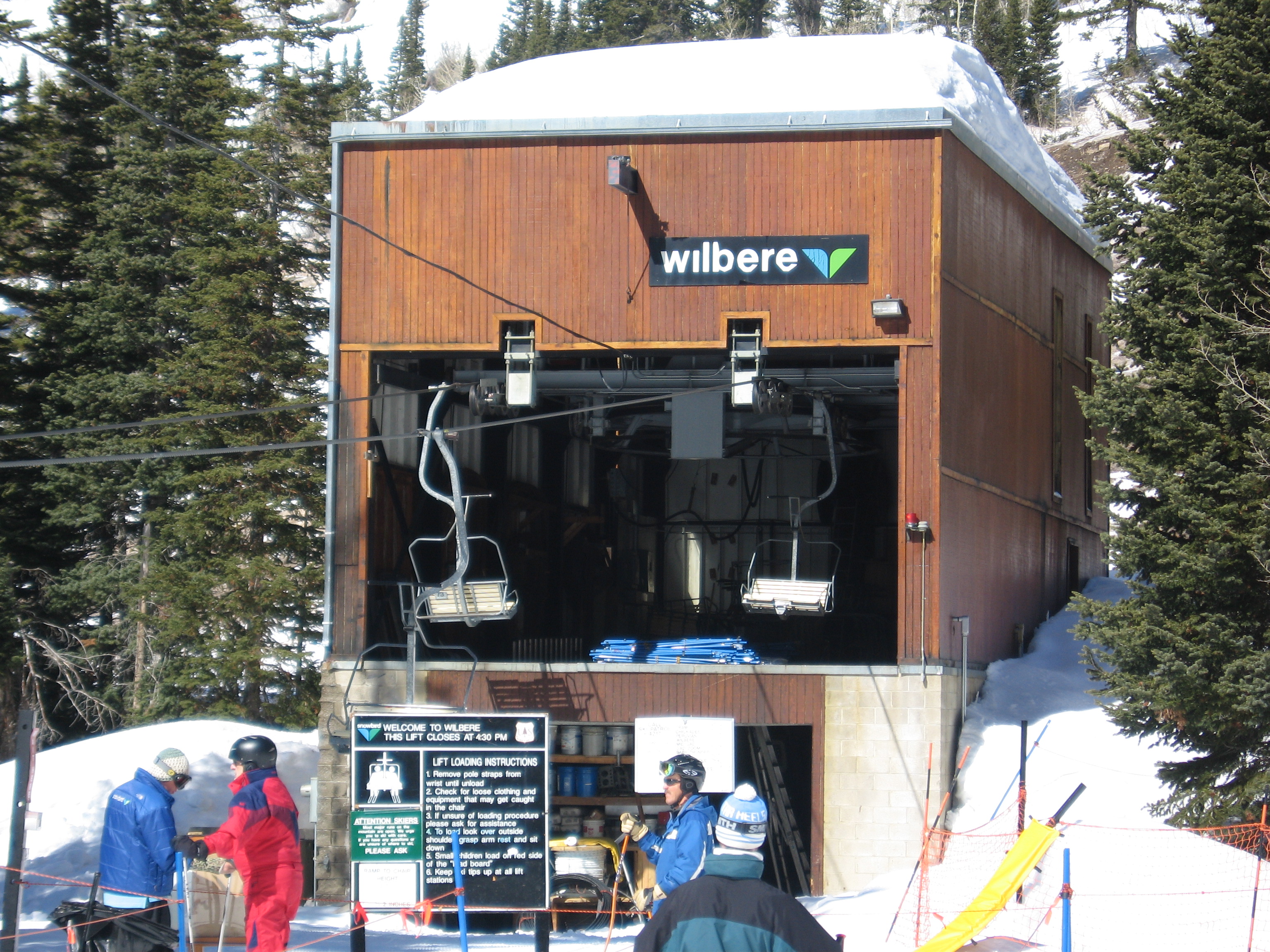
Doppelmayr has been selected to install a new Wilbere Quad next summer at Snowbird, the second new lift announced by Powdr for 2024. The quad will load in a new location in the Creekside base area and terminate near the top of the current Wilbere double, which Doppelmayr built in 1971. The modern AlpenStar fixed grip will feature a loading conveyor and carry 1,800 skiers per hour.
“With a number of short- and long-term projects in the works, we are taking great strides to make our mountain more accessible, more efficient and more engaging for our passholders and our community,” noted Snowbird President and General Manager Dave Fields. Wilbere 2.0 is expected to open for the 2024-25 ski season.
North America Fuels Growth for Doppelmayr
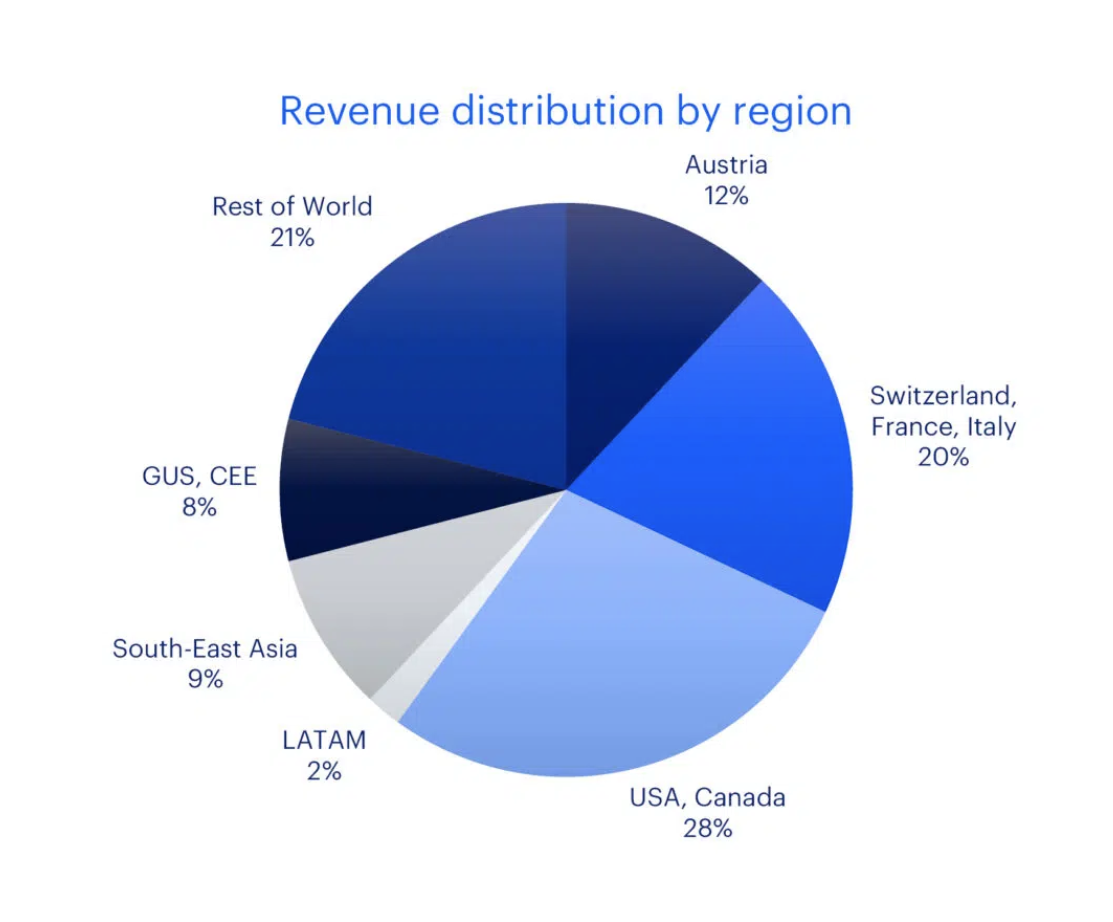
The Doppelmayr Group reported annual financial results today, and for the first time ever, North America surpassed Austria as the firm’s largest market. Doppelmayr reported total revenue of €946 million (US$1.0 billion) in fiscal year 2022-23, an annual increase of 6.7 percent and near a record high for the 130 year old company. The United States and Canada accounted for 28 percent or approximately $280 million during the fiscal year, which ran from April 2022 through March 2023. The last year before Covid North America represented only 17 percent of global turnover while the domestic Austrian market comprised 24 percent of the business.
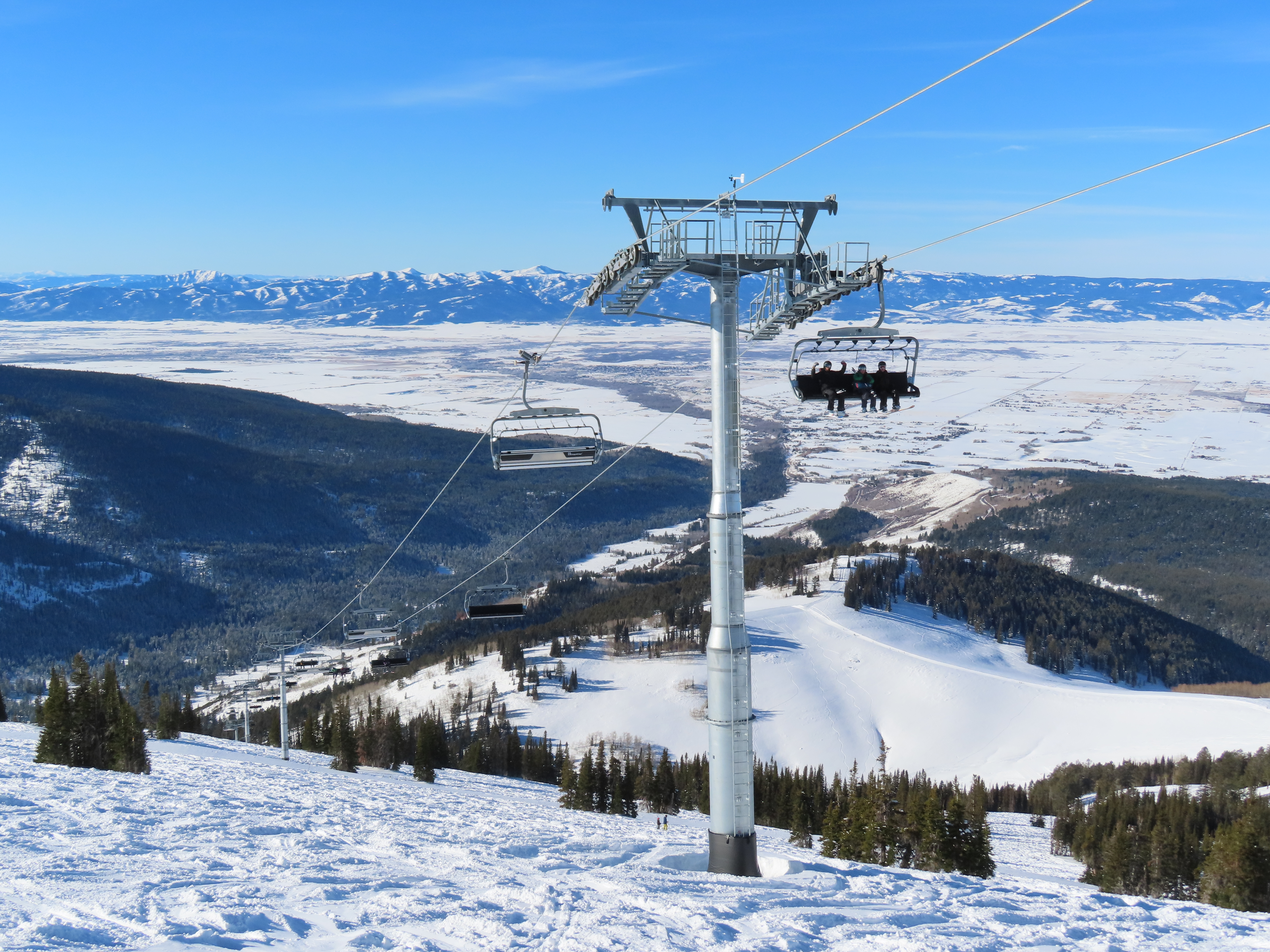
The group delivered 104 ropeways globally in 2022-23, 30 of which landed in North America. US ski resorts reported a record 64.7 million skier visits last season and have 31 more Doppelmayr lifts under construction for the coming winter. “One of the reasons for this market development is the continuing attractiveness of outdoor sports,” noted the Doppelmayr Group annual report. “Many ski resorts are replacing outdated installations with modern ropeways in order to offer their guests enhanced comfort. In addition, the new lifts feature higher capacity to provide the growing numbers of visitors with rapid access to the ski slopes.” Doppelmayr went from installing just one D-Line detachable in North America in 2018 to five last year and nine this year. Doppelmayr also increased its global employee headcount to 3,335 full time equivalents, an increase of 5.7 percent. Part of that growth was the group’s acquisition of cabin manufacturer Carvatech last October.
Doppelmayr also reported a strong order book despite some economic headwinds. “The investment strength of ski area operators in North America remains at a very high level,” the company noted. The Alps market is also strengthening with three AURO autonomous gondolas under construction. On the urban front, Doppelmayr is working to build expansive gondola systems in both Paris and Mexico City. Doppelmayr also expects revenue growth from new products, including its clair software platform, upcoming TRI-Line 3S system and new 20-MGD D-Line.