
- Poma breaks ground on Medellín’s sixth urban gondola line as Doppelmayr prepares to open La Paz’s sixth on March 24th.
- Gearbox issue strikes Camp Fortune, Quebec and 130 guests are roped off a Blue Mountain quad chair.
- As Beantown weighs a gondola, Boston Globe staff travel to experience Leitner’s Mexicable.
- Boyne Resorts acquires six mountain resorts plus the Gatlinburg Sky Lift it leased from CNL Lifestyle Properties and later Och-Ziff Capital Management. “This opportunity will enable us to accelerate and fine tune the execution of our reinvestment plans for these spectacular properties, which will boost our competitive advantages and support our focus on continuous enhancement of the guest experience,” says Boyne President Stephen Kircher.
- Don’t let this go unpunished at your resort.
- The Australian man who was supposed to buy Maine’s third largest ski resort is caught on tape saying, “We’re not going to deliver on Saddleback,” “Opening the mountain is not a primary concern for us,” and “We’re not going to lose any sleep with regards to it,” acknowledging it was mostly about cashing in on the EB-5 immigrant investor program.
- Triple Peaks’ Okemo, Crested Butte and Mt. Sunapee join the Epic Pass through a long-term alliance with Vail Resorts.
- Anti Edmonton gondola editorial argues “challenges to a gondola could include its operational reliability in a harsh winter climate.” Guess again.
Instagram Tuesday: Stars
Every Tuesday, I feature my favorite Instagram photos from around the lift world.
Alterra Building New Lifts at Stratton, Tremblant and Winter Park
Alterra Mountain Co., the new operator of eleven leading North American mountain resorts, today announced a transformational capital investment of $130 million to be followed by hundreds of millions more over the next five years. New lifts will debut at Winter Park Resort in Colorado, Mont Tremblant in Quebec and Stratton Mountain Resort in Vermont in time for next winter. Competitor Vail Resorts revealed a similar $150 million plan for 2018-19 with six new lifts across its resorts last December.
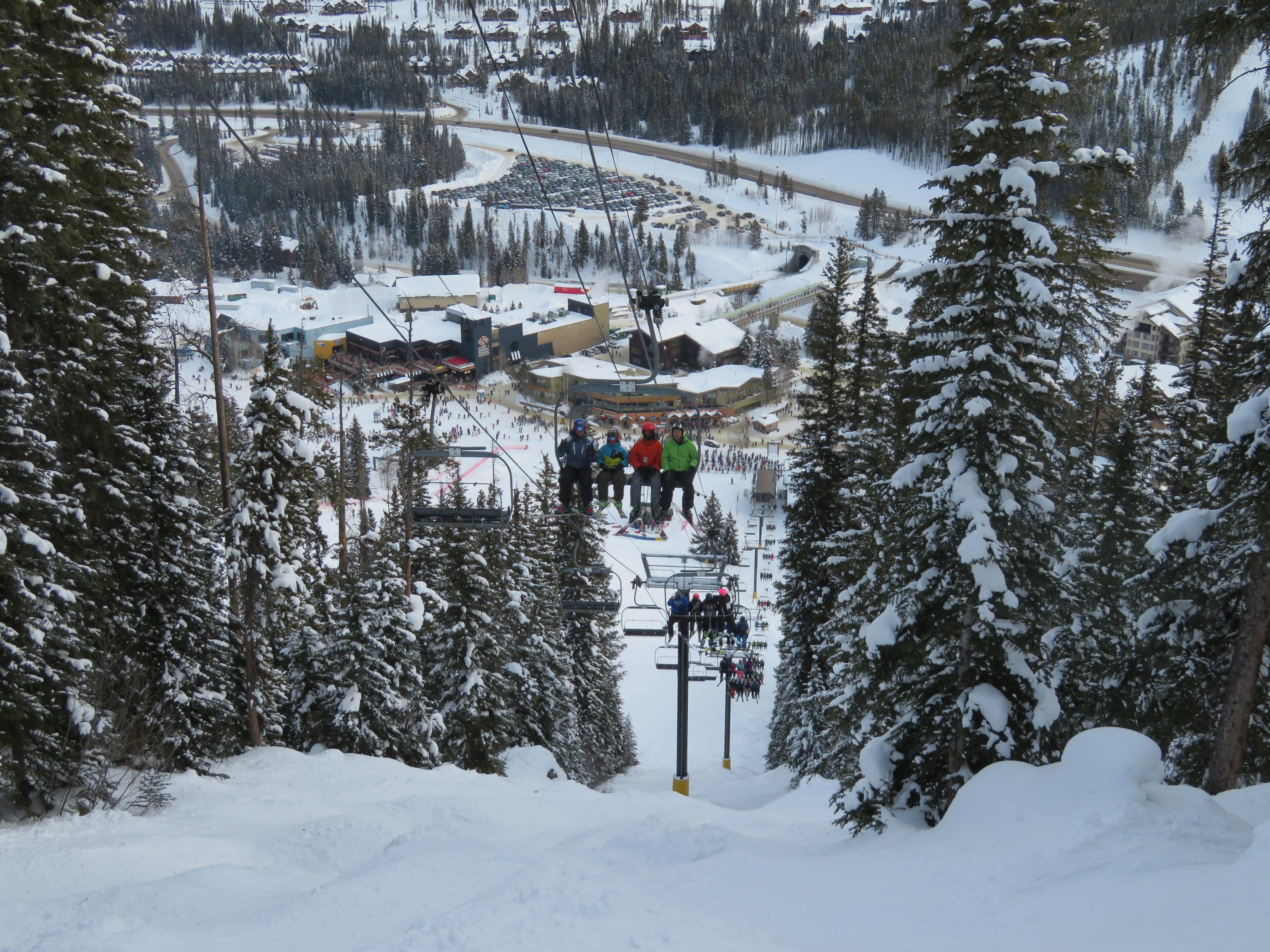
The largest single project for Alterra is a 10-passenger Zephyr Gondola at Winter Park replacing the current 1990 high-speed quad, the key people mover out of The Village at Winter Park. The new $16 million Leitner-Poma lift will be capable of moving 3,600 guests per hour to Sunspot, up from 2,600, and is the first new lift at the resort since 2007. It will feature Leitner-Poma’s DirectDrive technology, reducing energy consumption and the number of moving parts that can lead to down time. The new lift may also get a new name. “Zephyr is certainly on the table but nothing’s been decided yet,” said Steve Hurlbert, a spokesman for the resort.
Disney Skyliner Reaches Skyward
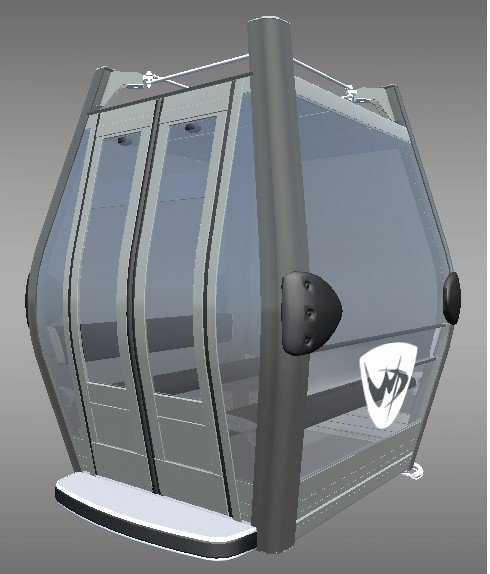
Walt Disney World is currently building America’s inaugural Doppelmayr D-Line gondola, actually three gondolas. Although Orlando is a long way from the mountains of Wyoming, the world’s most visited resort is also one of Earth’s most photographed places. So, through the magic of the internet, I am able to give a construction tour of the Disney Skyliner from afar.
Let’s start at Epcot. Foundations for this key station are taking shape but the bulk of work still lies ahead. Though they look like lift terminals, the dark green roofs are actually related to ferry boats the Skyliner will partially replace.
Next up is an angle station that Disney says will showcase the inner workings of the Skyliner as riders pass. No loading or unloading will take place here but the line will deflect around 110 degrees (double grooved bullwheel, maybe?) This one is also just beginning to be formed in what used to be a pond.
News Roundup: Never Ending
- Arizona Snowbowl files paperwork with the Coconino National Forest to replace the Agassiz lift with a combination Telemix/chondola as soon as this summer.
- Bromont in Quebec looks to build a Doppelmayr six place chair in place of its 1985 vintage detachable.
- It’s not every day you read about lifties being caught in an avalanche at the bottom of a high-speed quad. Thankfully no one was injured.
- I’m thinking President Trump’s 25 percent tariff on imported steel (and 10 percent for aluminum) will have negative implications for the ski lift business, though Mexico and Canada are exempted for now.
- Doppelmayr Canada seeks an experienced construction manager for its four lift megaproject at Whistler Blackcomb.
- Triple double Massachusetts mountain Bousquet is on the block.
- Tenney Mountain opened for skiing yesterday for the first time in eight years.
- When a T-Bar turns into a chairlift…
- Doppelmayr pitches a 3S gondola to connect Oakland with Alameda Island in San Francisco Bay.
- Antelope Butte’s two Riblets will see significant work this summer in advance of a possible reopening.
- Another viral video shows a child falling from a lift at Bear Mountain.
- Edmonton gondola idea wins a design competition, beating hundreds of other entries.
- New owner of Mt. Norquay eyes building a gondola from Banff for improved access.
- Vail Resorts posts strong second quarter results with net income up 58 percent and lift revenue up 6.6 percent despite skier visits dropping 4.9 percent. In addition, Vail is raising its corporate minimum wage to $12.25.
- Doppelmayr proclaims Big Sky’s upcoming 8-seater the most technologically advanced lift the company has ever delivered.
Big White Upgrading Powder Chair to a Leitner-Poma Quad
British Columbia’s third largest ski resort will retire its oldest lift this summer, a Mueller which dates back to 1979 called Powder. A new $3.1 million Leitner-Poma Canada Alpha quad chair will be capable of moving 1,900 skiers per hour versus the current 1,710. Big White calls the outgoing lift one of Canada’s oldest and most popular triple chairs with more than 15 million rides logged to date. “I’m proud to be leading the third generation of our family owned business, which was established in the summer of 1985,” said Peter Plimmer, president and CEO of Big White Ski Resort Ltd. in a press release announcing multiple summer projects worth $10 million CAD. “My grandfather, Desmond Schumann, would be proud of what we’re doing here at the resort.”
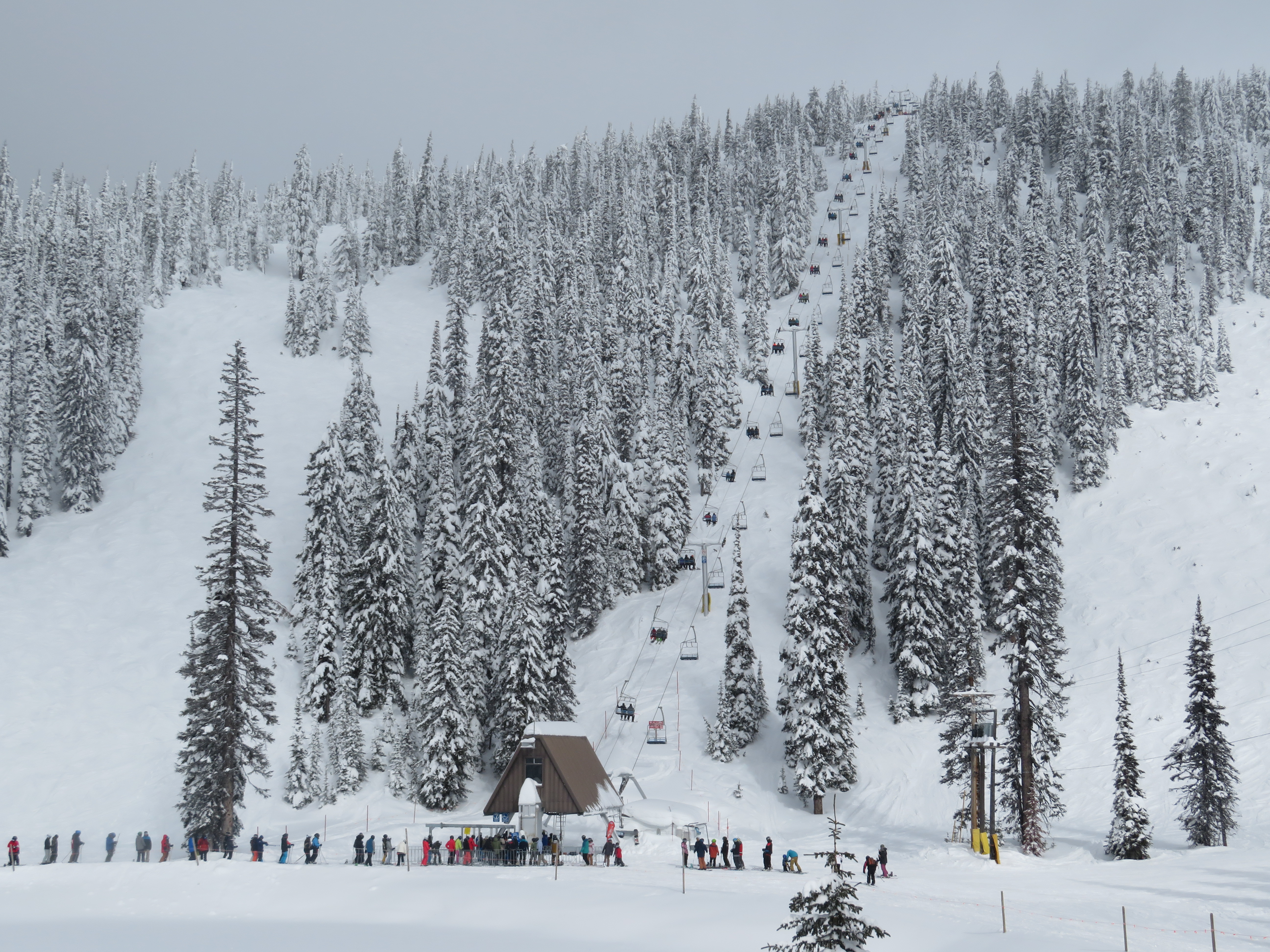
Next season Big White will operate a fleet of a dozen Doppelmayr and Leitner-Poma lifts including a six-pack and gondola. The new Powder Chair is the second announced Leitner-Poma fixed-grip project for 2018 after Arapahoe Basin’s Beavers installation. Last year, most of the Leitner-Poma Group’s fixed-grip orders went to Skytrac, though that division has yet to build a lift in Canada. New lifts are also coming to Blackcomb, Whistler, SilverStar and likely Sun Peaks in BC next winter.
Big Sky to Launch North America’s First Eight Passenger Chairlift
https://www.instagram.com/p/BgCibhZF7Sa/?hl=en&taken-by=bigskyresort
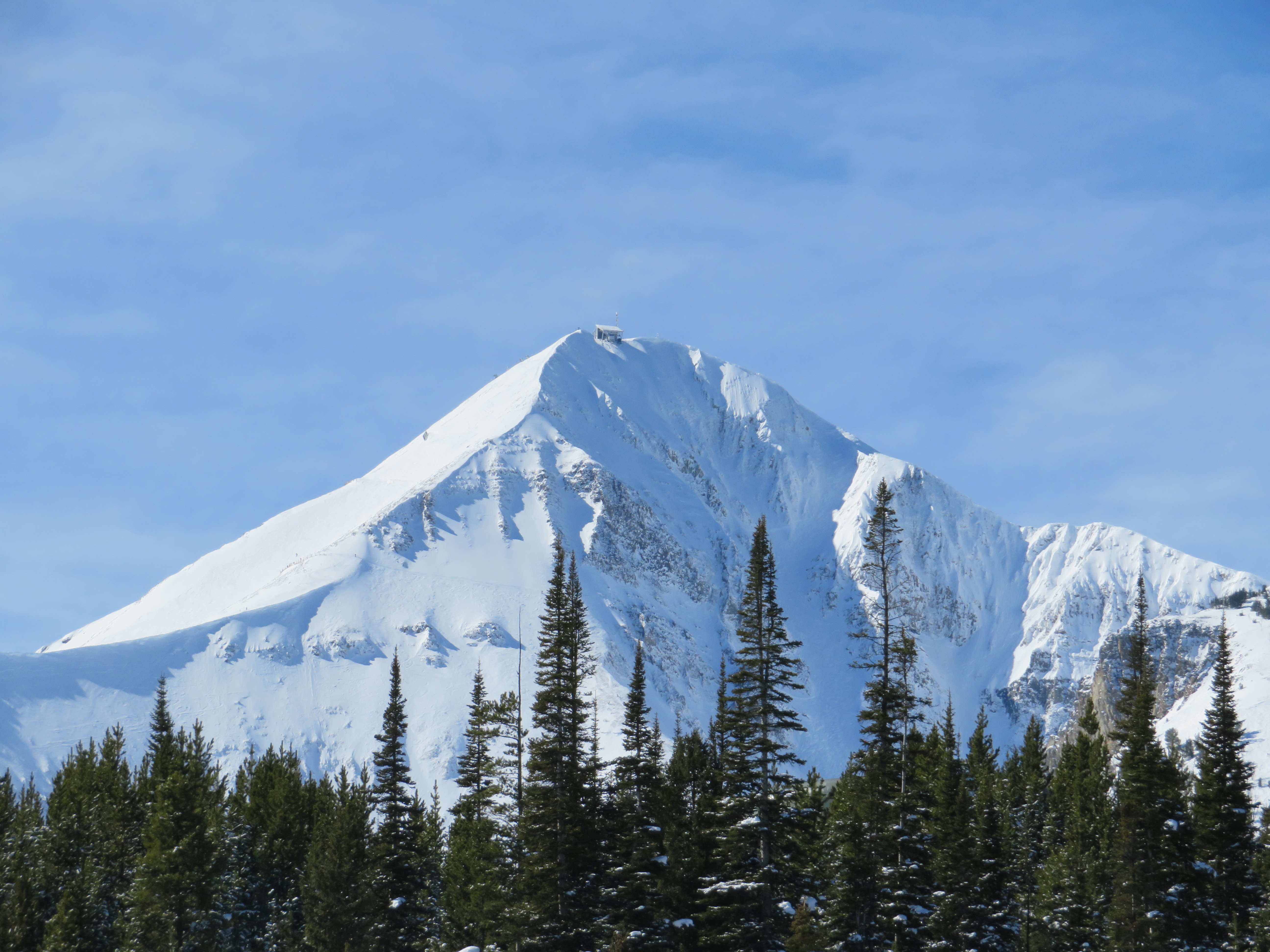
This afternoon couldn’t have been a more beautiful one for unveiling what will be America’s biggest lift. Over the next nine months, Big Sky Resort and Doppelmayr will create Ramcharger 8, a machine packed full of technology on Andesite Mountain. The current Ramcharger high-speed quad will move to Shedhorn and replace one of Big Sky’s most popular high-alpine lifts while a two-stage North Village gondola and more will eventually follow as part of Big Sky 2025. “The Biggest Skiing in America is getting bigger and better, again,” said Big Sky Resort General Manager and President Taylor Middleton before the bombshell announcement. Never before has America seen an 8-passenger chair of any kind, let alone one packed with every bell and whistle available.

I was lucky enough to be invited by Big Sky Resort and the Kircher family to be part of this momentous day in the Mountain Village, where Boyne Resorts’ Stephen Kircher detailed plans for being the North American ski industry’s D-Line launch customer. Kircher emphasized Big Sky’s lengthy path to this point and how the community has really come together in the past decade. “My family is proud of its 42-year commitment to southwest Montana and will continue the momentum that is underway at Big Sky Resort,” he said. “We are excited to bring the biggest chair in the world to Big Sky, and to work with the resort team and community to recognize the Resort’s full potential – rivaling the best of the Alps and our North American brethren.” With a huge snowpack, the Biggest Skiing in America is on track to have its best season ever with more than 500,000 skier days – a feat once only dreamed of here.
Heated Six-Person Chairlift Coming to Saint-Sauveur in 2019
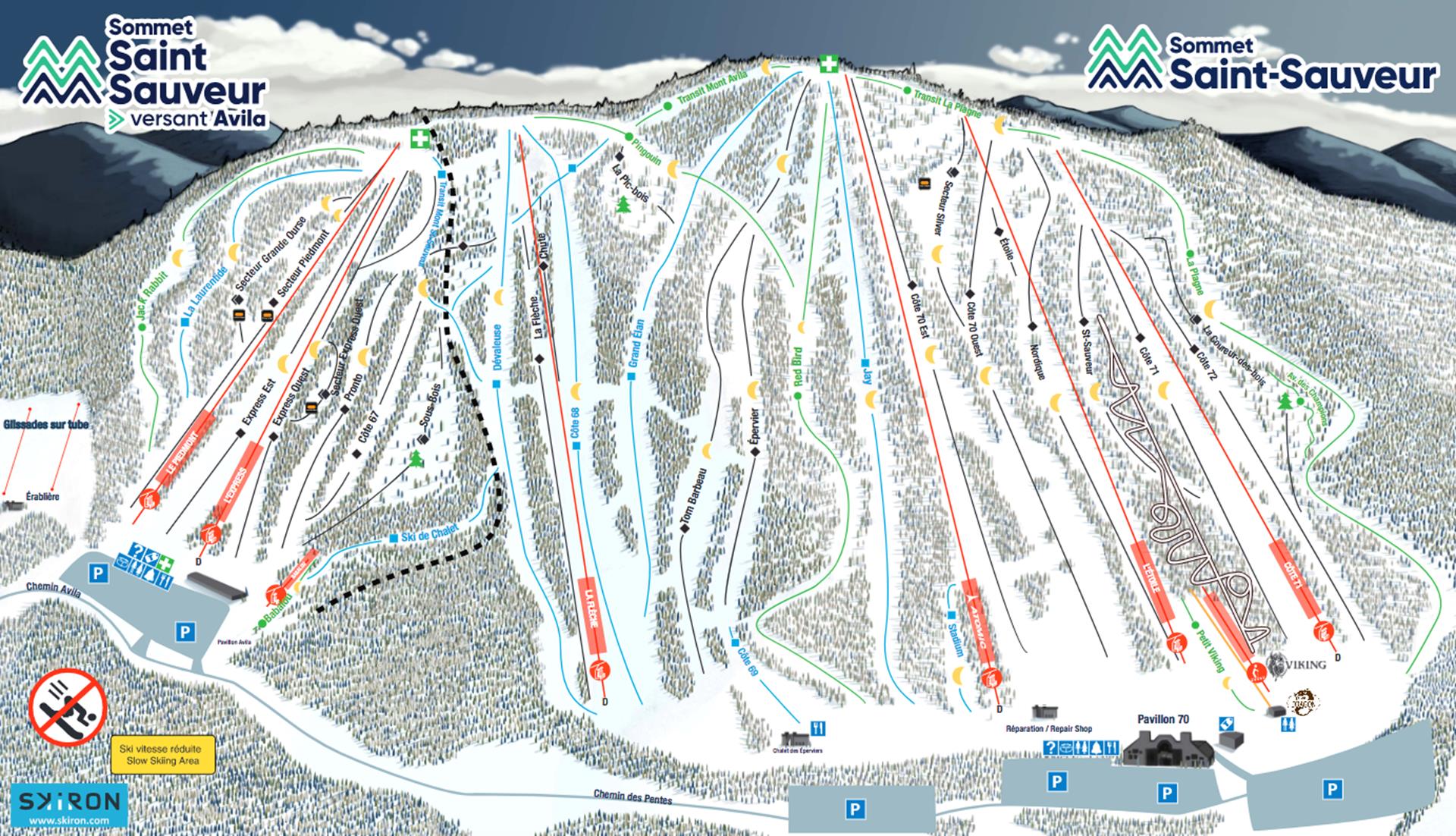
One of the world’s first chairlifts with heated seats but without bubbles will launch for the 2019-20 season at Sommet Saint-Sauveur, formerly known as Mont Saint Sauveur in Quebec. The new $4.7 million lift will be constructed by Doppelmayr, which is no surprise given that company’s significant manufacturing base just 15 minutes away in Saint-Jérôme. The six-pack will replace the Atomic Express, named for the famous ski brand and tied for the oldest operating detachable chairlift in North America at 33 years.
The Government of Quebec will provide approximately $2.3 million in funding for the new lift and other projects, an agreement which many American ski resort operators may envy. Sauveur is owned by MSSI, a holding company with five Laurentian resorts and is the previous owner of Jay Peak, Vermont.
Tahoe Donner Chooses Skytrac for New Beginner Lift
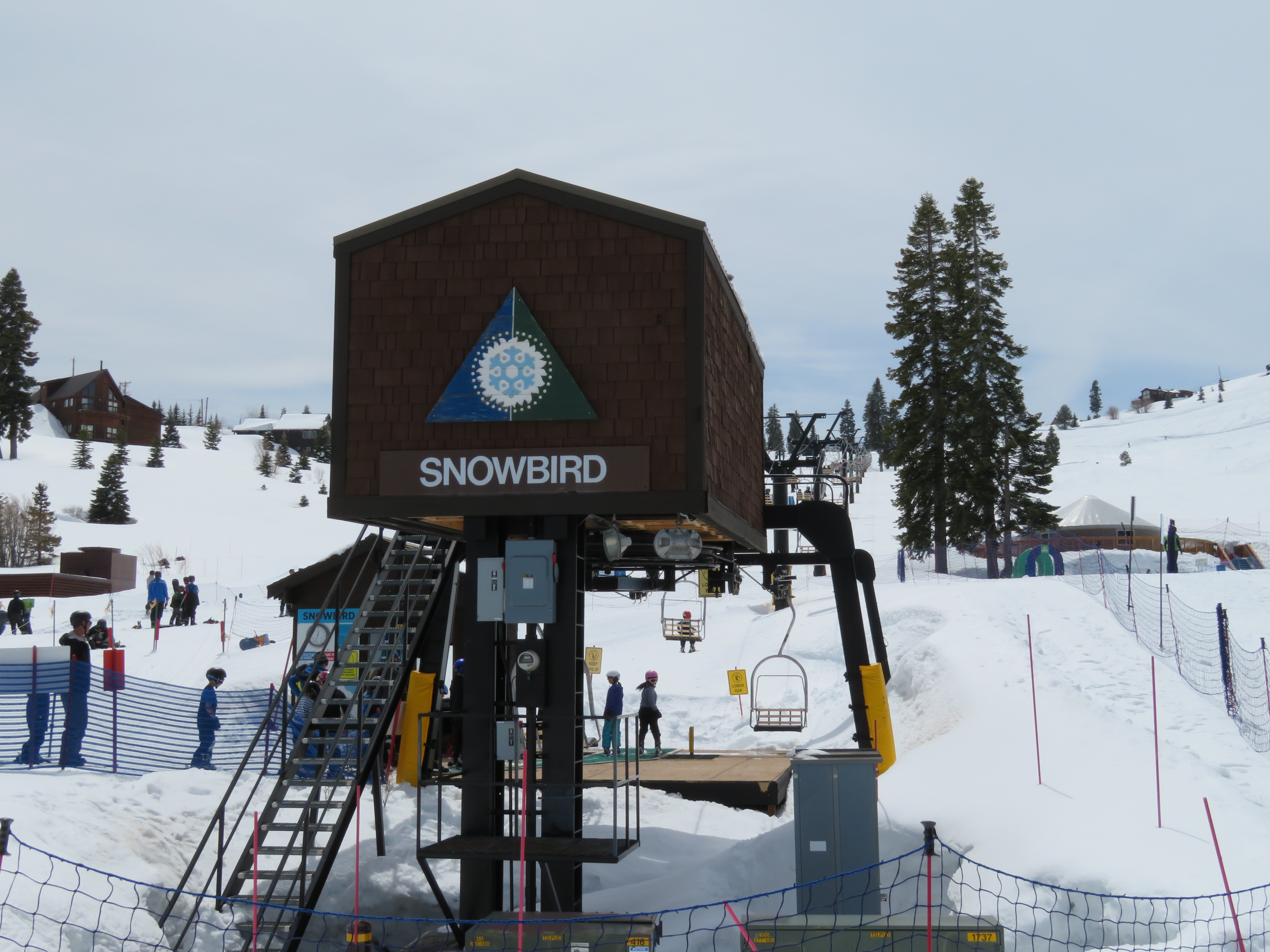
It may not be the biggest lift project I write about this week but Tahoe Donner near Truckee, California has signed a contract to replace its Snowbird SLI double this summer. The Tahoe Donner Association is one of the country’s largest homeowner associations and therefore the process of assessing the old lift, designing a new one and funding it is all detailed on the neighborhood’s website. Tahoe Donner staff solicited quotes from multiple manufacturers and looked at the used marketplace but ultimately settled on a brand new Skytrac Monarch fixed-grip triple chair to improve safety and reliability.

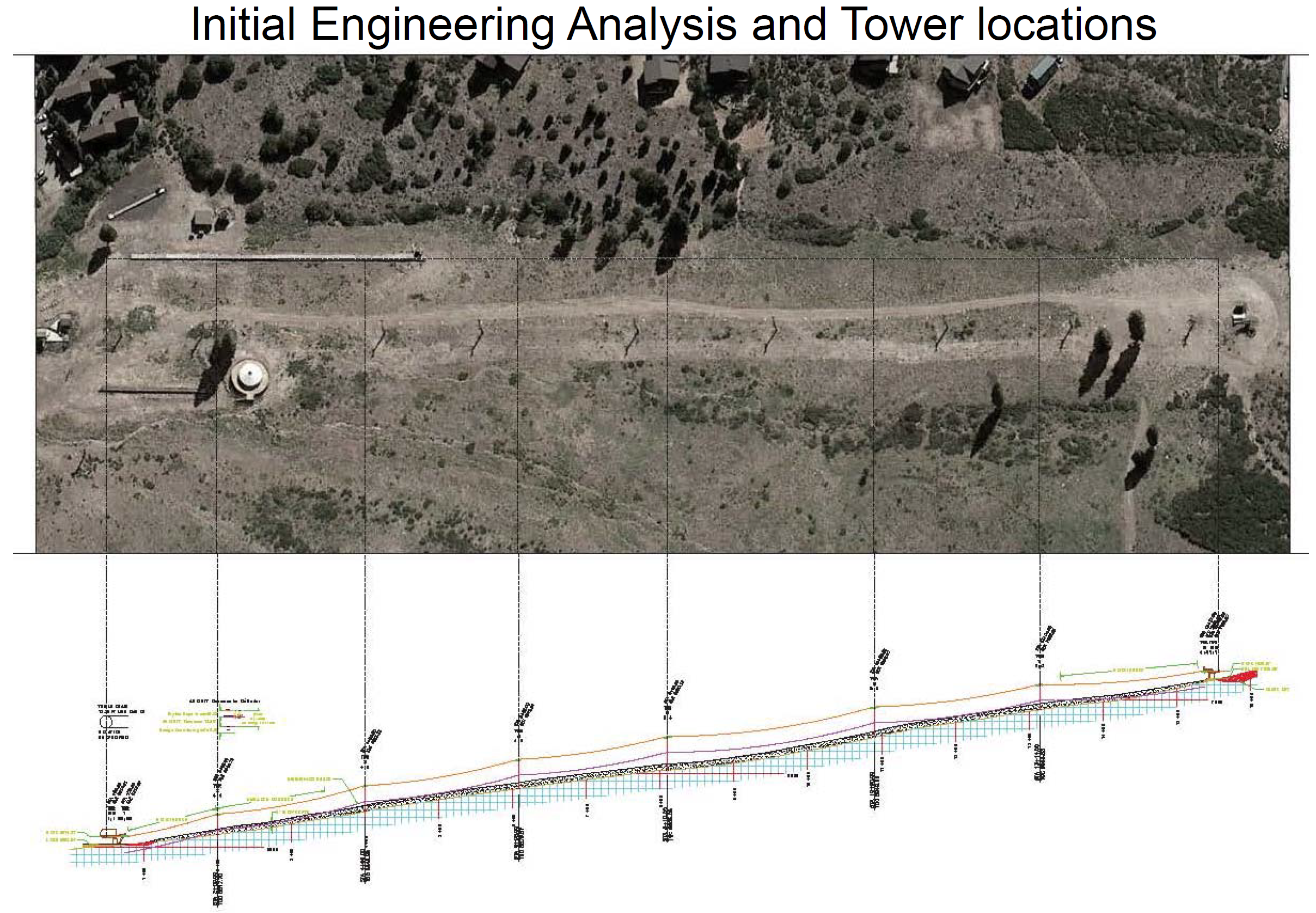
The new $1.5 million lift will be bottom drive and bottom tension with an increased line speed of 400 feet per minute. Capacity will jump from 900 pph to 1500 with a comfortable 7.2 second chair interval. New terminals will be smaller than the old ones and located off to the side of the Snowbird ski run for better circulation. The lift will go from nine towers to six with a slope length of 1,600 feet.
Tahoe Donner is open to the public and popular with California families as an affordable option near Lake Tahoe. It’s great to see homeowners committing to the future of the mountain with this new lift. Thanks to Kirk and Max for letting me know about the project.
Instagram Tuesday: Panoramic
Every Tuesday, I feature my favorite Instagram photos from around the lift world.

