
- Skytrac begins construction on two new quad chairs at a new Rainforest Adventures park in St. Maarten.
- The old Casper triple from Jackson Hole won’t debut at Magic Mountain in time for this winter.
- New York hedge fund buys 13 ski resorts from CNL Lifestyle Properties, Enterainment Properties Trust takes Northstar.
- Saddleback Mountain Foundation agrees to purchase Saddleback for $6 million if it can raise enough money.
- Seattle real estate developer buys Silver Mountain.
- Steamboat’s local paper previews the Elkhead Express.
- First cabins fly on the Dominican Republic’s new urban gondola system.
- Doppelmayr’s latest Wir magazine is available.
- Some splice advice from Mountain Wire Rope Services.
- The Black Hawk finds new civilian life with Timberline Helicopters building lifts.
- Powder Mountain makes new lifts official, will become largest ski resort in the United States.
Instagram Tuesday: Solo
Every Tuesday, we pick our favorite Instagram photos from around the lift world.
After 45 Years, Snowbird Tram Still Soars

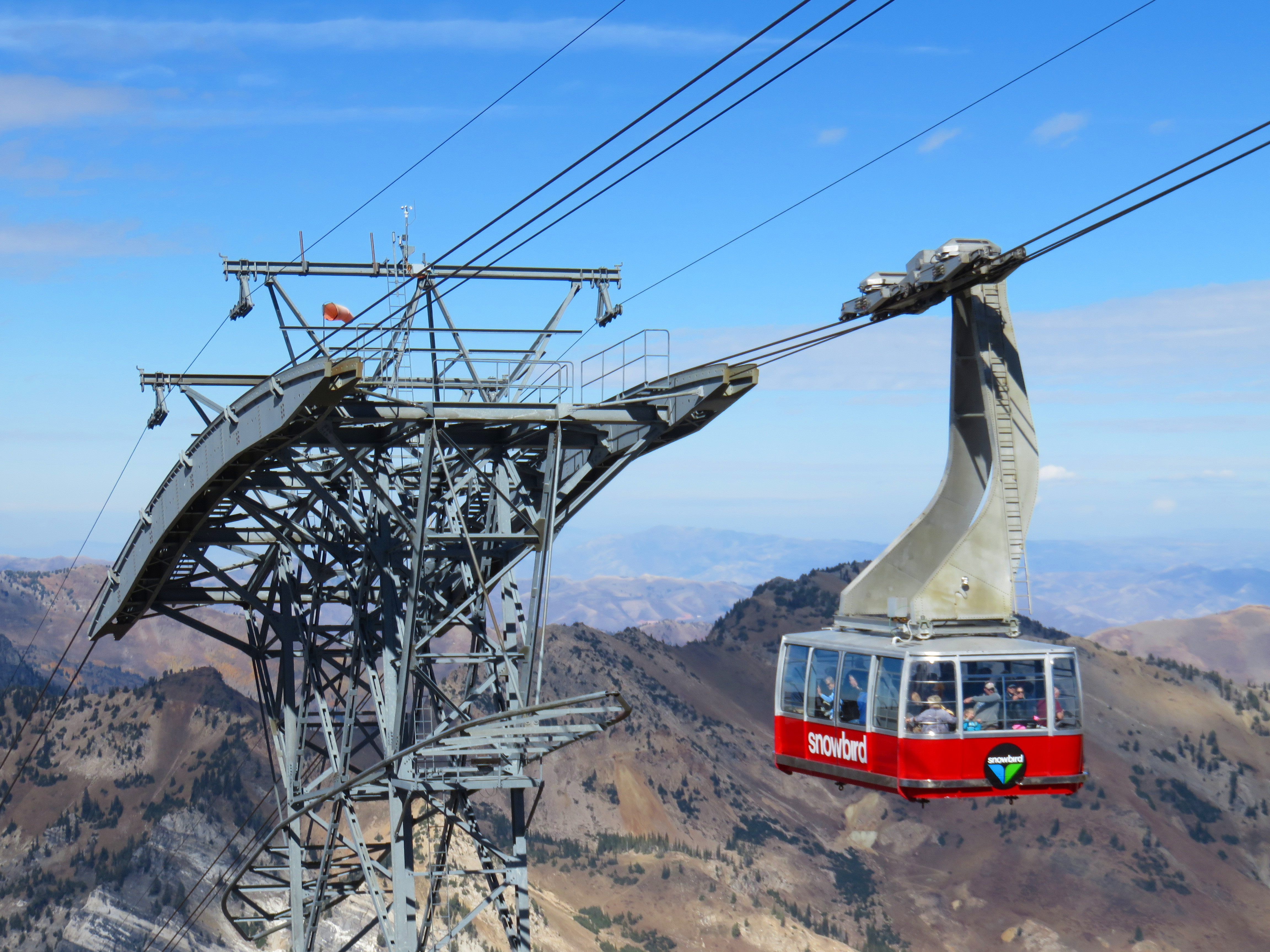
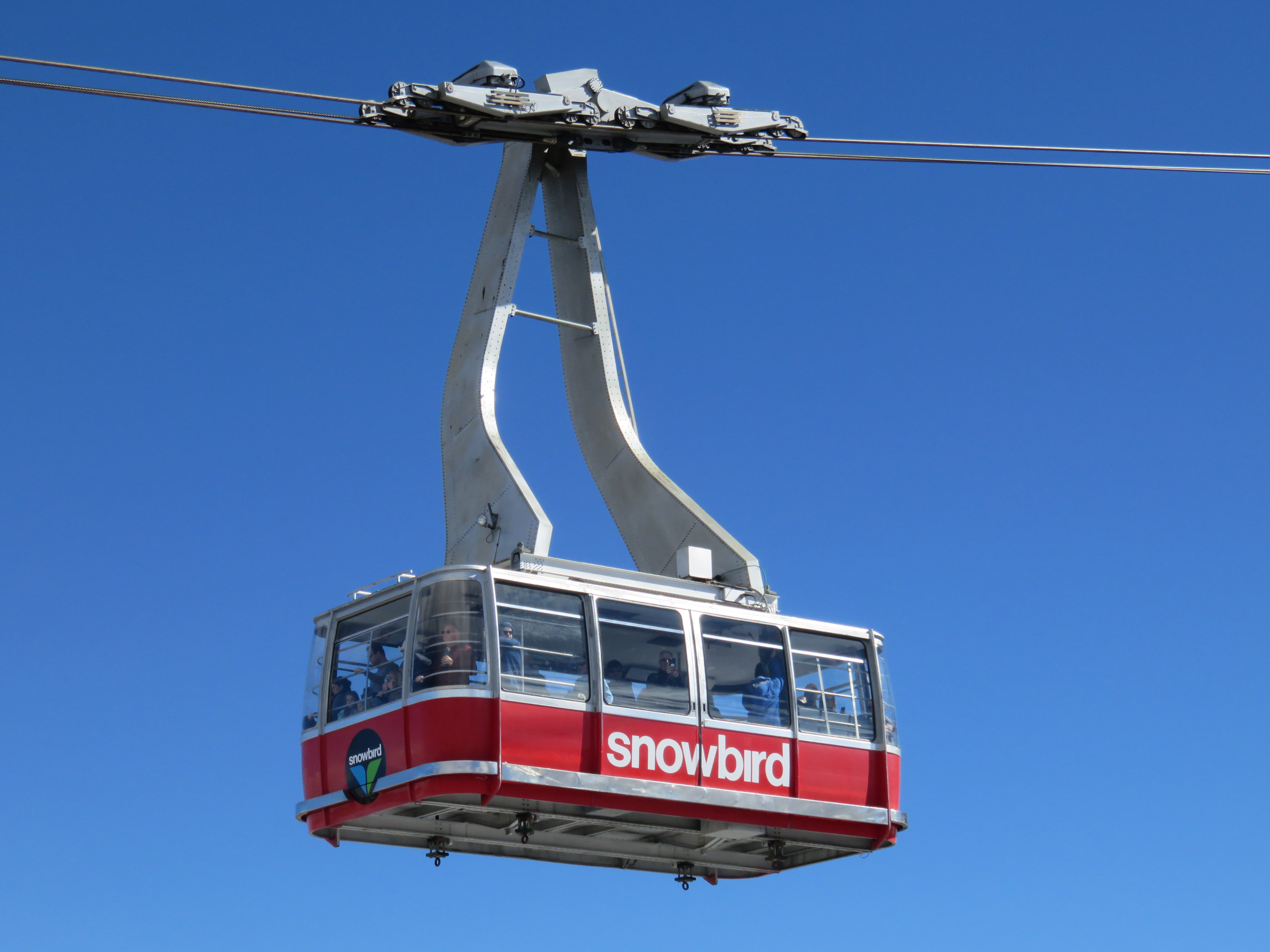
Few lifts in the world are as iconic as the Snowbird Tram with its 125 passenger red and blue cabins rising from Little Cottonwood Canyon to Hidden Peak. When it opened in 1971, the tram was one of the longest, largest and most powerful aerial tramways in the world and remains so today. In his 168-page book dedicated to this machine, Walt McConnell said of the tram, “It was loaded with innovative features and immediately became the symbol of Snowbird.” A timeless style combined with recent upgrades mean the tram is sure to remain an icon of the Wasatch for years to come.
Decades after the founding of nearby Alta, Ted Johnson envisioned a carefully-designed, 40-acre resort village with modern American design anchored by a tramway. After a trip over from Vail, Dick Bass agreed to join team Snowbird and provide financial backing. Ted quietly began buying mining claims in Little Cottonwood Canyon while still working at Alta. In Ted’s mind, a tram was the only lift to build and the route to Hidden Peak was clear. “The awesome massiveness of the tramway and its terminal buildings-to-be set the stage for the bold architectural statements of all of Snowbird,” he declared. He went public with the Snowbird development in 1966, forming Snowbird Design Group.
Instagram Tuesday: Lush Lands
Every Tuesday, we pick our favorite Instagram photos from around the lift world.
Eisgratbahn 3S Opens Today in Austria
The 2.8 mile 3S gondola Eisgratbahn, believed to be the world’s most expensive lift, debuts today after two long summers of construction. The two-stage system features 49 32-passenger Symphony cabins transporting up to 3,014 passengers per hour 4,000 vertical feet. The goal is to reduce the frequency of wind closures versus the former gondola lift. Congratulations to Leitner Ropeways and Stubaier Glacier on completing this monster project.
News Roundup: Vacation
Hello readers- for the next two weeks I am floating the Grand Canyon without access to the internet. I’ve scheduled a few posts for my absence, otherwise lift blogging will resume Nov. 5th –Peter from Flagstaff, Arizona.
- Ski season launches tomorrow at A-Basin. COO Al Henceroth is also looking for one of the resort’s original single chairs.
- Silver Mountain reportedly sells for a fire-sale price of $5 million. The resort’s gondola, formerly the world’s longest, cost $8 million in 1990.
- Doppelmayr goes to Moscow, Poma goes to Barcelona and Orlando.
- Wire Austin gets a website.
- Take a ride on the newly-named Hexago six-pack at Le Relais.
- In case you missed it, Gregg Blanchard of SlopeFillers fame interviewed me about Lift Blog.
- Woman sues Aspen Skiing Company over loading incident at the Snowmass Village Express.
- Vail Resorts to debut $100 million in capital improvements for 2016-17 including four new lifts. With Whistler-Blackcomb now Epic, the company will likely invest even more in 2017.
- 9News profiles the CPTSB.
Arizona’s First Six-Pack Takes Shape at Arizona Snowbowl

Just over a year ago, Arizona Snowbowl near Flagstaff hadn’t seen a new lift in 30 years. Now under the ownership of James Coleman, the resort is undergoing a renaissance with two new lifts in the last two years, new snowmaking coverage and expanded terrain. Last fall, Skytrac installed a new quad chair on the lower mountain named Humphrey’s Peak, a nod to Arizona’s highest mountain. This winter, Snowbowl will add the largest new chairlift in the country called the Grand Canyon Express. Built by Leitner-Poma, the six-pack is nearly complete and staff couldn’t be more excited about their mountain’s first detachable lift serving popular intermediate terrain with a six minute ride.
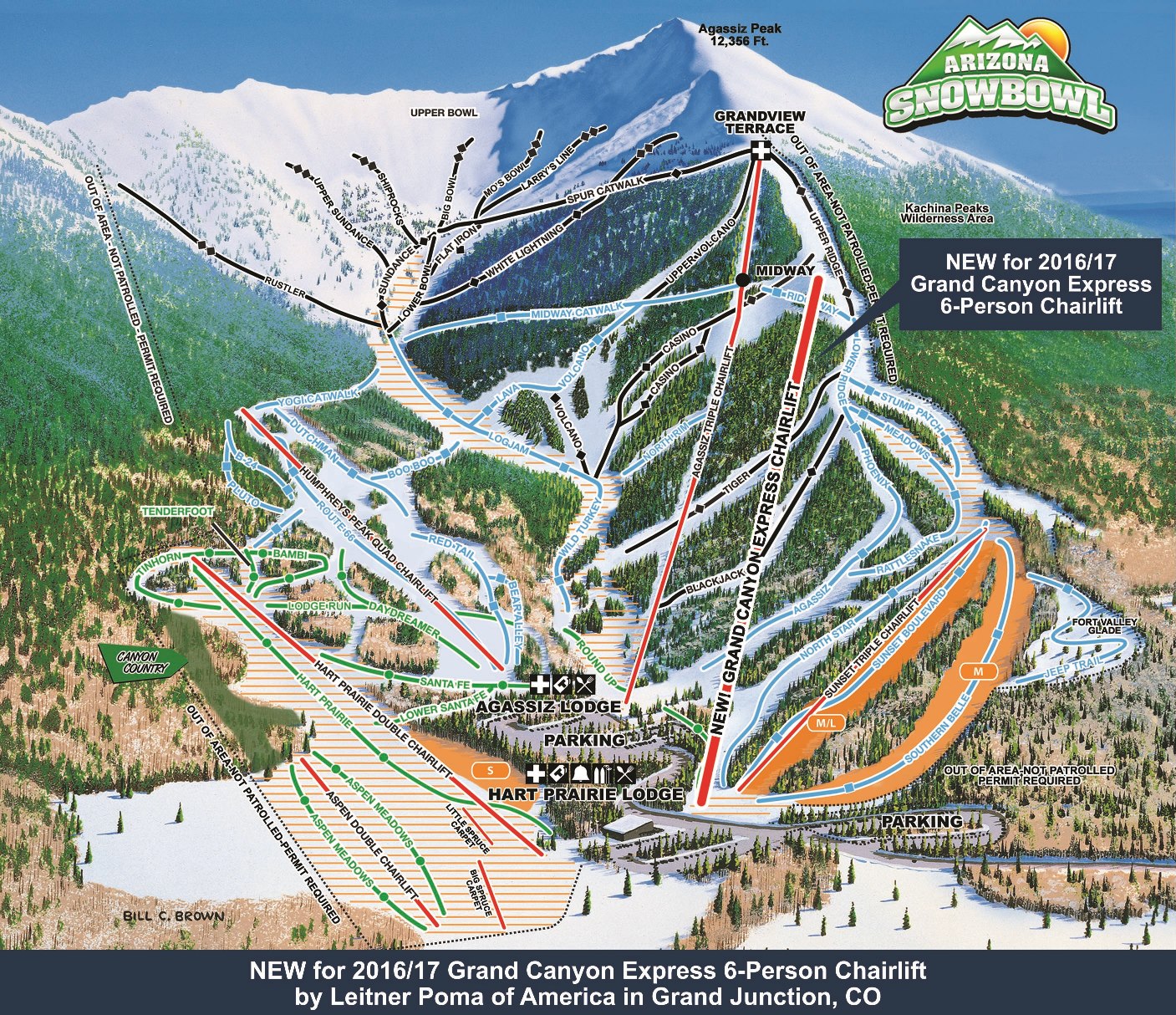
The first six-place lift in the state is large by any measure, not just gauge but also length (5,801 feet) with an impressive vertical of 1,546 feet. The line will have 61 chairs initially, moving up to 1,800 skiers per hour at 1,000 feet per minute. Arizona Snowbowl will be able to add 54 more chairs to reach 3,400 pph in the future. The new lift serves all of the terrain formerly accessible from the Sunset triple chair, which may eventually be removed. The Grand Canyon Express also accesses 90 percent of the acreage off Agassiz, Snowbowl’s workhorse lift that takes 13 minutes to ride.


Instagram Tuesday: Steel
Every Tuesday, we pick our favorite Instagram photos from around the lift world.
At Sundance, Doppelmayr Races to Replace Arrowhead Lift in 95 Days
Robert Redford’s Sundance Resort faced a challenge last fall. How could it find enough time to replace an aging lift that brings skiers to the mountain’s summit but also provides access to a hugely popular zip tour? With ski resorts increasingly becoming hubs for summer recreation, this is becoming a more frequent problem. Building a lift typically takes at least four months although there are exceptions. In 2015, Snow King Mountain replaced the heavily-used in both summer and winter Rafferty lift with a Doppelmayr quad in record time – under three months – between closing day of ski season and Independence Day weekend. This fall, Doppelmayr is making a similar push at Sundance to complete the new Arrowhead Quad.


Sundance’s other triple chair, Flathead, is actually ten years older than Arrowhead, which begs the question of why the latter will be modernized first. Built by Lift Engineering in 1985, the old Arrowhead could only download 240 guests per hour which no longer worked for summer operations. Furthermore, Yan used aluminum sheaves (with hubcaps!) on many of its later-model lifts which became prone to cracking. You’ll notice many Yan lifts of Arrowhead’s vintage sport upgraded line gear from Doppelmayr or Poma. Rather than upgrading piecemeal, Sundance announced last December it would replace the entire lift with a brand new quad chair. “With the amount of use Arrowhead Lift sees year-round, this upgrade is exciting to the skiing, snowboarding, ZipTour and summer programs that our guests love so much at Sundance,” director of mountain operations Czar Johnson said in a release announcing the project.
40 New Lifts: Construction Extends Gains in 2016
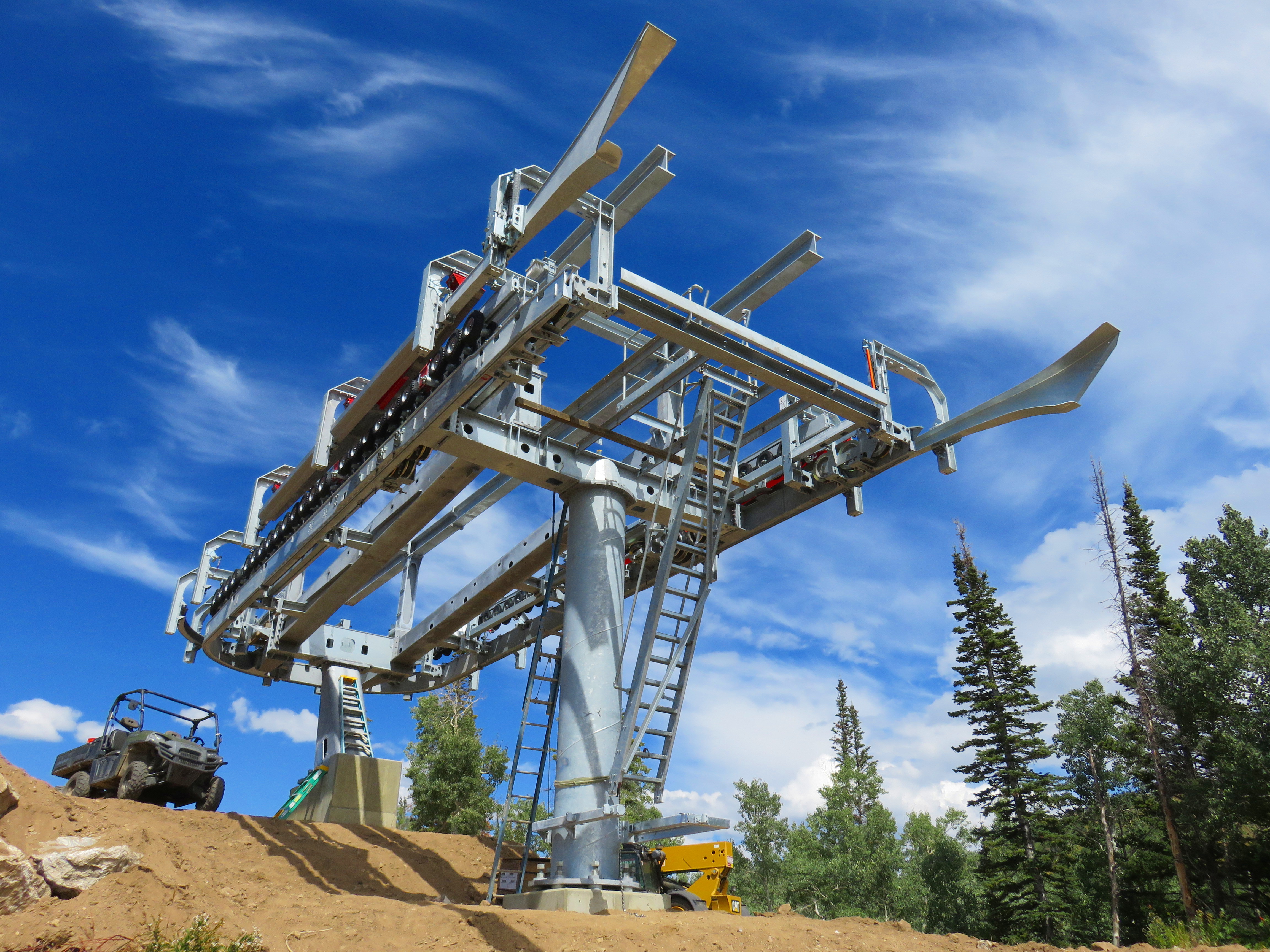
With work wrapping up on 36 new and four used lifts across North America, 2016 will go down as the best year for lift construction since the Great Recession. With Skytrac now a member of the Leitner-Poma Group, the big two manufacturers each supplied exactly the same number of lifts in North America – 17 – with one each for LST and Partek (although Skytrac provided controls for and installed the LST lift.) Doppelmayr and Leitner-Poma also had their best years individually since 2008 and Skytrac its second best in history with five complete lifts and a retrofit terminal for Keystone. These numbers include four gondolas manufactured in Europe by Leitner and Poma installed in Mexico and the Dominican Republic. If only lifts built by Leitner-Poma of America in Grand Junction are counted, Leitner-Poma had its third best year since 2008 with eight new lifts. I call it a tie.

While everyone knows the East had a horrible season last year, the Pacific states actually showed the softest demand for new lifts in 2016. Alaska, Washington, Oregon and California have steadily declined for more than a decade and just three new lifts went in there, the lowest number since at least 2004. The Mountain region saw 12 installations, virtually the same as last year and the second most since 2008. The Rockies also built the biggest lifts in the country – six-packs at Arizona Snowbowl & Big Sky, high speed quads at Steamboat & Vail and a two-stage gondola at Jackson Hole. The Midwest more than doubled last year’s count, achieving its second best year since 2004 with seven new lifts while the East was well below its ten-year average with six new lifts constructed in 2016. The big shocker: Wisconsin built more new lifts in 2016 than any other state or province with three new Doppelmayr quads at Wilmot Mountain, two Leitner-Poma quads at Cascade Mountain and a Skytrac quad at Christmas Mountain Village.
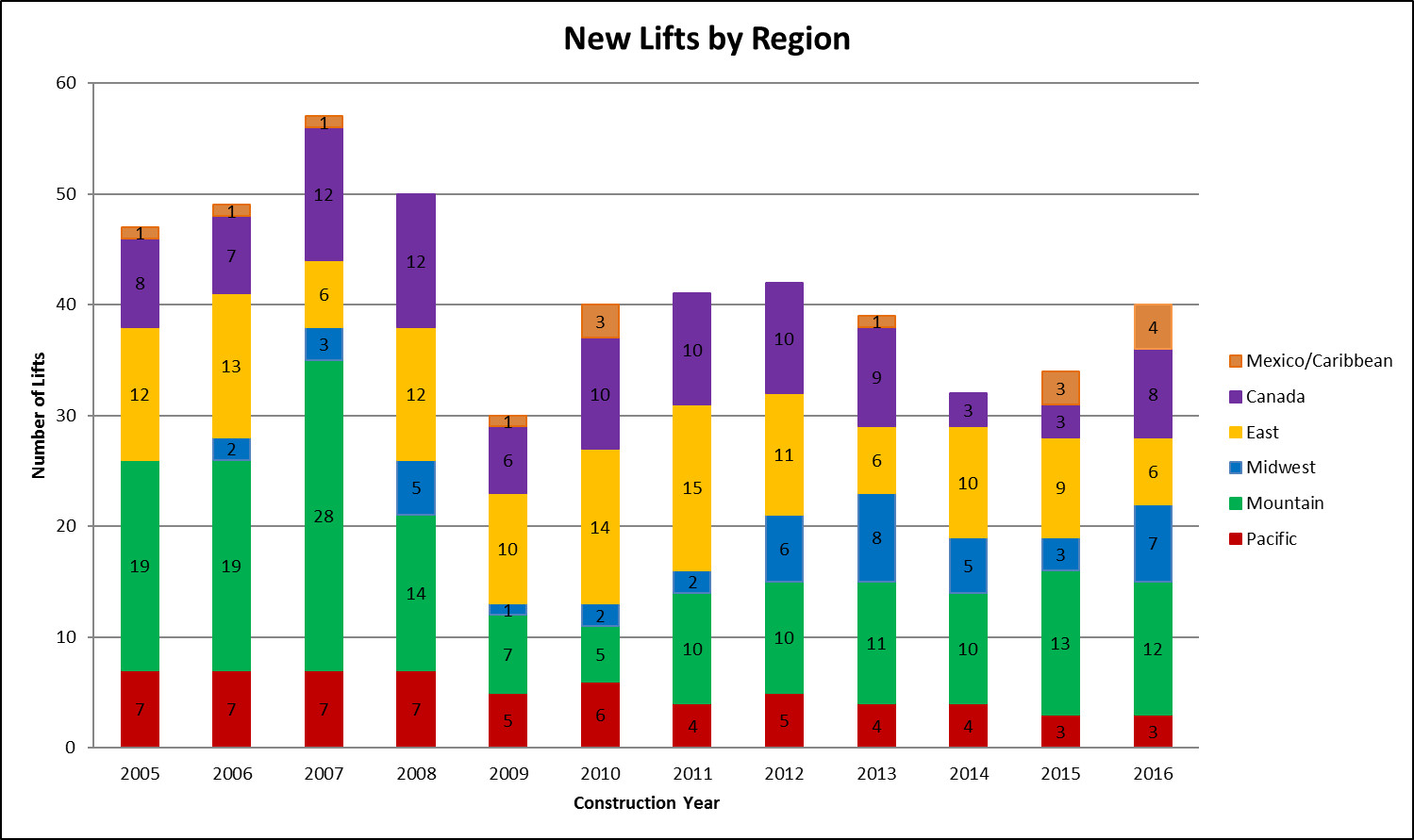
Canada finished right about average with eight new lifts, all built in the eastern provinces of Ontario and Quebec. Horseshoe Resort and Le Relais both added their first six-place detachables, which are sure to be well-received. Look for Western Canada to rebound next year after struggling since the recession. Perhaps most interesting is the four gondolas built for public transportation and tourism in Mexico and the Dominican Republic. I expect growth in Mexico and the Caribbean to continue as the urban ropeway revolution spreads north from South America (and hopefully to the United States!)

