
Every Tuesday, I feature my favorite Instagram photos from around the lift world.
Master Plan Outlines Extensive Lift Upgrades at Copper Mountain
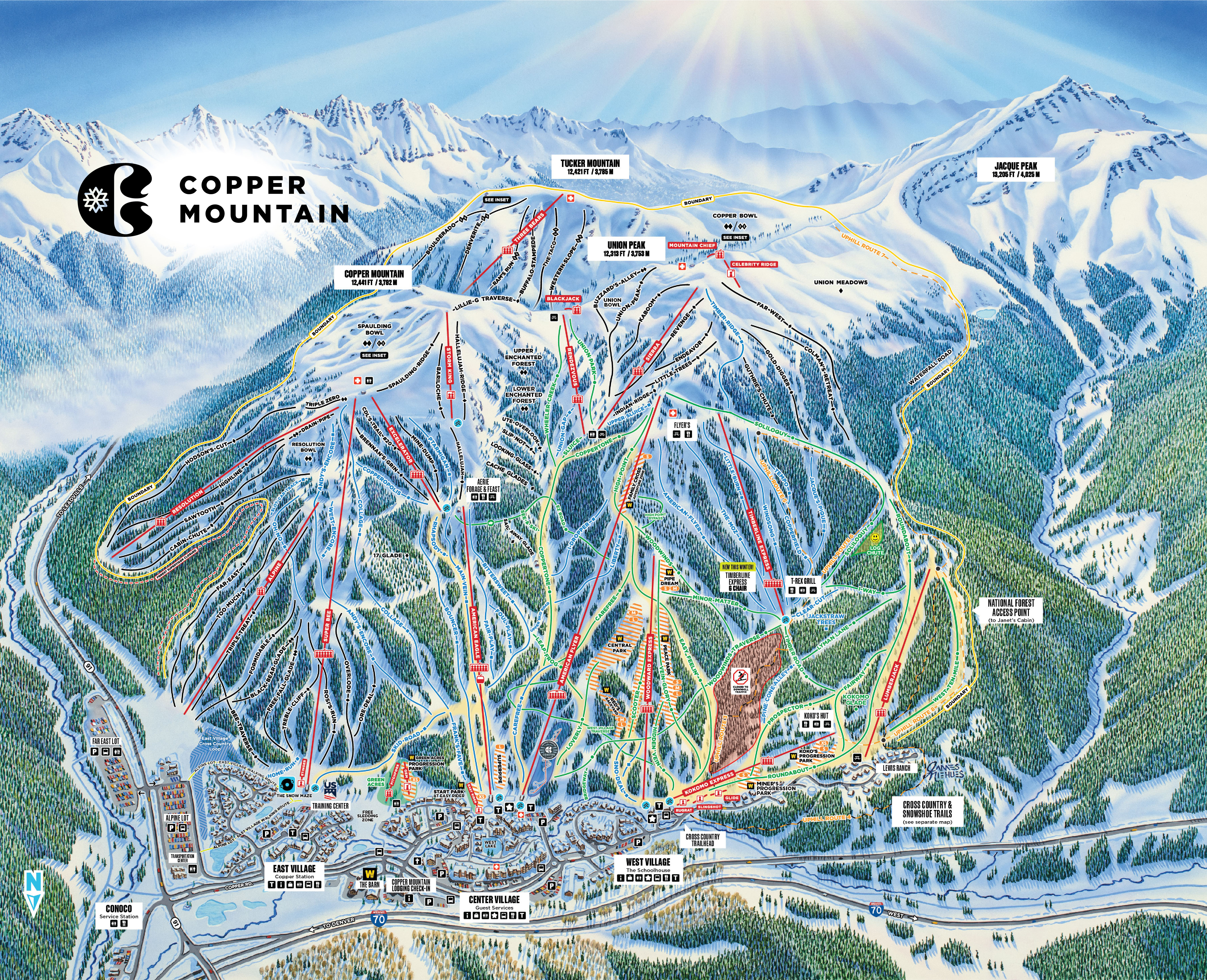
One of outgoing White River National Forest Supervisor Scott Fitzwilliams’ final actions last week was accepting a new master plan for Copper Mountain, one of eleven ski areas he oversaw for 15 years. The plan, prepared by SE Group, includes three direct lift replacements, four lift replacements in extended alignments, four new infill lifts within existing terrain and two expansion lifts. Notably, all projects reside within Copper’s existing 7,343 acre permit boundary. Copper’s operation today spans 3,641 acres and that would grow to 4,154 acres, an expansion of 14 percent. “The upgrade plan works to improve circulation around the mountain with updated lift infrastructure, as well as provide guests with access to new and unique terrain within Copper’s existing Special Use Permit area,” notes SE Group.

Two lift projects in the plan have already been approved but not yet implemented. The first is a six person replacement for Lumberjack on the far west side of the resort. The existing Lumberjack triple dates back to 1981 and takes more than nine minutes to ride. The replacement detachable would run 4,818 feet and access excellent beginner terrain. This project was originally approved as a quad but was later re-approved as a six place.
The second approved project is an Alpine replacement, green lighted since 2006. Even though Alpine recently received a new return terminal, the rest of the lift is nearing 50 years old and lacks sufficient capacity for planned development around the Alpine base. Detachable Alpine’s top terminal would be extended uphill, providing riders access to more terrain.

The most exciting component of the plan is a lift up Jacque Peak, located west of Tucker Mountain, which gained lift service in 2020. A 5,900 foot long detachable quad called Jacque East would service intermediate and advanced terrain in the Tucker Gulch drainage, becoming the highest lift in North America. It would top out at 13,150 feet, soundly beating Breckenridge’s Imperial Express record of 12,840 feet (Loveland’s master plan includes a lift to just over 12,900 feet which could be constructed before Copper gets to Jacque Peak.) “The [Jacque East] lift is strategically positioned to reduce potential impacts to known wetland areas with its alignment and minimize habitat impacts with its location above tree line, while still providing exceptional access to high alpine terrain,” notes SE Group.
A second expansion lift would be installed between Tucker Mountain and Jacque Peak called Thunderbird. This fixed triple would service advanced terrain similar to Three Bears. The short lift would also provide essential egress from Tucker Gulch back toward Copper’s base areas. “The Tucker Gulch expansion is designed to emphasize the high alpine experience,” the plan notes. “The vast majority of the terrain is above treeline, lee to the predominant westerly winds, and well-suited to provide a breathtaking but accessible guest experience.”

Related to the Jacque Peak expansion, both Blackjack and Mountain Chief in Copper Bowl are slated for replacement. These doubles date back to 1973 and 1977 and would see increased traffic as guests come and go from Jacque Peak. Blackjack would likely be replaced with a detachable quad and Mountain Chief a fixed triple in existing alignments.
Another major lift addition is called Union Meadows. This nearly 8,000 foot detachable quad would load west of the new Timberline Express and unload at the top of Union Meadows, providing access to the future Jacque East lift. Union Meadows Express would rise 1,366 vertical feet and carry up to 2,400 riders per hour.
Elsewhere on the front side, numerous lifts are earmarked for replacement. Chief among them is Super Bee, Copper’s first six pack dating back to 1998. The new Super Bee would become Copper’s first eight place chairlift and include a mid-station near the top of Rosie’s Run. The intermediate station would be useful for Copper’s extensive early season race training program. At nearly 9,000 feet long with an hourly capacity of 3,400 skiers, Super Bee 8 would be a monster lift. Alternatively, it could be constructed as two separate lifts like Copper had for decades prior to Super Bee’s construction.
Excelerator is slated to go from a quad to a six pack with the bottom terminal extended downhill to reduce crowding and cross traffic near the Aerie. Capacity would jump from 2,450 to 3,200 skiers per hour.

Rendezvous is also slated for extension with the bottom terminal shifting significantly east and downhill. “Upgrading the Rendezvous lift to a detachable quad and extending its current alignment will improve access to the Copper Bowl area while still providing an incredible beginner experience in the high-alpine,” notes the plan. A high speed Rendezvous would also reduce pressure on American Flyer and Timberline Express, which service similar terrain.
Just below the new Rendezvous lift, another detachable quad is proposed in the Sail Away Glades area. This lift would fill the void between American Eagle and American Flyer, servicing several new trails. This pod would add to Copper’s intermediate terrain, take pressure off base area lifts and improve cross-mountain circulation. Sail Away Express would run 968 vertical feet and transport 2,400 guests an hour.
Finally Copper intends to improve access to freestyle terrain, embracing its mantra as The Athlete’s Mountain. An 825 foot long platter lift is planned to run alongside the existing Superpipe, providing quicker laps. Similarly, a 2,500 foot long fixed grip chairlift is envisioned to service a terrain park near Woodward Express.
The plan also includes significant snowmaking improvements, new parking, restaurants and maintenance facilities. Overall comfortable carrying capacity would increase from 12,940 guests per day to 17,860 – not a goal or cap but rather a planning benchmark. This would allow Copper to maintain its current surplus of terrain for the number of skiers it hosts and continue to provide a high quality experience.
As always, master plans are conceptual in nature and do not constitute approval or timelines for specific projects. However, given Powdr’s recent sale of Killington and pending sales of Eldora, Mt. Bachelor and SilverStar, they may have the cash to follow this ambitious plan at their flagship mountain in the coming years.
Pats Peak to Replace Hurricane Chair
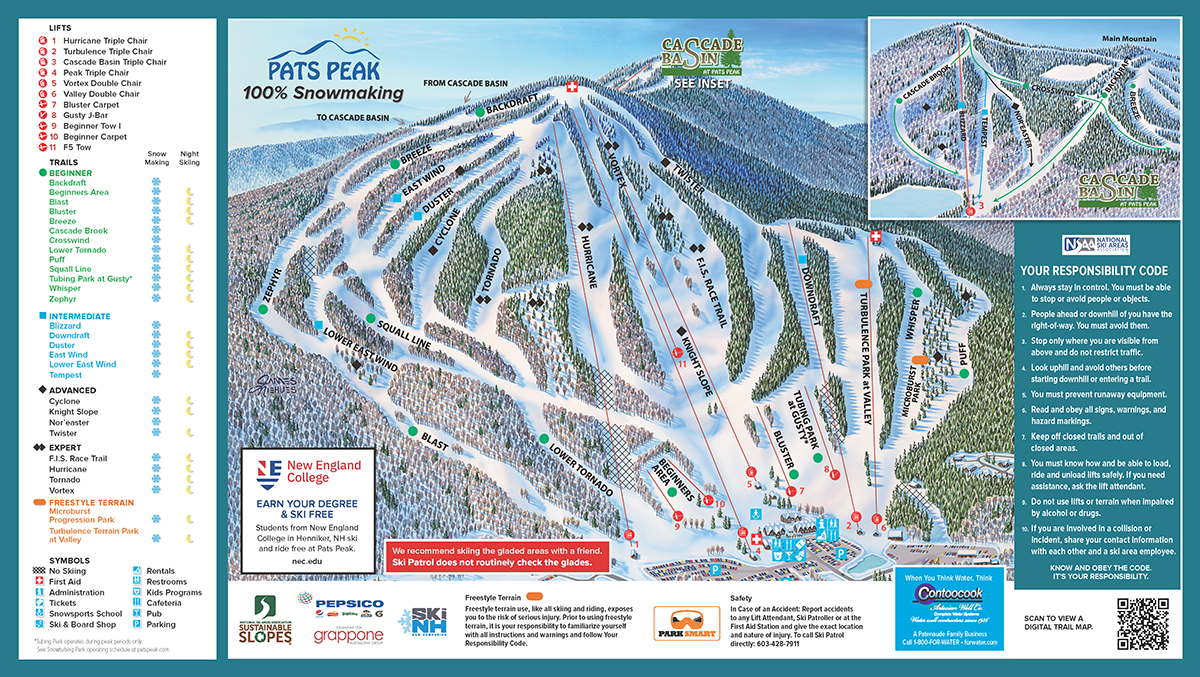
Pats Peak, New Hampshire announced this week it will uprade its second oldest chairlift to a modern quad chair. The new lift will be designed by Skytrac and contain a mix of new and used parts. Skytrac will supply a Monarch XL drive terminal, which will also include a Chairkit loading conveyor. The return terminal, towers and chairs will be 1997 Garaventa CTEC equipment, arriving by way of Lake Compounce Amusement Park in Connecticut. The new lift will follow the same alignment as the current Hurricane triple, which is being retired after 47 seasons. Both loading and unloading areas will be reconfigured to improve accessibility and flow. Pfister Mountain Services and Phoenix Excavation will handle installation with several tower foundations already completed last summer.
Hurricane will be the first quad chair for family-owned Pats Peak, which operates a fleet of double and triple chairs. “This new lift is an exciting step forward for Pats Peak,” said Kris Blomback, Pats Peak General Manager. “We are dedicated to continuous improvements that enhance the skiing and riding experience for all of our guests, and we look forward to welcoming everyone to enjoy the benefits of this new quad next season.” Chairs from the outgoing Borvig triple are for sale to the public.
News Roundup: Lynx Express
- June Mountain closes for two days due to issues with againg J1.
- Loveland proposes replacing Lift 7 with a quad.
- Indy Pass plans more resort additions through the spring and fall.
- One of them is Tenney Mountain, which also looks to build a high speed quad.
- Tenney’s Hornet double needs a gearbox rebuild, will be closed until mid-March.
- Skeetawk, Alaska seeks state funding to develop electrical infrastructure for a future Lift 2.
- Burke Mountain’s receiver says a sale may be near.
- The proposed Burnaby Mountain Gondola in metro Vancouver would include significant transit oriented development.
- Mt. Seymour, BC removes the Brockton chair from service for an unknown amount of time.
- Manning Park, BC closes the similar Blue Chair for inspections due to the incident at Mt. Seymour.
- Marble Mountain, Newfoundland hits the market.
- Chair 8 at Bear Mountain suffers a grip slip incident with passengers.
- Rezoning paves the way for more development at Powder Mountain.
- Leitner to build a seven station gondola in Iraq.
- Poley Mountain, New Brunswick works to repair its triple chair.
- Bretton Woods applies to build a new lift, Attitash seeks to reduce capacity on the closed Flying Bear.
- Solitude completes a mid-winter bullwheel bearing replacement on Sunrise.
- The first terminal and towers go up for the winter build Saluda Skyride in South Carolina.
- Mt. Crescent, Iowa rebrands as Crescent Hill.
- An inside look at operating the largest lift fleet in the country.
- And one of the smaller ones.
- Mineral Basin at Snowbird to be closed for a week-ish due to a machanical issue.
Instagram Tuesday: Bachelor
Every Tuesday, I feature my favorite Instagram photos from around the lift world.
News Roundup: Windstorm
- Killington’s Superstar lift replacement will cancel the 2025 Killington World Cup; chairs from Superstar will move to Golden Express at Pico.
- An unseated passenger is successfully caught in a deceleration net at Killington.
- Powderhorn plans a detachable replacement for West End.
- Gunstock loses its summit chairlift for much of the holiday week due to gearbox failure.
- Silver Mountain, Idaho rope evacuates Chair 4 due to a power outage and evacuation engine failure (now back open).
- A falling tree in high wind causes a three tower deropement on the Belleaye Express at Belleayre, New York (scheduled to reopen some time tomorrow).
- The same storm leads to a deropement and rope evacuation at Pats Peak, New Hampshire (back open).
- And the roof blows off Stratton’s gondola top terminal (also back open).
- Following three recent incidents in the state, New Hampshire clarifies how its tramway oversight works.
- Brattleboro Ski Hill in Vermont closes due to an electric motor issue.
- Arkansas adopts the ANSI standard in advance of its first chairlift installation.
- Pioneer at Park City still hasn’t run this season but may soon.
- Cannon’s tramway is still on track for $19 million in upgrades.
- Sugarloaf confirms plans to install Big Sky’s former Six Shooter to replace Timberline, a two year project.
- Stevens Pass rope evacuates the new Kehr’s quad at night.
- Echo Mountain, Colorado also has a night rope evac.
- Timberline closes the Molly’s detachable quad due to damage to a tower from a snow cat.
- Tenney Mountain, New Hampshire loses its main lift due to a mechanical issue.
- Hersheypark, Pennsylvania retires its chairlift ride.
Bridger Bowl Master Plan Envisions Six New Lifts
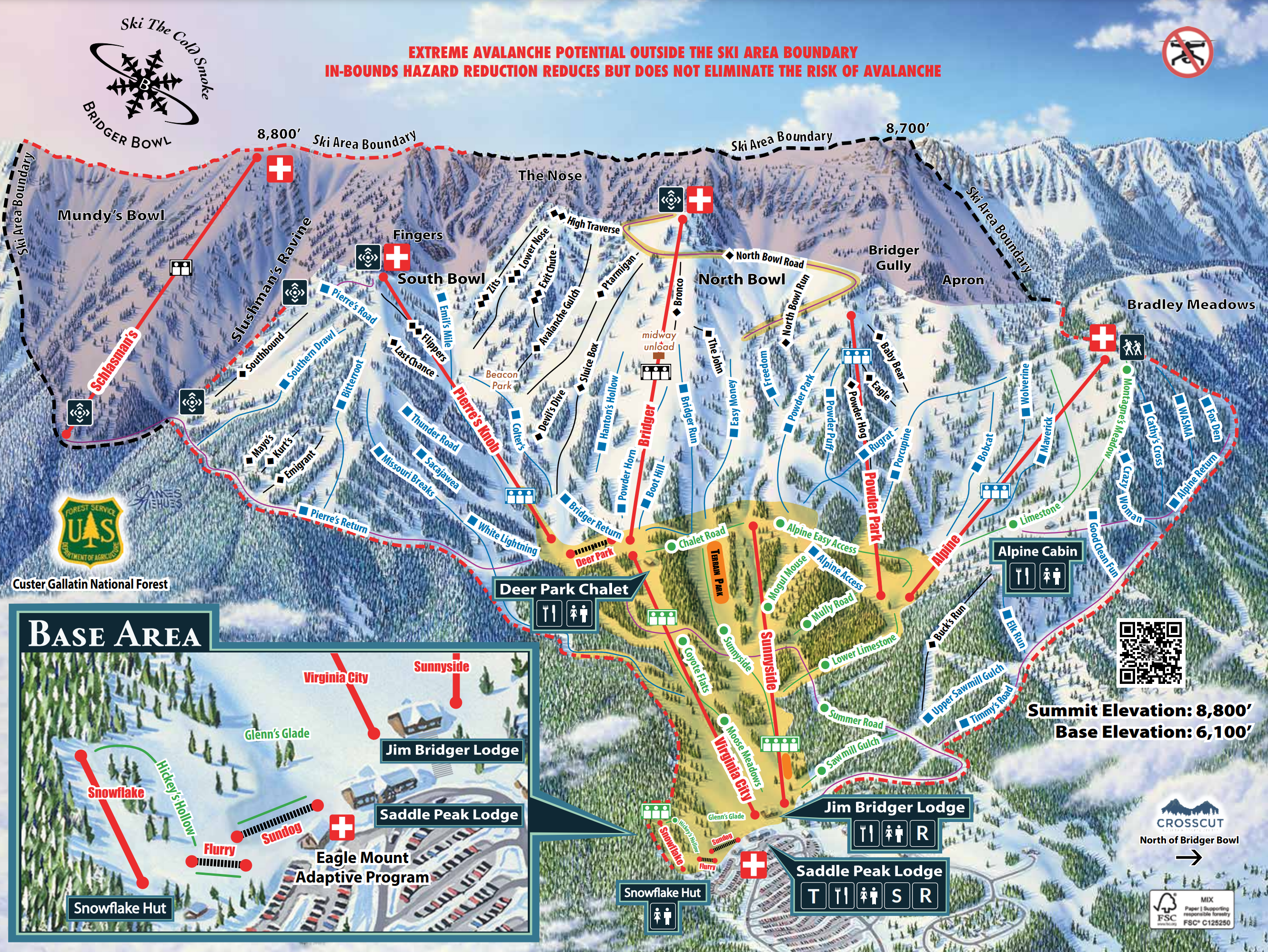
America’s second largest nonprofit ski area plans significant changes to its lift layout under a proposed 2025 master plan. Located near fast-growing Bozeman, Bridger Bowl proposes to add an expansion lift called Bradley Meadows, an infill lift called Pierre’s Knob 2 and three smaller lifts serving beginner trails and terrain parks. The plan was prepared by SE Group and is still undergoing finishing touches.
Bridger Bowl remains the continent’s third largest ski area without a detachable lift and that distinction is unlikely to change, though specific lift types have not been released. The first major project is a lift in Bradley Meadows, a carryover from Bridger Bowl’s 2015 Master Plan Update. This lift would service advanced terrain to the north of the existing Alpine triple. Bradley Meadows lies within Bridger’s existing Special Use Permit area in the Custer-Gallatin National Forest and includes several new trails. As part of the lift-served expansion, Bridger would construct a patrol only platter lift to the ridge, supplementing an existing patrol platter used for avalanche hazard reduction work. A new rope tow is also planned to service a terrain park between Alpine and Powder.

A second new chairlift carries the working name Pierre’s Knob 2 and would access terrain between Pierre’s Knob and Schlasman’s. These two chairs are quite far apart and require significant traversing to transit between them. The new lift would service several new trails on the south side of the mountain. All told, additional developed trails in Bradley Meadows and Pierre’s Knob 2 would encompass 70 acres.

Bridger Bowl also plans to expand its offering for beginners. Much of Bridger’s existing beginner terrain is located in high traffic areas near existing lifts. A more secluded beginner pod is planned, which would require a modest expansion of Bridger’s Special Use Permit area and a new chairlift. A second, shorter beginner chairlift is planned closer to the Virginia City lift. Interestingly, the current Snowflake lift used to run in a similar alignment before it was moved in 2017. The plan also includes major enhancements to snowmaking, a new night skiing program, lodge upgrades and additional parking.
The Bridger Ski Foundation plans to host two community open houses to solicit feedback on its proposed master plan. The first one, to be held at the ski area on February 27th, will include season passholders and members. A second open house is open to anyone on March 1st in Bozeman. You can also submit feedback online before the Master Development Plan is formally submitted to the Forest Service for acceptance.
Instagram Tuesday: High Above
Every Tuesday, I feature my favorite Instagram photos from around the lift world.
News Roundup: Valentine’s Edition
- Vail Resorts reaches an agreement with Crested Butte lift mechanics, averting a strike.
- A window falls from a cabin on Stowe’s Mansfield Gondola during operations.
- Mission Ridge acknowledges three different chairs have detached this season from Chair 4, a 1971 Riblet double (all empty and no injuries).
- Waterville Valley completes a midseason splice on the High Country T-Bar.
- A new owner looks to reopen Crystal Mountain, BC via crowdfunding.
- Winter Park’s High Lonesome Express is back after a four week maintenance closure.
- Still no Slide Brook Express at Sugarbush but hopefully soon.
- The Glade Triple at Catamount will miss the rest of the season.
- Badger Pass, California won’t open this season.
- Ditto for Cedar Pass, also in California.
- Park City gets serious about a gondola connecting Main Street to Deer Valley.
- President Trump imposes 25 percent tariffs on steel and aluminum imports with potential impacts on lift manufacturers.
- The US Forest Service, landlord to 124 ski areas, lays off 3,400 employees.
- A bipartisan group of Senators sponsor a bill that would direct the Forest Service retain some of the fees resorts pay to the federal government for ski purposes, such as processing resort improvement projects.
- The gondola in Moab, Utah which sat for 25 years without ever opening, is finally being removed.
- Solitude demystifies lift maintenance for customers.
Instagram Tuesday: Edelweiss
Every Tuesday, I feature my favorite Instagram photos from around the lift world.
 Lift Blog