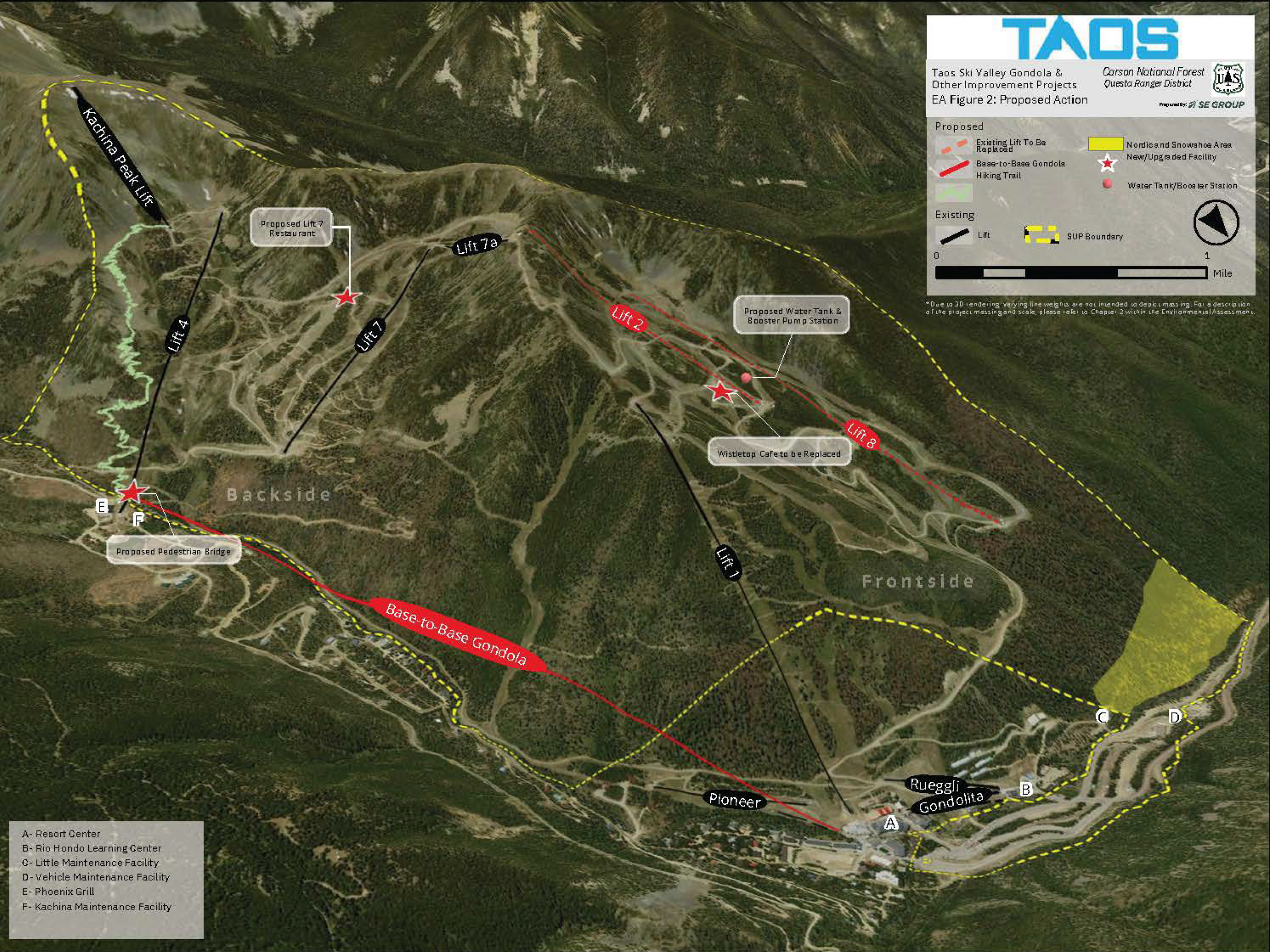
More than three years after it was first proposed, Taos’ Base-to-Base gondola is closer to reality. In a draft decision published today, the Forest Service proposed approving both the gondola and replacements for Lifts 2 and 8, though the decision is still subject to an objection period.
The gondola’s purpose is multifold. First, it would provide much-needed alternative to Lift 1, the only non-beginner lift out of the Resort Center. When Lift 1 goes down, the only other way for skiers to access the mountain is via road to Kachina Basin. The detachable gondola would also improve skier access to backside lifts 4 and 7. In summer, the gondola would link the village and Taos Ski Valley’s summer summer activity hub with bike park, via ferrata and hiking trails. The gondola would become the longest lift at Taos with eight seat cabins transiting 7,300 linear feet. While the base-to-base would not directly service much skiing, it would rise 800 vertical feet and provide access to a green trail running between Kachina Basin and the village. A small cabin maintenance facility is planned adjacent to the Kachina terminal.

The gondola is being designed to move 1,800 guests per hour both winter and summer and is expected to reduce vehicle traffic between base areas. A ticket will be required to ride in order to minimize foot traffic into the Wheeler Peak Wilderness adjacent to the top terminal. “Use of the gondola by non-ticketed guests may be allowed in the future following further study of guest use patterns and the broader use of the Wheeler Peak Wilderness,” notes the Forest Service. The agency did not set a minimum price for gondola rides, noting it could be “nominal.”
A second approved project would replace Lift 2, a 1995 fixed grip quad running from near the top of Lift 1 to Taos Patrol Headquarters. This lift would likely be a detachable quad and boost capacity from 1,800 to 2,400 skiers per hour. Lift 8 is also approved for similar treatment in the coming years. That lift services terrain below Lift 2 and dates back to 1991. When all three projects are completed, Taos will operate five modern detachable lifts, up from zero just five years ago.
Parties who previously commented on the projects have 45 days from today to file any objections.



 Lift Blog