- Berkshire East and Catamount to join Burke Mountain and Smugglers’ Notch under unified ownership.
- Quebec’s CMSQ takes over management of a fifth mountain, Belle Neige, and sets sights on a sixth.
- A private ski area with five chairlifts is approved in Nevada’s Ruby Mountains.
- Doppelmayr’s CEO highlights the importance of the United States market.
- In the wake of a fatal crash, Swiss media report Garaventa offered a voluntary retrofit for DT-108 grips on the Titlis Xpress several years ago.
- One person is killed and six injured when an aerial tram cable snaps in India.
- A law firm files an antitrust lawsuit against Alterra and Vail, claiming both “unlawfully inflated prices and suppressed competition through anticompetitive bundling practices tied to their multi‑mountain season passes.”
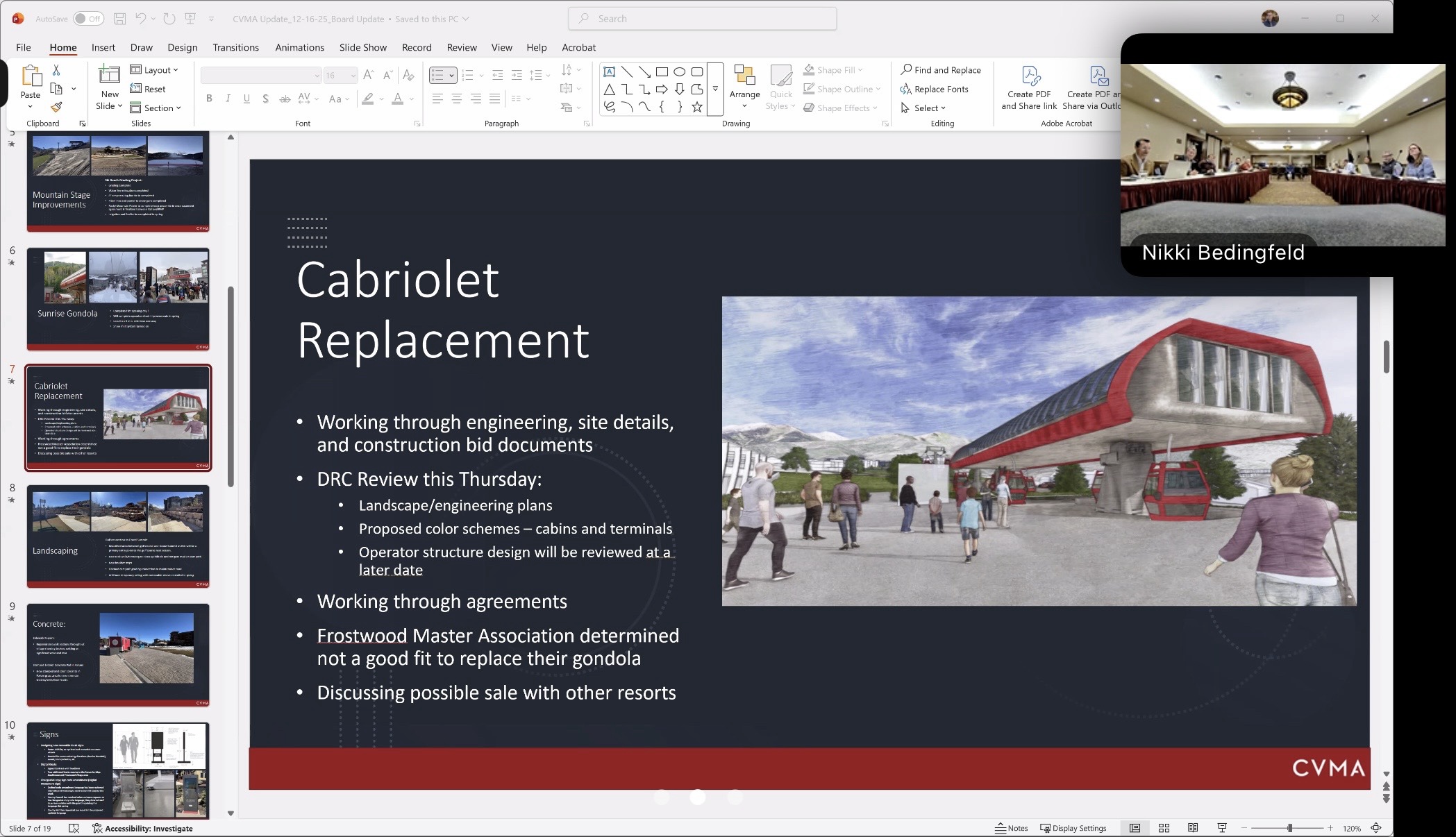
- Park City’s Cabriolet replacement to be called the Canyons Village Skyway.
- Park City officials get another chance to approve Eagle and Silverlode replacements.
- MND provides an update on its 10 lift project in Uzbekistan, including the first Orizon detachable.
- A Denver TV station looks back at the 1976 Vail gondola disaster with a multi-part series.
- Here’s a cool primer on how a splice comes together.
- Jackson Hole to debut a golden gondola in honor of Olympian Breezy Johnson.
- A tree falls on the Silver Mountain gondola.
- Alaska public radio explores how a gondola project supposed to cost under $10 million more than tripled in price.
- Big Sky will shorten Powder Seeker 6 this summer, slightly lowering the top terminal due to moving glacial rock.
- The Zincton proposal in BC faces local opposition.
- Nub’s Nob to replace the Orange triple with a Skytrac quad this summer.
- Skytrac will also build Lee Canyon’s expansion lift.
- Sponsored job: Electrical Lift Installer – Okanagan Project – Doppelmayr Canada
Vail
News Roundup: Wild Europe Weather
- In a real estate sales presentation, Red Mountain leaders say expansion lifts on Mt. Kirkup and White Wolf Ridge are a higher priority than replacing existing lifts.
- Sasquatch Mountain, BC provides an update on the Green Chair, which hasn’t spun all season.
- An avalanche strikes a closed detachable lift in France.
- Another French avalanche takes out a tower and hits a terminal.
- Rime ice topples a lift tower in Spain.
- A double chair rolls back during operation in China (likely a lift from BHMRI, not a western manufacturer.)
- Also in Asia, a viral video shows a gondola cabin dragging through deep snow.
- Bluewood, Washington upgrades Triple Nickel with Partek carriers, will sell old Borvig ones.
- Anakeesta offers up chairs from its former Chondola but not the gondola cabins.
- The 13 year-old critically injured in an unloading incident at Ski Vorlage, Quebec last week died four days later, her family says. Quebec’s ropeway regulator inspected the lift post-accident and identified several unspecified corrective actions, now completed.
- A five year old is hospitalized after falling from Sunday River’s Jordan Mountain double.
- Groundbreaking could come soon for the Aspen development that includes a new Lift 1A.
- Skytrac to construct both new lifts at Little Switzerland, Wisconsin.
- Five people board a quad chair on the Sourdough Express at Vail, one later jumps off after the lift stops (unclear if they were directed to do so by Vail Resorts staff.)
- Wisp temporarily closes two lifts for separate repairs.
- Tye Mill at Stevens Pass goes out of service.
- Also two lifts at Pico.
- Stratton’s gondola to remain closed into next week due to a maintenance issue.
- Sundance Express at Sun Peaks to be closed this weekend for maintenance.
- Castle Mountain, Alberta temporarily closes the new Stagecoach Express to swap a motor.
- At Marquette Mountain, Michigan, a misload bends apart a Riblet chair (quickly replaced without incident.)
- The Supreme Court strikes down some of President Trump’s import tariffs but not Section 232 steel and aluminum tariffs most affecting lift manufacturers. In response to the decision, the President orders a 10 percent global tariff to last 150 days (USMCA compliant goods and items already subjected to Section 232 tariffs are exempted).
News Roundup: Back at It
- Park City resubmits applications to build an Eagle six pack and Silverlode eight place.
- Snow King, Wyoming to add eight cabins to its gondola for summer concert capacity.
- The triple at Mont Cascades, Quebec closes until further notice due to mechanical issues.
- Same with Buzzsaw at Searchmont, Ontario.
- Red Mountain, BC goes without the key Motherlode triple this week due to a motor issue; runs a a snow cat shuttle instead.
- Crescent Hill, Iowa completes installation of a whole new drive terminal for its double chair.
- Little Eagle at Vail is evacuated after an incident; Vail Resorts declines to say whether anyone was injured amid online rumors (update 2/4: in a Colorado Passenger Tramway Safety Board Meeting, the state’s Supervisory Tramway Engineer said no one was injured.)
- Winslow at Dartmouth Skiway is also rope evacuated.
- A reader says Frenchman’s at Sun Valley was also rope evac’d this week.
- Visits to US resorts by Canadians are down 41 percent this winter.
- Mountain Village, Colorado intends to select a vendor for the new gondola this calendar year.
- Doppelmayr to build four urban gondolas in Puebla, Mexico with 12 total stations and 96 towers.
News Roundup: Under Contract
- Challenger at Mount Snow is down due to mechanical.
- Two people are hospitalized after falling from the Mountaintop Express at Vail.
- Canyons Village Management Association says the outgoing Cabriolet will not move to replace Frostwood after all but it’s in talks to sell the Cab to another mountain.
- Lake Louise’s new map depicts the Richardson’s Ridge expansion.
- Quebec clears Mont-Sainte-Anne to reopen lifts ordered closed for inspection last week.
- Eaglecrest delays the opening of the summit Ptarmigan lift due to extended maintenance.
- Crystal Mountain, Washington will operate at limited capacity through January due to a road washout.
- British Columbia selects a new operator for closed Tabor Mountain.
- Telluride details where negotiations stand with its ski patrol union. Both sides plan to meet Saturday.
- The last segment of the first Bartholet Ropetaxi on demand gondola opened today.
- Also a remarkable new 3S in the Dolomites.
- Leitner opens its first Ropera next-gen detachable.
- MND’s first production Orizon detachable to be commissioned summer 2026 in Uzbekistan.
- ORDA may spend $3 million on a consultant to guide maintenance on more than $600 million in infrastructure.
- Loon Mountain formally seeks approval to build the Gateway pulse gondola.
- A new ownership group is under contract to purchase Hermon Mountain, Maine.
- The Royal Gorge, Colorado gondola to receive glass floors in 2026.
- Instead of replacing two lifts in 2026, Mt. Ashland will likely do Windsor in 2026 and Ariel for 2027.
News Roundup: Can’t Just Be About Lifts
- An updated Stratton master plan envisions a competition T-Bar in 2027, a hotel-to-base chairlift in 2030 and gondola replacement circa 2033.
- Los Angeles releases the Draft Supplemental Environmental Report for the proposed Dodger Stadium gondola.
- The Forest Service approves Vail’s proposed replacements for lifts 15 and 21.
- Spirit Mountain’s new Leitner-Poma quad to be called Highline.
- Asked about new lifts on the Vail Resorts earnings conference call, CEO Rob Katz tells analysts priorities lie mostly elsewhere:
“We’re always going to be upgrading lifts; we announced a new lift for next year and that’s critical. But I think we need to realize also as a company and as an industry that it can’t just be about lifts. It’s not the only thing that matters to people. And in our minds we think there’s technology that can make a big difference. How people use technology in the digital experience, how it makes it easier for them to rent skis, how it makes it easier for them to connect with their ski instructor, how it makes it easier for them to get food, how it makes it easier for them to get around a resort or overall book a vacation. I think these are all things that are critical that really speak to the entirety of the guest experience when they come to us. Those are things where we really have a unique advantage because we own and operate all our resorts. They’re all on a common platform. And it’s where you invest dollars that actually impact everyone’s experience with all of our resorts rather than a singular lift, which affects one resort for some people who use that lift. Now that said, we have to keep investing in lifts. When you look back historically, you’ve seen us spend a lot of money on lifts over the last four years. So that’s continuing. We’re still going to keep proposing lifts. But I think the differentiator is going to be in this other area which is not as capital intensive as trying to replace every lift on Vail Mountain or something like that. That’s where we’re putting our focus.”
- A Swiss resort Vail was said to be interested in, Flims Laax, to be purchased by local municipalities.
- Some cool pictures of the nearly complete Mighty Argo Cable Car.
- A BC indigenous group acquires additional land for the proposed Cascade Skyline Gondola.
- BigRock, Maine introduces a new trail map painted by Rad Smith.
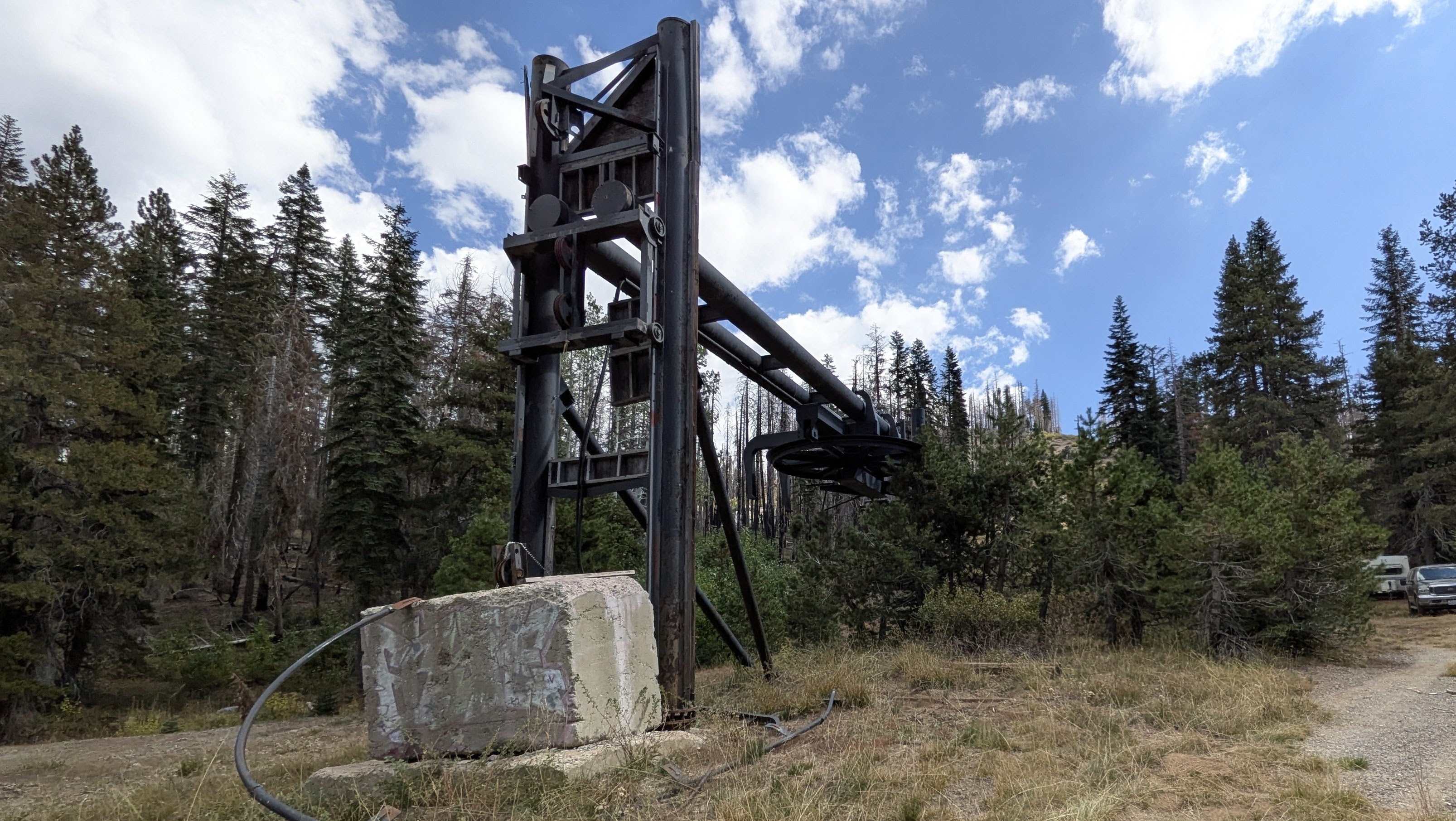
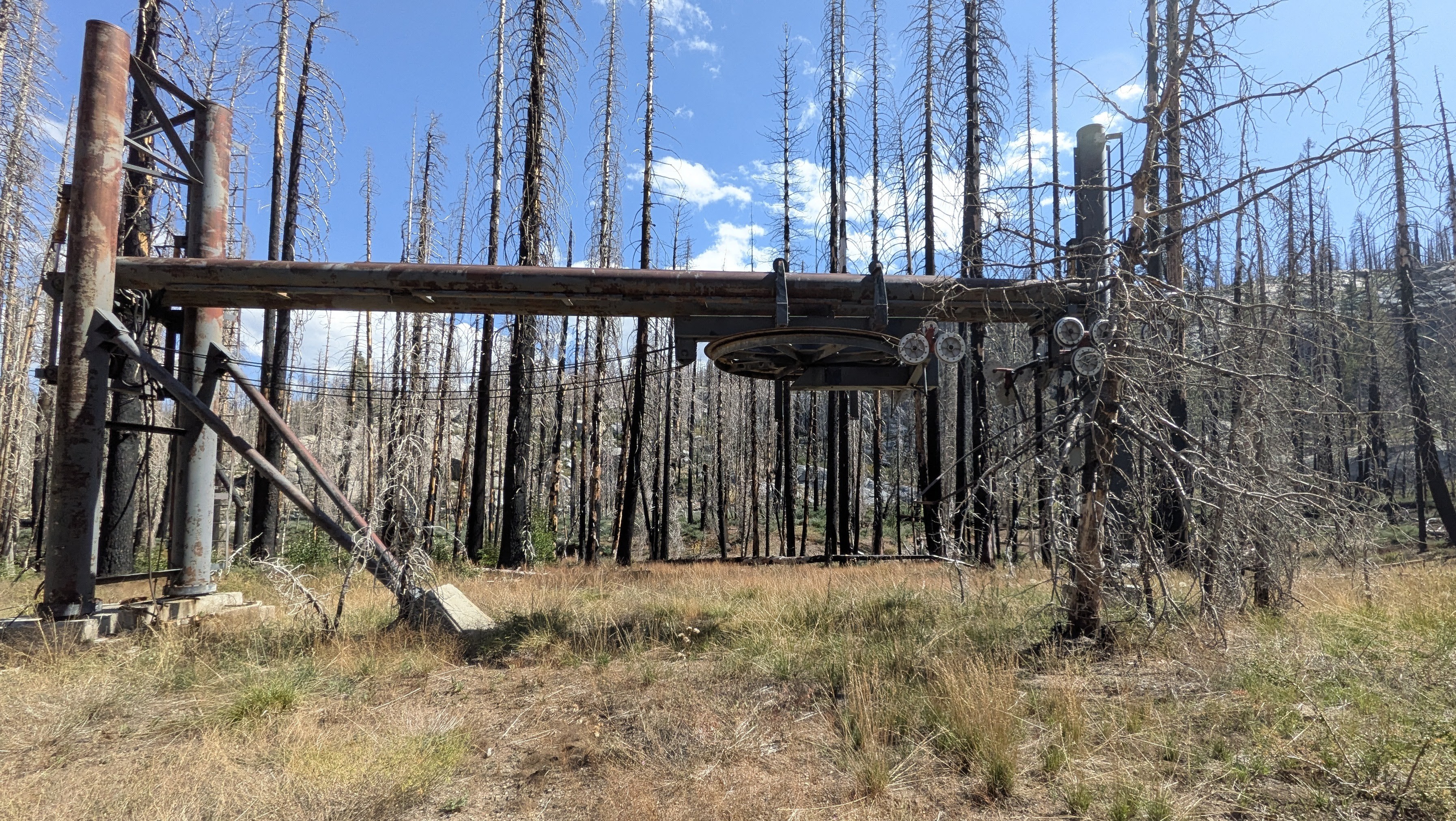
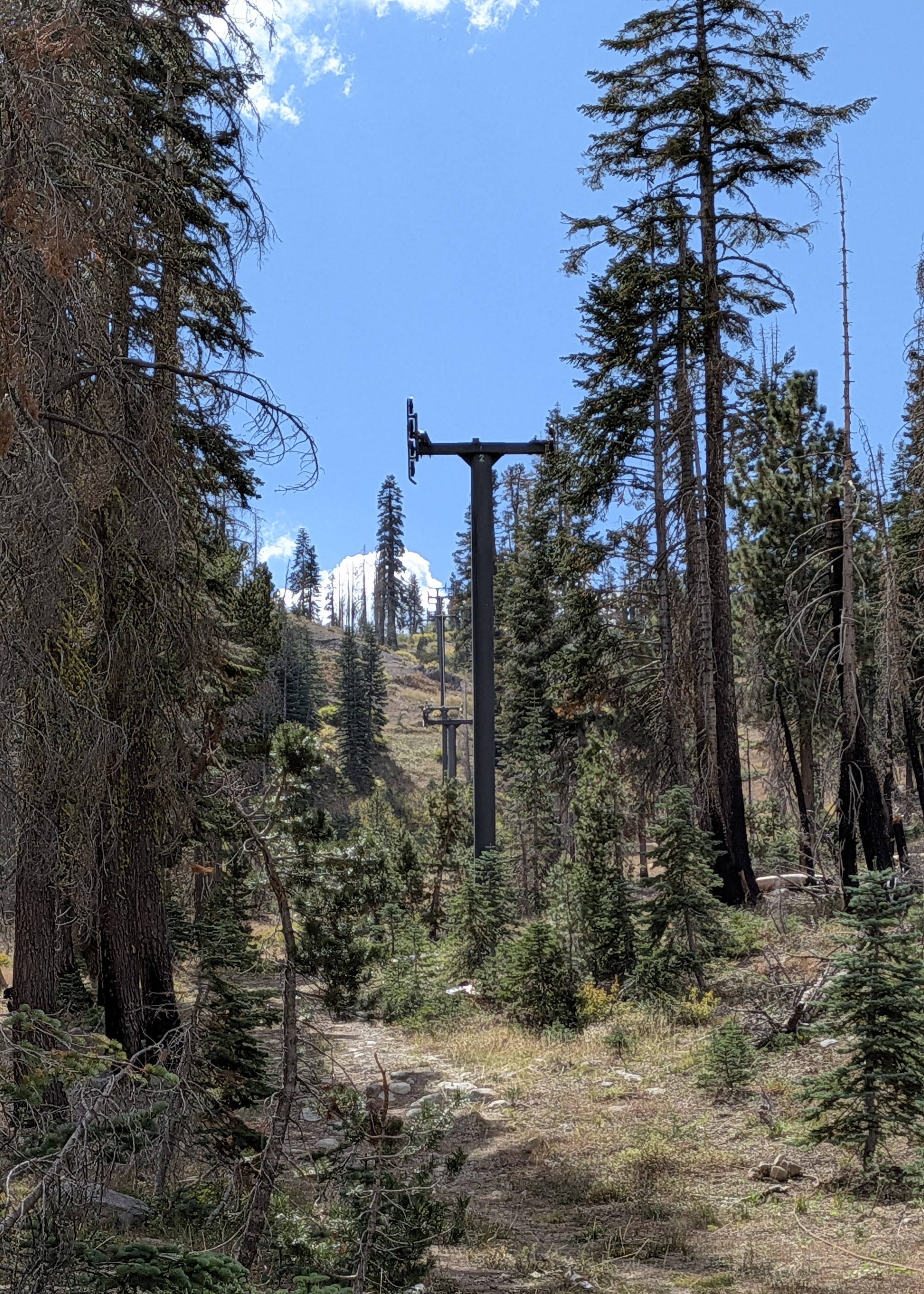
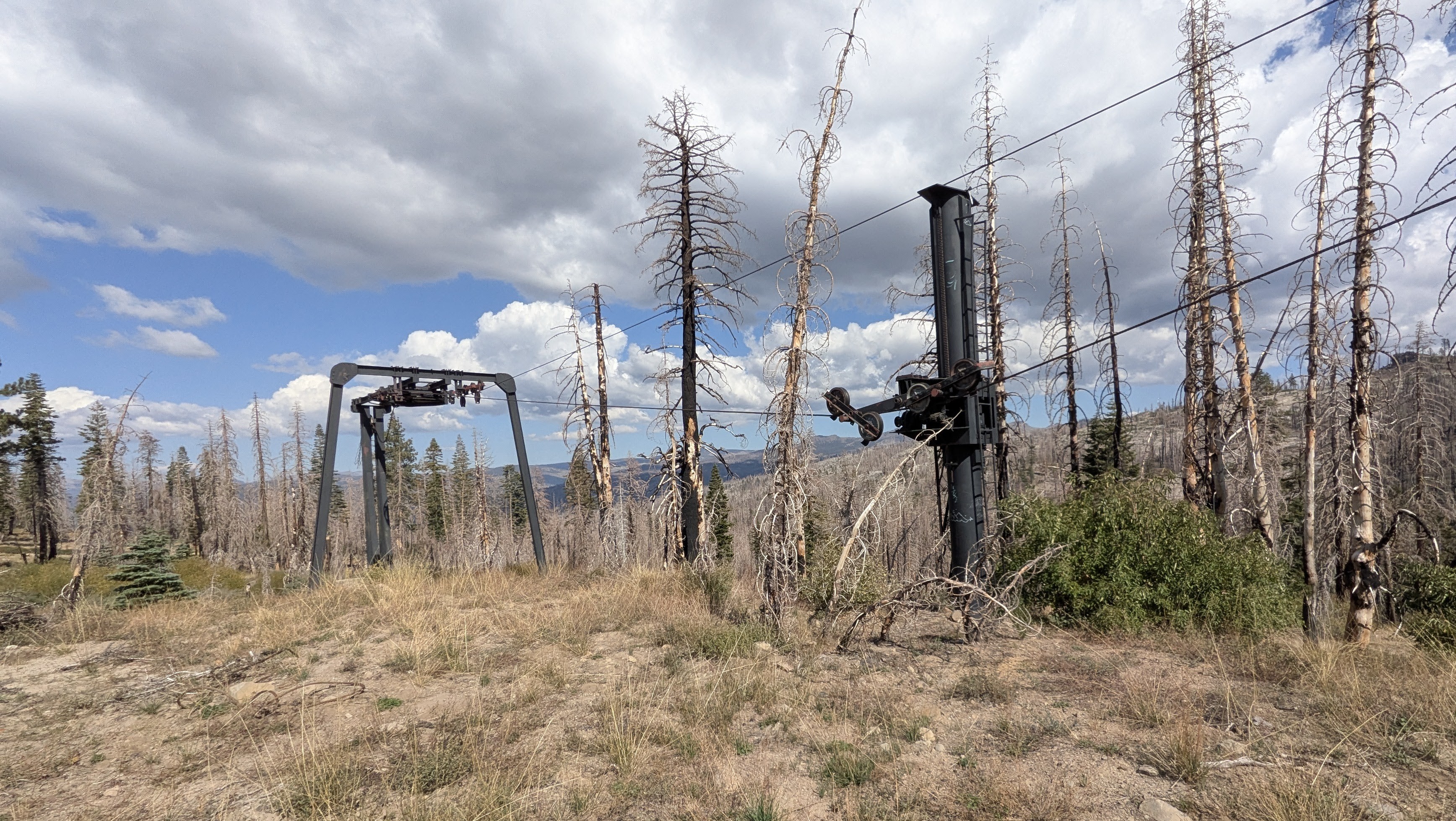
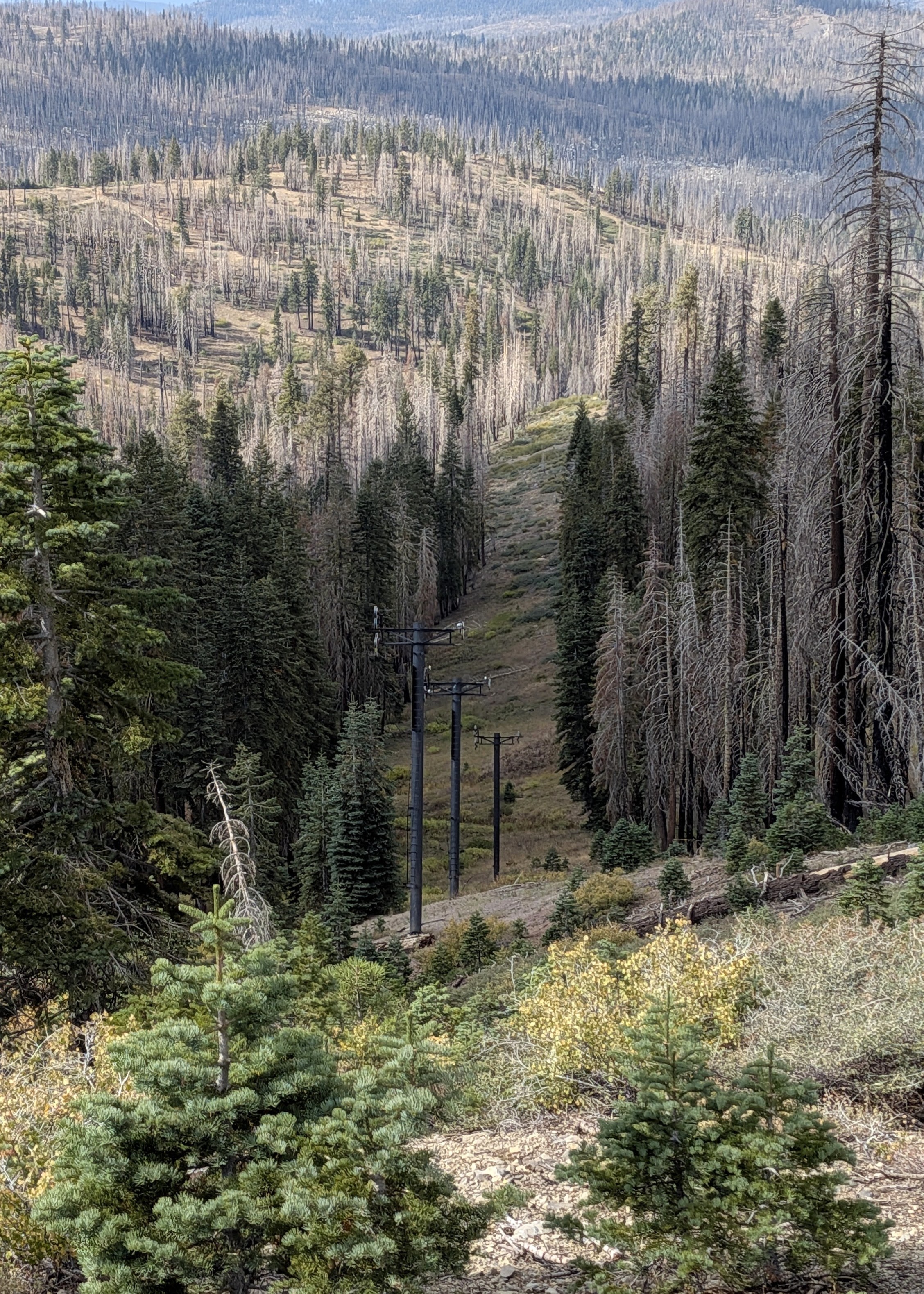
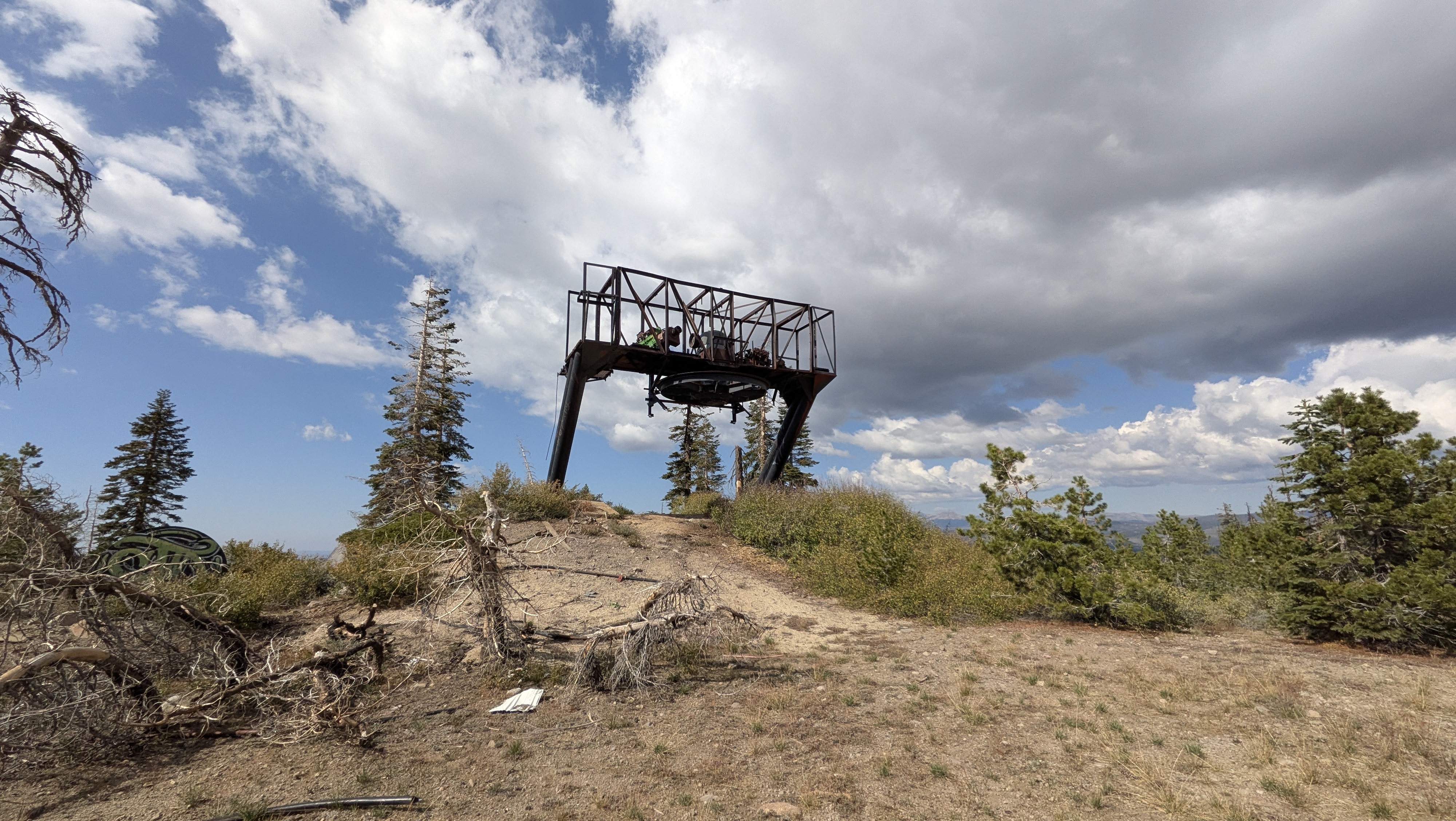
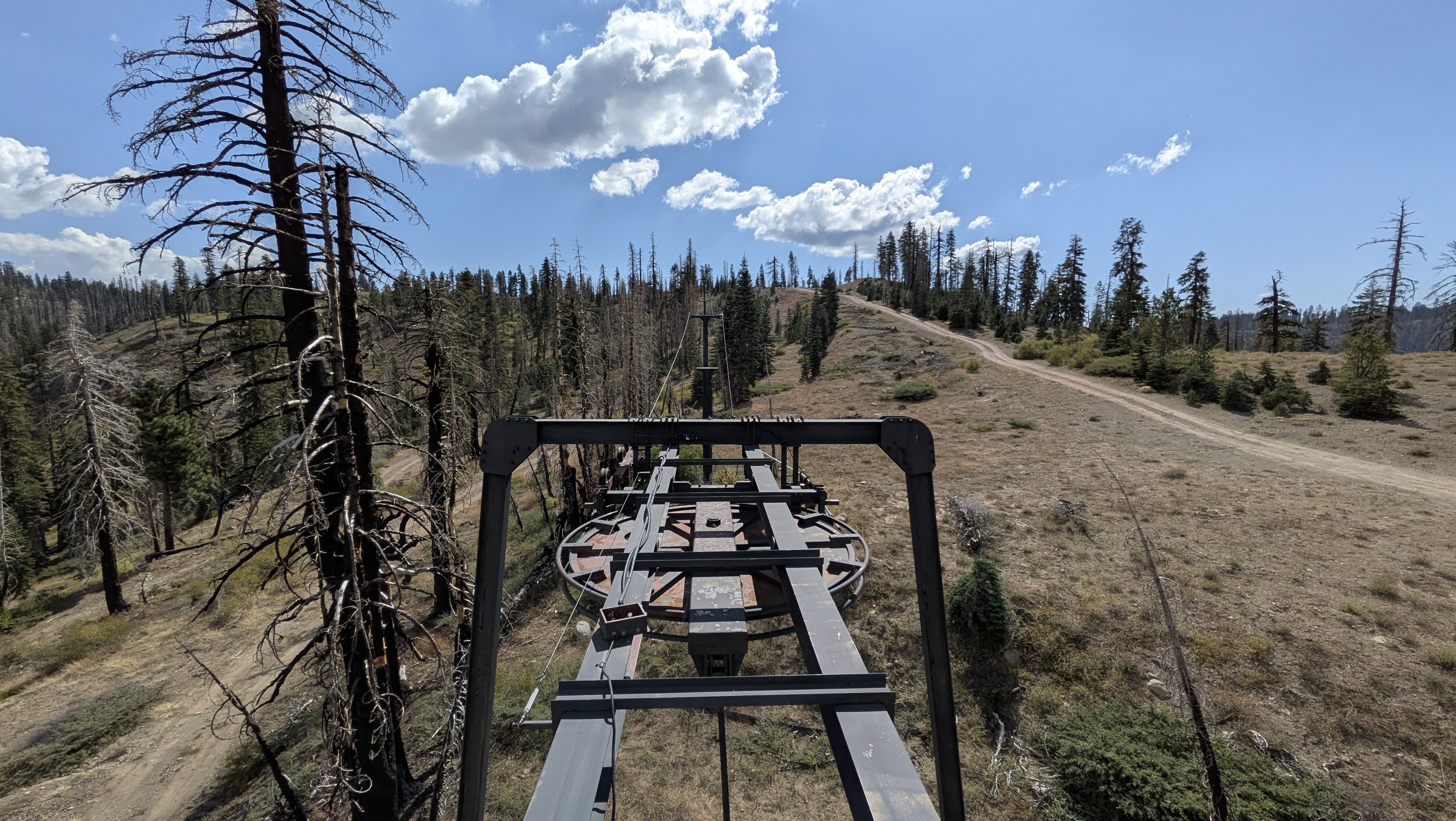
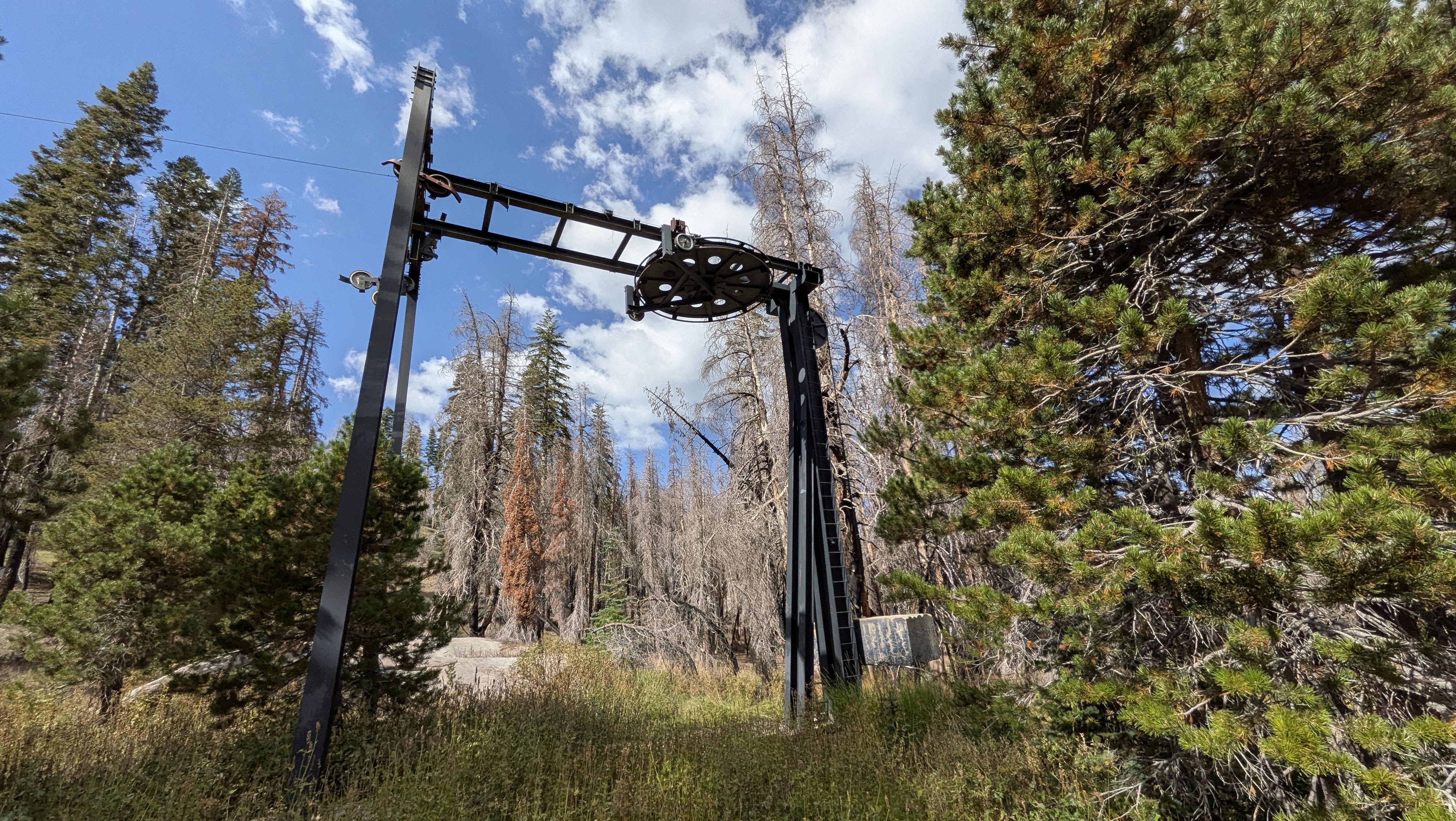
- Part of the former Iron Mountain Ski Area near Kirkwood goes up for sale. A reader who’d like to remain anonymous sent along these recent photos of five abandoned lifts.

News Roundup: Aerials
- Okanagan Gondola eyes a 2027 opening.
- Waterville Valley explains the reasoning behind building a lift in house.
- Quebec’s CMSQ group is selected to operate Mont Édouard and plans a CA$16 million six pack for 2026.
- CMSQ also intends to operate Mont Adstock and would like to take control of Mont-Sainte-Anne and Stoneham.
- BigRock, Maine decommissions its Mueller double.
- Vail narrows down on a gondola plan for West Lionshead.
- Still no arrests five years after the Sea to Sky Gondola cable was cut.
- A deal is in the works to reopen Toggenburg, New York for skiing.
- The Canadian government finds no illegal monopoly with the Banff Gondola and Jasper Sky Tram under common ownership.
- Five people are hospitalized following a chairlift collapse in Russia. Photos and video show the single chairs’s drive terminal upside down.
- The Forest Service approves a Sandia Peak Telemix.
- Aspen takes an exploratory look at valley gondola transport.
- Kicking Horse finishes installation of new hanger arms, hopes to reopen its gondola soon.
- The Palm Springs Aerial Tramway temporarily closes due to technical issues.
- Here’s a look from the air where Powder Mountain’s DMI, Davenport and Halfpint lifts are going.


News Roundup: Austrian Giants
- Austria’s Saalbach, Zell am See-Kaprun, Mayrhofen, Hintertux and Silvretta Montafon join the Epic Pass as partner resorts, bringing Epic to nine European destinations.
- Poma releases its 2024 Reference Book highlighting projects around the world.
- Eaglecrest may not meet a 2028 deadline to complete its used pulse gondola.
- America’s only summer only ski area will open this year for the first time in three.
- Whaleback meets a $250,000 fundraising goal for lift repairs.
- Opposition organizes against proposed Grand Targhee expansion.
- Bluewood, Washington to sell chairs if its new lift project is on track by September 1st.
- Hawaii’s first gondola is proposed on the North Shore of Oahu.
- A gondola is floated for Ft. Lauderdale, Florida.
- Also Anaheim, California.
- Marmot Basin’s visitation drops 30 percent due to last year’s fire in Jasper.
- Silver Mountain delays summer opening due to gondola repairs.
- Timberline Helicopters, the company that installs the majority of lift towers in the West, breaks ground on a $13 million expansion in North Idaho.
- The nonprofit organization that’s been trying to revive Cuchara, Colorado inks a 40 year operating lease for the mountain.
- Vail Mountain intends to begin work on the lift projects I wrote about last week next summer, subject to Forest Service approval.
- President Trump proposes a 50 percent tariff on imports from the European Union starting June 1st.
News Roundup: Ropera
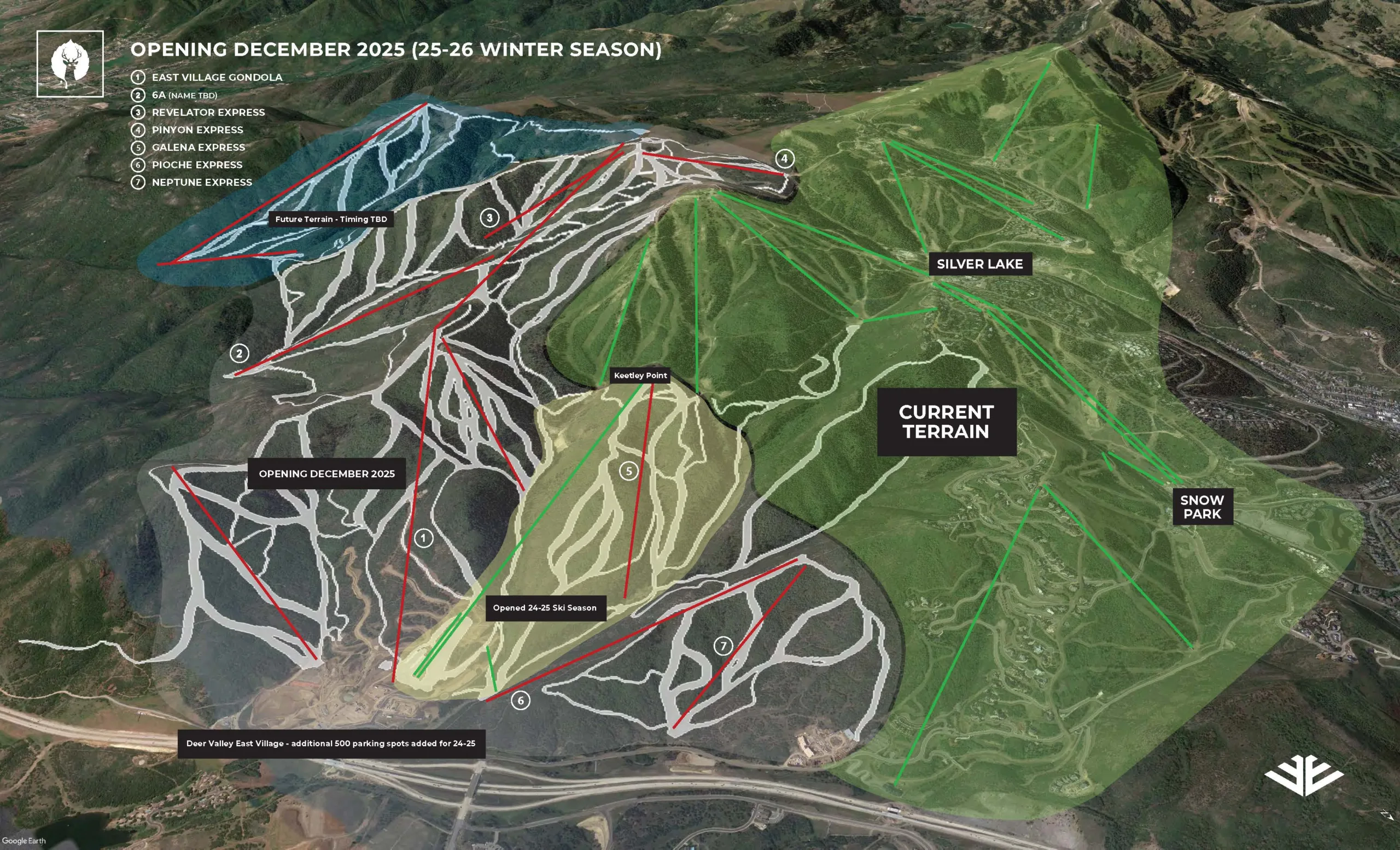
- Deer Valley updates its expansion site to show Lift 6 as two detachable quads (6A and 6B) instead of a six pack with mid-station.
- Vail Mountain seeks permission to replace Orient Express #21 with a six pack, swap Little Eagle #15 for a detachable quad and remove Wapiti #24.
- Leitner-Poma discusses the impact of tariffs on the SAM huddle.
- Burke Mountain emerges from nine years of government receivership with new owners.
- Mount Saint Louis-Moonstone, Ontario teases a new era coming to the Outback side of the mountain.
- Leitner introduces its next generation monocable detachable called Ropera, combining technology from Leitner, Poma and Bartholet. The launch customer will be Speikboden, Italy with a six place chairlift.
- Leitner and Doppelmayr release annual yearbooks.
- Snoqualmie unveils new renderings of the Edelweiss project at Alpental.
- A Colorado man succumbs to injuries sustained in a fall from Keystone’s Ruby Express last December.
- Powder Mountain tells the Utah tram board it’ll install between one and four new lifts this summer.
- A jury declines to award millions to a Mt. Bachelor skier who fell getting off a chairlift.
- Killington to donate and match proceeds from closing day to Whaleback Mountain’s chairlift replacement fund.
- Snow Partners to launch a new multi-mountain pass product offering three total days at six to ten Eastern resorts.
- Mt. Ashland, Oregon looks to replace the Ariel and Windsor doubles with Skytrac triple chairs in 2026.
News Roundup: Riverbanks
- 19 deluxe cabins arrive stateside for South Carolina’s only gondola.
- Ragged Mountain goes on the market.
- Leitner-Poma posts an ad hiring lift installers for a project at Crystal Mountain, Washington.
- A widow sues Breckenridge following her husband’s fatal fall from the Zendo chair, alleging “an unreasonable amount of snow and ice accumulation.”
- Purgatory acknowleges belt tightening on the mountain as it renegotiates long term debt.
- The Forest Service shows two Mission Ridge expansion proposals as canceled.
- The Forest Service releases a Draft Environmental Impact Statement for Grand Targhee’s proposed expansion including three pared down alternatives.
- Big Sky raises $150,000 for charity selling Explorer chairs.
- An idea to connect two Seattle neighborhoods by gondola resurfaces.
- Leitner teases a “New Era of Ropeways” coming at Interalpin.
- Relations sour between the Town of Mountain Village and Telluride Ski Resort owner Chuck Horning with the Town Manager giving a lengthy speech about problems at the resort.
- Skeetawk, Alaska’s only chairlift shuts down for a multi-week repair.
- Stowe’s FourRunner quad has been out of service all week.
- Vail reopens Riva Bahn after a two week gearbox rebuild.
- Kicking Horse’s gondola remains closed indefinitely; the resort will transport gear up to Stairway to Heaven free of charge but guests still have to walk there.
- Vail Resorts presents its strategic vision to investors.
News Roundup: Stairway to Heaven
- A video shows the Kicking Horse incident was exacerbated by running the damaged hanger to a tower, causing the lift to de-rope. The gondola will be closed at least a week and likely longer; the resort will allow guests to hike or skin to Stairway to Heaven.
- The snowboarder who died after falling from Red Lodge Mountain’s Triple Chair on Monday is identified as 37 year old Jeffrey Zinne of Billings in an incident described as a “malfunction.”
- A child was airlifted to Denver after falling 35 feet from the Purgatory Village Express the same day as the Kicking Horse and Red Lodge incidents.
- Leitner-Poma posts jobs for ski lift installers at Bretton Woods, Loveland, OZ Trails Bike Park, Powder Mountain, Snowmass, Snowbasin, Taos and Wasatch Peaks Ranch.
- New York State wins its case against a ski resort owner for buying Toggenburg to close it and reduce competition.
- Snowbasin to sell chairs from the Becker lift for charity.
- Loup Loup, Washington ends its season early due to a required motor repair.
- Vail’s Riva Bahn Express has been closed all week due to a gearbox issue requiring a rebuild.
- Vail Resorts reports solid results with season-to-date skier visits down 2.5%, lift ticket revenue up 4.1%, ski school revenue up 3.0%, dining revenue 3.1% and retail/rental revenue down 2.9%. Net income for the quarter ended January 31st increased 11.9%.
- Tenney Mountain, New Hampshire still plans to reopen the Hornet some time this winter following a gearbox issue.
- Another lawsuit is filed against the Little Cottonwood gondola proposal.
- Attitash reopens the Flying Bear five weeks after a chair fell from the line. Draft minutes from the New Hampshire Passenger Tramway Safety Board suggest multiple damaged carriers were found and Attitash was approved to reduce capacity from 82 to 64 carriers. Update Monday 3/17: Vail PR sent me this statement, emphasis theirs: “During our inspection process, we made the decision to reinspect all our chairs and grips, haul rope, sheaves, terminals, and more. Following our inspection, we are taking the opportunity to replace parts on some chairs unrelated to the incident as a part of routine upgrades. These chairs will remain temporarily out of service until the parts arrive. This was a decision made by the resort, that the Passenger Tramway Safety Board unanimously approved at the March 3rd board meeting. We have been given permission to run the lift between the manufacturer’s minimum and maximum design specifications.”
- Ober Mountain, Tennessee opens the new Sky Village Express.
- Whistler Blackcomb completes a mid-season rope inspection and splice due to a broken haul rope strand on the Emerald 6 Express.
- WB also pulls the plug on summer skiing due to glacial recession and its impact on lift access.
- A community co-op effort was unable to submit a bid for Mt. Bachelor.
- Vista Ridge, Alberta closes both its chairlifts indefinitely to conduct a review following several evacuations.
- Alpental will close two weeks early so crews can work to build the new Chair 2 over snow in a roadless area.
- Ditto for Explorer at Big Sky as it’s replaced with a gondola.
- After running on diesel generators for a decade, the Sea to Sky Gondola‘s upper terminal is connected to grid power for the first time.
- Whaleback, New Hampshire says it needs to raise $250,000 to fund off season maintenance and chairlift repairs.
- Titcomb Mountain looks to retire and replace T-Bar 2.
- Powder Mountain to build a private, homeowner only Leitner-Poma detachable quad this summer.
- Snowbird’s Mineral Basin reopening is further delayed due to “unforseen additional issues“.
- The Forest Service approves Alta to replace Supreme with a new lift and no eight degree bend.
- Pending approval of its members, Bryce Resort plans to install a third Skytrac on the backside of the mountain this summer.
 Lift Blog